
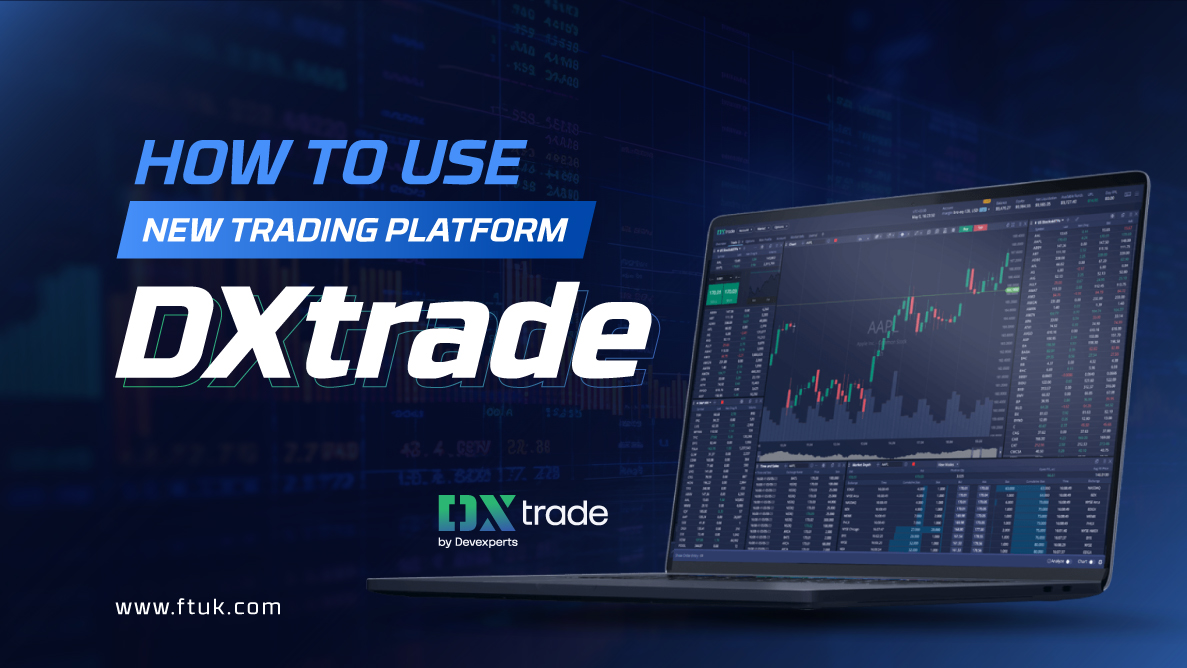
This video is your one-stop guide to getting started with DXTrade, the powerful platform partnered with FTUK. In minutes, you’ll be equipped to navigate the interface and trade forex with confidence! Watch now and unlock your forex trading potential!
Author: Abdel Access
How Understanding Prospect Theory Can Help You Trade Smarter

Forex trading is a demanding but potentially rewarding activity that requires a good understanding of the political and economic factors that drive the market, as well as technical analysis skills. However, to fully master the nuances of forex, it’s also important to understand the psychology of trading.
There are numerous resources available on this topic, but one of the most useful and insightful guides is Prospect Theory, which was first introduced in 1979 and developed further in 1992 by Amos Tversky and Daniel Kahneman, and won the Nobel Prize in Economics.
Here’s a closer look at what Prospect Theory is, and how it can be applied to forex trading so you can make the most of an instant funded account.
Understanding Prospect Theory
Prospect Theory is based around the concept that traders value losses and gains differently, and that they place more value on potential gains than potential losses, even if the possibility of both is equal. It’s part of the wider theory of behavioural economics that accepts that people do not always make rational and unbiased decisions when dealing with finances.
Kahneman argues that when people make decisions that will affect their personal financial situation, they are based on their most immediate emotional reactions, rather than a detached assessment of the long-term outcomes.
Gains and losses are short-term outcomes, and because humans are hardwired to dislike losing, they will subconsciously be biassed towards gains.
This can lead to traders taking bigger risks than they might assume, because they are not giving equal consideration to the potential losses. This behavioural theory is sometimes also referred to as ‘loss aversion bias.’ Some psychologists believe that the pain of losing is twice as intense as the joy we experience from a successful outcome.
This may be an evolutionary trait that lingers from the time when protecting ourselves from losses was more likely to ensure our survival than basking in a victory. For our ancient ancestors, avoiding the intense physical pain of being attacked by a predator, with a possible fatal outcome, is obviously more of a priority than securing a tasty dinner by making a kill.
Some psychologists believe that this behavioural trait is still apparent in our decision making processes today. This can result in cognitive biases towards avoiding losses. We are still socially conditioned to fear losses that may not be physical, but can be economic or emotional.
For example, no one likes to see their football team lose a match, or be rejected in a social situation such as dating. Money is something that we all need not just for survival but also to have some freedom of choice over the way we live our lives, so it is not surprising that it can bring out primal emotions such as fear and greed.
Rather than face up to the prospect of a painful loss, our minds can subconsciously focus on the more pleasurable and positive prospect of making a gain. When it comes to forex trading, this can lead to a tendency to hold on to a losing position for too long in the hope of breaking even, or of selling winning positions too early to lock in gains.
:max_bytes(150000):strip_icc():format(webp)/prospecttheory.asp-FINAL-55296758049c4501808f54b52747cb35.png)
Framing
When faced with a choice that has a 50/50 probability of making a gain or a loss, humans can have a tendency to frame the choice as a potential gain rather than a potential loss. This can prevent an individual from considering all of the available information with equal weight.
Another aspect of Prospect Theory is that it can lead to traders underestimating outcomes with low probability, and overestimating outcomes with high probability. This can lead to traders being caught out by sudden market swings, which is a common occurrence in the volatile forex markets.
Overconfidence
Prospect Theory identifies overconfidence as a common trait in financial traders, and a false sense that they can accurately predict or control events. It is impossible for even the most skilled traders to accurately predict the way the markets will move, and forex trading is all about weighing up probabilities in order to take controlled risks.
When a trader has an illusion that they can control or accurately predict market movements, it can lead to overly risky trades that overlook the prospect of losses and overemphasised potential gains.
Anchoring
Anchoring is another cognitive bias that is known to influence the behaviour of forex traders. It is the human tendency to rely too heavily in the first piece of information available when making a decision. However, this is not always the most objective and impartial information, but it ‘anchors’ in the mind and is used as a yardstick to measure all further sources against.
When forex trading, this can lead to basing all future decisions on the earliest technical analysis or economic data, rather than adapting to the latest available information. Forex traders need to be aware of anchoring bias, and ensure that all of their decisions are made on current market data, rather than taking a mental shortcut to their first impressions.
How can forex traders overcome cognitive biases?
The concepts described above are known as cognitive biases, and are a widely acknowledged issue in the high-stakes world of financial trading. Forex traders may consider themselves to be immune to biassed thinking, but these cognitive processes can be conscious or unconscious.
It is not possible, or even desirable, to completely eliminate all biases because they are deeply embedded in our thought processes. They can help us process a lot of information quickly by building up mental shortcuts, and avoid us having to go through unnecessary steps each time we want to carry out a task.
However, over time we can create selective thought patterns that stop us from considering the whole picture. In forex trading, this can put us at a disadvantage because it can lead to us forming conclusions based on limited or outdated information.
The first line of defence is to acknowledge that you are prone to biases such as those outlined by Prospect Theory. It is not a sign of mental weakness, but a normal and sometimes necessary part of our psychological make up: we are naturally attuned to fear the pain of loss more than the pleasure of success.
Even if you consider yourself a competent and well-informed trader, you should always be on your guard against biassed thinking. The second line of defence is to form a clear trading strategy and align it with your risk management strategy.
When you are making a trading decision, always refer to your plan and be vigilant for any emotional impulses that could be causing you to deviate from it. Another good strategy is to keep a detailed and accurate account of all your trading activities, so that you can periodically review your progress.
This will give you the opportunity to identify any situations where you have been loss averse. For example, are there trades where you have sold earlier than your stipulated price point, because you were anxious to lock in the profit? Would the outcome have been more profitable if you had stuck to your plan or carried out a fresh market analysis?
There may also be examples of trades in a losing position that you have hung on to for too long, rather than bite the bullet and accept the loss. In the majority of cases, this behaviour will probably only have amplified the loss, whereas selling at the limit specified in your trading plan would have minimised it.
When making a trading decision, try not to focus purely on the gains or losses, but objectively weigh up the probable outcomes. Adopt a neutral frame of mind, and avoid short-term thinking.
The key to making steady profits in forex trading is to keep your focus on the bigger picture: it takes new traders several months or even years to become consistently successful, and even then it will be necessary to accept some losses along the way.
Condition yourself to see losses as a sometimes necessary business expense that is part and parcel of the trading process, rather than a sign of personal failure. If you are taken by surprise by a steep loss, step back and process any resulting emotions such as anger, shock, panic, fear, shame, and so on.
It is normal to feel this way occasionally, but the key is to be aware of the emotion and not to act on it. Work out what went wrong, and adjust your risk management strategy accordingly, rather than compound the error with a poorly thought out and subjective action.
Prospect Theory and associated theories such as loss aversion bias can give traders greater insight into the subconscious processes that can influence their decision making.
This can improve their trading outcomes by learning how to recognise when their judgement might be skewed, and adopting suitable risk management strategies to help buffer themselves from the effects of these biases.
PART TIME VS FULL TIME IN FOREX TRADING
Part Time V Full Time Forex Trading
Many people dream of earning their living solely through forex trading, being their own boss, keeping their own hours…but how easy is it really to be a full time trader? On the other hand, some people wonder if it is really possible or worth the effort to fit forex trading around a full time job.
So is forex trading really an all or nothing choice? Here’s a look at both sides of the coin.
The pros of part time forex trading
The fact is, most people who are new to trading start off part time, combining it with their main job. This allows them to build up the skills and experience they need to become successful, without the pressure of trying to make a living from it.
There is a low barrier to entry, with instant forex funding available through broker accounts. This means that anyone with a small amount of investment capital can start trading straight away, with no high stakes involved.
For many people, this is a safe way to learn the ropes, because they are not risking their life savings and can continue to cover living expenses with the salary from their full time job. You will get to enjoy the benefits of an extra income source, without the need to make enough to cover your essential costs.
The forex markets are active almost 24/7, so even if you can only devote a few hours before 9am or after 5pm, there are still plenty of opportunities to make good trades. As a part time trader with a separate income, you will be free to experiment with your trading strategies, and learn what works best for you without the pressure of always being right.
The cons of part time forex trading
Fitting trading in around your full time job is a big commitment, and it can end up taking over your life. You may find that you have to make some compromises, such as having less time for hobbies, exercise, and seeing family and friends. Therefore you do need to be good at time management to maintain a reasonable work life balance.
The time constraints will limit the amount of trading windows you have, and in the fast moving forex markets this will inevitably lead to some missed opportunities to make profitable trades. You will also have less time available to carry out the technical and market analysis that are essential for developing a sound trading strategy.
The pros of full time forex trading
Full time forex trading allows you to throw yourself into the game 100%. Successful traders need mental and emotional discipline, and the will to learn as much as possible about how the markets operate. This is an ongoing process, and you will have more time available to devote to technical and fundamental analysis.
Ultimately, this will make you better at identifying the most profitable trading strategies and opportunities. As a full time trader, you will have access to the markets 24/7, giving you much greater scope to take advantage of periods of volatility, which can be a gift to the well prepared and skillful forex trader.
As well as more scope to hone your skills, full time trading brings you the freedom and independence of being your own boss. You get to decide which hours you work, and the location that you work from. There are potentially no limits on the amount you can earn, unlike a routine job where you are on a fixed income.
The cons of full time forex trading
The decision to become a full time trader needs some careful consideration, especially if you intend to rely on it as your sole income source to meet essential living expenses. It takes some very careful financial planning to ensure that you will have enough capital to cover your losses if you go through an unfruitful trading period.
You also need to question whether you really have the skills and experience necessary to make consistent profits that are enough to support your lifestyle. Do you have a financial safety net, such as a passive income source from property or investments, or a partner who is willing to support you through leaner patches?
Forex trading can be a high pressure career, which takes up deep reserves of mental and emotional energy. This might not seem like a major consideration when you are new and fired up with enthusiasm, but over the long haul it takes discipline to guard against burnout.
It is important to learn how to remain objective and analytical at all times, no matter how much stress you are under. Once you begin to let emotions such as fear and greed influence your trading decisions, it can soon turn into a downward spiral.
How can you decide what is best for you?
Ultimately, successful forex trading requires a lot of hard work and discipline whether you are going into it full time or part time. Some people might decide to ‘go hard or go home’, while others might prefer a more cautious approach. Part time trading is not always the easier option, because it will put major demands on your spare time.
However, it really depends on your attitude to risk and your personal circumstances. If you have the financial security to cover your living expenses and a safety net to fall back on, then you may decide to take the plunge and go full time.
How to make part time forex trading work for you
For many people, complementing their salary with the profits from a part time forex trading career is the most attractive and practical option. Thanks to the global nature of the forex markets, there are always opportunities available for fitting trading in around your main occupation.
In fact, the major markets of London, Tokyo and Sydney are at their most active when they open at 8am, so if you work a regular 9-5 job, you are ideally placed to take advantage of the most lucrative trading opportunities. The New York markets are also active at the end of the day between 5pm and 9pm, so evening trading is well worth your time too.
The key is to pick the currency pairs that are most active during the times of day you are available to trade. Fortunately, for UK based traders who work daytime hours, this leaves plenty of options from the major currencies, such as the Euro/US Dollar, and the British Pound/Japanese Yen.
The particular trading strategy you pick will depend on your level of knowledge and experience, as well as your personality type. If you have strong technical analysis skills, then price action trading may be your best option. This allows you to execute trades within a brief trading window, by closely monitoring upward or downward market movements.
To be able to use price action techniques effectively, you will need to be able to quickly and accurately interpret line charts and bar charts to read which way the market is trending. You will also need to have the mental sharpness to enter or exit your trade at the right point in order to take the maximum profit.
Price action trading suits people who have quick minds but not a great deal of patience, because it allows you to make a series of several short trades within a limited timeframe. Although you will only potentially make a small profit from each one, the amount of trades means that profits can soon accumulate.
If you dislike making decisions under pressure, and prefer to take a long view of a situation, then making fewer trades and holding them for days or even weeks may suit you better. This is also a good strategy for part time traders, because you can check up on your positions when you are available, without the need for constant monitoring.
The importance of a trading routine
Whether you decide to give full time or part time trading a go, both approaches will only work if you follow a structured routine. This is especially important if you are going full time, and have never been self-employed before.
It can be tempting to pick and choose what you do and when you work, but this is unlikely to lead to a productive trading career. Being your own boss has its perks, but you need to be disciplined enough to put in the hours and hard work. Contrary to popular belief, full time forex traders don’t spend all their time actually making trades.
Instead, they may spend some time at the beginning of each day getting into the right mindset, maybe with meditation or exercise. This can help you clear your mind and mentally prepare you for the rigours of the day. Some traders find it helps them to think more clearly in times of stress, which ultimately leads to better trading decisions.
The next portion of the day may be spent reviewing the economic calendar and checking up on current market conditions. Only then will the trader begin to identify potential trading setups.
Recent articles
