FOREX CALENDAR OF ECONOMIC EVENTS

WHAT IS A FOREX CALENDAR AND HOW IS IT USED IN FOREX TRADING?

A Forex economic calendar is essential to predict what economic news events you can expect and anticipate currency changes accordingly.

When trading in the Forex market, it is essential to foresee economic events. These economic events are often published or announced and will immediately influence currency rates. If you know when a certain economic event is going to be published, you are analysing the market thoroughly. Thorough analysis can help you to foresee how a currency rate may develop on a certain date.

Foresight is the reason why it is so important for a Forex trader to follow an economic calendar. The number of events, however, can be overwhelming. There are filtering tools on an economic calendar that make it far easier to keep an eye on the economic events with the highest possible impact for your Forex trades.

What is a Forex calendar?

Forex trades are mainly dependent on economic events. Currency rates are largely influenced when, for example, a central bank announces an interest change, unemployment rates are published, or when consumer trust is analysed. That is why economic development should be monitored closely.

To foresee economic development, a Forex calendar is necessary. When you analyse the market closely, you can largely predict developments on any certain day. With this knowledge, you can foresee a currency rate change and anticipate trades.

A Forex economic calendar, therefore, should be part of the fundamental technical analysis of a dedicated Forex trader. A Forex economic calendar also gives insight into in depth, new tips on how to forecast a Forex calendar, providing you with all the necessary knowledge to execute strategic trades.

What is an economic event?

All events that cause economic developments are classified as economic events. These economic events are recorded in financial statements or other types of announcements.

How to read a Forex calendar

Economic calendars typically provide a short description of the event, but, most importantly, assign a value to each event, “Actual,” “Forecasted,” and “Previous”. The specificity of the calendar allows you to see the timing of the next announcement so you can predict the actual impact of the economic event.

With color-coded – red, orange, and white – labels, the calendar differentiates the impact of economic events, helping you to scan for the most important events for your portfolio.

Because most Forex traders only deal with a certain set of currency pairs, most economic Forex calendars also provide the option to select only the currencies that are relevant for you. In this way, the economic calendar becomes leaner, making it far easier for you to pick out the highly relevant economic events that will impact your trades.

What economic events should you monitor?

Below, you will find ten of the most important economic events that can have a major impact on currency rates:

  • GDP Growth Rate
  • Consumer Sentiment
  • Economic Sentiment
  • Personal Consumption Expenditure (PCE)
  • Purchasing Managers’ Index (PMI)
  • Unemployment Rates
  • Inflation Rates
  • Business Confidence
  • Consumer Confidence
  • Retail Sales

A typical economic calendar can have dozens of events daily, so it can be a challenge to keep up with all of them. Most economic calendars label all economic events as low, middle, or high impact. This helps you to distinguish the important economic events you must follow from the ones of which you should be aware.

GDP Growth Rate

The Gross Domestic Product (GDP) Growth Rate indicates how quickly the economy of a certain country is growing. This rate compares the GDP of the last quarter with the previous quarter. A high growth rate can indicate that a country’s currency rate is rising, whereas a declining GDP often means a currency is becoming weaker.

Consumer Sentiment Indicator (CSI)

Consumer sentiment is a statistical rate regarding the health of the economy according to consumers. It is all about people’s feelings toward their own financial health. CSI indicates if consumers are going to invest and buy, or if they expect to sit on their money for a while. A high consumer sentiment will often lead to a higher GDP, hence a stronger currency.

Economic Sentiment Indicator (ESI)

The Economic Sentiment Indicator (ESI) is based on the economic development of five sectors: industry (40%), services (30%), consumers (20%), retail (5%), and construction (5%). The higher the indicator, the stronger the currency.

Personal Consumption Expenditure (PCE)

Personal Consumption Expenditure refers to household expenditures. This indicator is released monthly and supports the reporting of the PCE Price Index. The higher the indicator of this economic event, the strong the currency will be, and vice versa.

Purchasing Managers’ Index (PMI)

The Purchasing Managers’ Index (PMI) is another index that indicates the direction of the economy. The index summarizes the market conditions according to purchasing managers. A high index foresees an economic growth for a country, leading to a stronger currency.

Unemployment Rates

The Unemployment Rate indicates the percentage of the work force that is currently unemployed and searching for employment. Low unemployment leads to higher inflation. A higher rate than expected is negative for a currency, while a lower rate than expected can be interpreted as positive.

Inflation Rates

Inflation rates impact the rate of currencies. Low inflation typically exhibits a higher currency value, as the purchasing power of consumers increases. Inflation, therefore, is one of the factors that influence a country’s exchange rate.

Business Confidence

Business confidence refers to the forward-looking expectations of companies. Business confidence is usually measured by surveys and gives a good indication as to whether companies are going to invest in the next quarter, leading to larger spending. A higher confidence most likely leads to a stronger currency.

Consumer Confidence

Consumer confidence is an important economic factor that indicates the degree of optimism among consumers. Consumers’ view of the overall state of the economy impacts their personal financial situation, and thus their spending in the next period. A higher confidence leads to a higher GDP and a stronger currency.

Retail Sales

A change in retail sales has a strong effect on a currency. An increase in retail sales has a positive effect on a currency. A negative retail sales development, on the other hand, is likely to reduce the value of a currency.

In conclusion, it is very important to follow an economic Forex calendar so you can anticipate changes in a currency rate. Make sure to create an overview of only relevant currencies in combination with economic events with high or medium impact. When you narrow your focus in this way, you can pay attention to what really matters.

Are you ready to start trading with a funded Forex account?

Do you want to apply the knowledge you acquired about Forex calendars on a funded Forex account? Forex Traders UK is passionate about educating traders about winning Forex trading strategies. In addition to articles on technical analysis and technical mindset, we also write about other Forex-related topics. Subscribe to our newsletter to stay informed about our newest blog posts.

Share:

Share on facebook Share on whatsapp Share on twitter

PLOTTING THE DIFFERENT TRENDLINES

TRENDLINE TRADING PLOTTING DIFFERENT TRENDLINES

When trendlines are drawn correctly, they show a trend in clarity and offer specific information and opportunities to Forex traders.

https://youtu.be/PlkKFvfnNhU

Trendline trading is a very common strategy within the technical realm of Forex trading. Trendline trading is probably one of the most underrated strategies as well. If a trendline is drawn out correctly, it shows the trend in clarity and offers great opportunities for Forex traders to get into the market.

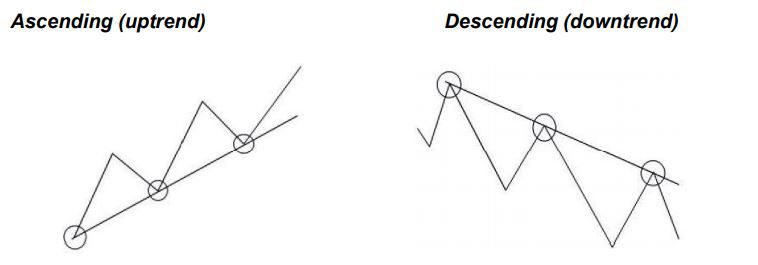
Trendlines are, essentially, a line of the best fit at either the dynamic area of support or resistance. An ascending trendline indicates an uptrend, while a descending trendline uncovers a downtrend.

Basic features of a trendline

The basic features of a trendline are simple. An uptrend line is drawn along the bottom of easily identifiable support areas and signals an uptrend in price action. They will also accurately show the higher lows in the market.

In a downtrend, on the other hand, the trendline is drawn along the top of easily identifiable resistance areas, the tops of the lower highs.

Trendline characteristics and how to use them

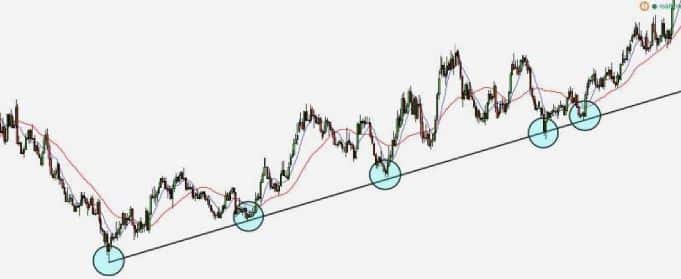
Another note to consider when using trendlines is that the more bounces (touches) a trendline shows, the stronger the trend. A trendline with many bounces would convey that the line is highly respected by the price action and will continue to follow this line to a high degree of accuracy.

You only need two lower highs or two higher lows to place a trendline, but finding a third trendline bounce can be very strong in the current trend direction.

There are two ways in which a price can react to the trendline. The value can bounce off of the trendline and then continue in the trend direction, or there can be a break in the trendline and then a reversal in value.

We have strategies and methods for breaking down these two types of market movements, all of which can produce very profitable trades. We will review the indicators that support these methods and what to look for in terms of indicative entry, stop loss, and target levels.

Trendline bounces

As you can see from these diagrams, bounces will occur in the market that respect the support or resistance lines and will influence the market trend. Here is an example of an ascending trendline that has made many bounces that have caused the market to trend upwards.

When plotting the simple trendline in a daily and weekly timeframe, aim for a line of best fit. You want to link up the key levels and bounces while removing as little price action as possible. If the trendline appears too difficult to plot due to messy market candlesticks, then the trendline is invalid. Do not force a trend where there isn’t one.

Counter Trendlines (CTL) and Trendline breaks

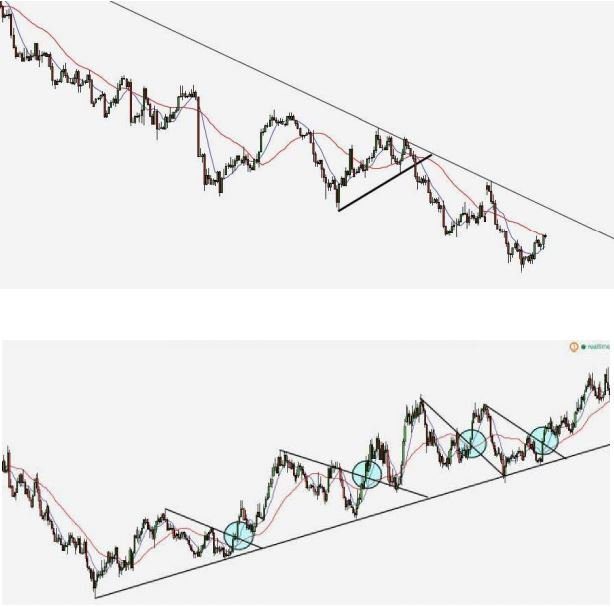
The counter trendlines shown above are the bold lines that fall opposite to the alignment of the overall trend.

Above are some examples of how the counter trendlines will work in alignment with the overall trend.

Trendline Breaks

There are three signals to look out for when identifying a trendline break. We will need some confirmation to get us into a setup. We look for the momentum formed in the previous candlesticks and find a break, retest, and continuation that occurs frequently in the market.

When looking for a trendline break, we need to see a break, retest, and continuation as shown in the diagram above. We have also shown the point of entry you would use to confirm the setup.

As soon as we achieve a break of the minor support created from the initial break, and the candle closes below those levels, we can short/sell. This technique also works in a bullish scenario if we see a descending trendline in play.

Example of a trendline break

We need to look for a break, retest, and continuation in more clarity when trading breakouts. Eighty percent of the time, the market will act this way around trendline breaks. The initial target, for which you should aim in this scenario, is the first point created on the trendline.


Trendline trading conclusion

Trendline trading is a great strategy for Forex traders to utilise. However, it is important not to draw trend lines by forcing them to suit the market. If a trendline does not fit correctly, then that trendline is not valid! Try to understand how each pair in your watchlist reacts to trendlines and journal your findings for future reference.

Share:

Share on facebook Share on whatsapp Share on twitter

TRADE LITTLE AND OFTEN

Trade little and often to make time to rest your mind.

High frequency trading means to trade wisely, not often.

The idea that high frequency trading requires staring at ten screens for ten hours per day is very wrong. Not only is this unhealthy when it comes to making trading sustainable for your mind, it will also yield poor trading results.

If you trade small sums often, you will find yourself being more productive and building a profitable performance. Trading wisely and making the correct decisions does not take a huge amount of time. When trading, you cannot control the market, but you can effectively control your own account.

Take time away from the charts

It can be difficult to progress after a winning trade. When you win, it is instinctual to immediately try to replicate your success. On the flip side, when we lose, we try to chase that lost capital as quickly as possible.

Win or lose, always shut off your computer after a trade and take time to reflect. This a crucial time in which you can build on your trading stamina and become a powerful and logical trader. Resting the mind will only help your knowledge and skills grow.

Not every session will be profitable, so always take time to work on your mind. If you feel stressed out, return to the charts later. Revise and optimise your Forex trading strategies in your time away from the market.

Develop a high frequency trading routine

As previously mentioned, most traders should consider reducing their time in front of screens. In the beginning of your trading journey, you may want to study and back test a lot. Creating a three to four hour daily routine is more than enough time to prepare your trades and keep a handle on your trading account with maximum growth.

When to close profits and losses

The simple answer to closing positions is, ultimately, when your bias changes. In most cases, you want to leave your trades to run, but there will be times when it is best to close out trades early, both when they are making profits and losses. You need to read and focus on the daily candlesticks to identify shifts, and then capitalise where you can. You must follow your risk management rules strictly in order to maximize profits.

Reacting to trading outcomes

When our Forex trading plans fail us, it is normal to experience disappointment and sadness as an initial reaction. Yet, when we start doubting our abilities to succeed in trading, when we start blaming ourselves for factors we cannot control, it is essential to recognise that emotions are playing too big a role in our trading.

Reducing risk and accepting that we will lose at least 20 to 50% of our trades is a part of the mindset of a trader, combined with the positive risks of a reward. A trader must focus on the bigger picture and not get caught up in the details of one bad trade. With a lower trading volume, a possible loss has a larger, more stressful impact, a statistic that works in favour of high frequency traders.

Trust the process and build an emotional structure that can withstand both winning trades and losing trades.

Simple yet difficult

High frequency trading is a simple process on paper, we either buy or sell. Placing a trade and hitting profit can also sometimes be easy. At the same time, enduring losing streaks can lead to depression. This can also lead to the so-called ‘anchoring bias,’ the tendency to define future trades by historical trends.

Some Forex traders tend to ignore the fact that the market conditions continuously shift and spend their time regretting past losing trades. The simple solution to this conundrum is to cover each trade with a low-risk stop loss.


High frequency trading overview

In conclusion, Forex trading is much more than financial knowledge or pure luck. Forex trading is a super complex field, with emotional intellect being a major player. Forex trading and Forex psychology are two parts of the game. Emotional awareness and control in high frequency trading is widely underestimated and should be seriously considered by all Forex traders.

Share:

Share on facebook Share on whatsapp Share on twitter

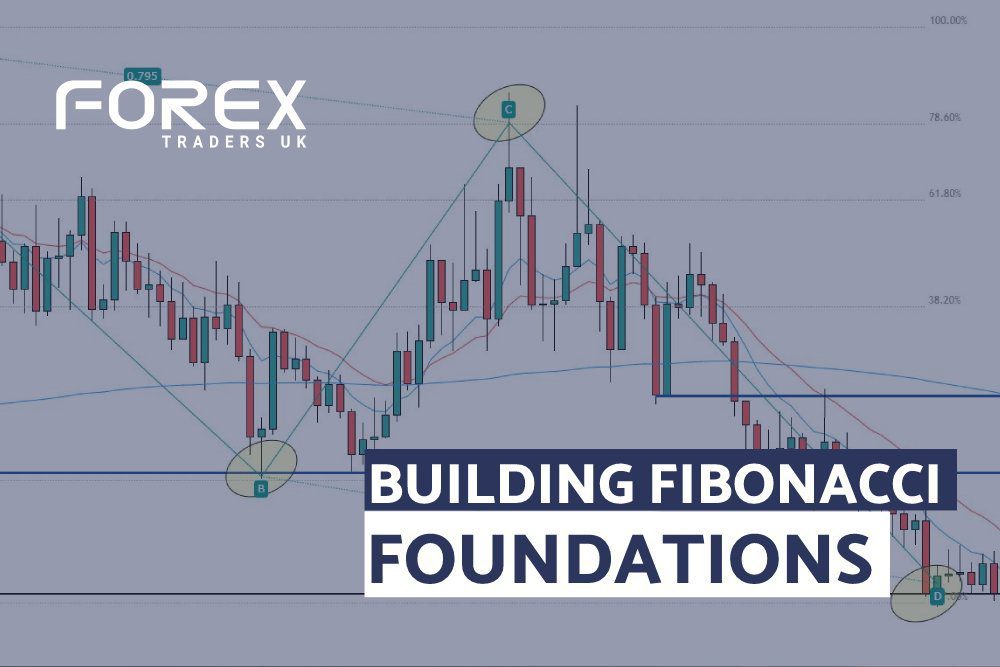
BUILDING FIBONACCI FOUNDATIONS

RELIABLE TRADE SETUPS USING THE FIBONACCI SEQUENCE

What is a Fibonacci sequence?

https://www.youtube.com/watch?v=kellUhpYJjc

Fibonacci was an Italian mathematician who defined a set of numbers. The Fibonacci sequence is a series of numbers in which, after 0 and 1, every number is the sum of the two previous numbers. The sequence produces sums into eternity:

0, 1, 1, 2, 3, 5, 8, 13, 21, 34, 55, 89, 144, 233, 377, 610, 987, 1597, 2584, 4181, 6765….

There are some fascinating connections between these numbers that form the basis of Fibonacci sequence trading. While we cannot cover all of these links in the present post, below are the most important qualities of the sequence that you will need to know when we apply Fibonacci’s principles to Forex trading:

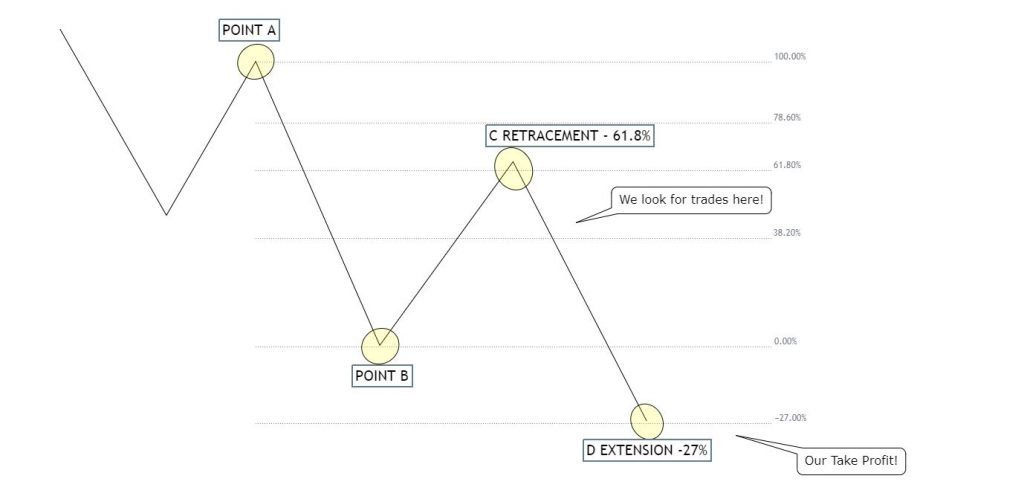
  • If you divide a number in the sequence by the previous number, the quotient is approximately 1.618. This value is used as a key level in Fibonacci extensions as you will soon learn.
  • If you divide a number by the next highest number, the quotient is approximately 0.618. This number forms the foundation for the 61.8% Fibonacci retracement level.

The setup of the Fibonacci sequence

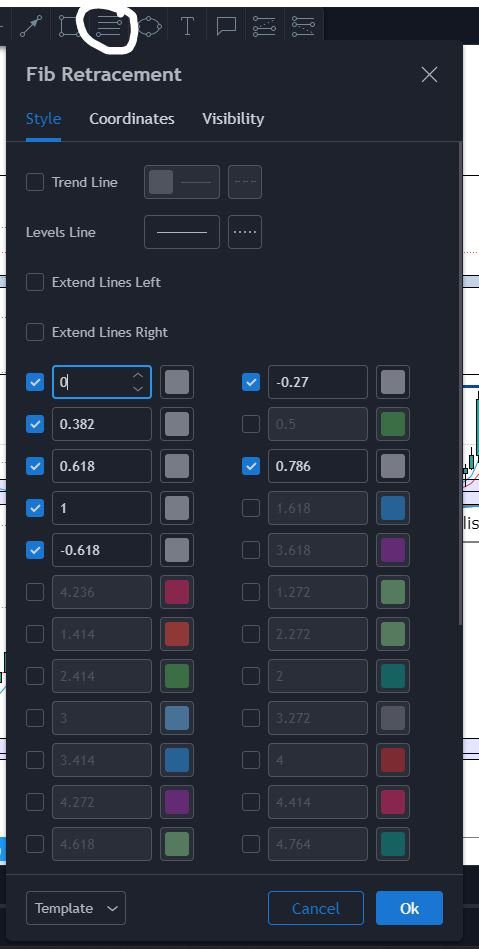
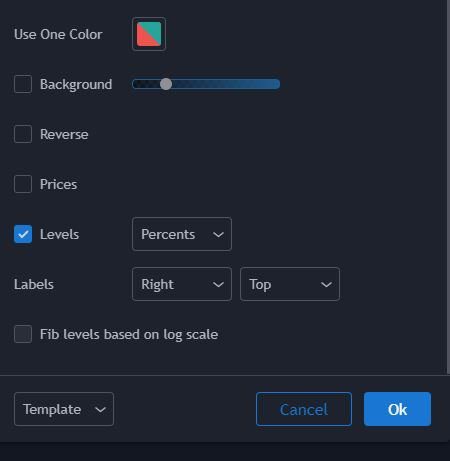
As pictured in the diagram above, these are the numbers we focus on when Fibonacci sequence trading. We use the 31.8% and the 61.8%/78.6% as retracements, and the -27% and -61.8% as the extension levels or targets.

When to use the Fibonacci numbers

You should use the Fibonacci numbers when you have already identified the trend direction and key levels. Both Fibonacci retracement levels and Fibonacci extension levels are used by many traders with different trading styles and timeframes, such as long-term trading, intraday trading, and swing trading.

The tool and levels of the Fibonacci sequence are also used within many different trading markets, especially within Forex trading. The most effective time to use it, in our opinion, is when analysing the daily timeframe.

Use the Fibonacci sequence in both long-term bullish and bearish trends

The Fibonacci sequence is a basic tool. When combined with other Forex trading tools it is very powerful and accurate and can yield high profits. Combine Fibonacci strategy with:

  • Key levels
  • Moving averages
  • Trend direction
  • Trendlines

Conclusion Fibonacci sequence

Hopefully, you feel more comfortable with the basics of the Fibonacci sequence and how it can be applied to Forex trading. Remember, it will work on all timeframes, but it is better to utilise the strategy on the four-hour charts, daily charts, weekly charts, or monthly charts. Yet, this does not mean you cannot apply Fibonacci quarterly.

The Fibonacci sequence is a useful tool to identify where the targets, destinations, and pullbacks are likely to occur in a trend. As previously explained, 61.8% is a key number in the Fibonacci sequence, which is why it is commonly called the Golden Ratio.

Share:

Share on facebook Share on whatsapp Share on twitter

FOREX TRADING COURSE

HOW DO YOU SELECT THE BEST FOREX TRADING COURSE?

As a Forex trader, you need to receive proper education to become successful. More experienced traders continuously educate themselves to grow even better!

When you are a beginning Forex trader, the vast amount of knowledge on the subject can be overwhelming to acquire. There are innumerable Forex trading strategies, techniques, and analysis that can help you excel as a Forex trader.

Once you have reached a baseline level of Forex trading knowledge, you will have a better idea of in which fields you wish to improve or which fields represent gaps in your knowledge. On the other hand, before diversifying, you should also attempt to master the field of Forex trading in which you are a novice in order to become the ultimate Forex trading authority in your field of expertise.

Gain knowledge about Forex trading

A Forex trading course can help you to gain knowledge you need to become proficient. In a Forex course, you learn about topics related to the skills you wish to improve to make you a better trader.

As the Forex market is enormous and heavily traded, the information and Forex trading courses available are numerous. It can be quite difficult to select the Forex trading course that works best for you. You do not want to waste time and money by not selecting the Forex trading course that fits your needs.

Which Forex trading course to select

You can find numerous free Forex trading courses online, but the question is – do they serve you? Firstly, many free Forex trading courses are merely an upsell mechanism to paid Forex trading courses. Consider what content you actually learn in this free Forex trading course.

Secondly, you must be vigilant as to who is providing you with the Forex trading knowledge. In the present social media era, there are plenty of Forex trading ‘influencers’ who claim to have the expertise, but give you irrelevant insights, or worse, completely false information.

Consider the following aspects when you decide to follow a Forex trading course.

What is your basic Forex trading knowledge?

First of all, you need to know what basic trading knowledge you possess. A beginner Forex trader requires an entirely different Forex trading course than an experienced Forex trader. This is why you must clearly elucidate your level of basic Forex trader knowledge.

Do not hesitate to contact the distributor of the Forex trading course to ask about your Forex trading level and your compatibility with the course. A good educator knows exactly the proper audience for their Forex trading course, and can recommend you the Forex course that fits your needs.

It starts all with your learning goals

Secondly, you must clarify your personal learning goals. When you have your goals set, it is much easier to select the adequate Forex trading course for your needs.

What do you want to learn, and when?

When you have the goal to learn about Forex trading, you need to know which aspects of the large field you want to learn. As a beginning Forex trader, it is helpful to gain knowledge of a wide range of strategies, techniques, and analysis methods.

As a more advanced Forex trader, you have the capacity to define more clearly what you exactly want to learn. Therefore, you can make a more educated decision about what kind of Forex course fits your needs.

Besides, it is most important to define when you want to learn how to trade Forex. As we all live busy lives, we have to clearly define a timeframe upfront. Of course, a small 1-hour course is much easier to plan around compared to a complete Forex trading course.

Trading strategies

What Forex trading strategies must be part of your trading plan? When you do not have a clue yet, it is much easier, and select a Forex trading course with which you are acquainted. For example, a course containing the top 10 Forex trading strategies may be helpful.

When you have a clearer vision, for example, day trading is the Forex trading strategy that you want to master, then you focus merely on that. That makes it much easier to select the Forex trading course you need, and you will make much more efficient use of your time.

After all, with a selective choice, you do not waste your time and brain capacity with knowledge of other useless Forex trading strategies.

Technical analysis

The analytic part is most essential to the majority of traders. There are various technical analysis techniques that are typically used for certain trading strategies. Be sure that you select the technical analysis techniques that yield better outcomes for you as a better trader.

Traders’ mindset

A part of Forex trading that is often underestimated is the trader’s mindset. Some people have a natural trading instinct and can handle tons of stress without a problem. Others handle stress differently, but this is something that can be thought as well.

Traders’ mindset is all about psychology, handling defeat, and losses, and keeping to your set strategy, to not getting involved in the emotion of the moment. This does not apply only when you lose, but most certainly when you win as well. You would not be the first trader that goes all-in at a moment of euphoria, and then losing all capital at once…

What do you want to spend?

Another goal you should define is the amount of money you want to spend. With so many free courses around, it might be tempting to not want to spend anything at all. The question is – is this the right decision? Most knowledge comes at a price.

This does not mean that the most expensive Forex trading course gives you the most knowledge. Not at all, and therefore you have to look at the content of the Forex course to see if it brings you what you need.

Get knowledge from experienced Forex traders

Look very carefully about the Forex institute you get your Forex course from. What experience do they have themselves in Forex trading? When a Forex trading course was made by experienced Forex traders, you are far more likely to get value for your investment.

How do you know the level of experience of the authors of your Forex trading course? You must look at the references they give, including previous publications of the traders. On the other hand, you must not stare blindly to this, as there can be highly experienced Forex traders with just a few years of experience. These traders can provide you with most valuable information as well.

Is there the possibility to ask questions yourself?

One success factor of a Forex trading course is the possibility to ask questions yourself as well. Basically, the information you have to learn is the same for everyone, but every single successful trader has their own methodology. That is why the learned trading skills have to be adapted to one’s own trading style.

It is therefore vital that you can ask questions about how one must deal with your own specific information. That it is why it is vital that you are part of a Forex traders’ community where you cannot only ask questions to the educators themselves, but to your fellow traders as well.

Look, therefore, for a Forex trading course that facilitates these qualities. Look if the educators are open for 1:1 sessions and if there is kind of a forum or chat group that you can spar with other Forex traders as ell. In this way you have the best change in become an even better Forex trader.

Are you ready to start trading with a funded Forex account?

Do you want to apply the knowledge you acquired during your Forex trading course on a funded Forex account? Forex Traders UK is passionate about educating traders about winning Forex trading strategies. In addition to articles on technical analysis and technical mindset, we also write about other Forex-related topics. Subscribe to our newsletter to stay informed about our newest blog posts.
Share:

Share on facebook Share on whatsapp Share on twitter

MANAGING OPEN TRADES

TRADING RISK MANAGEMENT WITH OPEN TRADES

Different trading and risk management strategies will lead to different outcomes

https://www.youtube.com/watch?v=jktfNxjeV4E

Not all Forex traders are the same; everyone’s performance is unique. The way that your methods can become more profitable is by understanding and respecting the best risk management strategies for trading. You should primarily focus on managing your trades in a way that minimizes losses and increases profitable trading outcomes.

Be flexible with your long-term trading risk management

You will experience many different challenges when managing your trades. While flexibility is essential, this does not mean you should completely change all of your strategies when faced with a new challenge. You should be adaptive and build upon what works for you. At the beginning, it may appear as if many strategies are not working at all. However, if you persist, you are bound to have a breakthrough and find a system that works for you when managing trades with minimal trading risk management.

Trade risk management with minimal risk

Your primary goal while managing your trading should be to minimize risk. Protect your trading capital while you allow for growth and maintain a healthy risk-reward ratio. There are many Forex trading strategies you can employ to build efficient risk management that will help you to achieve your long-term goals.

Essentially, these approaches will assist in reducing overall exposure to risk and minimise the likelihood of substantial losses as an outcome. Start by risking 1% over the next 4 weeks while implementing effective risk management strategies in your training and analyse the results of your performance.

When to close profits and losses

The simple answer to closing positions is, ultimately, when your bias changes. In most cases, you want to leave your trades to run, but there will be times when it is best to close out trades early, both when they are making profits and losses. You need to read and focus on the daily candlesticks to identify shifts, and then capitalise where you can. You must follow your risk management rules strictly in order to maximize profits.

Managing stop loss orders

Stop losses are not a trendy subject, but using them to restrain your trading like a seatbelt will only help you in the long run and promote optimal trading risk management. Knowing exactly where to set your stop loss initially can be tricky, but the level depends on your style and the situation. By utilising this tool, you can eliminate your losing trades as soon as possible and cut losses at the right time.

Usually, 15 to 20 pips above or below the prior high/low on the respected timeframe is sufficient long-term. Once your stop loss has been set, you should only adjust it to either break even or to profit. Never extend the amount of risk on one trade; always be firm with your stop losses. This strategy can be the key to optimal trading risk management.

Trading risk management overview

Overall, trading risk management is simple: you must earn the right to trade bigger. Managing the building blocks of your basic trading habits will allow you to grow capital in a way that will enable you to trade bigger down the road.

Be patient and enjoy the long road ahead without fear of loss. Stop losses can either aid in your profitability or capture profits. Using them will not guarantee success in trading, but without them, a trading career will be short-lived.

Share:

Share on facebook Share on whatsapp Share on twitter

RANGES AND ZONES

PROFIT FROM TRADING RANGES AND ZONES

Using trading ranges and zones helps us predict how a currency pair will behave, in order to profit from historical prices

https://www.youtube.com/watch?v=bfc7ZHwFOOg

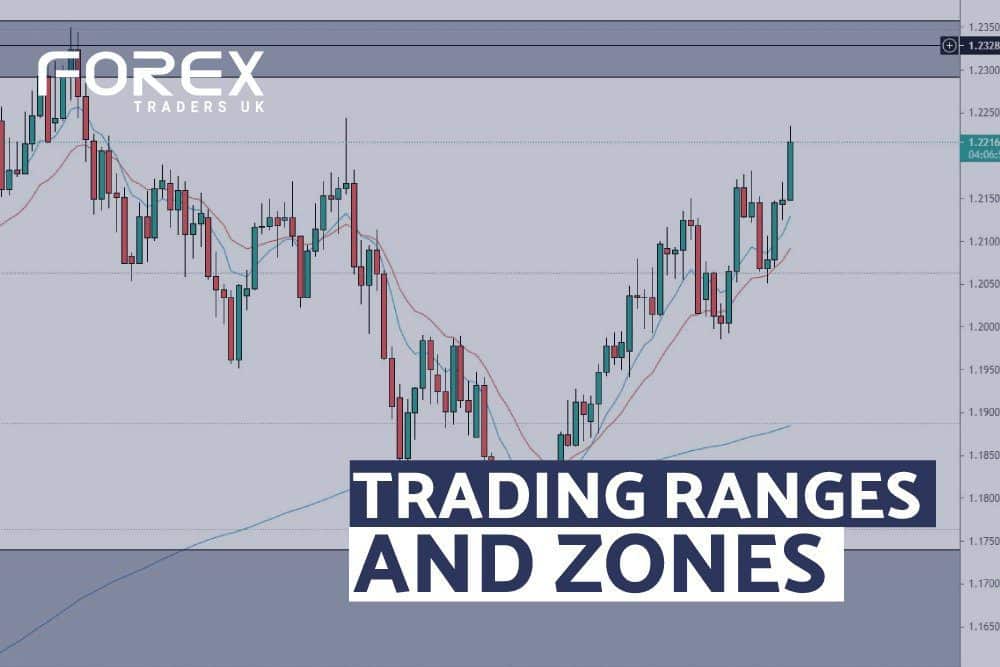
Trading ranges and zones are one of the basic forms of technical analysis, which essentially involves locating areas of support and resistance and using them to identify targets or trade entries.

Trading within rangebound markets or sideways markets is more challenging than trading within a strong trend as it can get quite complex. Using the key levels as support or resistance within a trend is much more favoured when it comes to long-term trading.

Using key levels as areas is far better than always using fixed price lines. We can use the more dynamic areas of trading zones to find better Forex trading opportunities.

Using a line of best fit

It is common for new Forex traders to experiment with support and resistance levels and where to plot them on the chart. You need to consider a few things when it comes to drawing on zones:

  • The number of wicks or touches in a certain area;
  • The time frame you are on;
  • Nearest round levels.

Once you understand the overall trend on the higher time frames, then you can plot the immediate daily support and resistance levels and use them on the lower time frames.

When support becomes resistance, and resistance becomes support

Resistance becoming support and vice versa is an action seen during the evolution of a trend and breakout points. This is due to key levels being broken and crossed by price. Once the new high or low is formed, a movement back to the broken key level will occur before a continuation in the trend direction. These are called retests.

Using key levels to set up a trade and manage risk

Trade setups will mainly use key levels to either place take-profit levels or stop-loss levels. Using them to manage risk will help cut losses short if a key level is broken in the opposite direction of your trade.

Psychological levels and round numbers

Psychological levels are price levels that are round numbers, like 1.2000 or 1.2500. Round numbers can frequently help you as support levels or resistance levels. Some currency pairs even carry the trait of magnetising to these levels when nearing them. When it comes to technical analysis, the higher the time frame, the more important the round numbers are.

Where we can find value with these psychological levels is when prices have resisted or been supported at these points in the past. This can tell us that those levels will carry more significance when being met. Many Forex traders will even use these levels as a stop-loss, so this is something to consider when trading to them.

Conclusion

Trading ranges and zones are important for building structure when you are Forex trading on multiple time frames. If a certain price has been met in the past, then it is likely to occur again. The quality of your support and resistance will form the base layer of good or bad technical analysis.

Forex Traders UK is passionate about educating traders about winning trading strategies. In addition to articles on technical analysis, we also write about technical mindset and other Forex-related topics. Subscribe to our newsletter to stay informed about our newest blog posts.
Share:

Share on facebook Share on whatsapp Share on twitter

MOVING AVERAGE TECHNIQUES

WHAT IS A MOVING AVERAGE?

Moving averages are one of the few indicators that are highly profitable when used alongside a robust structure of technical analysis

https://www.youtube.com/watch?v=ceYKnbo14pg

A moving average is one of the only indicators we use to support our technical analysis. It indicates the current market direction and trends with other benefits.

There are two different types of moving averages, depending on what data they collect and where they sit on the chart. We like to use the exponential moving average (EMA), although some traders opt for the simple moving average (SMA).

Moving average setup

The main setup for the moving averages that we employ is 9 (blue) and 18 (red), which can be used on all time frames and can be implemented as a trade confirmation. We also use the 200 daily moving average (DMA) and 200 weekly moving average (WMA) as a long-term confluence.

Purpose of Moving averages

Depending on how you use them, moving averages can offer both short- and long-term trade direction impulses with early signs of trend continuations and reversals. When rolling averages cross, it can suggest a trend change on that specific time frame. Managing support and resistance or to trade the crossovers is the main use of rolling averages. Some traders may only use one certain moving average, but using multiple allows the further confluence of these cross-over points.

Don’t use them as gospel

Whilst they can be a great tool in a trader’s toolkit, it’s important to use other forms of technical analysis before we place any trades based on moving averages. They should be part of the later tasks that involve breaking down charts as a final confluence to support a trade direction and confirmation on an already solid amount of information. Remember the markets on the higher time frames always leave many clues as to when prices will end up. Use the moving averages to spot the destinations of the currency pairs.

Dynamic support and resistance

As previously mentioned, rolling averages can also be used as dynamic support and resistance. Many moving averages carry more weight than others in the market, and using multiple can show the long-term dynamic areas we should be looking for trade entries at.

Ideally, on the daily and weekly, we want to use moving averages in this way and not on much lower time frames. However, using this indicator on the hourly for crossovers can serve as a great entry confluence for a trade. 

Conclusion

To conclude, moving averages are one of the most popular indicators as they are accessible on almost every platform. Make notes on them when recording your charts and look for correlations with what works for your trading style. As you gain experience with moving averages, you will see that they can be a very profitable tool.

But remember, these are indicators, and all indicators lag the current price, so use them only as final confluences. 

Forex Traders UK is passionate about educating traders about winning trading strategies. In addition to articles on technical analysis, we also write about technical mindset and other Forex-related topics. Subscribe to our newsletter to keep informed about our newest blog posts.


Share:

SUCCESSFUL FOREX TRADING STRATEGIES

SUCCESSFUL FOREX TRADING STRATEGIES

Learn about new Forex trading strategies to become better skilled at discovering excellent trading opportunities

There are numerous Forex trading strategies that might help you become successful as a Forex trader. However, with time, every successful Forex trader develops their own strategy, often combining several strategies into a system that works perfectly for them.

But as a starting Forex trader, you still have to learn about all the Forex trading strategies and understand all the pros and cons of each strategy so that you may discover for yourself what would work best for you.

Many market specialists agree that swing trading, day trading and scalping are the most often applied Forex trading strategies in the world. However, there are more successful Forex trading strategies available that can be applied as well. We will unfold some of these strategies for you.

Position trading

Position trading is a simple Forex trading strategy that involves holding your trading position for a longer period – from weeks to years. This type of Forex trading strategy does require knowledge of macroeconomics in order successfully implement it.

Position traders don’t get nervous about pullbacks or price fluctuations, as the major trend has already been foreseen by the research. With position trading, it is, however, very important to set clear stop out levels to minimize your losses.

The greatest benefit of the position trading strategy is that is does not require a lot of trading activity to be involved with a certain trading position. On the other hand, it does require considerable knowledge of the market in order to foresee a trend.

Grid trading

Grid trading is a type of breakout trading technique. A grid trader wants to benefit from new trends that are just beginning to shape. They will create a ‘grid’ of stop orders above and below the current price level. This so-called ‘grid of trades’ guarantees that you will win no matter what direction the price actually moves.

The great advantage of grid trading is that you do not need to research the market to determine the direction it will actually go in. Additionally, you don’t need to be monitoring developments all the time. On the other hand, there are increased costs to having numerous open positions that you will have to take on as a grid trader. To minimize these costs, you will need to close all orders the minute the trend goes in the opposite direction.

Range trading

In a ranging market, prices tend to move in a sideways pattern; therefore, range trading is typically based on grasping the support and resistance levels. You clearly define the price range of a trade before it reverses and moves in the opposite direction.

Range traders typically use banded momentum indicators to identify the overbought and oversold conditions of a trade.

The main benefit of range trading is that you can capitalize on current trends without needing to predict the market. On the other hand, timing is essential, so following the trend can be quite intense.

Retracement trading

When Forex traders talk about retracement, they are referring to the short price reversion direction within a dominant trend. A retracement trader uses technical analysis, such as Fibonacci retracements, to identify retracements over actual reversals.

These retracement traders know that they must hold their position as the dominant trend will most likely continue. When they realize that the retracement is actually the beginning of a reversal, they will leave their positions.

Retracement trading can help you decide when you have to enter or exit a position. However, it is important that you use several technical indicators like moving averages, candlestick patterns and momentum oscillators to confirm the trend.

Trend trading

Trend trading can be a highly reliable Forex trading strategy that is simple to implement as well. With this Forex trading strategy, you trade in the exact same direction as the current price trend. The only thing you have to figure out is how strong a trend actually is.

You can do so by identifying the exact direction of the trend and its duration. You don’t have to deeply analyse when the market will reverse. Instead, you can easily define a stop out level, or how much variation of the opposite trend you are going to accept. This way, you can benefit from current trends and limit your loss.

The major benefit of this Forex trading strategy is that you do not need to understand what is going to be next, and it is rather easy to implement. On the downside, you need patience as this Forex trading strategy works more for medium- to long-period trades.

News trading

The price of currency pairs is primarily influenced by macroeconomic events. That is why it is so important to follow economic news – to discover the potential impact on currency rates. This way, a new trader can anticipate macroeconomic movements.

Major macroeconomic events that influence currency rates are interest rate decisions by national banks, national economic reports like inflation, trade balances and unemployment rates, and confidence surveys that are often published by banks.

Macroeconomic developments do not always move in the same speed as you might expect, which is why a day trader must choose their momentum very carefully. On the other hand, when you are an expert in reading macroeconomic developments, you can almost predict price developments with certainty.

Want to start trading with a funded Forex account?

Do you want to apply your newly learned Forex trading strategies on a funded Forex account? Forex Traders UK is passionate about educating traders about winning trading strategies. In addition to articles on technical analysis, we also write about technical mindset and other Forex-related topics. Subscribe to our newsletter to stay informed about our newest blog posts.
Share:

Share on facebook Share on whatsapp Share on twitter