HOW TO BUILD A WINNING TRADING PLAN

HOW TO BUILD A WINNING TRADING PLAN

A trading plan is a strategic game that Forex traders play in order to identify trades and trade successfully in specific Forex markets.

A trading plan will assist Forex traders in answering the question, “Why are you in the Forex market?” Some people want to generate extra money, while others want it to be their primary source of income! Whatever your motivation for entering the Forex market as a trader, you must first identify where you stand so that realistic goals may be set and achieved.

Some traders may be content with a few hundred dollars each month. Other Forex traders may aspire to be professional traders and have loftier ambitions. This makes it crucial for them to create detailed trading plans so they can achieve their vision.

A trading plan assists you in determining the type of Forex trader you are, which in turn determines the optimum risk tolerance and strategy for you. Even if you are not interested or skilled in Forex trading, having a trading plan can help you make better educated judgments than if you do not have one.

What Forex trader will you plan to become?

Trading plans assist Forex traders in determining their preferences. Do you prefer trading in the short term or in the medium/long term? Understanding your appetite for risk and risk-taking style enables you to perform effectively. Preferences vary over time, so demo accounts like this one are useful for practising without risking real money.

Because everyone approaches Forex trading differently, one’s risk profile is fundamental. Some take risks naturally and associate them with opportunity, while others are more averse and prefer minimizing the level of risk.

Knowing one’s personal risk tolerance will allow you to change how you manage your investing portfolio accordingly. This way, no opportunities are squandered. There are also no losses incurred as a result of an individual overreacting in anticipation of an undesirable change that was not indicated on the charts.

Find an edge

Every Forex trader should discover their trading edge. A Forex trader who is strong in math and managing stress, for example, may have a shorter attention span than others. Another Forex trader always has the big picture in mind, but struggles with short periods since he can’t handle pressure. As a result, this Forex trader is better suited for longer trades or less volatile Forex markets.

Beginner Forex traders should assess their skills and then select a trading strategy that is appropriate for them. People frequently try to fit themselves into a specific type of trade, but this should not be the case.

Build a specific outline of your trading routines

We can break down the outline for a trading strategy into five major areas:

  • Logic – the reasoning behind your trade and why you believe it will succeed
  • Objectives – your goals
  • Characteristics – when to enter/exit trades, analysis of movement (fixed or trailing stop-loss orders)
  • Risk management – rules that help us protect our capital in case of unexpected market changes
  • Entry rules – to determine where we enter positions

Trade management refers to how we handle the trade once opened, whereas exit management refers to withdrawing profits from losing investments once predetermined targets have been reached.

There are very few traders that immediately discover the best personal trading strategy. Most Forex traders will devote substantial effort to evaluating various trading strategies in a demo environment or by back-testing.

You might get to the point where you discover an effective strategy that has promising results. However, it is doubtful that you would continue with this approach indefinitely without making any modifications. Furthermore, Forex markets are always evolving, so you must as well!

 

Share:

Share on facebook Share on whatsapp Share on twitter

PROFIT TAKING STRATEGIES

SETTING PROFIT TARGETS INCREASE TRADING PROFITS

When it comes to Forex trading, profit targets are vital. Knowing when to get on and off the train is essential to increasing trade profits.

A successful Forex trader must understand their trading strategy in its entirety, as well as their own trading personality. It might be difficult to open and close trades based just on intuition. Most traders benefit from having an exit strategy in place ahead of time in order to maximize trading profits.

It is important to plan out how you will determine your entrance point. It is also critical to define your stop loss and take profit levels. You should stick to them for the duration of your trade. If your plan is not followed, it may make decision making exceedingly difficult.

For example, one may let losing positions run wild in the expectation that prices will turn around, or one might cut winning trades too short out of concern that prices will rapidly shift against a trader.

Importance of profit targets

One of the most difficult aspects of Forex trading to master is psychology. To achieve consistency and enhance your risk management abilities, you must establish guidelines that will assist you in adhering to a self-created strategy.

Profit and stop-loss orders are essential in doing this since they encourage us to adhere to our Forex trading methods more closely. They also notify us when we should make changes to increase trading profits, rather than throwing everything away because things didn’t go as planned the first time around.

If not having these tools working properly was considered “not good,” then why isn’t everyone performing well? Instead, I consider how many Forex traders have such qualities but lack discipline – discipline in locating high-quality setups and constructing a large number of confluences around the exit plan.

Exit examples

Implementing a rigorous set of rules and techniques into your Forex trading plan is one of the best ways to maximize trading profit while minimizing losses. Here are a few popular methods:

Keeping track with charts

Staying current on market trends will help you remain ahead of the game when it comes time to execute these successful actions. Use economic calendars, news updates, and social media platforms like Twitter to stay up to date on real-time announcements that might have a major impact on the markets!

Candlestick patterns

Candlestick patterns can be used to forecast a trade’s result. Candles with names like “bearish engulfing pattern” or “dark cloud cover” should raise an alert because they don’t sound nice.

Forex trading fundamentals

When deciding when to exit a trade, Forex fundamentals play a significant role. The election of Donald Trump may have caused an economic shock, and investors should exit their positions in this case.

The best trade exit strategy

Profitable trading in the Forex market is reliant on your trading strategy and plan. We’ve included some of the most popular Forex trading methods below, but we recommend figuring out what works best for you:

  • You can scale into trades by utilizing different entry points (dollar-cost averaging).
  • Trade breakouts from important price levels, such as support or resistance lines.
  • Once they have reached their predetermined target, close all open positions.


Share:

Share on facebook Share on whatsapp Share on twitter

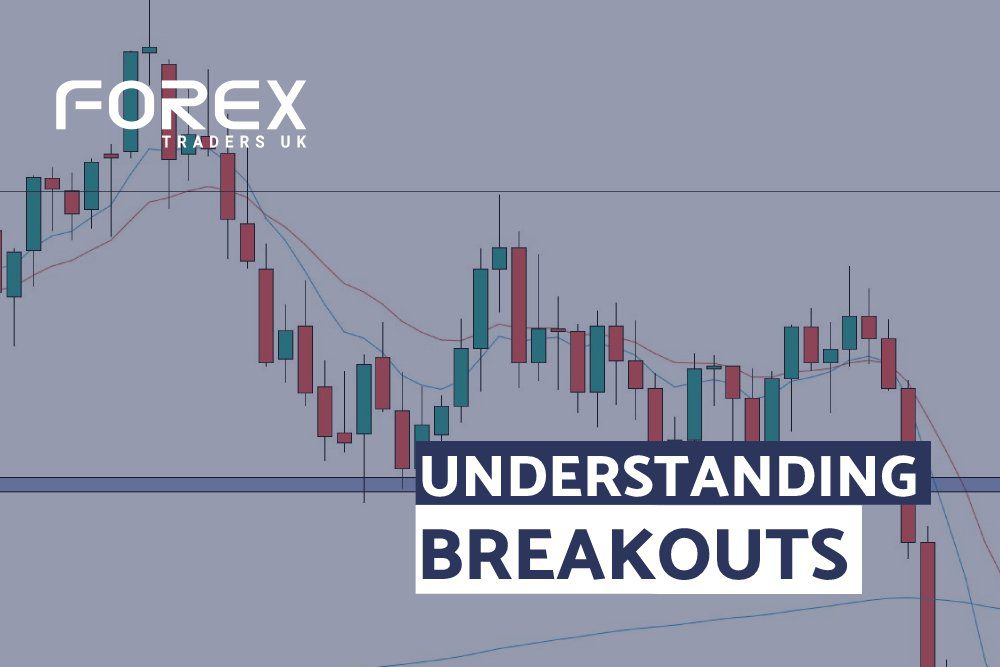
UNDERSTANDING BREAKOUTS

Understanding breakout trading with continuation and reversal breakouts

We look at continuation and reversal breakouts as well as fake outs. It’s always a good idea to refresh your knowledge with some of the basic theories for trading in the Forex market.

Breakouts are, arguably, the most important events in Forex trading. They can not only tell you what is happening on with supply and demand, but also give insight into how traders feel about their investments for long-term or short-term profits.

There are two primary forms of breakouts: continuation breakouts and reversal breakouts, which frequently interact depending on the situation at present.

When you understand the different types of breakouts, you’ll be able to make sense of things that may be confusing to new Forex traders. Beginners don’t usually understand why prices change suddenly and incongruently with previous trends seen over days, weeks, or months; if it’s an upward continuation, the price must be higher than before.

For Forex traders, a change in sentiment may create a lot of excitement and opportunities to earn some quick pips and participate in overall trends.

Again, as with most technical tools, we must look left to see how the price has behaved before in order to determine the targets or breakout lengths. With added confluences, using other tools can increase the structure and clarity of your targets. The more details and confluences, the better!

Continuation Breakouts

It can be difficult to discern if the market is going to make another move during periods of range-bound movement known as consolidation. This phenomenon occurs when buyers and sellers analyse the moment and how to act. So after a long rally in one direction, you might expect some breathing room, or continuation breakouts, across other parts of the stock’s chart. Not simply an immediate reversal breakout that crashes as if nothing had happened!

Forex traders are constantly in search for the next big trend. If traders see an initial trend and it continues in that direction, they will continue to push prices as a “continuation” of what first appeared to be the best decision. This is referred to as a “continuation breakout”!

Reversal Breakouts

The trend is the sole difference between continuation and reversal breakouts. A long, steady uptrend precedes a reversal break, which slows as it approaches its peak.

A typical pattern would be an extended period where prices have grown in a more gradual climb or even gone sideways before they spike up suddenly, which can indicate strength on both ends of the trade as well as potential exhaustion among buyers who are less likely to continue buying aggressively after such prolonged periods without much movement.

False Breakouts

False breakouts occur when price breaks past specific levels but does not continue to move in the same direction. Instead, you could observe a short price spike followed by a return to the trading range.

False breakouts may be deceptive, leading traders who were on the lookout for an entrance to quickly exit the trade with no profit.

How do you enter on a breakout? In this situation, you should wait for the price to retrace back to its original level before determining whether it will bounce up or down. If you’re trading upwards, wait for an uptrend to form before entering; if you’re trading downwards, be sure your trade will bounce shortly before entering (and know what direction the trend is moving in).

To make the most out of your trades, wait to see if a breakout will continue in the same direction before entering. The drawback is that sometimes prices move quickly without hesitation, so traders might miss out on some opportunities by waiting too long.

Share:

Share on facebook Share on whatsapp Share on twitter

OUR DAILY TRADING ROUTINE

Our successful daily Forex trading system

Your Forex trading strategy is important! Here we share our daily trading routine successfully used for over 7 years in the Forex market.

Most Forex brokers will allow you to open a FREE Forex demo account. These “mock” trading accounts have all of the capabilities of a “real” account and are used by many Forex traders to test their trading methods before risking real money in an expensive trade gone wrong!

The Forex demonstration account allows you to learn about the mechanics of Forex trading for free and experiment with your trades risk-free.

It may be tempting to begin trading with real money, but the best thing you can do for yourself is to demo trade until you develop a lucrative strategy before determining if a career path in Forex is a good fit for your goals and lifestyle in the long run.

Forex Trade Execution

If you want to be successful in Forex trading, we recommend not only recognizing potential trades, but also being able to correctly set up the trade when it is time to enter. Keep the following aspects in mind as you prepare your next move:

Entry

Before determining whether or not to take a position, you should have a basic understanding of the dynamics of the currency pair and what other Forex traders are watching. Furthermore, keep an eye on volume levels since they may sometimes signal price movement or whether additional supply is coming into that particular market, causing prices to fall even further (or vice versa).

Stop Loss

Set a stop-loss order near support to ensure that any losses during the Forex trade do not exceed your risk tolerance level; similarly, set profit targets above resistance areas.

Enhance your edge using your trading journal

So, if you want to be a consistently profitable Forex trader with a consistent set of behaviours – such as avoiding trading when at a disadvantage or doubling down on what works – it’s critical to go review your previous trades. Patterns that are losing money may thus be stopped immediately, while the most profitable trades may remain intact.

End of day data

Successful Forex traders have a unique trading strategy that focuses on end-of-day data. A s a Forex trader, you must focus on the daily chart time frames, then wait until the Forex market closes each day to analyse the watch list.

Some may call it laziness (they are wrong!), but this is what Forex traders consider part-time trading. Reduced screen time allows you to clear your mind and live life outside of the Forex market, which enhances your overall performance over time!

Share:

Share on facebook Share on whatsapp Share on twitter

LEARN ON DEMO ACCOUNTS

Learn Forex trading first on a Forex demo account

It may be tempting to begin trading with real money, but the best thing you can do for yourself is to demo trade until you develop a profitable strategy before determining if a career in Forex is a good fit for your goals and lifestyle in the long-term.

Most Forex brokers will allow you to open a FREE Forex demo account. These “mock” trading accounts have all of the capabilities of a “real” account and are used by many Forex traders to test their trading methods before risking real money in an expensive trade gone wrong!

The Forex demonstration account allows you to learn about the mechanics of Forex trading for free and experiment with your trades risk-free.

It may be tempting to begin trading with real money, but the best thing you can do for yourself is to demo trade until you develop a lucrative strategy before determining if a career path in Forex is a good fit for your goals and lifestyle in the long run.

Don’t trade your prop account until you are winning

You’ve probably heard the adage: “don’t boil your frog too quickly”. If you’re Forex trading live using a Forex demo account and consistently losing money, you should continue trading demo before creating an actual money-making account.

Every Forex trader’s success begins on day one by properly laying the foundation through simulated training.  When they feel confident enough in themselves when profit or gains were made online with virtual cash, only THEN should they consider moving on to real-life transactions. As we all know, Forex markets don’t always move the direction we want them to, and it is easy to be caught up in negative emotions.

Build a sample of demo trades on one currency pair

The key to success is selecting the appropriate currency pairings with which to begin Forex demo trading.

To begin, stick to one of the majors, like GBP/USD or USD/CAD, because they are the most liquid and have tighter spreads. This reduces the possibility of slippage when it comes time to execute an order in real-time market conditions without incurring any margin calls.

Next, work on refining your trading methods by developing good habits before diving in head first and risking money that isn’t yet yours. Your money should be saved until after you have had enough practice.

Finally, have experience dealing with different Forex markets so that you can adjust accordingly to what the current data suggests about trends from previous events.

Inability to let go of trades or directions

The markets are complicated and difficult to navigate, especially if you don’t recognize how your own biases might influence your decision-making. Fortunately, there are common flaws in our thought patterns that we should be aware of at all times so that they don’t catch us off guard!

When increasing your confidence in the charts, it’s a good idea to be able to emotionally distance yourself using a Forex demo account and its virtual funds.

Share:

Share on facebook Share on whatsapp Share on twitter

WHY TRADERS FAIL

WHY DO FOREX TRADERS FAIL?

Click to watch analysis video

Even after a few unsuccessful trades, successful traders stick to their strategies. Avoid repeating mistakes in the future and trade smarter!


Risk management and risk distribution

If you are careful with your trades, they can be a great way to grow your money without too much risk. For example, if you have £10,000 in trading capital and want the maximum loss per trade to be 1%, that means every £100 or less is spent on an open position. This should give traders some breathing room when making big decisions about their Forex strategy while maintaining enough investment exposure to not miss out on all of the fluctuations in the Forex market.

Every trade has some level of risk, but with the correct technique, you can manage this risk. You will have no issue trading for profit if you know what risks are possible and how to assess them.

The only thing you need be concerned about while engaging in these types of trades is not losing sight of liquidity (how quickly a market reacts) or leverage (using more money than necessary). Even with solid judgment and good practices, like with any worthwhile endeavour, some risk is unavoidable!

Number of instruments and trades

If you want to be successful in Forex trading, you must take your time and concentrate on one currency pair at a time. Focusing all of your efforts on one pairing will lead to greater familiarity with not just that particular pair but also any others.

We believe you should start with the fundamentals. Instead of focusing on dozens of currencies, concentrate on a few that are straightforward for beginners to understand, such as GBP and EUR.

For those who are still struggling with Forex trading or any other financial investment, the focus is not profits; it is process development, and simply getting started can be intimidating enough!

Learning from mistakes

It’s difficult to learn from mistakes when we refuse to recognize we made them. Instead, Forex traders may place blame on the market or other external factors for their losses. Confrontation is, nevertheless, a necessary part of the process.

When you make mistakes, it may appear like you are unlucky. Those situations, however, are opportunities to learn and grow from the experience. Mistakes show us what we value in life, our likes and dislikes, as well as which aspects of ourselves need to be improved or strengthened! Making a mistake would be less challenging if people would embrace mistakes for what they are: learning experiences, not failures!


Share:

Share on facebook
Share on whatsapp
Share on twitter

4 IMPORTANT TRADING TOOLS

4 Important trade tools for Forex trading

For Forex traders, Forex trade tools provide some of the most valuable trading insights. Learn about a few Forex tools that are effective for this form of currency trading and how they may help any trader succeed!

The Forex market is a thriving global economy that moves trillions of dollars every day. The trading platforms enable you to trade this vast market with all of its ups and downs, as well as your Forex needs.

For Forex traders, the Forex market may be regarded as a large puzzle. Everyone can learn something from it and trade on it! With trading software at our disposal, we can keep an eye on markets from anywhere in the world.

Regardless of where life takes us or what time zone we happen to be in. When open trades are due back home, simply pull out your smartphone or tablet computer while sipping margaritas poolside beneath an umbrella overlooking the ocean.

While the platforms are popular and provide excellent employment opportunities, it is critical to step away from them while analysing charts on a technical level. Only professional charting software such as Trading View and Sierra Charts should be used for charting tools and drawings.

Financial calendars

The economic calendar is a trading tool that informs you when major events are scheduled to occur and how these events may impact the currency market. The data contains information on employment, inflation, and the dates of central bank meetings throughout the world. In December of last year, for example, many traders were anticipating a report from Japan that would show unemployment rates at their lowest since 1969.

What do you think will happen if this turns out to be the case? Economic calendars are a must-have for Forex traders these days. The information contains employment and inflation figures, as well as GDP and central bank meeting dates.

Trading journals and calculators

Keeping a trading journal is an excellent way to collect data from both profitable and unsuccessful deals. Although some businesses provide software that will supply you with this information automatically, many traders still choose to do it personally for the sake of their business and personal habits.

Time zone converter

When it comes to currency pairings, certain trading sessions, periods, and days are better than others in terms of liquidity. Knowing what those times are in your local time zone gives Forex traders a big edge since it helps them to take full advantage of the best trading opportunities.

Certain trading sessions occur at different times based on each trader’s location, thus understanding when they occur is essential for maximizing profits.


Share:

UNDERSTANDING IMPORTANT TRADING METRICS

Understanding important trading metrics for maximum trading profit

The majority of traders do not utilize account metrics to analyse their trading performance. Not using them is essentially throwing money away. In this blog post, we discuss some of the most important metrics we use.

For most Forex traders, net profit is the ultimate measure of success, but it doesn’t tell us everything. Net gain provides no evidence of how much time or how much money was spent, which is crucial information for evaluating performance.

Comparing traders with different profit margins and time frames might be difficult at times. Take a  look at the following scenarios: Trader 1 posted a profit of $20k after two weeks of trading. Trader 2 on the other hand, after 6 months of trading Forex, generated a net profit of $80k. Who wins?

If we only consider how much money was made in those six months, trader 2 is performing better, but when you examine both the amount earned and the time it took this individual to complete all of those trades, trader number one obviously wins since he managed his trade correctly in much less time!

Profit factor

The profit factor refers to the amount of capital that was earned, compared to the capital lost when Forex trading. It’s very common to incur losses over the course of a trade and make profits as well. What matters is whether you’re making more than you are losing in the long run over a large sample size of trades.

To calculate this, divide your total winnings by your total gross loss. Congratulations, you are a winning trader if it generates an acceptable percentage! This figure will be automatically calculated for you in your dashboard within your account metrics for your funded Forex trading account.

It’s critical to understand how your trades are performing as a Forex trader in order to avoid taking on too much risk or pulling back when the Forex market is at its most profitable. By dividing a trade’s profits by all of its losses and multiplying by 100, the profit factor index is calculated. As a result, anything above one is regarded as high performance, while anything below one indicates that you are not doing well for yourself.

A factor of 1.0 (and below) refers to poor performance, while a factor of 2.1 and up is excellent. The range (1.1-2) depicts average trade performances that vary depending on the skill level of the Forex trader or their trading strategy for each type of investment they deal with at that time. Due to external factors such as competition from other Forex traders whose success may have been exaggerated, it will not always be successful. This affects market pricing and may quickly derail trades.

Win ratio

The win ratio is a useful metric. The ratio denotes the number of winners versus losers during a specific period of time, usually a day or week. To calculate the win ratio, simply divide the number of winning trades by 100% of all trades that occurred during this time period (winners/losers).

The majority of beginning Forex traders make a common mistake to assume they need 50+ percent on their trade ratios to be profitable, but most traders can do well with less than 25%.

If you want to get as close to perfecting any percentage as possible, you can utilize one of two methods: Before adjusting percentages, first determine what point would have been regarded as profitable.


Average win vs average loss

The win ratio represents the number of winners vs. losers in a given time frame, typically one day or week. To calculate the win ratio, just divide the number of winning trades by 100 percent of all trades that occurred during this time period (winners/losers).

The average loser and the number of losers a trader has in their portfolio can help determine how great an impact one loss could have on your overall profits. If you’re averaging 3x more winners than losers, for example, it could be safe to add another strategy like scalping, because losses won’t have as much of an impact on your bottom line.

If you’re not doing so well with this metric, or even worse, if you’re losing money on every trade, strategies with higher win rates are probably better for individuals who don’t want to take huge risks but still want to earn impressive profits.


Expectation

The riskiness of a trading strategy may be determined by the expectation of your trading profit. When you multiply the average loss and expected value together, you obtain a “expectation” measure that informs you whether or not it’s worth it to take this risk.

The measurement ranges from 0 to 0.4. It indicates that investment will almost certainly provide a negative return, with 0.5 being acceptable but anything below 1 indicating that there is no reason to be optimistic. The investment may only break even over time, but returns above 1 are healthy and have upside potential.

The risk of an investment is determined by the expectation metric (high or low). Because changes in the Forex markets are impossible to foresee, investors must carefully evaluate the expectancy of their trade against the risks of a negative outcome. Even when there is no market turbulence, you should seek trades with positive yields while assessing them. Those are investments most likely to come out ahead regardless of how events unfold!

Duration

The holding time is important to traders because it determines how long they are “locked” into a trade. If your trades last for weeks or months, then the total amount of profit you will make in that timeframe might not be as high because your capital cannot be reallocated elsewhere while committed to this trade.

It’s also worth noting that day trading and swing trading have different standards for their respective lengths. However, they share one common trait: more flexibility for the investor than those who prefer longer-term ventures.

The holding time can determine how much money a Forex trader makes over an extended period since they do not have access to the funds during this duration, but only after completion of said transaction. Holding time, or the amount of time a trade is open, is not only an indicator as to whether the trade was successful, but also the potential profit.

When your capital is locked away from other trades, another opportunity may arise and if you do not take advantage, all potential profits will go to waste!

Holding time limits the number of simultaneous trades due to its effects on net profit, both limiting financial gain and making trading more difficult by consuming valuable resources such as capital and mental energy.


Share:

Share on facebook Share on whatsapp Share on twitter