Women In Business: 5 Of The Best Female Traders

Financial trading is the great equaliser, as anyone who has knowledge, research, skillset and discipline to navigate the markets has the potential to make money.

The only barrier that is in the way of potential success is access to capital, something we try to fix throughout our instant funding prop firm accounts.

Historically, however, this access to capital allowed for the establishment of a glass ceiling that prevented a lot of promising female traders from rising the ranks, as seen in books such as Liar’s Poker by Michael Lewis and Tom Wolfe’s The Bonfire of the Vanities.

Talent is often undeniable, and there are countless female traders who have shattered the glass ceiling and become huge successes in the process. Here are five of the most famous, successful and influential.

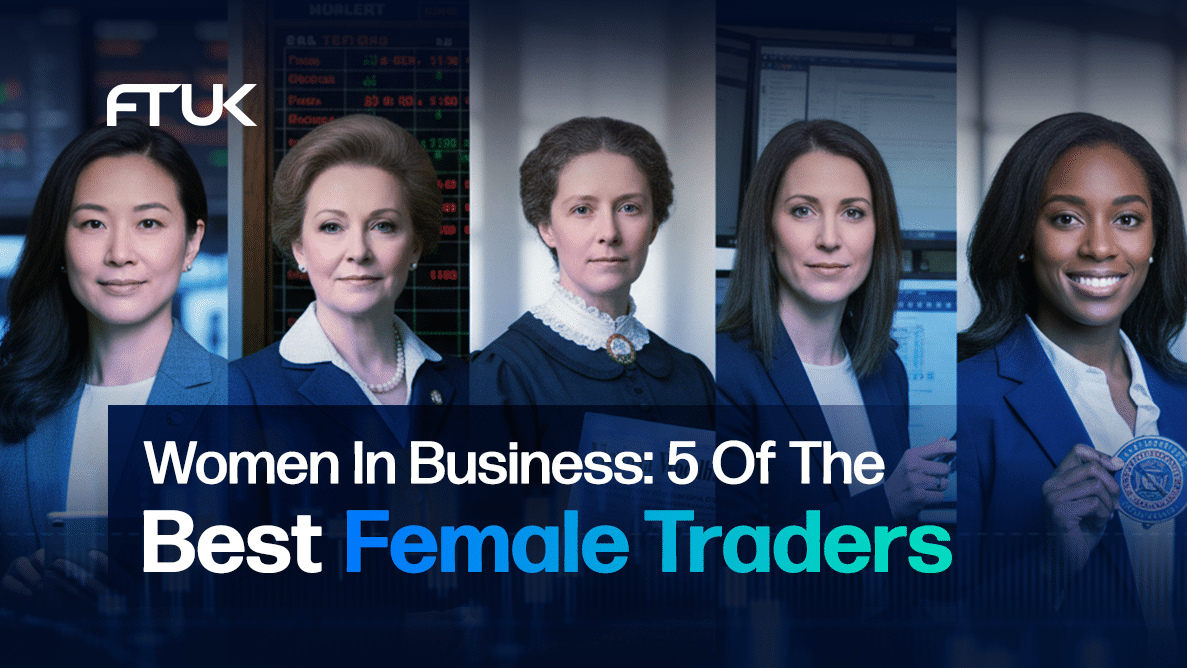
Kathy Lien

One of the greatest forex traders of all time, Kathy Lien was a prodigious talent who started her Wall Street Career at the age of 18, having graduated from the Stern School of Business in New York.

An advocate for fundamental analysis, the secret to her success has been studying wider macroeconomic trends whilst combining that with technical analysis to find the entry and exit points for trades with a high probability of success.

She has also written several best-selling books, with Millionaire Traders being particularly beloved as an inspiration for many people from all walks of life to give trading a try.

Muriel Siebert

The “First Lady of Wall Street”, Muriel Siebert was one of the most critical voices in the history of the New York Stock Exchange and faced every type of institutional sexism it was possible to face at that point, but triumphed to become one of the most important traders and Superintendent of Banks during her era.

Her biggest achievement, however, was her advocacy for women and other voices that had been silenced by a male-dominated sector. She argued and was vindicated time after time that a plurality of voices is essential for the future of the financial sector.

Given that the NYSE did not even have a women’s bathroom until 1987, the scale of the progress she blazed a trail for is almost impossible to truly measure.

Victoria Woodhull

The first stockbroker in Wall Street history, Victoria Woodhull was a tireless advocate for women’s suffrage, civil rights and the free love movement, who leveraged her talent for trading into materially improving the lives of women and advocating for beliefs that were inexplicably controversial at the time.

Having made a fortune as a clairvoyant, she would, alongside her sister Tennessee, open a brokerage firm with the help of railroad magnate Cornelius Vanderbilt, proving to be successful in a field that struggled to comprehend the existence of female stock traders.

She would, ironically enough, also publish the first English edition of The Communist Manifesto and even run for president in an extremely influential life.

Linda Bradford Raschke

One of the highly influential New Market Wizards, Linda Bradford Raschke was heralded as one of the finest technical analysts of her era, taking advantage of her particular skill at short-term trades to craft a highly successful track record even during particularly volatile market periods.

What makes her career particularly impressive is that her success has been tied to short-term technical analysis in the commodity and futures markets, with a hit rate that has made her hugely popular in the trading world.

With a reputation for consistency across a 45-year career, Ms Raschke has cemented her status as one of the greatest financial traders of all time, and like many who have come before her, she has provided a wealth of insights into financial trading alongside actionable advice that has inspired generations of other traders.

Lauren Simmons

Known as the “Wolfette of Wall Street”, Lauren Simmons became the youngest ever full-time female trader on the New York Stock Exchange at the age of 22, as well as only the second African-American woman in such a position.

Her particular story, which began in Georgia with a genetics degree and ended with a job in one of the most prestigious trading floors in the world, is one that showcases the power of pursuing one’s goals. Her determination and the motivation it provided her to improve are the reasons she achieved what appeared to be the impossible.

She left the position after a year and a half to advocate for diversity, empowerment and financial wellness, but she also represents the possibilities that are available for people willing to invest in themselves, both on Wall Street and through the opportunities that came afterwards.

What Lessons Can Traders Learn From The Wolf Of Uzbekistan?

In every trading community, certain names rise above the rest and become legends. It’s likely that you’ve heard of George Soros, AKA “The man who broke the Bank of England”, and maybe even his less famous pal Stanley Druckenmiller (who some might say was the brains behind Soros’ gigantic $1 billion scoop in 1992). 

However, one name you might be less familiar with is Shohjaxon Eshniyozov Akmal Ogli, better known as “The Wolf of Uzbekistan.” He’s definitely under the radar in mainstream media, but among the trading community he is a source of awe and inspiration. 

His rise from a young and inexperienced trader in 2012 to a figure celebrated for remarkable results has been told and retold across trading forums, news sites, and social media. Some of the numbers attached to his story are almost too good to believe — rapid growth, small accounts turned into huge balances, and claims of long winning streaks. 

Whether every statistic checks out or not, what matters is the set of principles behind his journey. And for traders working with prop firms and instant funded accounts, those principles are more relevant than ever.

How did the Wolf get started?

The Wolf of Uzbekistan didn’t begin with deep pockets or institutional backing. He started small, made mistakes, and learned through trial and error. That early period of losing and adjusting built the foundation for the success that followed.

For funded traders, the lesson is clear: you don’t have to hit home runs from day one. What matters is getting comfortable with your strategy, respecting the risk rules, and building consistency. Every small trade is an opportunity to sharpen your edge.

What strategies did the Wolf use?

According to his story, Shohjaxon eventually built a unique blend of technical, mathematical, and fundamental approaches. It wasn’t a “holy grail” strategy, but a system he believed in and refined over time.

This matters because in the world of prop trading, you can’t survive on luck or gut instinct. Firms set strict risk parameters. You need a plan that can generate returns while staying within those rules. Define your timeframes, instruments, and risk levels. Build something repeatable, not just exciting.

How did the Wolf learn forex?

It’s often said that he read over three hundred books on Forex, devouring everything from technical manuals to economic theory. Whether or not that number is exact, the message is powerful: success comes from self-education.

Markets never stand still. Central bank policy shifts, volatility regimes change, technology evolves. If you want to thrive as a funded trader, you must treat learning as a lifelong pursuit. The best traders are always students, always refining.

How did the Wolf avoid losses? 

Perhaps the most striking part of the Wolf’s legend is his supposed ability to avoid losses for long stretches while compounding his account. Even if the numbers are exaggerated, the principle behind them is what matters most: strict risk control.

For prop traders, this isn’t optional. One blown drawdown limit can cost you the account. That means sizing positions carefully, respecting stop-losses, and understanding that capital preservation comes before chasing profits. You can’t compound what you’ve already lost.

Consistency beats flash

There’s a natural attraction to spectacular returns. Turning a thousand dollars into millions in a short span makes for great headlines. But in reality, consistency is the true marker of success — especially when you’re trading with someone else’s capital.

Prop firms don’t reward reckless risk-taking that happens to pay off once. They want traders who can deliver steady performance month after month. That means aiming for controlled growth, not lottery-ticket trades.

The psychology of persistence

The Wolf’s journey also highlights the mental battle every trader faces. In the early years, he had to endure frustration, setbacks, and doubt. The turning point came when he developed the resilience to keep going.

Funded account trading can be equally tough on the psyche. You’ll face losing streaks, pressure from performance targets, and the temptation to break your own rules. What separates successful traders is the discipline to stick to the plan and the ability to bounce back without revenge-trading or freezing up.

Transparency and credibility

Part of the Wolf of Uzbekistan’s reputation comes from his willingness to share his results openly. Transparency builds trust.

In trading, credibility is everything. For your own journey, that may mean keeping meticulous journals, tracking results, and being honest with yourself about what works and what doesn’t. If you share results with a prop firm or audience, back them up with real data. Legends are built on stories, but real careers are built on trust.

Adapting to change

Markets are never static. Strategies that worked yesterday may stop working tomorrow. Shohjaxon’s story suggests a willingness to refine and adapt over time — a key factor in his longevity.

As a trader, you must be ready to evolve. Monitor your performance, know when a strategy is decaying, and don’t be afraid to pivot. Flexibility often matters as much as discipline.

Scaling without losing control

The hardest part of success is often handling growth. Scaling up too quickly has ruined many traders. The Wolf’s story shows that, however rapid his rise may seem, it came with structured scaling.

For funded traders, the same principle applies. Respect the firm’s scaling plans. Increase size gradually, in proportion to your proven performance. Keep your risk profile steady as you grow.

Reputation and longevity

Finally, the Wolf of Uzbekistan reminds us that trading is about more than money. Reputation matters. Legends are celebrated because of results, but they endure because of credibility.

For anyone trading with a prop firm, your reputation is on the line every time you open a position. Be ethical, be transparent, and think long term. Success isn’t just about this month’s payout — it’s about building a career that can last years.

Putting it all together

So, what can a solo trader or funded account holder take away from the Wolf of Uzbekistan?

Start small, learn fast.

  • Build a system you can trust and refine it constantly.
  • Treat risk management as your foundation.
  • Value consistency over excitement.
  • Invest as much in your mindset as in your analysis.
  • Be transparent with yourself and others.
  • Adapt when conditions change.
  • Scale responsibly.
  • Protect your reputation.

The Wolf’s story may be wrapped in hype, but at its core lies a set of timeless lessons. They’re the same lessons that every successful trader, past and present, eventually learns.

You don’t need to chase sensational returns to build your own success story. What you need is discipline, education, and consistency. Follow those principles, and while you might not become a trading legend overnight, you’ll give yourself the best chance of achieving the kind of success that lasts.

Forex Trading: All You Need To Know About Cable

If you’re relatively new to forex trading, you might have heard people talk about “trading cable” and wonder what that means. We’re here to enlighten you and not only explain what cable is in the context of Forex, but also why it’s so important. 

So, let’s get started.

What is cable in forex? 

Cable is a slang term used to describe the GBP/USD currency pair. The name originates from the telegram cables that lie under the Atlantic Ocean, connecting the UK and the US. When these cables were first laid, connecting London to New York, they were the primary means of sharing currency quotas and other forex-related data.

So, the term cable stuck in relation to this specific currency pair – and it’s always used to describe this pair. It is never applied to other currency combinations. 

What does cable up and cable down mean?

This is important if you’re listening to trading advice from others so you understand which way the currencies in the pair are moving!

When someone says “cable is down” they are referring to the performance of the British pound against the US dollar. So, if cable is falling, that means the US dollar is rising in value compared to the British pound. 

Therefore, if “cable is up” or rising, that means the British pound is rising in value against the US dollar. 

At the time of the mini-budget from Liz Truss’s conservative government in 2022, cable fell significantly – so the pound lost value against the dollar. In fact, it hit an all-time low in the wake of this announcement, although cable has risen since then. 

Why is cable such a popular currency pair?

Cable is one of the most popular pairs for forex traders because it is highly liquid and very widely traded. That means there are frequent fluctuations in its price, which can allow forex traders to make good returns – if they bet the right way. 

It is also the third most widely traded currency pair traded on forex markets after the euro and US dollar, which is the most traded pair, and the US dollar and Japanese yen, which sits in the number two position. 

Given the economic importance of both the UK and US economies on the world stage, it is little surprise that this currency pair is so popular. Its historical nature also helps as it is a well-established currency pair allowing traders to look at a great deal of data from previous years to help inform their trading decisions. 

What influences the value of cable?

As we saw with the impact that the Liz Truss budget had on the value of GBP in the cable pair, political decisions can have an effect on the value of cable. But this is not the only influence that has an impact that traders need to be aware of.

Central bank decisions – in this case either from the Bank of England or the Federal Reserve – can also affect the value of cable. The economic outlook for both countries can also push cable up or down, as can data around the gross domestic product (GDP) of either nation, unemployment figures and inflation. 

The US-UK trade balance also has an effect, which is why this is such a dynamic currency pairing and one that experiences so much movement in both directions. This also means that you need to pay attention to various sources of news to help you predict the direction of cable at any given time. 

How can I trade cable? 

There are several ways in which you can trade cable on forex markets, including through a broker, with contracts for difference (CFDs) and through spread betting. 

In all of these types of trading, you will take a position (or make a “bet”) on whether one currency will rise or fall against the other without ever actually buying or selling US dollars or British pounds. 

Although this minimises the risk in some respects, it’s important to remember that forex trading is leveraged, which means that you could lose more than you initially “bet” on a trade. However, the upside is that this means you can gain substantially more with less capital, which is why it’s such a popular way to trade forex.

How will I know I’m ready to trade cable? 

When you think of it in this way, and given all of the factors that can affect the value of cable, it might feel more daunting than you thought to start trading. However, there are ways in which you can build your skills and knowledge as a forex trader without having to risk any money. 

Our one step evaluation program will help you trade with confidence. Rather than diving straight in, you can undergo a test to prove your forex trading skills before being fully funded. As a one step evaluation prop firm, we require you to achieve a ten per cent profit target and demonstrate disciplined risk management. 

When you can do that, you can become a fully funded forex trader at a rate that suits you. 

However, if you still feel like you need more time, our two step program could be more suitable. This will help you to hone your skills and develop consistency within your forex trading activity before you become fully traded. 

Similar to our one step program, we require you to hit certain milestones with your trades. In this instance, that’s a ten per cent profit with a ten per cent static drawdown. In phase two, we’ll expect you to hit a five per cent profit within the same risk parameters. 

We’re so confident that this will help you become a balanced forex trader that we’ll refund your evaluation fee as part of your first level two payout. 

So, there are many ways in which to start trading cable and getting into the forex market, whether you’re ready to go straight for instant funding or whether you want to take your trading a little slower to learn the ropes and get your head around how this currency pair moves. 

Amsterdam… The World’s First True Forex Market!

When you think of world-leading stock exchanges in the 2020s, you likely name places like the London Stock Exchange (LSE), the New York Stock Exchange, the Tokyo Stock Exchange (TYO) and the Nasdaq. But do you ever add Euronext Amsterdam to that list?

If the answer is no, then perhaps you should given that it was the world’s first stock exchange and the world’s first true forex market. 

The birth of the Amsterdam Stock Exchange

The Amsterdam Stock Exchange was officially founded in 1602, when it was used as a way for merchants from the East to trade spices with those in Europe. Because of the trade routes the Dutch developed, this was very lucrative for the country. 

So, initially the exchange provided a way of trading commodities, but this evolved into the trading of stocks and equities, much of which is connected to the rise of the Dutch East India company. 

This transformed into a securities market when the option for shareholders to transfer their share options to a third party enabled investors to start making speculative trades. 

An explosive event

The Amsterdam stock exchange earned so much money for the Dutch that the Spanish attempted to blow up the building in which it was housed during the Eighty Years’ War. The Spanish were hoping to reduce the amount of money the Dutch were funnelling into their war effort. 

So, in 1622, Spanish troops planted a boat filled with gunpowder under the building, which at that time stood on the arches over the Rokin canal. However, the Spanish plot was foiled when a young orphan boy discovered the boat and raised the alarm.

This led to a delightful Dutch tradition – Exchange Drumming Day – when children are invited to play the drums in the exchange building where the acoustics amplify the sound. 

The boy who saved the Amsterdam Stock Exchange centuries ago was rewarded for his heroics with the chance to play the drums in the building alongside other orphans, which was his wish at the time. 

Experimentation in Amsterdam

One of the reasons why the Amsterdam Stock Exchange is considered the first of its kind is that traders in the 17th century were able to explore different trading instruments – many of which have evolved into the trading instruments we use today. 

Among the trades that took place at this time were futures trades (where wealthy Dutch families traded in commodity values), shares in joint-stock companies and currency exchange. 

The widespread use of bills of exchange is what cemented the Amsterdam Stock Exchange as a hub for forex trading. In the early 17th century, the Amsterdam government introduced a law that restricted the use of bills of exchange to its newly created exchange bank. 

This was the government’s attempt to regulate the sector, which was developed as a way of allowing a seller to provide credit to a buyer. In the 90-odd years following its establishment and the new rules relating to bills of exchange, deposits at Amsterdam’s exchange bank increased significantly. 

As a result, the institution was able to manage significant deposits and transfers, as well as to settle international debts. 

What about today?

Now known as Euronext, the Amsterdam Stock Exchange is still going strong today. In 2000, it merged with two other large European stock exchanges – the Brussels Stock Exchange and the Paris Stock Exchange – to form Euronext. 

This is the largest pan-European equities market that allows traders to access a suite of services and products, including stocks, bonds, funds, stock options, index options and index futures. As a collective, Euronext has the deepest liquidity pool in Europe. 

The liquidity of the market is important, because this is how easy it is to convert an asset or a security into cash. 

If you’re interested in learning more about trading, and experimenting with trading instruments much like the early traders in Amsterdam did, a trading training programme is a great way to go. This will give you the opportunity to learn how to trade profitably, without the risk of losing considerable sums on live trades. 

Stock and forex markets have evolved over centuries as a result of people experimenting to find new ways of trading and making money. Even though in today’s market there are set instruments you can use for trading, if you’re new to this world there is still a lot to learn.

By completing a training programme with a one step evaluation prop firm before you start making live trades, you maximise your chances of success in the forex market, while minimising your risk – it’s a win-win!

Why Was Forex Trading So Exclusive In The 20th Century?

Today, it’s entirely possible to get instant forex funding and trade from your phone, from anywhere and at almost any time of the day or night. This scenario was completely unimaginable 20 years ago, and in fact for much of its history, forex trading has been limited to elite financial institutions and central banks. 

So why was forex trading so exclusive at the beginning? The answer to this question can be found in the evolution of national currencies and the roots of international trade, and also the world-changing events of the 20th century. 

The early origins of forex trading

The need to exchange foreign currencies has existed since the time that merchants and traders travelled to sell goods. Initially, commodities such as salt and spice were exchanged rather than money. The first coins were produced in the early 6th century BC, and gold or silver coins became the universal currency for hundreds of years to come. 

The value of the coins was determined by weight and metal content, rather than today’s free-floating system that measures currencies against each other. There was no reason to speculate on currency values as most contemporary forex traders do, because the purpose was purely transactional.

The earliest forex market

Over time, the heavy metal coins were replaced by paper notes that could be converted into gold. Individual countries began to hold their precious metals in reserve, and paper notes served as bills of exchange. This enabled the world’s first real forex market to be established in Amsterdam about 500 years ago. 

In 1875, the Gold Standard was introduced, which restricted the printing of paper notes to the equal value of a country’s gold reserves. Gold was the metal of choice due to its rarity, durability, mallability, and the effort involved in extracting it. 

The government of countries that signed up to the Gold Standard guaranteed that they would redeem paper money for its value in gold. This system worked reasonably well until the onset of the Great Depression after World War I, when many countries had depleted reserves and frequently defaulted on their obligations. 

Recognising that this would make it impossible for the world economy to recover from the devastating effects of two world wars, global leaders and economists began working out a new system to stabilise exchange rates. 

The rise and fall of the Bretton Woods System

This led to the creation of the Bretton Woods System, which pegged most global currencies to the value of the US dollar, as the US economy and industrial base had suffered the least damage from the wars. In turn, the US dollar was pegged to gold at a fixed rate of $35 an ounce. 

The agreement was signed by delegates from 44 different countries in July 1944 at Bretton Woods in New Hampshire, USA. In terms of forex history, it was very significant because it fixed exchange rates and allowed swift and smooth transactions between countries. 

However, forex trading remained a very exclusive domain because there was little room for speculation, and governments intervened heavily in the market to maintain exchange rate pegs. Only central banks, commercial banks, and large multinationals participated in the market, mainly to manage currency reserves or conduct international business.

It was almost impossible for individuals to access the market unless they had significant amounts of capital, and even then it required contacts within a banking system that was largely closed to the public. All this began to change with the collapse of the Bretton Woods System and the rise of digital technology. 

The rise of the free floating market

By 1971, the Bretton Woods system was failing due to the devaluing of the US dollar against its gold reserves following a surge in government spending and lending. The system was completely dismantled by President Nixon in 1973. As a result, most currencies floated freely on the market, with the value determined by supply and demand. 

This meant that speculation was profitable for the first time, and the first true forex market was launched out of Chicago in 1972. During the 1970s and 80s, the global economic situation remained uncertain and the resulting fluctuations in the market created both risk and opportunity.

However, even in this freer environment, forex trading remained largely exclusive to interbank markets, large corporations and governments and central banks. 

Continuing barriers to entry

Despite the foundations being laid for the modern forex market, it remained closed to individual traders for a variety of reasons. These included:

High minimum trade sizes: the interbank market operated with multi-million dollar lot sizes, and this amount of capital was not accessible to 99.9 per cent of the population.

Basic communication systems: During the 1970s and 80s before the internet, trading was conducted by telephone or telex machines and prices were relayed manually. This meant the practical means to access the market was limited to those who worked in the financial sector or who had trusted contacts within it. 

Limited access to leverage: Leverage (trading with borrowed money) was only accessible within financial institutions, and individual investors were not in a position to negotiate leverage. 

Lack of regulation: Although the forex markets were tightly controlled by governments, there was no structure in place to protect individual speculators. The only realistic way for solo traders to access the market was through having access to substantial private capital and contacts within the banking system. 

How the internet bulldozed through barriers

The real levelling of the playing field began in the 1990s, with the rise of the internet and personal computing. Brokers and prop firms offered leverage to solo traders, who were able to access the market through electronic trading platforms and real-time quotes. An online trading community grew, offering tips, insights and free educational materials. 

During the 00s, forex trading was still a relatively niche activity, but as technology and internet speeds improved, the global market has blown up and become more competitive. Today, millions of solo traders supplement their income or have even made forex trading their career.

New frontiers: how to thrive as a solo trader

In theory, anyone can access the forex markets from their phone or laptop and begin trading. However, it’s important to appreciate the history of the markets and have an awareness that it can be risky, complex and fast moving. We might enjoy advanced technology and instant connectivity, but it’s essential to back this up with knowledge and skills.

Learn as much as you can

Although forex trading is more accessible, for most of history only trained professionals carried out trades, and even they made mistakes and incurred heavy losses sometimes. The markets have evolved around global economies and international trade, and they take skill, patience and emotional control to navigate.

The technology might be user-friendly, but the markets are not designed to serve your purposes: you need to put in the time and effort to learn technical and fundamental analysis and risk management skills.

There’s a lot of content out there promising to help you learn to trade, but separating valuable insights from empty hype takes discernment. Be cautious of flashy courses or so-called YouTube gurus promising overnight riches. 

Unless you already have a strong background in finance or trading, the idea of turning a few hundred pounds into millions in just a few months is more fantasy than fact.

Instead, look for educational material that’s realistic about what forex trading involves. A good course will teach both the opportunities and the risks, without making inflated promises. Once you’re comfortable with core concepts like pips, spreads, leverage, and margin, it’s time to put together a structured trading plan. 

Risk management: your most important skill

Perhaps the most essential skill for long-term success in forex is mastering risk management. Every trader, no matter how experienced, faces losing trades. 

What separates successful traders from the rest is how they handle those losses. Always trade with a stop loss in place to limit your downside, and make sure you’re clear on your personal risk tolerance. Understanding how much you’re willing to lose on any given trade is just as important as identifying when to enter or exit the market.

Put Your Knowledge Into Action

Once you’ve built a solid foundation, the next step is applying what you’ve learned. Demo accounts can be a great way to get familiar with a trading platform and market conditions, without risking real capital. However, because there’s no real pressure, they can also feel a bit detached from reality.

If you want a more immersive experience with minimal financial risk, consider signing up for a 14-day free trial with a proprietary trading firm (prop firm). These trials offer access to virtual funded accounts where you’ll trade under live market conditions, using professional platforms and tools.

You’ll be challenged to meet profit targets and adhere to strict risk management rules, offering a more realistic trading environment. If you can demonstrate consistent skill and discipline, you may qualify for the firm’s evaluation stage and, ultimately, a fully funded live account with a profit-sharing arrangement.

How The Bretton Woods System Birthed The Modern Forex Market

The modern forex market is the world’s largest and most liquid financial market, trading trillions of dollars every day. Thanks to the rise of instant funding prop firms, it’s now possible for anyone to take part in forex trading with little personal financial risk and the potential for high rewards. But how did this financial phenomenon come into existence? 

The roots can be traced back to 1944 and the negotiation of the Bretton Woods Agreement, named for the small New Hampshire location where the conference of international economists and politicians was held. 

Here’s a look at how this landmark event reshaped the world’s financial system and birthed the modern forex market. 

The backdrop of the Bretton Woods conference

In July 1944, the global economy was staggering from the impact of two World Wars (World War II would not reach its conclusion until September 1945), and there was a pressing need to develop a unified global trading framework. 

Under the pre-1944 system, currencies fluctuated wildly and international trade was plagued by uncertainties and inequalities between nations. This obviously did not create ideal conditions for the world economy to rebuild after the devastating impact of the wars. 

Before the outbreak of World War I in 1914, most countries followed the Gold Standard, which involved fixing the value of their currencies to a specified amount of gold, or pegging their currency to a country that did so. This created stability and allowed countries to trade internationally amid a system of checks and balances.

However, after the outbreak of World War I, the gold standard was largely abandoned because it was too inflexible and countries needed unprecedented access to funds for the war effort. The interwar years saw a period of instability as currencies were rapidly devalued and the previous balance of payments was thrown out of kilter. 

This resulted in the Great Depression, and world leaders were keen to avoid similar mistakes after the conclusion of WWII. This clarified the need for a new financial system that was both stable but also afforded the flexibility to enable global trade to flourish and foster long-term growth, without descending into currency wars. 

Enter the Bretton Woods Agreement

The Bretton Woods summit in summer 1944 lasted for three weeks, but in fact the preparations had been going on in the background for several years. One of the principal architects of the agreement was the English economist John Maynard Keynes, who is considered to be one of the most influential economists of the 20th century.

The conference president was U.S. Treasury Secretary Henry Morgenthau Jr., and 730 delegates from 44 allied nations across the globe attended the summit to make active contributions and sign the agreement. The new system was designed to be more flexible than the Gold Standard, but less unpredictable than the unstructured interwar years.

The key elements included:

Fixed exchange rates: The creation of a fair and efficient foreign exchange system was set up by a requirement for participating nations to peg their currencies to the US dollar, which in turn was pegged to the price of gold. 

Currency stability: Participating countries would commit to maintaining their exchange rate within a narrow margin either side of the fixed rate. If the currency fluctuated too much, the central bank would step in with corrective measures. 

International oversight: Two new financial institutions were established to help manage the new system: the International Monetary Fund (IMF) and the World Bank. 

Why was the US dollar used to underpin the system?

The US dollar was selected as the default global currency because at the time the US economy was the world’s biggest, and the least damage had been inflicted on its industrial base. The US also held the majority of the world’s gold reserves. 

How does the forex market tie in?

The exchange of foreign currencies was still necessary to maintain fixed rates in the wake of Bretton Woods, although there wasn’t the scope for frequent trading and profit making that there is today. The early forex markets were tightly controlled, and access was limited to central banks and large financial institutions. 

The collapse of the Bretton Woods system

By the 1960s, weakness in the Bretton Woods system began to be exposed. The US gold supply was dwindling as state spending increased, and the strength of the dollar was called into question. In 1971, the US President Richard M. Nixon devalued the US dollar and suspended its convertibility into gold, and the system collapsed entirely by 1973.

The rise of the the modern forex market

The abandonment of the Bretton Woods system left countries free to choose their own exchange mechanisms. Some chose to link the value to another country’s currency, but others chose to let the currency float freely on the market, so the value was determined by supply and demand. 

This system formed the basis of the modern forex market and the resulting volatility opened the floodgates for investors and speculators. However, during the 1970s through to the early 1990s, forex trading was mostly limited to city bankers and multinational corporations. 

Traders relied on phones and telex machines to carry out transactions, and this limited the scope to carry out real time trades. Governments and central banks still operated strict currency controls in most cases, so the market was much less dynamic than it is today.

All this changed with the rise of the internet and digital technology in the 1990s and 2000s. Digital trading platforms could be accessed by solo traders from a laptop anywhere in the world round the clock, and prop firms offered the opportunity to trade with funded accounts, eliminating the element of personal financial risk. 

The government controls of the forex markets were relaxed, and today it is a decentralised and highly liquid market that is largely unregulated. While this brings risks, it also offers the potential for skilled traders to make consistent profits. The vast majority of trades are now carried out for speculative purposes, rather than as a result of international trade or travel.

How to get started with forex trading

If you’ve read this far, then you are probably intrigued about how to get involved with forex trading yourself. Taking some time to learn about the history of the forex markets is a great first step, because you already have an understanding of how it has evolved from a closed shop to an open global marketplace. 

You will also have grasped the advantages and drawbacks of such a system. Free-floating prices that are driven by supply and demand mean that currency prices can fluctuate dramatically according to political events or economic data releases, and the 24/7 decentralised markets mean that you are not tied to fixed trading windows.

However, this volatility also means that the forex markets can be difficult to predict and complex for new traders to navigate. As well as a sound understanding of what drives market movements, you will also need to be able to use technical analysis tools such as charts, graphs and moving averages. 

Ways to learn online

There is plenty of free material out there to help you learn the basics of forex trading, but you’ll have to put some legwork into sifting the wheat from the chaff. Steer clear of courses or YouTube gurus who claim that you can make millions of dollars within a few months, because unless you’ve already got a finance background this is highly unlikely. 

Pick a course that doesn’t make any unrealistic promises, and is transparent about the risks as well as the rewards of forex trading. Once you have a grasp of basic trading terminology such as pip, spread, leverage, and margin size, put together a structured trading plan. Keep it simple: there will be plenty of time to fine tune it later on.

One of the most crucial aspects of successful forex trading is strong risk management skills. Always use stop loss orders to protect yourself from making steep losses, and make sure that you understand your risk tolerance levels. 

Put your skills to the test

After a certain point, the best course of action is to put your theoretical knowledge to practical use. You can use a demo account to practice trading in simulated market conditions, but the lack of real pressure might hold back your progress.

One of the most popular ways to access forex trading with low personal financial risk is to sign up for a 14 day free trial with a prop firm. This means that you will have access to a virtual funded account and real time market conditions. 

You’ll gain experience of using a world-leading trading platform, and you’ll have the added motivation of profit targets to hit and risk management rules to operate within. If you prove you’ve got what it takes, you can progress to the evaluation stage and on to a fully funded account with profit share.

The Evolution Of The Forex Market

The foreign exchange (forex) market has a long and fascinating history that goes back much further than you might imagine. It’s fascinating to explore how it has evolved over the centuries and it highlights just how integral the concept of exchange is to human society.

If we’re going to take forex back to its first iteration, we need to travel back in time to Mesopotamia, when the concept of bartering – trading goods for other goods – was first introduced. 

While we take forex to mean monetary currencies in this day and age, centuries ago currencies also referred to sought-after goods, such as salt, spices, fabrics and other materials. The arrival of the gold coin started to change the landscape though, which is when we began to see a more familiar trading arena develop. 

The gold standard: the dawn of modern forex

In the 1800s, the gold standard was created as a way of benchmarking a country’s currency against the value of gold. 

All this meant was that the government of the day would redeem paper money for its equivalent value in gold. This underpinned the global financial market in the 19th and early 20th centuries, because it provided a common, tangible asset to underpin the value of different currencies. 

Ultimately it meant that when one country traded currencies with another, it could convert the currency it received into gold. At this point in history, forex trading was limited to big banking institutions and governments – the average person didn’t have an opportunity to engage in these kinds of financial transactions. 

However, the gold standard didn’t last. The system stopped being used in the period between the first and second world wars. Britain, then a global economic powerhouse, stopped using the gold standard in 1931. The US followed just two years later. 

From gold standard to the fiat system

What replaced the gold standard is what we still use today: the fiat system. Simply put, this means that the value of the world’s currencies is not fixed to a specific asset like gold. Instead, each currency’s value can fluctuate based on a variety of factors. 

So, when we look at the forex market today, each currency’s value is derived based on its performance against other currencies in forex markets. This means that the market changes dynamically, supporting a more flexible global economy. 

A really simple way to think of the fiat system is from the perspective of I Owe Yous (IOUs). So, when someone gives you a £5 note, that piece of paper is essentially an “IOU” for goods of that value. Of course, this is a very simplistic interpretation, but it’s a good way to bring forex markets back to basics. 

This means that “fiat currency” is just another term for legal tender. In other words, a government in a specific country has specified that this currency will be accepted for payment of goods and services within its borders. 

One of the major shifts to this way of trading came with the Bretton Woods agreement, which was signed in 1944. Under this agreement, other currencies around the world were “pegged” to the US dollar, making it the world’s reserve currency. The value of the US dollar, in return, was pegged to the value of gold. 

This opened the doors to a system that provided a more stable way to trade currencies internationally. It also highlights how, even though the gold standard was no longer in use, the precious metal still played an important role in forex trading. 

However, the Bretton Woods agreement was only short lived. In 1971, the system became unsustainable when there were concerns that the US didn’t have a high enough supply of gold to cover all the US dollars in circulation.

In other words, if everyone who held dollars had taken them to a US bank and converted them to gold, as they would have been entitled to do, there wouldn’t be enough gold to go around. Within two years, the Bretton Woods system had been abandoned and all global currencies were valued against one another. 

The rise of electronic trading

We took another giant leap closer to the forex system we know today in the 1980s with the introduction of electronic currency trading. In fact, this period is perhaps the most important in modern forex trading’s history, because now countries and banks could trade with one another without having to physically pass money between them.

The main benefits of electronic trading were improved efficiency, quicker trades and a reduction in transaction costs. It also made forex trading more accessible and opened up new opportunities all over the world. 

Electronic trading paved the way for the 24-hour dealer’s market that we now have access to via modern online trading platforms. But the retail forex trading market didn’t emerge until the 1990s. This was what really shifted the dynamics in the marketplace, because it meant that individual investors could make forex trades alongside banking institutions and governments.

Of course, technology has played a significant role in the accessibility of forex trading. From the introduction of the internet to the rise of smartphones and trading apps, we have seen the barriers to individual investors making forex trades decrease in recent decades. 

Nowadays it’s possible to get access to instant forex funding and make trades from wherever you are, as long as you have a connected device. 

The modern forex market

Today’s forex market not only allows investors to buy, sell, exchange and speculate on currencies. It also supports international currency conversions for trade settlements and investments. 

In the current forex market, currencies are traded in pairs. The most liquid forex trading pairs in the world are the EUR/USD, USD/JPY and GBP/USD, although in theory currencies can be traded in many different combinations. In 2024, the global forex market was valued at $861 billion. 

Its value is expected to increase considerably, with current predictions estimating it will reach $1,535 billion by 2033.

There are also multiple ways in which to trade on forex markets. The most common are FX swaps, spot transactions and outright forwards, while options and currency swaps are among the additional ways in which trades are executed. 

Although the US dollar remains one of the dominant currencies in global forex trading, there are other players in the mix. The euro has become the world’s second most traded currency since its introduction in 1999, for instance, while the Chinese yuan has been growing in influence. As of 2024, it accounted for seven per cent of forex trades. 

The changing complexion of the forex market

Two of the biggest shifts in forex trading that have contributed to its evolution are the introduction of electronic trading and the opportunity for individual investors to make trades. This means that forex trading evolved from being the preserve of financial institutions and governments to a market that anyone could get involved in.

This is reflected in the proliferation of electronic trading platforms that can give us access to forex markets from our phones and enable us to execute trades in seconds. 

Over the years, three main types of forex market have evolved:

  • Spot market: As the name suggests, this facilitates trades “on the spot” – or in the moment. 
  • Forward market: This is primarily used for hedging against currency fluctuations. It is a mechanism that allows two people – a buyer and a seller – to exchange currencies at an agreed rate on a specified future date. Crucially no currencies are actually exchanged during such trades, instead they are predicated on the values of the buyer’s and seller’s respective currencies. 
  • Futures market: Trades here are conducted in a similar way to on the forward market. However, the main difference is that futures trading happens on an exchange, which minimises the risk found in the forward market. The futures market is also regulated. 

Looking ahead

The forex market has certainly evolved with the times and there is no reason to suspect that its evolution has finished. 

There are many new advances on the horizon, from artificial intelligence (AI) and machine learning (ML) that are being incorporated into trading platforms to inform decisions and spot patterns, to the rise of cryptocurrencies and blockchain. 

Blockchain could form part of this next evolution by allowing forex trading to further decentralise its record keeping by providing a reliable, permanent, accessible and secure way to record information about trades. 

In addition, cryptocurrencies could provide the next frontier for forex trading, with some brokers already allowing crypto-to-crypto and even crypto-to-fiat trades. This is expected to have a significant impact on forex markets and is likely to form part of their next evolution. 

While the integration of cryptocurrencies into traditional forex markets presents new opportunities for investors, it also comes with risks, particularly in relation to increased market volatility, uncertainty over the regulatory landscape and the possibility of market manipulation.

If you’re a forex investor, it is certainly an area to keep an eye on. It’s important that you continue to educate yourself about how forex markets work, what trades you can undertake and what the risks and opportunities are.

Cut Through The Hype: Where To Learn Trading The Right Way

Forex trading is an attractive career prospect for many people, with real profit potential, and the freedom to work from anywhere in the world and be your own boss. But in order to achieve this dream, there’s a crucial question to answer: “Where to learn how to trade forex?”

Solo forex trading is still a relatively new concept, and while there is a plethora of material out there, it can feel like the Wild West. Where to start and how to avoid the cowboys? The search for up to date, high-quality information that suits your learning style can feel overwhelming. Here’s how to cut through the noise and actually learn trading the right way.

Define what you need to know

Before diving down the rabbit hole of endless Google searches, start by understanding what a good forex trading education actually includes. This will help you to sort out the genuinely useful stuff from the hype and the chancers. You’ll need to get a handle on:

  • Market mechanics: What moves currency prices? (this is sometimes called ‘fundamental analysis’). How does the forex market differ from stocks or crypto?
  • Technical analysis: How to interpret price action, trends, support/resistance, indicators, and patterns.
  • Risk management: How much to risk per trade, using stop-losses, managing drawdowns, and protecting your capital.
  • Trading psychology: How to avoid revenge trading, fear-based decisions, and emotional burnout.
  • Backtesting and strategy building: How to create a system that works for you, and stick with it even when the market wobbles.

This might seem overwhelming if you are new to forex trading, or you are just impatient to get down to the business of making money. But trust us: you will have a much better chance of setting yourself up for success if you put the effort into learning these steps. 

Skipping this stage is a bit like getting into a powerful car without understanding the rules of the road: it probably won’t end well. Be prepared to roll your sleeves up now and it will stand you in a much stronger position for the rest of your forex trading career. Steer well clear of anyone claiming you can learn trading in 30 minutes: you can’t. 

Free online learning resources

If you are a complete beginner looking for a free introduction to forex, there’s plenty of online resources. One of the most popular free courses is Babypips.com – School of Pipsology. It’s written in a fun and accessible style, and includes learning tools such as quizzes, infographics and real world examples. 

The course content begins at a basic ‘kindergarten’ level, and progresses through steadily to Graduation level. The content is comprehensive and you’ll have a good grounding in what you need to know. However, it is a theoretical introduction, and your knowledge will need to be backed up with live experience such as a 14-day free trial with a prop firm at some point.

If you prefer the interactiveness and immediacy of face to face educators, YouTube is bursting with forex creators. However, you should be very selective about what you choose to take on board: while some offer useful insights, others are surfing trends, which may be fine for more advanced traders, but it’s not where you need to be right now.

Others may grab your attention with unverified claims and unrealistic goals such as “Make a million in six months” or “learn how to be a forex expert in an afternoon”. Avoid anyone who downplays the importance of risk management or claims to have “secret insider knowledge”: they do not have your best interests at heart. Some of the advice is simply out of date. 

Offline forex learning resources

If good old fashioned books are more your style, again, there’s plenty of choice. It’s easier to make well-informed decisions about books, as generally there are online reviews from credible sources that can give you an idea of the quality of the content. 

Good books or audiobooks for beginners include: “Currency Trading For Dummies” and “Forex Trading: The Basics Explained in Simple Terms” by Jim Brown. Books are also an effective way to learn more about the psychology of forex trading, because they’ll be able to give you a broader depth and understanding than most of the briefer online materials. 

Recommended books about trading psychology and mindset include: Trading in the Zone by Mark Douglas; Trading Psychology 2.0: From Best Practices to Best Processes by Brett N Steenbarger; and Market Mind Games by Denise Shull. 

Paid courses

There are paid forex courses, but as you might expect, some are worth it and some are basically scams. If the course is led by a trader who can demonstrate a verified track record of success, and is upfront about the risks and challenges of forex trading, this may be worth exploring. 

Check out reviews and testimonials from other students on independent sites and forums. A paid course should be transparent about results and offer benefits such as ongoing mentorship and coaching, and lifetime access to updates. 

On the other hand, avoid courses that make unverified claims about huge profits, timescales of less than three months, and do not talk about the risks as well as the rewards of forex trading. Other red flags include using pressure tactics to get you to sign up, and promoting tools and signals instead of teaching the full process of trading. 

The importance of hands-on experience

So far, we’ve emphasised the importance of taking a structured approach to learning and ensuring that you have the breadth and depth of knowledge to make well-informed decisions. When you’ve got to a point where you feel that you can confidently put together and carry out a trading plan, it’s time to put everything into practice.

By this stage, the best way to continue learning is by doing. Many platforms offer demo accounts, which allows you to place trades with fake funds in a simulated market environment. This lets you test out and refine your trading strategies, and get familiar with the interface of trading platforms. 

However, the lack of real-world pressure means that it’s all too easy to disregard the importance of risk management and get into bad habits that are hard to break. This can be discouraging and ultimately it can make it more difficult to become consistently profitable over time. 

Learn with a prop firm free trial

To strike the right balance between pressure and risk management, consider a 14-day free trial with a prop firm. You’ll be given access to a live simulated account and professional trading software with no strings attached. 

There’s also the added motivation of profit targets to hit and the firm’s risk management rules to follow, so you won’t feel as though you are just playing at it. If you approach your trial as you would if you were trading your own money and prove that you’ve got what it takes, you’ll have the opportunity to progress to the evaluation stage and beyond. 

This provides you with a stepping stone to gaining a funded traded account with a prop firm. This means that you’ll be trading with the firm’s money so there’s no personal financial risk for you. The trading plans are designed to reward consistent performance over time: traders who hit their profit targets will have bigger profit shares and more funds to play with.

Most solo traders aspire to a funded account with a prop firm, because of the minimal amount of personal capital required and the low financial risk to themselves. Therefore, a 14-day free trial is the ideal way to step into the live trading arena and set yourself up for a profitable second income stream, or even a new career. 

Tips for ongoing success as a trader

So you completed your free trial or maybe even passed the evaluation phase: congratulations, you have already put in a lot of hard work and effort to make it this far. To continue to prosper, some traders find it helpful to join a trading community. Trading can feel lonely and isolating, and at times you may find your confidence or motivation dips. 

If you join an online trading community, you’ll have the opportunity to ask questions of more experienced traders, and get feedback on your ideas and strategies. You can also learn from the mistakes of others, or simply find likeminded people with whom you can share the stories of your wins and losses.

When selecting a community to join, scroll through the posts and discussion boards to get an idea of the ethos. If it seems competitive with an emphasis on profits over process, move on and look elsewhere. Many prop firms will give you access to their private communities and educational resources when you sign up for a free trial.

Above all, track your trades in a journal and regularly review them so you can reflect on what’s working and what isn’t. Learning forex is a continual journey, but if you start off on the right foot you’ll soon be on a steady path to profits.