Understanding Prop Firm Payouts

Forex trading is a popular way to supplement your income, or even make your full-time career if you are good enough. Prop firms are an accessible way to start trading even if you only have a small budget, because it’s possible to trade with the firm’s funds rather than your own. 

As you progress through the evaluation process and onto a live trading account, there’s the opportunity to make big profits. However, it’s important to understand the payout structure of the prop firm before you sign up, so that you’ve got a clear picture of your earning potential, and to make an informed decision about which firm will best suit your profit goals.  

How do prop firms work and what are prop firm payouts?

First up, let’s take a look at the basic setup of a forex prop firm. To put it simply, these are companies that allow traders to trade with large amounts of the firm’s capital, rather than risking your own money. In return, the prop firm will take a percentage of the profits you make on each trade. 

This is not a new concept, but until the rapid ascent of the internet, it was the domain of larger banks and financial institutions. Now, technology has led the way to dedicated prop firms, which have thrown open the doors to a much wider trading audience. 

In fact, anyone with a digital device such as a smartphone or laptop and an internet connection can apply to an independent prop trading firm. It will usually be necessary to complete an evaluation phase first, which may involve one or two steps where you need to pass a test and meet virtual profit targets in order to progress.

However, for the most experienced and confident traders, it’s possible to find firms that offer instant forex funding, bypassing the evaluation phase and having immediate access to a live funded account. You’ll still need to trade with the firm’s risk management rules and hit certain targets if you want to progress to larger capital allowances. 

What factors influence prop firm payouts?

So, as you will have grasped by now, a prop firm payout is basically the percentage of profits that you can keep after making a successful trade. The percentage split will vary according to factors such as which prop firm you use, the type of account you have, and your performance history. 

Typically, traders will be able to keep up to between 50 to 80 per cent of their profits per trade. The firm may offer an increasing percentage that rewards consistent performance and meeting predetermined profit targets. 

The prop firm should offer clear and transparent rules about their payout structure, so make sure that this is the case, and they are not hiding caveats in the small print. Naturally, it’s important that you have understood the payout terms fully before you sign up to avoid any confusion or frustration later on down the line.

Check points such as the required minimum profit targets needed to receive a payout; how frequently the payouts are made (typically every two weeks or once a month); what currencies are used to make the payouts; and how many working days the payouts take to process. 

Why are payout structures in place?

The payout structure may seem to be a longer and more detailed process than you would like: after all, you are putting in your time and effort and you want to be rewarded for it. However, the setup is not designed to be deliberately obstructive, but rather to protect both you and the company from making unsustainable losses.

You may need to put up a certain amount of your own capital as collateral, and although this will generally be a moderate amount, you will risk losing this if you make reckless decisions and poorly planned trades. 

As you will largely be trading with the firm’s capital, it’s important that you can prove your ability to manage market risk in accordance with their rules, within specified drawdown limits, and to hit your profit targets. 

Scaling programs

To encourage high performance and motivation, many firms offer attractive scaling programs. These are designed to reward the most consistent and profitable traders with larger account sizes each time certain benchmarks are met. 

For example, a new trader will typically start with an account size of $10k, but the size will double each time you hit your targets. Depending on which prop firm you use, the very highest performing traders can have access to a maximum account of $6,400,000 with a profit share of 80 per cent. 

Larger accounts lead to higher payouts if you continue to make profitable trades. You may also be able to make more frequent withdrawals of your payouts, if you wish to use them for other investments or to cover your personal expenses. Therefore, it’s a potentially very lucrative endeavour if you are a skilled and dedicated trader.

Tips for getting the best out of prop firm payouts

It’s essential to research the terms and conditions of the prop firm carefully. As we have seen, the payout structures vary, so make sure that you use a company with a competitive system that does not make rash or unrealistic promises, but offers a clear pathway to be rewarded for consistent performance. 

Assess your current trading level

You should also take into account your level of skill and trading experience. Forex trading is definitely not a get rich quick scheme, and there are really no shortcuts to making big bucks. Therefore be honest with yourself about your abilities and current level of knowledge. 

The evaluation systems that most forex prop firms have in place are there for the mutual benefit of you and the company. It may be a slower process than you’d ideally wish for, but trading with a virtual account rather than live funds can help you to build up your confidence, road test your strategy, and prove to yourself as well as the company what you can do. 

There are many free resources available to help you learn more about forex trading, from webinars and podcasts to videos and downloadable materials. When you sign up to a prop firm, you should also have access to a supportive community where you can ask questions and look for guidance or mentorship.

Educate yourself as much as you can about the various aspects of forex if you lack experience, such as the basics of fundamental analysis and trading economic news, and the basic concepts of technical analysis, such as how to interpret bar charts and line graphs in order to read market conditions and identify opportunities to place good trades. 

Understand your trading style and risk tolerance

Some prop firms may be more geared towards certain trading styles, such as short term day trading or swing trading, or longer term position trading. Consider your trading style, which may be influenced by your temperament and natural abilities, as well as the amount of time you have available for trading.  

For example, if you are comfortable with making fast decisions, have a high tolerance for risk, and the time to monitor your trades closely without interruptions and other commitments to attend to, then you may be suited to a firm that prioritises high volume trading styles. 

If you prefer to have plenty of time to consider your trading decisions, and are combining your trading with a full time job or other duties, then you should consider longer term trading strategies. 

The prop firm should be matched to your trading style and goals, so research their setup and ethos beforehand. This will give you the best chance of meeting the payout requirements and making larger profits. 

Understand the rules

Knowing and complying with the rules of the prop firm is essential to ensure that you do not violate the terms and conditions, which could lead to payout penalties or even the termination of your account. 

Forex prop firms generally have a high risk tolerance because they are using their own funds rather than managing accounts on behalf of clients, but it will still be necessary to trade within their stipulated risk parameters. 

To protect your payouts, you should not exceed your daily drawdown limits or overall account limit, and comply with any other rules as stated in their terms and conditions. 

Look for scaling programs

Many forex prop firms offer scaling plans, which are designed to reward the most consistent and profitable traders. This gives you the potential to significantly increase your account size, allowing you to place larger trades with the potential for bigger profits. Typically, the better you perform, the larger the percentage of your profits you can keep.

Research the profit sharing arrangements of the prop firm so you can compare the market and understand what to expect. 

Aim for consistent profits

Above all, the key to being a successful forex trader and maximising your payouts is through a consistent performance with carefully managed risks. Devise a trading strategy that focuses on this, rather than aiming for high risk trades with short term strategies.
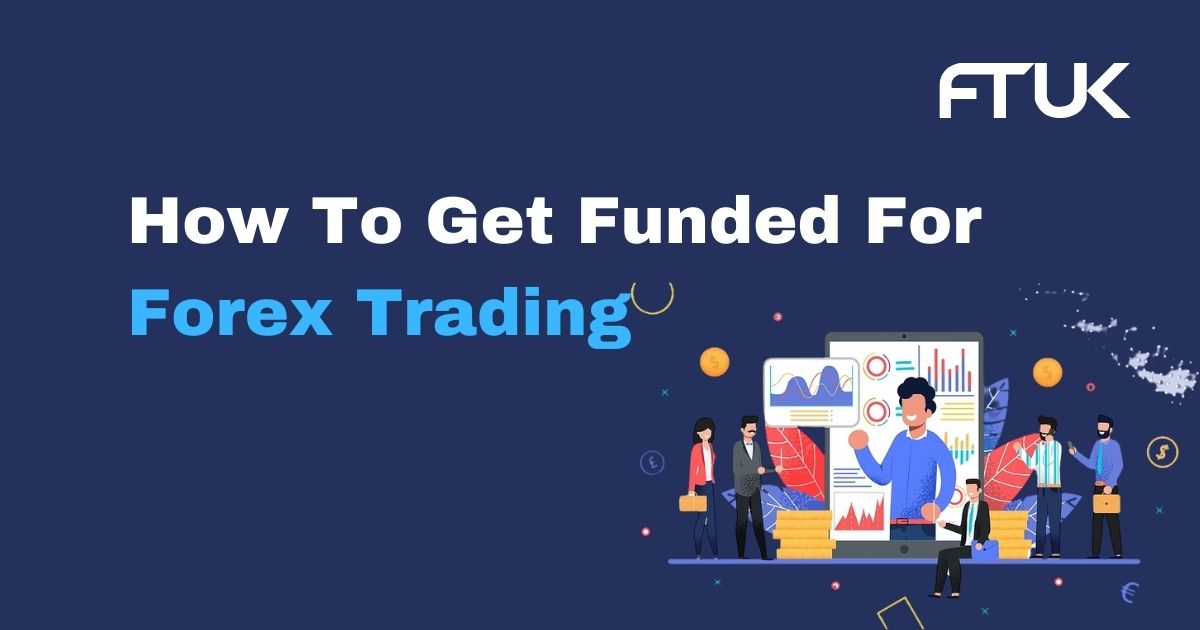
How To Get Funded For Forex Trading

Forex trading is now very straightforward to access for individuals with a reasonable level of skill and knowledge. Thanks to sophisticated online trading platforms, it’s no longer the preserve of city bankers, but open to anyone who is willing to put in the time and effort to trade. 

However, many potential traders may be wary of risking their own money, or do not have sufficient capital to make the rewards seem worthwhile. If this sounds like you, then here’s all the information you need to know about accessing instant forex funding. This will allow you to make use of your skills with a minimum amount of personal investment. 

Understanding prop funding firms

Proprietary (prop) trading firms are companies that allow traders to access the firms’ capital to trade, rather than risk their own. In return, the prop firm will take a percentage of any profits earned, and may charge a monthly fee for access to trading platforms. 

Many prop firms operate remotely, so all you need is a desktop computer, laptop, or even a tablet or phone and an internet connection. Due to the highly liquid nature of the forex markets, which operate almost 24/7, it’s possible for competent traders to earn a lucrative second income stream, even when working a regular full time job. 

The structure of the prop firm will vary depending on their operational model, so it’s important to research the company and read the small print before you sign up. The most common model you will find is that the company has an evaluation program that allows you to prove your skills with a demo account before progressing to a funded account. 

This might sound daunting if you are a relatively new trader, but with some preparation it is perfectly possible to succeed. You’ll need to prove that you can manage market risk in accordance with the firm’s rules, such as drawdown limits and risk-per-trade requirements, and to achieve specified profit targets. 

In return, you’ll have access to significantly higher amounts of capital to trade with than you otherwise would, at no personal risk to your own finances. As well as capital, you’ll have access to the firm’s account management tools and a supportive online community. 

Scaled trading plans

The prop firm will typically offer a scaling trading plan, based on your level of experience and skill. The funding trading accounts usually begin at around $10k, but if you hit your profit targets it’s possible to progress to $100k or beyond. 

Many prop firms operate on the principle that the more consistent and successful a trader becomes, the more of their profit share they can keep, up to a maximum of 80 per cent. Therefore the most skilled and motivated traders can make substantial amounts of money with very little risk to their personal finances. 

Some traders even find that they are doing well enough to make forex trading their full-time career. This brings all the benefits of being your own boss, with the freedom to work wherever you are in the world and the hours that fit in with your lifestyle.  

What if you do not have much experience?

If you are an inexperienced trader but have made the effort to understand how the forex markets work and the principles behind a solid trading and risk management strategy, the best way to get access to a funded forex account is to use a prop firm with a two-step funding model.

This means that when you sign up, you will begin an evaluation process where you will need to hit a minimum profit target using a demo account or other simulated trading environment. This enables you can put your strategy into action without the stress of trading with real money. 

With a two-step process, you’ll need to pass an initial test, followed by a second test to make sure that you have a sound grip on the principles of forex trading and can be consistent in hitting your profit targets. This allows you to build up your confidence without being thrown in at the deep end, particularly if your previous trading experience is limited.

If you already have some experience under your belt, you may prefer to follow a one-step evaluation program. This means that you only need to pass one test before being given access to a live funded trading account. 

The most skilled and confident traders can bypass the evaluation stage altogether to access instant funding with a live account, provided they meet the prop firm’s criteria. 

Do Prop Firms Actually Pay Out?

The best instant funding prop firms understand the importance of a positive symbiotic relationship between traders and the firm itself. The former receives capital to trade forex, and the latter receives expertise, unique approaches, and unique strategies.

It is essential to bring this up because whilst the topic of this article could be answered with a single word, and in the spirit of not “burying the lede” the answer is of course that yes prop firms do pay out, the question is one that is worth exploring further.

Prop firms work on a profit-sharing system, one that starts off with a reasonable split commensurate to the experience of a trader in the system before providing increasing payouts and ratios that are more generous to the trader as they build their skills.

Often, when people ask about whether prop firms pay out, this is not necessarily about the specific process of requesting withdrawals, targets and payout schedules, but also about the expectations a firm places on a trader and how to both acquire a live account and keep hold of it.

With that in mind, this guide hopes to answer the question of payouts comprehensively and then go further.

What Does A Payout System Look Like?

FTUK utilises a payout system that uses a Payout Locker, all of which is integrated into the trading dashboard used to manage accounts.

Payouts can be made to a wide range of currencies via Rise Works or via the stablecoin USDT, a cryptocurrency token pegged to the United States Dollar, in a process that takes up to two working days to process and is reflected in a wallet in three working days.

In order to qualify for a payout, a trader has to have spent 14 calendar days (typically ten working days) in their current trading level, have achieved their profit target, be approved for scaling up and have enough of a profit share to qualify for a payout.

The latter point can often be a point of confusion, but can usually be easily explained with an example; it is not enough to have an account in profit by the $250 minimum amount but this has to be the total of your share.

For example, a Two-Step Evaluation account has a flat profit share once you pass the two test account rounds of 80 per cent, which means that you need to have a profit of at least $312.50 in your account before you get a payout.

Meanwhile, if you have a One-Step or Instant Funding Account, where the profit share scales once you reach progressively higher funding levels, you need to have at least $500 profit in your account, a figure that will decrease to $416.67, then $357.15, and finally to $312.50.

Generally, you can take out a payout once every two weeks, although this can be increased to weekly payouts with the purchase of an optional extra, so make sure to factor that into your decision to payout your profits.

Finally, there is the Payout Locker to consider, which adds an extra risk management step to your account.

How it works is that the first withdrawal at any given level increases the static drawdown limit from the starting capital minus the percentage drawdown allowed (10 per cent for Two Step, 6 per cent for Instant Funding) to the starting funding balance for that level.

For example, if you have a $10,000 Instant Funding account, the first funding stage has a drawdown limit of $9,400, meaning that the account cannot dip below this figure otherwise it can trigger a hard breach that can lead to account termination.

Once you make your first withdrawal, the drawdown limit increases to $10,000 until you reach the next funding level, in which case the drawdown limit reverts to the starting balance minus the percentage drawdown, which in this example would be $19,800.

All of this will be made clear on the trading dashboard, and an explanation of the Payout Locker system is shown whenever it applies, which is the first withdrawal of every funding level.

This is the mechanics of how the payout system works in general for FTUK, and many prop firms use similar systems to ensure strong risk management practices so that traders do not make a withdrawal and immediately enter a drawdown system that could risk their account and the capital of the firm.

In practice, the further a trader progresses and the more funding they have available, the lower the likelihood that they will struggle with or even notice the Locker, but it helps to encourage trading strategies which are designed with long-term, sustainable gains in mind and put risk management first.

Why Do Some Traders Not Reach A Payout?

Funded prop firms employ these systems because they want to create a system of responsible trading with individuals who play the long game. This is part of the reason why evaluation systems are put in place and why bigger profit splits are available faster for those who pass the Two-Step programme compared to the One-Step or Instant Funding schemes.

The evaluation system is in place as a mutually beneficial arrangement; traders build up their skills and prepare their long-term trading strategies ready for a live account, and the timescales for payouts encourage longer plays rather than rolling the dice.

At the same time, it is also the case that a not-insubstantial number of people who take the challenge do not reach the point of getting a payout, which is often why the question gets asked of whether there is any gain at all from applying for a prop firm.

As we have established above, there is very much a firm system of payouts, so why do so many traders, even ones who pass evaluations, seem to fall at the first hurdle? The answer is more psychological than financial.

Evaluation systems try their absolute hardest to simulate live environments without any money on the line, but the fact remains that they are safe environments and everyone who uses them knows that subconsciously.

This means that, whilst any egregious risk-taking will be almost immediately spotted, some traders are perhaps not as au fait with effective risk management as they need to be once the keys to a live account are given.

As well as this, there are two emotions of the market that sway every trader but can particularly harm brand-new traders.

Many traders, particularly those unfamiliar with prop firms, are vulnerable to fear and greed, and as soon as that freedom is available, it can sometimes lead to relatively rash decisions.

Obviously, this is far from everyone, but a number significant enough to establish payout policy either pass the test or pay for an Instant Funding account end up in a hard breach situation before they reach the first payout opportunity.

There are a few reasons it can happen. The first is a matter of self-selection; it is extremely unlikely but possible to gamble your way to passing an evaluation round and possibly even two if you end up on a lucky streak.

However, whilst you can sometimes hit the jackpot, you can’t hit the jackpot twice, and if you go into a live account expecting reckless trades to work out, then within days you will end up at your drawdown limit.

Of course, the number of people who fluke their way into a live account is tiny and they get found out almost immediately unless they change very quickly.

The more common cause of lost payouts is people who do establish a trading plan, make strong fundamentals and develop a risk management scheme but throw all of that out of the window as soon as they get a live account.

There are many personal accounts of people who talk about the first time they got a live account, had a very strong win rate on trades and realised that if their mindset is one of arrogance and an assumption they can overleverage because they cannot possibly lose, they end up in a bad situation very quickly.

What can make this worse is when such a trade goes badly and a trader focuses not on sticking to their trading plan but on chasing losses. Like most gamblers who do this, the losses can quickly spiral out of control.

All of this shows that the key to successful trading is not just a matter of skill, although very few people will pass an evaluation without some degree of fundamental knowledge about trading, the markets and the unique vagaries of markets such as forex, but also about mindset and mentality.

This is something that some prop firms can exacerbate by having strict time limits and attendance requirements, both of which can spook traders into making rash and reckless decisions.

The more common trend is to focus on the long game; FTUK has no time limit on any of its evaluation phases nor on its funding tier levels, removing the temptation to risk it all before the clock strikes midnight.

Ultimately, by taking it slow, focusing on consistency, trading plans and treating the scaling target as something to stick close to rather than try to massively exceed, a prop firm will pay out a profit split that gets better as a trader does.

How Do Forex Prop Firms Work?

If you are interested in trying forex trading, you may have heard that prop firms are the best way to access the markets, but are not quite sure what they are all about. Here’s a look at how forex prop firms work, and what they can offer you.

What is a prop firm?

Proprietary forex trading (widely abbreviated to prop trading) involves a financial institution that uses its own funds to make trades, rather than client funds. Forex prop firms allow traders access to their capital to trade, in return for a percentage of the profits made on each trade. The most successful traders can be rewarded with up to 80 per cent of their gains. 

How to get started with a forex prop firm

Prop firms offer a straightforward model that allows committed traders to progress quickly and to be rewarded for their skill and effort. This process will vary depending on which firm you use, but in most cases you will need to complete an evaluation program to prove that you have the necessary skills and knowledge to make it as a trader. 

This does not mean that you already need to be a seasoned trader, so long as you understand the basic concepts of forex trading and can identify good opportunities in the market. You’ll need to prove that you can manage market risk in accordance with the rules of the prop firm and hit a predefined target.

Two step, one step, and instant funding programs

More experienced traders who already have a honed trading strategy and tried and tested abilities can complete a one step program that involves a single test. Two step programs involve taking a second test to prove that the trader has really understood the process and not just lucked out on the first test, and they are ideal for those new to forex trading. 

During the evaluation phase, you will be trading with a demo account and any profit and losses that you make will be theoretical. 

The most experienced and confident traders may be able to skip the evaluation phase altogether and jump straight in with an instant funding program. You’ll still need to follow the account rules and manage risk in accordance with the prop firm’s risk tolerance plan. 

When you pass the evaluation you will be offered a live funded account. This will usually involve paying a fee or monthly subscription that may be used as collateral for your trades, so you need to consider how much of your own money you are willing to invest and what your attitude to risk is. If you hit your targets, some prop firms will refund your fee.  

Tailored trading plans

Some prop firms offer a scaling plan that can be tailored according to your trading style and skill level. If you hit your evaluation targets, you will be able to trade with larger amounts of funds and may be able to keep a higher percentage of the profits. 

Funded accounts typically start at around $10k, and it’s possible to scale up to $100k + with leverage of up to 50:1 and up to 80 per cent profit share. For the talented trader, this is an opportunity to make serious amounts of money while risking very little of their own capital. 

What are the advantages of a forex prop trading firm? 

For many people, the main advantage of a prop firm is that even if you don’t have a large amount of capital of your own to invest, you can trade with substantial amounts of the prop firm’s capital (known as leverage). This enables you to trade with larger position sizes with the potential to make big profits, without risking your own savings in the process. 

Trading with a prop firm is also a great opportunity to advance your skills as a trader. You will have instant access to industry leading technology: all you need is a mobile, laptop, tablet, or desktop computer. The forex markets operate almost 24/7, so as long as you have an internet connection, you can trade from anywhere in the world at any time. 

Of course, you’ll need to operate within the rules of the game, but you’ll have room to grow, and you’ll also be part of a supportive community with access to advanced trading tools, educational resources, and guidance and mentorship. 

How To Get A Funded Trading Account

Potential and the resources to fulfil that potential are not always fairly distributed, and this is something a lot of proprietary trading firms try hard to fix with instant funding programmes.

The idea is fairly straightforward; as prop firms are trading with their own capital rather than taking a cut from account holders who keep their money with them, they are on the lookout for skilled investors to provide capital to.

This is important, as many investors who have the skill, knowledge and potential to succeed in markets such as forex lack the capital to do so effectively on their own. Forex is very liquid and volatile, but it tends to change in small increments, which means that considerable investment is necessary to make returns you can cash out.

It is a mutually beneficial relationship, but how do you go from day trading or simulations of financial markets to being in charge of a funded trading account?

The simple answer is to apply at a suitable firm, pay the application fee, go through either a one-step or two-step application process, meet the evaluation objectives, and get access to a live account. Meet the objectives of that account, and you start getting a profit share.

For the right trader, it can be the perfect step up to turning an interest and nascent skill at financial trading into a career, with people who can trade consistently rewarded with a growing scale of rewards.

That is the short answer, but the road to a funded account does not start with filling out an online application and paying the entry fee, nor does it strictly end when a trader gets the keys to a funded account with up to 100:1 leverage.

It is about developing knowledge, experience, strategy and a mental makeup designed with long-term success in mind.

Step One: Asking The Big Questions

The first step to a funded trading account involves asking yourself if entering the world of professional trading is the right move for you. The first step of answering that question is knowing what you are getting into.

At a basic level, a funded trading account is a trading account with a predetermined amount of capital that a trader can use to set up a portfolio within the guidelines and parameters set by the prop firm.

It allows investors to use the firm’s funds rather than their own, which enables larger trades to be made, something critical in certain trading strategies where the way to make money is through consistent, safe strategies made at a considerable scale.

It also allows a trader access to a live account without having to seek out certifications and licences, although there is obviously nothing stopping them from doing so.

This means that people who faced roadblocks through being unable to pay registration fees but clearly have the talent to trade well can get significant starting capital, and once their strategies start to pay out, use that money to kickstart their career, either continuing with their prop firm account or wherever they may roam on the markets.

There is a profit-sharing mechanism, typically scaling in favorability towards the trader the more they demonstrate their acumen and this creates a symbiotic relationship between the firm and the trader they fund.

The firm gives the trader the capital, the resources, the platform, education and access to their network of traders and peers, and the trader uses all of this to make consistent gains on the market.

With all of that in place, the next step is asking whether you feel ready to be a funded trader.

If you like the idea of having the flexibility to trade from a comfortable, personal working environment, without the pressure of a trading floor, clients or the personal financial risks that can come from leveraged trading, then applying for a funded trading account can be a great step.

It is also a good idea if you want to take an alternative path into the world of finance. Many people have pivoted from their previous careers and into finance, bringing tremendous enthusiasm, willingness to learn and a fresh perspective.

After a huge retail trading boom in 2020, a lot of people who never traded before experimented with small amounts of capital and got a taste for trading. Getting a funded account is the next logical step.

Step Two: Get Ready

Once you have decided this is the path you want to take, you can jump right into your application, but it is always best to do some preparation and reconnaissance first.

Learn the rules for a specific prop firm as well as expectations and how they are defined. Firms are very clear about what is needed from their traders and what will qualify them for profits and payouts.

For example, some firms have a requirement that all trades have a stop-loss order on them that needs to be placed within a minute of the order. Others will have a required amount of activity, all will have a maximum drawdown allowed and certain profit targets.

Check whether your trading strategy and schedule suit the firm you wish to work with. High-frequency trading, for example, is not always allowed by some firms and can lead to your account being banned and all trades closed.

All prop firms will clearly list their rules, and explain which ones are soft breaches (which necessitates risk management monitoring) and which are hard breaches (which leads to an account being closed).

Beyond this, make sure you have some kind of rudimentary trading strategy and discipline in place before you complete your application. Some application processes have a time limit, others have minimum targets and drawdown limits, and it pays to have a system in place that has the potential to work.

The best way to see if you are ready is to give a demo account a try. Most prop firms will have a demo account, free to try for a few days to let you get used to the dashboard, analytics, and access to trading platforms without any risk or consequences to your application.

This is a way to try for free and see if you can manage the requirements of an evaluation and live account. If not, then all it means is that you need to develop your fundamentals, read around and develop a style and strategy of trading that works for you.

It also lets you easily and clearly see which rules are enforced by the trading platform without accidentally stepping on a landmine and ruining your account, especially if you run a strategy or have particular tendencies that make you likely to get close to the rules.

Step Three: Make Your Application

There are a lot of different funded account types, geared towards different types of traders and with different standards.

There are three main account types available:

  • Two-Step Application
  • One-Step Application
  • Instant Funding

Each of these account types has a different size account, going from $25,000 to $100,000, with sign-up fees that vary depending on account size, type of evaluation and any additional add-ons such as weekly payouts (rather than bi-weekly), no stop-loss and unlocking additional scaling levels.

If you are just starting out with a bit of theoretical success with demo accounts and small-scale retail trading portfolios but have not made this your career yet, it is perhaps best to start with a two-step account.

This system has a two-phase evaluation, with separate profit targets for the first and second days and a requirement to trade for three days each month.

Alternatively, for traders with some experience, there is a single-step prop firm, which removes the second five per cent profit target, albeit with lower maximum leverage and an extra minimum trading day.

Finally, there are Instant Funding plans, which skip the evaluation step and get traders started on a live account, able to immediately earn profits as soon as they start trading, and with just one single trading day required per month.

Step Four: Scale Up With Sustained Success

Once you pass the evaluation, you get a live account and can start using progressively more capital in your accounts with an increased profit share, as long as you can demonstrate discipline, consistency and a will to constantly develop your skills and market knowledge.

Once you start your account, set up a trading journal and keep track of your transactions in order to record their outcomes, as well as any notes about your methodology and mindset for particular trades.

Establish firm risk management plans and a trading strategy that avoids the temptation to trade emotionally. Much like meal prepping, it is often best to do a lot of the thinking when you are in the best headspace to do so and establish a set of criteria you can easily follow.

Keep disciplined, avoid especially volatile periods, set stop-loss orders and use every gain and every loss as a learning experience for what you can do in future to keep yourself in a position to consistently succeed.

Finally, take care of yourself. Reward your successes, commiserate rough days and remember that the minimum trading days requirement means that if something is not going well, it is perfectly fine to turn off the terminal. A diverse portfolio will not reach the drawdown limit very quickly.

Signs FOMO Is Damaging Your Trading & What To Do About It

Forex trading is an exciting and potentially lucrative activity, and by accessing a one step funding prop firm, it’s a path that anyone can pursue. However, it’s important to be able to keep your head or you risk being swept up in a destructive tumult of emotions, which will seriously damage the outcome of your trades.

The rise of FOMO

One of the most powerful of these emotions is Fear of Missing Out, or FOMO as it is widely referred to online. This is not just for teenagers who can’t decide which party to go to on Saturday night: it’s a problem that is increasingly affecting people of all age ranges and walks of life, driven by the digital-era constant state of connectedness.

Having too much choice might seem to be a trivial or classic ‘first world problem’, but it can have a corrosive effect on quality of life, triggering or exacerbating anxiety, depression, low self-esteem, and risky behaviour. It’s this last one that forex traders need to be particularly aware of. Here’s why.

What’s the role of FOMO in forex trading?

In the context of forex trading, FOMO refers to the fear a trader has of missing out on a potentially profitable trading opportunity. It’s a particularly pernicious cocktail of two of the strongest and most primal of human emotions: fear and greed. 

The trader is plagued by the sense that the grass is always greener on the other side of the forex market, and this can induce an unpleasant state of constant anxiety and restlessness. It can lead the trader to make decisions that are based on their emotions rather than rational and logical reasoning, and regular readers will know that this never ends well.

Forex based FOMO might be triggered by a rapid swing in market direction, or even by a fellow trader posting a success story on social media. This dangles the enticing prospect of making a quick profit, and the trader may abandon a solid risk management strategy and rush into a poorly thought-out decision such as entering a trade too late or exiting too soon.

Key signs FOMO is damaging your forex trading

Jumping into trades without referring to your trading strategy

If you find your adrenaline levels spiking in response to an upswing in market price, then you may be prompted to act on your impulse to turn a quick profit. Some people find this buzz addictive, and they may even be convinced that they are doing the right thing by seizing the moment. 

However, contrary to popular stereotypes, successful forex trading is rarely about the thrill of the chase, but rather about developing a well-defined strategy and sticking to it. If you find yourself deviating from it as soon as the market sneezes, it’s a sign that FOMO is damaging your trading.

Overtrading

Overtrading is a real red flag in forex FOMO terms. The forex markets are highly liquid and operate almost 24/7, and this can sometimes entice inexperienced traders into thinking that there’s a better opportunity just around the corner. However, profitable forex trading is not about the quantity of your trades, but about the quality.

FOMO can lead you to trade even when the market conditions are not favourable, or to trade when you are mentally and emotionally unprepared. For example, you might be tired or stressed out from your regular job, distracted by family or relationship problems, or just not in the right mindset to be making unbiased decisions.

Revenge trading

Related to overtrading is revenge trading, which is when a trader is driven to recover their losses from a previous trade by making a risky trade. This is driven by both the fear of loss and the greed for profits, and it can cause you to overleverage, make too many trades, and oversize your positions. 

Revenge trading is a dangerous downward spiral, as most of the time you will compound your losses and you may be riding roughshod over all your red flags as you do so. This can be financially and emotionally ruinous, so it’s crucial to recognise the signs and nip them in the bud. 

Trading due to peer pressure

Traders can fall prey to the evils of social comparison, especially if they are big users of social media or networking forums. You might feel compelled to make a trade because you’ve just seen another trader posting about an enviable profit, or you have picked up on a ‘hot tip’ or a market rumour, and want to act on it straight away. 

You may have become drawn into an online trading community, which can be a great source of support, advice, and camaraderie, particularly as forex trading is by its nature very much a lone wolf activity. However, be on your guard for any desire to try to impress or compete with other traders, because this can lead to emotional trading.

Trading due to market noise

While it’s important to keep up with economic data and key news, it’s important to maintain a sense of perspective and avoid getting caught up in news media or social media hype about the ‘next big thing’. This may lead you to following the herd rather than carrying out any proper market analysis or research. 

You may also be drawn into unsuitable trades that are not aligned with your trading plan, approach to risk, or your natural trading style and personality. For example, if by nature you are a cautious person, but infectious media hype prompts you into a risky short term trade, you may soon find yourself out of your depth. 

What to do about FOMO in forex trading

If any of the above signs are uncomfortably familiar (be brutally honest with yourself), then it’s important to take steps to counteract them, otherwise you will struggle to achieve the results that you deserve for your time investment. Here are some practical tips to help you combat FOMO and optimise your forex trading. 

Create a solid trading plan and stick to it

You’ve probably already heard this advice many times over as you learn the ropes of forex trading, but sticking to a robust trading plan really is your best defence against all forms of dangerous emotional trading. Your plan should include clearly defined entering and exit strategies, including your technical indicators, risk management rules, and profit targets. 

While your plan should not be inflexible, any tweaks and changes of direction should be separately and without reference to your open trades. Backtest any amendments until you have gained confidence in them and will have proof of workability. This will protect you from making impulsive trades that are poorly thought out and unlikely to do well. 

Limit your exposure to social media and news updates

We are all living in a state of constant connectedness, should we choose to do so. Social media can be a positive influence if used wisely, but be vigilant for signs of addiction and turn off your notifications during trading hours. 

Successful forex trading comes from making well thought out and independent decisions, and the distortions and hype of social media can be the enemy of this process. 

While it’s important to stay well informed about economic and geopolitical news, be discerning about which outlets you follow, rather than just hitching your wagon to various self proclaimed ‘experts.’ Stick to credible sources that are relevant to your currency pairs and trading strategy, and learn how to filter out the noise. 

Work on your patience and emotional discipline

Patience is often an underrated virtue in modern life, when we are conditioned to expect instant gratification. However, FOMO is a devil that feeds on short-term thinking and a desire for quick wins. Use patience to starve your FOMO and curb those impulses to react to every spike in the market. 

Everyone has different ways of managing their emotions, so it might take some time to figure out what works best for you. This might be through practising mindfulness meditation; keeping a daily journal of your thoughts and feelings about each trade; or a grounding technique to prompt you to step back and take stock when the green eyed monster flares up.

Set clear goals for yourself so that you can remain focused on long-term thinking. This helps you to worry less about missing out on immediate gains, and move towards a sustainable model of trading that involves making high quality decisions rather than chasing every market signal. 

Educate yourself and develop confidence in your own abilities

Above all, confidence in your trading abilities will help you to rise above emotional decisions that are driven by FOMO. This will come naturally over the months and years as your trading career progresses. Help yourself by taking every opportunity to learn about both the technical side of trading and also the psychological side.

This will not only improve your trading skills, but will also help you to become a more resilient and objective trader who is capable of generating a steady income. 

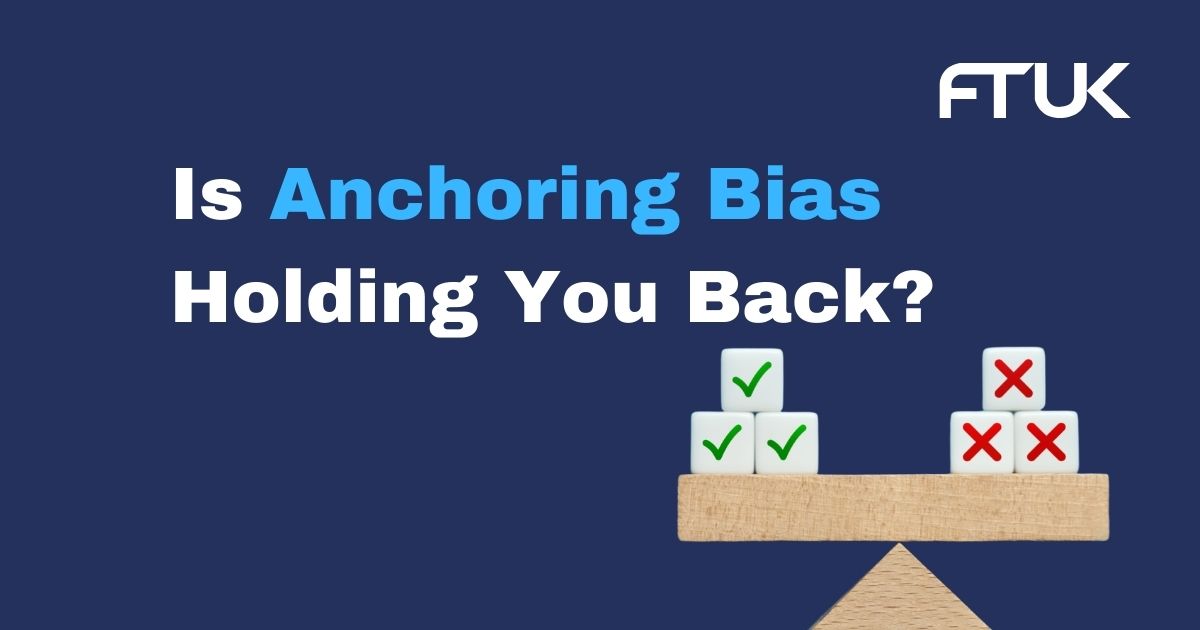
Is Anchoring Bias Holding You Back?

Every action we take in any walk of life is shaped by countless heuristics and biases that make up our intuitive decision-making, but these same assumptions that help you get through life might be limiting your success as a forex trader.

Of the many different biases that affect prop firm traders, anchoring bias might perhaps be one of the most common, but despite seeming like a rather harmless belief, it can potentially cause more damage to your portfolio and career than you might expect.

In no small part, because it is difficult to see when it is affecting your strategy, it might be the greatest limit to the potential of a trader, but also one that can be fixed by reshaping your trading strategy in a way that focuses less on the currency ticker and more on your overall strategy.

To understand why, here is a guide to anchoring bias, how it manifests in forex trading, how you can spot it shaping your decision-making subconsciously and what you can do about all of this.

What Is Anchoring Bias?

Life is shaped by biases, as they are a fundamental way in which we think and decide quickly, and one of the most supported theories about why this is the case can be found in the concept of there being two systems of thinking.

System 1 thinking is intuitive, immediate and unconscious, allowing us to make snap decisions, follow a familiar route, read signs, log into a terminal without having to consciously recall our user credentials, breathe, and thousands of other decisions we make every day without even thinking about it.

By contrast, System 2 thinking is intentional, conscious and often quite slow, requiring us to carefully consider not only the answer to a problem, but also the process in which we reach this conclusion.

Many everyday actions can switch from one to the other; many people who are first learning a skill will rely heavily on System 2 thinking to ensure they are doing everything correctly, but once it becomes second nature it becomes a System 1 skill.

Conversely, a theory behind the “yips”, “target panic”, “twisties” and “dartitis”, four sport-specific terms for the loss of fine motor skills during routine actions such as putting in golf, serving in tennis and throwing darts, is that these actions are undertaken consciously using System 2 thinking rather than System 1 thinking, causing overcorrections in high-pressure situations.

This all serves to illustrate that System 1 thinking is something far beyond recklessness or impulsiveness, but instead is a vital part of how we make decisions, but there is a double-edged aspect to the speed of thought.

Whilst it allows for very quick decision-making, these choices are based on a lot of assumptions, which are not always going to be correct.

The most common of these is the anchoring bias, which is where a single piece of information is prioritised and focused on when making a decision, such as first impressions, initial price or presentation.

Whichever initial factors become the anchor of a particular belief will shape decision-making later on.

This bias is a key reason why first impressions matter so much when meeting someone either personally or professionally; that first encounter will shape the perspective of the rest of the relationship and any decisions where this relationship is a factor.

For example, people are typically more likely to try and maintain a long-term relationship if the start of it had very positive memories attached to it, even if said relationship has become decidedly more harmful over time.

It is commonly used advantageously by retailers to make products and sales seem better than they are; if you see that an item is priced at £40 but the next time you see it has gone down to £20, it will look like a much better deal than if the same item was initially sold for £20, even if its actual value is closer to £20 than £40 if viewed analytically.

What Can Affect Anchoring Bias?

Like most heuristics, it is an aspect of emotional trading, with various personal factors affecting how vulnerable people can be to anchoring.

Someone who does not have a lot of experience in a particular field is more likely to rely on the little information they have available to them, making them prone to anchoring bias.

Meanwhile, personality traits such as closed-mindedness and stubbornness can lead someone to believe that the information they already have is enough to make a reasoned decision.

Finally, mood is a key critical factor, people who are stressed, sad, angry or otherwise in a generally negative mood may be more inclined to make snap decisions using anchoring.

How Does Anchoring Bias Affect Forex Trading?

Once you have a general impression of how common anchoring is, the next question is invariably about how it affects your forex career, and ultimately it can worm its way into nearly every trading decision if you let it.

When many traders start out, the currency markets can be extraordinarily complex, with so many different data points available to a trader as soon as they gain access, which means that a trader who jumps in at the deep end is going to base a lot of their trading activity on the first pieces of information they see and judge performance based on that.

A somewhat simplified example of this is buying a currency pair at a given price and assuming that price is a neutral norm, even if it turns out to be the peak or the valley of a given asset’s price.

Buying in without doing a lot of research first could give the mistaken impression that the purchase price is the baseline and potentially either sell a pair too soon after making only a modest gain that could go higher or wait to sell a currency pair that has peaked and lose far more money than if a stop loss order had been placed.

It also causes either overreactions to sudden activity in the market or conversely misses a sign that there has been a major change in market conditions because the basis of the trading strategy is a limited pool of old information rather than continuing research and analysis of a portfolio.

It can also lead to an emotional attachment to your buy price, meaning that some traders in a bear market might stubbornly close a position because they do not want to “realise their losses”, denying reality in the process.

As with other forms of trading bias, the two main driving emotions of fear and greed both affect anchoring in different ways, and both can lead to a trader losing considerable amounts of potential or actual money in the process.

There is the story of a celebrity stock picker who claimed to have an “unbeaten record” of choosing stocks. However, the sleight of hand he used to get that “record” how meaningless “wins and losses” in financial markets are, especially in forex.

The story of Lenny Dykstra’s stock market career is somewhat infamous, but the short version of his strategy is that he would pick stocks and make all of his trading decisions based on anchoring.

As soon as the stock price ticked above his initial purchase price, he immediately sold, whilst any stock that was trading lower than his original buy price he kept, losing huge amounts of money in the process, contributing to his later bankruptcy.

How Do You Stop Anchoring Holding You Back?

Once an anchor has its hooks in you, it can be difficult to let go and examine the market objectively as it exists, rather than relative to the initial point of reference. 

However, it is not impossible to break the hold anchoring has, and for many traders, it is the first step from being a beginner on the market to making trading their career.

The first step is to accept that everyone has been vulnerable to anchoring at some point in their trading career. There is no shame in wanting your picks to do well, as long as you have the perspective to get out of a position when it is clear that it won’t.

A lot of anchoring comes from limited understanding and experience with the vast web of data that makes up the forex market, and the best way to fix that is with experience and learning.

Ultimately, it takes a lot of time to know how to effectively interpret all of the data you have available, sort out good information from bad, and understand how to tell the difference between a trend and an aberration.

Spend a good chunk of your trading day not trading at all but following the market and working on your trading plan.

Focus always on the long-term trend and the overall goal, rather than the moment-to-moment random noise of the market and the record of individual trades. Many traders have dozens of losing trades that are wiped out by a well-planned successful one, so avoid taking each one so personally.

Stay positive in general, mindful of your thoughts and more objective in your decision-making. 

Setting up a trading plan can help here, as it allows you to dedicate time away from the market to setting up an approach that harnesses System 1 thinking far more constructively and effectively.

How To Define Success On Your Own Terms In Forex Trading

When you are learning the art of forex trading, ‘success’ is a word you will probably see bandied about a lot. After all, the reason you turned up is to make successful trades, and you need to find out how this is done. However, success can be a relative concept, and this is particularly true in the world of forex trading.

The slippery concept of success

There are different interpretations of the term ‘success’ even if you try to find an unambiguous dictionary definition. For example, Oxford Languages defines it as ‘the accomplishment of an aim or purpose’; while the Cambridge Dictionary goes for ‘achieving of the results wanted or hoped for.’ Some subtle differences right there.

Meanwhile Merriam-Webster informs us: ‘the meaning of SUCCESS is degree or measure of succeeding’, while Collins Dictionary explains: ‘The success of something is the fact that it works in a satisfactory way or has the result that is intended.’

This goes to show that there is no single and narrow definition of success, and of course it means different things to all of us. Some individuals are very goal oriented and materialistic, while others are more motivated by learning widely and having a range of experiences, interests and achievements in their lives. 

In forex trading, it’s best to avoid thinking of success as a black and white concept. If you equate success simply with making large profits all the time, this is likely to hinder your progress rather than help you to accomplish this aim. Here’s why.

Building a solid plan should be your first step to success

Naturally, you want your goals to focus on making money, but in the early stages of your trading career, making money should not be your main goal. This may sound counterintuitive, but profits are the byproduct of a well-constructed trading plan, a careful risk management strategy, and the persistence to stick to them over time.

A strong trading strategy will have well-defined risk parameters that are aligned with your financial situation and overall attitude to risk: in other words, you should not be trading with money you cannot afford to lose, or with amounts that make you wake up in a cold sweat in the middle of the night. 

The trading plan should also define the currency pairs that will be traded; position size; the entry and exit points in the market; and the technical and fundamental analysis methods that will be used. All this should precede any profit goals, because profits without a plan are simply a matter of luck, and that tends to run out.

With a one step funding prop firm, the opportunities to make profits really are there for the taking, but it’s all about the methods you use rather than the blind pursuit of money. You might have heard stories about forex as a ‘get rich quick’ scheme, but in truth any early windfalls are down to pure chance, and you might as well gamble instead.

However, if you take the time to develop a solid and detailed trading plan and learn to identify genuine opportunities in the markets, it is possible to make good returns. 

Chasing profits means you could be blinded by greed

Good forex trading is not just about knowing the markets well, but also knowing yourself. Money is something that we all need to survive, and also to help us have freer and more comfortable lives. Therefore it naturally evokes strong emotions, including greed, one of eternal seven deadly sins. 

Greed can blind emotionally unprepared traders, causing them to deviate from their trading plan, take unmanaged risks, and make too many unsuitable trades. You might think that you would be immune to it, but when the pressure is on, almost everyone can be prone to emotional or biassed thinking. 

Spend some time researching the psychology of forex trading as well as the technical aspects, and learn to recognise signs when your emotions may be clouding your judgement. Take a step away from the screen, refer back to your trading plan, and stick with it. 

If profit is your first goal, you may not learn to let go of a losing trade

Losses are an inevitable part of trading, and even those elusive ‘successful’ traders will make losses on around 50 per cent of their trades. Novice traders can tend to hang on to a losing trade because they are afraid of losing, but this tends to exacerbate the loss. Get out of a falling trade early, analyse what went wrong and move on.

If you take losses too personally, you may not develop the resilience to bounce back from failure, and you will also be over cautious in your trading, and this will get in the way of making steady gains in the long run.

How to avoid the trap of chasing empty ideas about success

Don’t be too influenced by the opinions of others

Sharing ideas, tips and opinions in forex trading can be useful, and you may even wish to be mentored by a more experienced trader to help you develop and boost your confidence. However, keep a sense of perspective and don’t get too hung up trying to emulate the moves of other traders.

Remember success is your individual journey, and there’s no fixed role model for a successful forex trader; this is something that is different for everyone. Set personal goals that are achievable and take into account your other commitments in life and the time you have available for trading; and your level of confidence, experience and emotional resilience. 

Remember that progress is about more than profits, and minimising your losses over time is still a valuable achievement on your way to long-term prosperity. Learn to enjoy the journey, not just the outcome, and don’t compare your progress or results with others.

Focus on all-round growth

You can have growth-oriented goals that go beyond the narrow confines of making profitable trades. As we said before, profits are the by-products of a good process, so work on continually refining your process and reaching smaller goals rather than just the results. 

Focus on skill development, such as getting to grips with new technical analysis tools or applying different sets of economic data to your trading strategy. Risk management is another important skill that you can focus on cultivating, such as finding your comfort level with leverages, stop losses, and trade volumes. 

Have a psychological strategy

New traders often underestimate the importance of trading psychology, but it really can make the difference between a trader who gives up the game, and one who is generating a steady second income stream in six months or a year. For example, you might want to set a daily loss limit to avoid becoming overly discouraged or provoked into revenge trading.

You may even want to have a daily win limit so that a winning streak doesn’t go to your head and create a sense of invulnerability, as this could equally lead to some disastrous trading decisions. Finding some way to become aware of your emotions and take control of them really is one of the best ways to improve your trading skills.

You may wish to do this as a part of a wider lifestyle plan that involves a meditation or mindfulness session in the morning before you start trading, or a stress busting exercise session to clear your mind and keep you emotionally well balanced. 

Focus on the whole picture

The best forex traders tend to enjoy the whole picture, and don’t expect their every move to immediately translate into profits. The forex markets are highly dynamic, so it’s a continual learning curve and the more time and intellectual energy you invest in it, the greater your rewards in terms of both enjoyment and profits.

So, there you have it. Learn to define success on your own terms in your forex trading. This doesn’t mean kidding yourself that all will come good in the end when you are persistently making more losses than gains, but developing a long-term mindset and a consistent approach.

What the diverse group of ‘successful forex traders’ tend to have in common is not a secret box of magic tricks, but an approach that includes a solid trading and risk management plan, a businesslike attitude to losses, and above all, a genuine curiosity to keep learning about the forex markets and the wider economic and political events that drive them. 

It is impossible to always be right in your trades and there will always be losses along the way, but if you are willing to learn from each experience and shift your focus from short-term wins to long-term growth, you will find that success and profits are the natural byproducts of your hard work. 

Understanding Cognitive Vs Emotional Biases In Forex Trading

Forex trading is not just about developing a solid trading strategy: it’s the decisions you make in the heat of the moment that really count. None of us can act in a truly objective and unbiased way 100 per cent of the time, and this can cloud your judgement and negatively impact the outcome of a trade.

Our emotions can also distort the decision making process, often before we realise it. Strong emotions can be erratic and arise suddenly, and the high stakes and intense pressure of making quick financial decisions can amplify whatever emotions we are experiencing. 

This is why successful traders work just as much on cultivating their mindset as they do on their trading plan. The mental and emotional aspect of trading is broadly classified into two types: cognitive biases and emotional biases. They occur from distinct psychological processes, so it’s helpful for traders to gain an insight into how they impact their decisions.

Here’s a closer look at the differences between these biases, what they typically involve, and strategies to manage them.

Cognitive biases

Cognitive biases are subconscious thought patterns that can lead to errors in logical thinking, and influence judgements and decisions. It is impossible to be entirely free of them, because it is the brain’s way of making mental shortcuts and protecting our minds from information overload: no one can ever know everything. 

These biases affect us all in unique ways, because we all interpret information differently and have different memories and educational and social experiences. Often we are not aware of biassed thinking in our everyday lives, because it can be subtle and deep-rooted. However, it’s important to understand how they might influence your trading decisions. 

Confirmation bias

Confirmation bias is when we seek out information that confirms our existing beliefs and opinions, and ignore anything that contradicts or challenges them. We may also assume that everyone else shares the same views, and that there is nothing further to learn about a topic beyond what we already know.

This type of selective thinking can mean that traders miss out on valuable information when carrying out fundamental analysis, and this can weaken the quality of their trading strategy. It can also result in errors in the interpretation of technical analysis tools, because the trader may look for patterns that confirm their expectations, rather than draw objective conclusions.

For example, if you believe that the market is bullish due to sentiment on social media, this can lead you to adjust your exit points from a trade in the expectation that the value of a particular currency will rise. However, the opinions of economists and respected news journalists might provide a different view, which you failed to take into account.

Overconfidence bias

Overconfidence bias is a pitfall that can catch out some new traders, particularly after a big win or a run of successful trades. This can create a false sense of confidence that is not based on the reality of the trader’s knowledge and skills, but an inflated belief in their ability to interpret the forex market.

This can result in the trader taking bigger positions or making too many trades, and being less cautious with their risk management policy. This can expose them to significant losses, because of the cognitive gap between what the trader believes is right, and what the best course of action should be. 

Anchoring bias

Anchoring bias is the tendency to fixate on the first piece of information a trader finds about a particular market opportunity, and use that information as their reference point without adjusting their thinking when they encounter further information. The first reference point may be entirely arbitrary, and there is no justification for prioritising it.

This can be damaging for forex traders, because it may cause them to miss the ideal time to exit a trade and hold on past its peak. It can also result in them selling too early in a trade, or trading with underperforming currency pairs. Anchoring bias may occur when a trader is rushing or making too many trades that are under researched and likely to perform poorly. 

Disposition bias

The disposition bias, also known as the disposition effect, can sabotage your chance of success in forex trading by prompting you to sell profitable trades too early, and to hold on to losing trades for too long. This is a natural human trait to try to protect our assets, and it’s a complex cognitive bias because it can be subtle and crosses over with emotional biases.

Almost all of us are conditioned to be loss averse, because we fear the pain of losing more than we seek the pleasure of success. We may think that we are being cautious and taking the right course of action, but in fact we could be standing in our own way. Of course, it’s important not to overcompensate and neglect to manage risks properly.

Emotional biases

Emotional biases are when a trader makes decisions that are driven by their feelings rather than logical thought processes. Forex trading can bring out powerful emotions in even the most stoical of characters, because ultimately we are dealing with assets that we all need to secure our survival and comfort. 

Therefore it’s not surprising that we are all prone to primal emotions such as fear and greed when we are trading. Wise traders do not try to suppress or deny these emotions, but learn how to recognise them and take action to separate them from their decision making process. 

Greed

Naturally, the goal for all traders is to make profits rather than lose money, but when the desire for profit overrides good trading decisions it can have the opposite effect. Traders who view the markets simply as a ‘get rich quick’ opportunity may be particularly vulnerable to greed, causing them to over-leverage or hold onto winning trades for too long. 

Greed can also prompt traders to make impulsive decisions and disregard risks, leaving them more exposed to heavy losses. 

Fear

As we have seen, fear is an emotion that can lead to loss aversion bias, and it’s the flip side of greed. Instead of actively seeking profitable trades, fear can cause us to be overcautious, exiting trades as soon as they are in profit rather than sticking to our trading plan, or holding on to a losing trade in the hope that the market will turn, even if there is no evidence of this.

Fear can evolve into panic if the markets turn volatile, causing potentially disastrous decisions. 

Fear of Missing Out (FOMO)

FOMO is a type of herding behaviour, and it stems from the natural human desire to feel like part of the crowd. Most of us tend to seek safety in numbers, and this is also true when it comes to the forex markets. If the sentiment is running in one direction, it can feel very uncomfortable to tread your own path.

However, chasing market trends rather than making well-informed independent decisions can lead to badly timed trades that get caught up in sudden reversals of fortune. 

How to overcome cognitive and emotional biases in forex trading

Reflect on your performance

Over time, forex traders will learn how to recognise and manage some degree of bias and emotional decision making. This often comes with knowledge and experience, and the old saying ‘we learn by our mistakes’ applies here. The key is to reflect on what went wrong in your unsuccessful trades, and question if any of your decisions were biassed or emotion-led. 

Assess your performance every few weeks. Keeping a trading journal will help you to do this more accurately. Don’t just write down the factual information about each trade, but also record something of your state of mind and emotions before, during and after the trade. This will help you to identify and challenge any negative behaviours.

Stick to your trading plan

One of the most effective ways to avoid emotion-led decisions is to always stick to your trading plan. This avoids any impulsive behaviour and exposure to unnecessary risks. This is not to say that you should not adjust your trading strategy, but that any changes should be based on logical reasons and back tested on a demo account first.

Stress management

Forex trading can be an emotional rollercoaster, and may even lead to elevated stress levels that make it even more difficult to develop a good trading mindset. Many successful traders use practices such as mindfulness meditation to help clear their minds of mental clutter before they start their day’s trading. 

So there you have it!

Understanding the differences (and crossovers) between cognitive and emotional biases can help you to create a stronger trading plan and make more objective decisions. Forex trading psychology is something that most traders will come to master with time and experience. 

When we are aware of the traps that our minds can drive us into, we are equipped to navigate the forex markets more effectively. 

Looking for a one step prop firm? Please visit our website today.