AVOID PREDICTING THE MARKETS, RATHER BE REACTIVE

AVOID PREDICTING THE MARKETS, RATHER BE REACTIVE

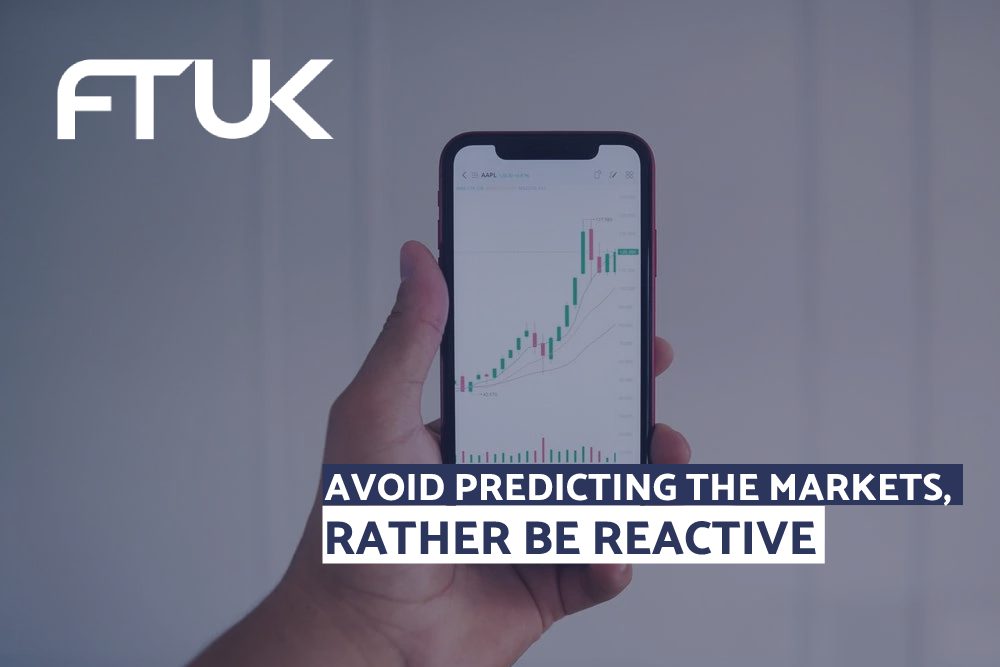
When we all first begin trading, we learn some basic strategies and pair patterns but usually continue to lose more than what we can make. This can only change once you shift your perspective; instead of trying to predict the market – which can be considered high risk – you should become reactive in your methods. Firstly, you must keep emotions away from losses. Look to learn how to markets move and have a systematic approach to finding trades when they meet your list of market entry requirements.


Market manipulation


It is also important to know a large majority of traders lose in this market so knowing and recognising basic traps and manipulation can give an extra reactive edge in the market. Manipulation can occur many times per day in the market and trying to predict every small movement will be extremely difficult.


To succeed in the forex market, try not to make predictions about it. It is always changing rapidly, so you need to be flexible and adaptable to every new turn of events. When you react, that means you are going with what is expected from the market trends. You’ll aim to trade with large institutions like hedge funds and banks, which can be seen by analysing the way the instruments move on the higher timeframes. In these cases, you’ll see trends when it comes to trading – one approach might be if it’s bullish then wait for an area of support before entering the market looking for a continuation of that larger trend. It’s always best to follow the current trend is on the daily/weekly timeframes because the fundamental and technical analysis does work together effectively.


Build a long-term plan to help become a reactive and disciplined trader


Follow these steps: Understand the current market condition, stay updated with major economic events, set your risk-reward ratio, and check for an appropriate entry point. Set stop loss and take profit levels; then place the trade. Then we need to get some trading volume in to study and back test a strategy. When you react to the market to find trades you should try to repeat what works for over and over. Constantly changing your trading style will not only leave you confused but it will mean you are predicting movements rather than reactive to what you see and then anticipating a continuation in the overall trend that you can see.


Trade what you see with pattern recognition


You may have heard the term before, ‘trade what you see, not what you think’. It’s a very true statement and its simple to understand but not easy to implement. A lot of trader will either listen to other traders or get caught up in a fixed idea and try to catch a movement. Whilst we are all speculating when trading, it can lead some traders to overtrade or enter one more position if a trade doesn’t go their way initially. The risk to reward ratio may look even more profitable which may lead to chasing bigger losses and so on.

Always be ready to step back and evaluate the patterns you see occurring in the market and document them. Try to replicate other trades in the same style if it worked for you. Or look to adapt if it didn’t.

Recent articles


Share:

Share on facebook
Share on whatsapp
Share on twitter

THE KEY TO BECOMING PROFITABLE ON THE EVALUATION

THE KEY TO BECOMING PROFITABLE ON THE EVALUATION


Nathan recently passed his evaluation FTUK account. Here is what he said:

How long have you been trading for?
5 years

How long did it take you to become profitable and how did you become consistent?
Took me 4 years before I became profitable , I found consistency 7 months ago

What trading methods do you use? Elaborate on your trading style.
Smart Money Concepts. I trade reversal of trends at the extremes . I trade continuation of trends by using the reversal concept on pull backs . My entry drill is Stop hunt, break of structure and Return to Orderblock.

What has been your biggest hurdle to overcome?
Overtrading and holding on to trades for longer . I recently learnt to control those by trimming down my watch list and projecting my targets on higher time frames.

What has been your best moment in your trading career?
Best moments was when I finally became profitable trading gold. It had been the scariest commodity to trade for me.

Why did you choose Forex Traders UK?
The fast growth plan . I do not need to change my plan to get a bigger trading account. All I need to do is smash my milestone target and get upgraded.

What would you say to other traders starting out with Forex Traders UK?
Right Psychology and Risk management is the key to becoming profitable trading a prop account . With patience the money will come.

What are you goals long term in trading?
To be a profitable trader managing a 6digit trading account.

Recent articles


Share:

Share on facebook
Share on whatsapp
Share on twitter

ARE YOU A SLAVE TO YOUR COGNITIVE BIAS?

Are You A Slave To Your Cognitive Bias?

The success or failure of any Forex trading scheme ultimately comes down to one thing and one thing only… decision-making. The FX world moves incredibly quickly and you’ve got to be able to respond in kind, otherwise your trading career will be over before it’s even begun.


But have you ever wondered what, if anything, leads us to make specific decisions – and is there anything to be done that could improve your decision-making to really drive your successes on the trading floor?


The psychology of choice certainly makes for interesting reading and it can prove really beneficial for your trading game to sit down and work out exactly what you think is motivating you to make different decisions… and what could subconsciously be making you lean in one direction or another.


Biased thinking


We’re bombarded with a lot of information every single second of every single day, but our brain is only able to process a tiny amount of it, so we’re helped along in our decision-making by what are known as biases.


These are an inevitable part of what it means to be human and they can either be quite useful or they can cause us to make cognitive errors, so it can be helpful to give your decision-making processes a review from time to time to see if there’s anything holding you back.


There are two types of bias in psychology: Conscious or explicit bias, and unconscious or cognitive bias. 


With conscious bias, you know what your feelings and attitudes on a subject are and you conduct your relative behaviours with intent. With cognitive bias, you’re not always involved in the process, with your subconscious essentially making your decisions for you.


On the one hand, what’s useful about cognitive biases is that they can help rid you of the burden of making the decisions in the first place, freeing up your mental load and allowing you to make choices relatively quickly… which is great from a trading perspective, because the environment can turn on a dime and you need to be able to react accordingly – and trust yourself to be able to take decisive action as and when it’s required.


However, these cognitive biases can also prove to be far more of a hindrance than a help, if our decisions are being prejudiced by unconscious attitudes, values and beliefs. This is where emotion can start to overtake reason in decision-making… and this could see you hit a slump with your trading ambitions if you’re not careful.


There are different types of cognitive bias that could potentially be influencing your success, but familiarising yourself with them could give you the tools you need to make changes to your reactions, decisions and behaviours. Here are some of the main cognitive biases to get to know.


Confirmation bias


Confirmation bias is what makes us unable to look at our current set of circumstances in an objective way. We spend our time seeking out data and information that confirms what we believe to be true, without seeking out sources that could potentially challenge these thoughts and ideas.


For traders, this is clearly problematic and can see you cutting winners way too early or refusing to give up on losing trades, despite the cold hard facts presenting themselves to you right before your very eyes.


You’re sure to have your own opinions as to what’s going on the market and that’s great. It’s as it should be. But you can help keep your confirmation bias well under control if you make sure you seek out the opinions of other analysts as well, as this will help you gain an unbiased impression of what’s going on.


Attribution bias


This one is an interesting one! Attribution bias is when we decide who or what was responsible for any particular outcome. For traders this could be attributing a series of wins to your unrivalled skills as a trader, but attributing your losses to external factors, whether that’s market unpredictability or sheer bad luck… as long as it has nothing to do with you!


Being overconfident can have a huge impact on how you trade. After all, we all know that emotions are the devil’s work when it comes to trading and you’ve got to keep them all in check, even when you’re doing well. Or especially when you’re doing well!


If you think you’ve fallen into this particular trap, adapting your trading strategy can help you avoid any potential fallout. Take a look at the different products you trade and see which ones you dedicate the most time to. Are they your best performing trades or are they falling short of the mark?


If they’re doing incredibly well, try to decipher why that could be and see if you can then take this knowledge and apply it to your other stocks. Post-trade analysis is always a good move if you want to upskill as a trader and you’re sure to see improvements soon if you start carrying out regular reviews.


Herding bias


As problematic as being overconfident can be for traders, being nervous, not trusting yourself and not sticking to your trading plan can also have an impact on your trading career.


Herding bias is often referred to as ‘sheep mentality’, referring to making decisions based on what others are doing, even if you know deep down you should be sticking to your guns.


It can be very difficult not to second guess yourself when the majority of other traders start reacting in a certain way, of course. It makes you think they know something you don’t… which is how you end up joining the herd.


So what can be done? Well, sticking to your trading plan and having faith in your own analysis is really the only way to beat this particular bias. If everything points towards a certain direction, it makes sense to go in that direction, even if a large group of traders seem to be doing something completely different.


Doing this means that, even if you’re wrong, it still represents an excellent learning opportunity and you can actually work out any issues with your trading strategies. If you just blindly follow everyone else for no discernible reason, you won’t be able to gain anything much of value from the situation, regardless of whether you win or lose.


Recency bias


Habitually successful traders will make sure that they factor in historical data when analysing trading markets, making their decisions based on a wide range of different criteria.


If you don’t do this, you put yourself at risk of falling foul of recency bias, where you end up making decisions based on a very recent event, rather than adopting a more holistic viewpoint.


The impact of recency bias can be huge for traders and a trading journal can help you keep on top of it all, tracking your performance over time. 


A solid trading strategy is also a must, so you can keep your goals at the forefront of your mind and what your plan is to achieve them. This will help you keep your emotions in check and ensure you approach your trading with nothing but a clear mind.


The endowment effect


We’ve said it before and we’ll say it again… successful trading means leaving your emotions at the door. The endowment effect can be a big problem where trading is concerned, when you become emotionally invested in a particular stock or trade.


This can be because the trade in question has some kind of personal significance for you, which then leads you to value it more highly than you might have done otherwise. This can result in you clinging on to something and continuing to persevere with it, even if it goes against your overall investment goals or risk tolerance levels.


To avoid this particular mental trap, keep up to date with all the latest information and developments related to your trades. You’ll be able to update your trading strategy when presented with new information… so make sure you keep an open mind in this regard.


Having a clear exit strategy in mind for all your trades can also help prevent you from falling victim to the endowment effect. 


No matter what trade you’re dealing with, make sure you set some limits and restrictions in place… and make sure you stick to them, no matter what happens. Trust yourself, trust your analysis and you should see more wins than losses over time.


Are you considering joining a Forex funding program? With FTUK, you can trade whenever and wherever you like. All you need is an internet connection and you’re ready to roll. You’ll enjoy immediate funding and can hit the ground running with our capital. We also cover trading losses and reward all those who implement solid risk control.

Recent articles

Share:

Share on facebook Share on whatsapp Share on twitter

DO YOU KNOW YOUR SUPPORT AND RESISTANCE?

Do you know your Support & Resistance?

[ays_quiz id=’6′]


Support and resistance is an extremely important factor in forex trading. In fact, it can be so crucial that it affects your entry and exit points. When you combine support and resistance with chart patterns and other methods, you can determine more reliable places to place your trade entries and build a winning strategy.

Recent articles

Share:

Share on facebook Share on whatsapp Share on twitter

SHOULD YOU TRADE FOREX WITH A DEMO ACCOUNT?

Should You Trade Forex with a Demo Account?

Saying ‘Is a demo account necessary?’ – is like saying ‘ it is worth practicing before a sports match’. Of course, it is practice that makes perfect.

There are two kinds of people in the world: those who trade forex using demo accounts, and those who don’t. But which one are you? Perhaps it’s time to change your answer! In this guide to trading forex with a demo account, you’ll learn what demo accounts are, how they can help you learn to trade, and why trading without one may put you at risk of serious financial losses. Learn more here!

The benefits of using a demo account

Demo accounts are essentially play money accounts with no value. They can be obtained by most forex brokers and allow the trader to test themselves with a sample amount in the real market conditions. You can open demo accounts in any size with any leverage and begin learning straight away.

Demo accounts are advantageous for experimenting new skills or strategies. We can test new strategies without risking real money and build confidence through learning how the markets move. A newbie trader can’t always handle the pressure of a live account and I see no harm with demos where they don’t have to worry about losing their money.

The risks and dangers of not using a demo account

As a trader who has traded through both a Live and Demo account. I feel like I managed to get a better grasp of my system through using a demo account. I understood quite quickly that the markets are manipulated, and it helped me develop my ideas to combat that. I never thought of it as a quick money-making scheme nor did I take huge risks with the demo account, I treated it as if it was real money and took responsibility to trade it properly.

I think it can be dangerous to jump in live without some demo trading experience as you can develop early habits and lose the medium to expand your knowledge through back testing. Going live straight away will make the trader instantly short-term results orientated.

Alternatives to using a demo forex trading account.

There are merits to using a small deposit mini trading account or a prop firm to learn on. Most prop firms will carry trading limits which can help assist a trader to take it seriously and build an account with slow risk.

In general, it is always better to start learning basic methods online. Write down all the methods you use, then keep what works and discard the rest. Keep your strategies simple and logical over a long-term sample size.

If you still want to use a demo account, then read this first

I will clarify; the point of a demo account is to get a feel of forex trading; however, it can sometimes create the psychological illusion of not caring about any losses/wins and taking enormous risk without having to confront consequences (psychological side). So, when you use one try to pretend it is a real deposit and take it seriously. Trade with it slowly and try to aim for small, realistic targets each week/month and build up a tolerance for earning the right to trade with larger lot sizes.

In the short term, a new forex trader won’t need to deposit any funds to try trading, however longer term, he/she is most likely to lose his/her first deposit after trading a demo as those are 2 different trading environments as the demo account is meaningless to most traders.

So why not first use a real account before anything else? Some traders may say that using a demo account will make a novice trader overconfident. This will cause him to deposit more money than they would want to initially use for testing purposes. Therefore, they think a demo account is simply disastrous for new traders and is achieving the opposite of what it should. But it all comes down to what you want out of the market and what you are prepared to put in.


PATIENCE IS KEY TO BEING A PROFITABLE TRADER

PATIENCE IS KEY TO BEING A PROFITABLE TRADER

https://youtu.be/MrRhv4wxsOo

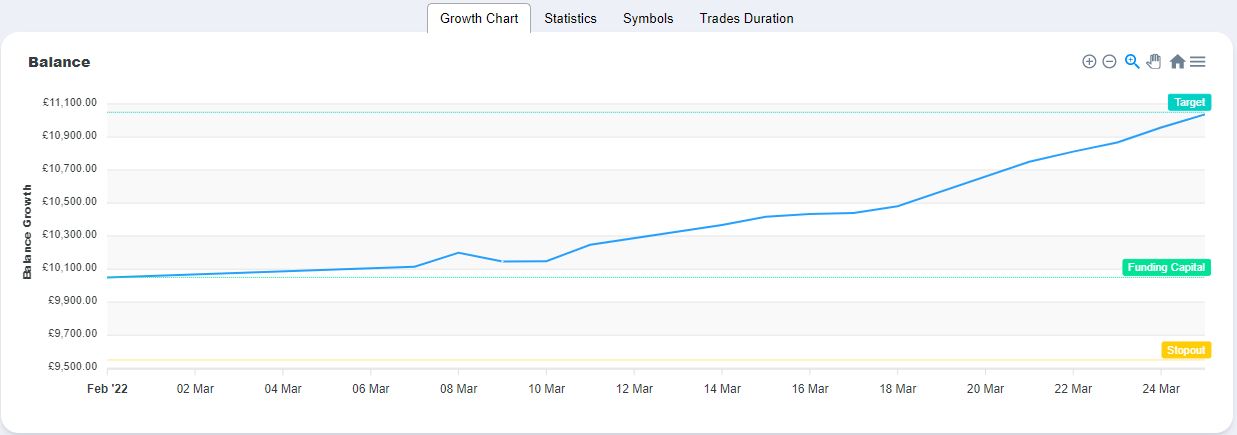
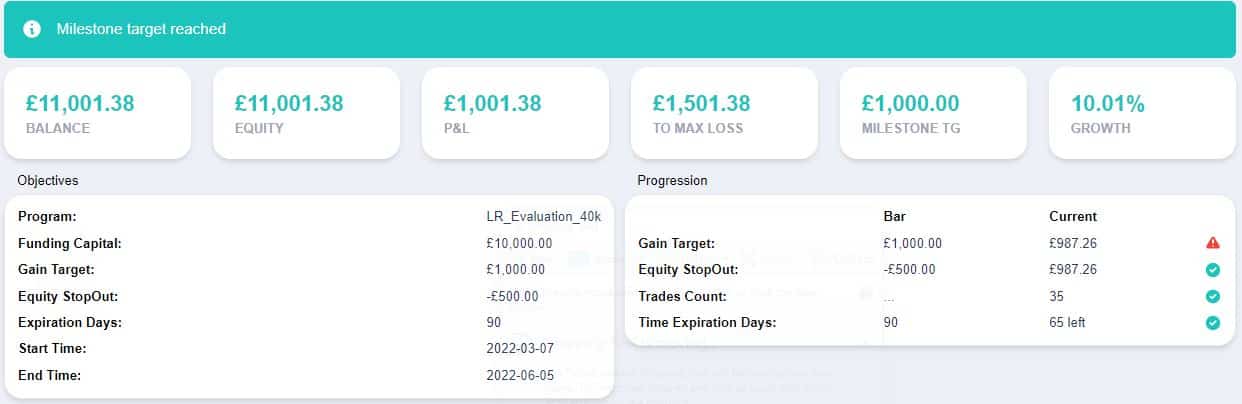
One of our latest traders, recently achieved the profit milestone and we find out how he did it and what strategies he used.

 
How long have you been trading for? 
2 years
 
How long did it take you to become profitable and how did you become consistent? *
2 years
 
What trading methods do you use? Elaborate on your trading style. 
Simplicity and patience
 
What has been your biggest hurdle to overcome? 
Avoiding same mistakes
 
What has been your best moment in your trading career? 
Passing this test
 
Why did you choose Forex Traders UK? 
It has a good rewarding system and progress system
 
What would you say to other traders starting out with Forex Traders UK? 
Read and write. Start off with a demo, do not rush it and have patience as being profitable is not easy with the forex market
 
What are you goals long term in trading? 
Being able to reach the maximum amount of capital with FT UK and have become successful with it


Recent articles


Share:

Share on facebook
Share on whatsapp
Share on twitter

EXPERIENCED TRADER SHARES HIS STORY

EXPERIENCED TRADER SHARES HIS STORY

https://youtu.be/oTC37U7A7Wo

One of our latest traders, recently achieved the profit milestone and we find out how he did it and what strategies he used.

How long have you been trading for? 
8 years
How long did it take you to become profitable and how did you become consistent? 
5 years
What trading methods do you use? Elaborate on your trading style. 
Proprietary algorithm, developed from an institutional trading basis, no indicators, no patterns etc. strict risk and money management
What has been your biggest hurdle to overcome? 
Exiting trades at the most prime exit
What has been your best moment in your trading career? 
357% in one week
Why did you choose Forex Traders UK? 
Recommended to me and found it interesting to be a part of a prop fund and no longer need to handle clients
What would you say to other traders starting out with Forex Traders UK? 
What’s the downside???
What are you goals long term in trading? 
Entering the robbins cup and setting a record return in the FX division never seen before
 

Recent articles


Share:

Share on facebook
Share on whatsapp
Share on twitter

10 FOREX TRADING MYTHS BUSTED

10 Forex Trading Myths Busted

The exciting and rewarding world of forex trading is more accessible than ever, with funded trading accounts available to those with even modest sums to invest. However, as with any rapidly expanding investor market, there’s some misleading information doing the rounds.


It’s important to check that anything that you hear about the sector is from a valid source. Acting on wrong information could damage your progress, or even lead into serious loss-making territory. Here are some of the most common myths you might hear about forex trading, and how to sort the fact from fiction.


  1. It’s an easy way to make a fast buck

While it is possible to make large profits from a low investment, it takes skill, time and practise to achieve this level of success. Forex trading is -definitely not for those seeking a get-rich-quick scheme. If you want the chance of immediate riches with no effort, you would be better off buying a lottery ticket.


  1. More trades mean more profits

This is a very common misconception about forex trading. Maxing out the number of trades that you make is not the path to instant profits. Forex trading is all about quality over quantity, even for the most experienced of traders. Beginners are advised to stick to the major currency pairs, such as USD/EUR and USD/GBP.


New traders can often be lured into a false sense of security after a winning streak, and take more positions, or invest more. However, the forex markets move extremely fast, and what was a flush of success can soon turn into a loss-making endeavour. It’s important in forex trading not to let your emotions rule your head.


  1. Forex trading is for high-net-worth individuals

The saying goes that the best way to make money is to have money, and it’s true that you do need some capital to invest upfront. However, the point of entry is surprisingly low, and no barrier to those on a modest income.  You don’t need to have vast amounts of cash to dabble in forex trading; you can get going with under £500.


In fact, the majority of forex trading is now carried out by casual traders rather than high powered city types who are hardened by years on the trading floor. It’s affordable, easily accessible, and there’s a wealth of information out there for anyone wishing to learn the ropes.


  1. Good traders don’t make losses

A very common misconception is that it is possible to be right all the time, and never make losses on your trades. The truth is, that losses are an inevitable part of the trading game, and happen to even some of the most experienced traders. The only way to minimise the chance of making losses is to cultivate a solid strategy and stick to it.


As you gain more knowledge and experience of the markets, you will learn how to stack the odds in your favour. You will know how to work within your risk tolerance, and how to read the market conditions. There really is no magic beanstalk that leads to a string of endless success and huge profits!


  1. The market is fixed against traders

Casual traders who have been disappointed with their performance sometimes claim that the forex markets are rigged against traders. This is simply not the case, as it is impossible to completely predetermine a market as liquid and dynamic as the forex markets.


The foreign exchange market is entirely legitimate, although like any large financial market, there is the possibility of fraud occurring. However, the markets are robustly self-regulated by the Commodity Futures Trading Commission and the National Futures Association (NFA).


When choosing a broker for forex trading, check that they are registered onshore, and are included on the NFA database. Also check out reviews on sites such as Trustpilot, just as you would when researching any potential purchase or service.


  1. You can turn news events into easy profits

Events reported in the news, relating to political, economic or geographical affairs, can and do impact on currency values. However, it is not as simple as scouring the media to try and anticipate how the markets react. It is very difficult to make money this way, unless you have advanced knowledge of statistical analysis, and prior access to information.


  1. A stop-loss order is the only risk strategy you need

Successful forex trading is impossible without a full risk management strategy. To avoid getting drawn into an unmanageable situation, you need to do more than just use a stop loss order.


Be honest about your financial circumstances, and know how much money you can comfortably afford to lose with each deal. Make an assessment of your income and outgoings, and the percentage of your savings you are willing to play with. This will give you an idea of the degree of variability that is available to you in your profit and loss margins.


Even if you have plenty of capital at your disposal, you will still need to do more than avoid worst case scenarios to be a successful forex trader. Beginners should start small, risking no more than 1% or 2% of their total capital per trade at first.


The road to lucrative trading does not lie along taking big risks, but rather through developing a robust and careful risk management strategy. Stick to a low-risk program until you feel that you have some solid experience under your belt.


  1. You can only learn how to trade from videos and books

You certainly need to learn the ropes before you enter the world of forex trading, and reading up on technical details and techniques is important. However, in the end, it’s your money at stake, and no one has a more vested interest in that than you. There is always an unknowable element to trading, because the market is so liquid and dynamic.


Even the greatest experts can’t teach you everything you need to know, and even the most experienced traders make losses sometimes. Like driving a car, in the end you are on your own out there, and will have to make your own judgment calls to navigate your way around the system.


Developing the right trading mindset is just as important as learning about the technical elements. Remember that experienced and successful traders make objective decisions, and refuse to be tempted by greed for greater profits, or to become over-cautious through fear. They have the ability to make logical decisions within a short timeframe.


Some people find that learning mindfulness techniques, which teach you how to centre yourself in the present moment, work well for them. If you think that this sounds too woolly for you, remember that top professional athletes often use such methods to stop them ‘choking’ at high-pressure events.


The power of the mind to subconsciously influence our emotions and decision-making process should not be underestimated. Knowing when to step back, and when to stick to your guns, is an art that can be mastered through practice, experience, and learning from the odd mistake! 


  1. It’s too complicated

Having stressed the importance of learning and developing a strategy, it’s just as important to remember that a more complicated strategy doesn’t generally increase your returns. Therefore, once you have worked out a formula that brings modest rewards, you should remain consistent in your approach, rather than enter a rabbit hole of tweaks and turns.


Keeping yourself well informed about world economic events will give you an edge as a trader, because macroeconomic factors are what drives the currency values. To a certain extent, some understanding of economic principles will help, but it’s not necessary to be an expert or hold a degree in this area.


  1. It’s a full-time job

Although the forex markets are open almost 24/7, it’s a myth that you need to spend all your waking hours monitoring charts and graphs in order to get ahead.  In fact, the majority of forex traders have full-time occupations, and dabble in the markets at evenings or weekends.


As the major financial markets are most active when they open at 8am UTC, it’s possible to fit in trading around regular 9-5 hours. It’s perfectly feasible to top up your income from trading profits, simply by committing to a few hours a week. It is important to have a disciplined risk management strategy, but this can be fine-tuned as you go along.


As we have mentioned, there’s no great mystery to successful forex trading. Anyone can learn the basic principles, through online forums, talking directly to other traders, and reading up on techniques. It does take some time, but your patience will be well rewarded if you maintain a consistent approach.


All this is to say that forex trading is now more accessible than ever before, and there is no reason why anyone with a certain degree of financial savvy should not make a profit. Many people find it is an excellent way to top up their salary, without taking unreasonable risks with their finances.

Recent articles

Share:

Share on facebook Share on whatsapp Share on twitter