HOW TO SMASH A SIDE HUSTLE IN TRADING

How To Smash A Side Hustle In Forex Trading

Forex trading can seem like a full-time occupation, but the truth is, most people fit trading in around their day job. With some research and practice, it’s perfectly possible to complement your salary with some significant returns from a side hustle in forex trading. Think this sounds too good to be true?  Here’s how to make it happen!


Make sure you know the basics

If you are a total beginner, then it’s a good idea to set up a demo account to get some practise in, and make sure you have got to grips with the basics of the game. You don’t need any specialist equipment besides an ordinary desktop PC or a laptop, to access a platform that provides forex instant funding.


If you are already competent at dealing with your personal finances, including budgeting and investing, you should find the fundamentals of forex trading relatively easy to pick up. The forex market is extremely dynamic and flexible, and operates almost 24 hours a day, making it ideal for those who want to use it as a profitable side hustle.


Develop the right mindset

You need to accept that the risk of loss is a part of trading, and risk needs to be managed to avoid the prospect of getting drawn into a situation that you can’t sustain financially or emotionally. Trading within a limited time frame means that you will have to make quick decisions, so it’s important to be psychologically prepared for the challenge.


You need to learn how to manage the natural human emotions of greed for greater profits, and fear of losses, to avoid being drawn into subjective, rather than objective decisions. There’s plenty of material both on and offline about the psychology of trading, so it’s worth familiarising yourself with some of it before you get going.


Understand leverage

Leverage is a finance provided by brokers to traders, which allows you to buy currency lots for a fraction of the cash represented in a lot. High leverage is available for forex trading, which is normally expressed as a ratio.


For example, a ratio of 1:1000 means that you can trade with just $100 for an investment of $100,000. To trade with a 1% margin, you would need $1,000.


As you can see, high leverage can substantially increase your profit potential, but it needs to be understood and used wisely to minimise losses. Start small, risking just 0.25% or 0.5% of your total capital per trade at first. Some funding platforms will charge a fee for leverage, so make sure you are familiar with the terms and conditions before signing up.


Commit yourself to a strategy

It does take more than the occasional dabble to make forex trading worthwhile, so it’s important to work out your strategy and stick to it. If you have a full-on schedule, you’ll have to do some juggling so that you have a few hours spare at the weekend or in the evenings.


Keep a track of your gains and losses as you go along, to give you an insight into what is working and what isn’t. This will help you to refine your methods. Some traders even do something called ‘backtesting’, which is a process of reviewing historical data to see which strategies work and which don’t.


Set yourself realistic goals, and know how much money you are prepared to risk losing with each deal. This means reviewing your outgoings and income, and working out how much disposable cash you can stand to lose without threatening your ability to pay essential bills, or damaging your savings account too badly.


Identify peak trading times

Because forex markets are open around the world on an almost 24/5 basis, it’s easy enough to fit trading in around your scheduled work hours. However, it’s important to note that the markets are more active at some times of day than others.


Research the most optimal times of day which fit into your available trading hours, which will probably be early morning or later in the evening. The markets for the major currencies are generally most active at the beginning of the day.


Use US Dollars as a trading pair

Beginners are advised to use US dollars (USD) as one of their trading pairs, as this is the most readily available and frequently traded currency of all. For a new or part time trader without the time or experience to study the markets carefully, trading the USD with the Euro (EUR) or the British pound (GPB) is advised.


Other pairs that can be traded relatively easily include the USD/JPY (Japanese Yen), USD/CHF (Swiss Franc), USD/CAD (Canadian Dollar), and USD/AUD (Australian Dollar).  More exotic currencies from emerging markets are best left for more experienced traders, as they are prone to greater volubility and carry a higher risk of making losses.


The time of day you are available to trade will also influence your choice of currency pairs. For example, the best time to trade for the major London, Tokyo, and Sydney stock markets is when they open at 8am UTC.


Risk tools

Even experienced traders will use tools to put a ‘stop loss’ on their account. This puts an automatic stop to trading when the value drops to a certain level below the entry price. This is a common risk management strategy, which prevents heavy losses in a fast-moving climate.


Learn as much as you can

Forex trading is a steep learning curve, but it is perfectly possible for anyone who is prepared to put in the work to make it a lucrative part time occupation.


This will happen faster if you keep up with the broader factors that influence the currency markets, such as geopolitical events, the unemployment rates of particular countries, and the level of demand for particular commodities produced by individual countries.


Many people find that joining online forums and communities is a great way to learn from others who have already learnt from their mistakes! You will also be able to post questions yourself if you are curious about something. This can be helpful, but be aware that most users will be posting anonymously and not everyone will be providing correct information.


Strike a balance between getting practical experience of trading, and learning as much as you can from forums, books, videos, courses, and trade journals. Focus on the currencies that you want to trade in, and learn how to analyse their movements. Also read as much as you can about risk management strategies, as this is crucial to successful forex trading.


There is no single strategy or formula for success in forex trading, but over time, you can hone your instincts and knowledge to mitigate the risks and maximise the potential. The more prepared you are, the better your results will be. Becoming skilled in trading takes time and patience, and it is always better to take small steps that can easily be reversed.

Recent articles

Share:

Share on facebook Share on whatsapp Share on twitter

HOW TO FIGURE OUT YOUR RISK TOLERANCE

How To Figure Out Your Risk Tolerance

The forex market is an active and liquid market, with the potential to bring excellent rewards for traders. Over $6.6 trillion of trade volume is achieved per day, so there is no shortage of opportunities to make substantial profits. However, this flexibility also comes with a certain amount of risk, which needs to be understood.


When it comes to successful trading, establishing your risk tolerance is one of the key strategies. Here’s a look at what risk tolerance means in relation to forex trading, and how to determine what your personal risk tolerance is. A well thought out strategy will make you more confident and capable of balancing risk and reward in your trading.


What does risk tolerance mean in forex trading?

Risk tolerance in trading means the degree of variability that you can stand financially in your investment returns. In other words, you need to ask yourself what is the maximum amount of money you are willing and able to lose in each deal?  This will be an individual choice, depending on your personal circumstances.


What’s your level of trading experience?

If you’re reading this, it’s likely that you are new or just making your first forays into forex trading. Therefore, it makes sense not to throw yourself in at the deep end. Start off small, with a low-risk program, or even a demo account, and find your feet.


Most newbies tend not to risk more than 1% or 2% of their total capital per trade until they have more experience under their belt. This means that if you were to start with $10,000 in your account for example, and were to set a maximum loss allowable of 1%, you would never end up losing more than $100 per trade.


There will be plenty of time for the more strategic manoeuvres further down the line, so you don’t need to take any serious risks at this point. Remember that profits tend to come to those who manage risk carefully. Study the strategies and psychology of forex trading to help sharpen up your skills, and you’ll soon be ready for the big time.


How much capital do you have to play with?

To take any managed risk with your investment, you need to ask yourself how much disposable income you have to play with. That is, what percentage of your earnings or savings are available to you, after your bills, mortgage, taxes, and all your other outgoings have been paid out.


To test this out, ask yourself what percentage you are happy to risk, and comfortably go about the rest of the day without monitoring the situation like a hawk.  It is likely to be an amount which won’t threaten your ability to pay for essentials such as food, housing, and energy, or eat too drastically into your holiday fund.


Find out the amount you’re willing to lose, based on an honest and realistic assessment of your financial circumstances, and don’t go beyond that. It can be tempting to push yourself over your limits, because greater risks reap greater rewards in forex trading, but this is a dangerous path to tread if you are going to end up with unpayable debts.


Be consistent with your risks

It can be easy to be lured into a false sense of confidence with the first flush of success, and increase your positions, or take larger positions, but this is a classic rookie error. Take the attitude that a loss may be just around the corner, and don’t let a run of profits alter your risk management strategy.


Remember that the forex markets are extremely dynamic, and the wheel will soon turn, whatever the current situation may suggest. Therefore, becoming overambitious too soon in your trading career is never a good idea. Be strong, and maintain a consistent approach if you want to see the best results.


Keep up with your positions

Check up with your positions at the end of each day. Depending on what platform or app you are using, this may be automatically displayed for you. It will let you know if there are pending positions, and how much available cash you have.


Learn to read the market

Make sure that you are familiar with forex trading terminology, and keep on top of the forex news. This means you will be able to anticipate how the market will behave. The demand for currencies is influenced by geopolitical events, tourism activity, the economic buoyancy of a particular country, interest rates, and many other factors.


The forex markets fluctuate on a daily basis, and obviously, a weaker currency means there is always a stronger currency to profit from somewhere. Currencies are traded in pairs, for example, the EUR/USD (Euro/US Dollar) and the USD/GBP (the US dollar and the British pound).


Currency pairs that are not associated with the USD are known as crosses, or minor currencies. The currency pairs of emerging markets are known as exotic pairs. New traders will not usually invest in emerging markets, as although they often experience fast growth, they can be unstable, and less well-regulated than advanced economies.


Pay attention to commodity prices, as the strength of a currency is linked to the major commodity exports of a particular currency. For example, the New Zealand Dollar (NZD) is strongly linked to the price of wool and dairy products. When the demand for these products rises, the cost will rise and the currency will strengthen.


The Canadian Dollar (CAD) is heavily correlated to the volume of oil exports for that country, and the Australian Dollar (AUD) is linked to the price of gold and iron ore. A ‘Bear Market’ is a term used to describe a market where all currencies are on a downward trend, usually as a reaction to disruptive geopolitical or environmental events.


A Bull Market on the other hand is when events take a more positive turn, and as a result economic confidence rises, leading to an upward trend in currency prices.


Learn about the psychology of trading

Of course, you need to know the technical nuts and bolts of forex trading to be successful. However, it is just as important to be aware of the psychological investment you are making. You will need to be able to make good decisions in a short timeframe, and manage your emotions.


Good traders look beyond their gut reactions, in order to remain objective, and gain a competitive edge over their rivals. Making quick decisions and thinking on your feet can lead to subjective responses, so you need to fine tune your thinking and overcome this natural human tendency.


Dealing with profit and loss margins naturally creates a fear of losing, and a greed for greater profits. However, being in thrall to these two emotions can lead to serious mistakes. Swift reversals in market trends can catch out those who try and push profits to a maximum, while the overly cautious will struggle to make progress.


This is where your risk management strategy can help you out. As we have discussed already, you need to know what your risk tolerance is from the outset.  This will act as a built-in check and balance system, and prevent you from losing unmanageable amounts of money. A new trader might set a limit of 1%, for example.


Broaden your knowledge base

As we have also discussed earlier, you can gain more insight and expertise into forex trading by researching and studying the markets. This will lend a greater depth and foresight to your decisions, allowing you to see beyond temporary glitches and spikes, and develop an eye for the bigger picture.


Therefore, keep up to date with the financial press, including trade journals, and speak to people who work in the sector if you can. Forex trading is strongly driven by macroeconomics, which means the economy as a whole, rather than individual behaviour. Current affairs, such as political decisions, can influence the economic health of a country.


The forex market depends on the balance of trade between nations. If a certain commodity is in high demand, then this will strengthen the currency of the country which produces it. This is because foreign buyers must convert their currency into that of the country they wish to purchase the goods from.


Develop an understanding of the factors that drive economic growth and decline around the world, in order to keep up with the complexities of forex trading.


Accepting risk

Finally, it is important to accept that risk is all part of trading, and that losses are not failures; even the most experienced of traders sometimes make losses. However, by careful risk management, you can learn how to stack the odds in your favour, and minimise your level of risk.


Financial trading without a risk management strategy removes any control from the situation, and is basically the equivalent of gambling. By learning how to gauge your personal risk tolerance, you will increase your skills as a trader, and also prevent yourself from ending up in a precarious financial position.


If you are looking for instant forex funding, talk to us today.

Recent articles

Share:

Share on facebook Share on whatsapp Share on twitter

DAMIAN IN NOW TRADING £70,000!

DAMIAN IS NOW TRADING £70,000!

https://youtu.be/bnQMwc111zI

One of our latest traders, Damian has recently hit the first profit milestone and is now trading £70,000! We take a brief look at his performance.

How long have you been trading?

13 Years

How long did it take you to become profitable?

A long time. Became profitable by strictly sticking to trade plan and risk management

What is your main trading style?

Aim to Trade Trending markets off the daily timeframe looking for good entries and having set rules for getting out of the trade. Also trade shorter time frames using similar rules for markets that are faster moving or strongly trending.

What would you say to other traders with FTUK? 

Good way to get access to Capital and great trading conditions.

Recent articles

Share:

Share on facebook
Share on whatsapp
Share on twitter

BEATING FEAR IN TRADING

BEATING FEAR IN TRADING

Beating The Fear In Forex Trading


Whether you’re new to the wonderful world of forex trading or whether you’re well versed in the art of buying and selling, there is a single universal truth for one and all… currency trading can be scary!


Of course, the fear is partly what attracts us to trading in the first place. What’s life without a little risk, after all? But fear starts to become problematic for traders when it gets in the way and holds you back, driving you to making all sorts of terrible trading decisions that ultimately lead to substantial losses and failure.


There’s no place for emotion when it comes to trading and you’ll need to keep your own in check if you want to see success. Fear is perhaps the biggest obstacle you’ll have to overcome if you do want to start making real wins – and don’t be fooled into thinking that it’ll be an easy thing to accomplish.


Many traders find it really hard to keep fear at bay and all that work they put in researching different strategies and picking up different technical skills goes out of the window. Fear ends up making the decisions for them – and they’re usually the wrong ones.


Of course, it’s normal to feel fear when you’re investing so much time and money into something. You don’t want to lose, after all.


But also bear in mind that this fear can also be a force for good, as well as evil, as it means that you’ll assess all the risks properly before making any decisions. Just make sure you don’t let it overwhelm you and paralyse you into doing nothing or acting rashly. A clear head is an absolute must!


What are you afraid of?


The first step to conquering your fears is to work out just what it is that scares you most. Some fears are more common than others and it’s just a matter of being honest with yourself and seeing where you need to focus your attention first.


Fear of loss is, of course, a very common problem that traders develop. No one wants to lose their money. Losses early on can compound this issue, with traders spurred on to reduce their trading – so the chances of profits are also reduced.


Another really common fear is the fear of being wrong. Failure is inevitable and this needs to be acknowledged.


You can’t expect to be an expert immediately and it will take a lot of wins and losses before you can say you truly know what you’re doing – and the losses are a really important part of the process, so check your ego at the door and accept that you’re bound to make mistakes along the way. It’s not about being right… it’s about making money!


And then there’s the fear of missing out. This is one of the hardest ones to overcome and is largely driven by greed. When you spot a potential trade a little on the late side and you consider it to be a great opportunity, you pounce because you don’t want to miss out, even if it goes against the strategic rules you’ve set for yourself.


How can you beat the fear?


The good news is that, even though fear while forex trading is inevitable, there’s a lot you can do to address the problem head on.


The way you trade will help to keep your fears under control. First of all, never risk what you can’t afford to lose and make sure that you choose your trades appropriately. This may limit potential profits, but it’ll cut your losses as well and help you to build confidence.


Coming up with a specific trading plan is another excellent strategy to bear in mind. By following this and not deviating from the rules you’ve set for yourself, you’ll be able to reduce uncertainty and fear… and enjoy trading all the more.


Overtrading is also something to avoid where possible. If you trade too much, you’ll sustain unnecessary losses and this can take a real toll on your confidence levels. When your confidence dips, you’re more likely to experience fear of loss. So take a break, don’t trade and come back with a new mental and emotional approach to the game.


Have you tried mindfulness?


Away from the currency exchange market, you might find something else particularly useful when it comes to keeping your fears under control. Meditation and mindfulness can really make a huge difference to the way you trade and how you handle wins and losses, so if you’ve been feeling a little overwhelmed of late, it could certainly be worth a try.


A recent study carried out by researchers at Harvard-affiliated Massachusetts General Hospital found that mindfulness meditation could actually alter how the brain processes fear memories… and even extinguish fearful associations altogether.


Sara Lazar, senior author of the study, said: “Fear and anxiety have a habitual component to them – the memory of something that provoked fear in the past will trigger a habitual fear response when we are reminded of the event, even if there is no actual present moment threat.


“The data indicates that mindfulness can help us recognize that some fear reactions are [disproportionate] to the threat, and thus reduces the fear response to those stimuli. Mindfulness can also enhance our ability to remember this new less fearful reaction and break the anxiety habit.”


From a trading perspective, practising mindfulness will help to keep your mind clear and more focused on the present moment. You’ll find you’re better able to read and analyse the market and are less likely to make ill-considered decisions in haste.


And you’ll be able to boost your performance by avoiding destructive trading practices, driven by emotional responses to the likes of anger, greed and fear.


There’s a reason why so many professional sports teams around the world are increasingly using mindfulness to help give their game a boost.


Anchoring yourself in the present moment keeps you entirely focused on your current pursuit – but how do you go about achieving this particular mental state and how do you stop your thoughts, anxieties and worries from intruding?


How to practise mindfulness


The great news is that mindfulness is very easy to practise and it’s achievable for everyone, with immediate benefits to be realised from the very outset.


It can be done anywhere and at any time, which makes it perfect for traders, as the trading world changes constantly and there’s no telling what might happen, so having a tool you can employ at the drop of hat is particularly advantageous.


First of all, make yourself comfortable in a space that feels calm and quiet. Sit or lie down and set a timer for a short time (five to ten minutes, if you’re just starting out). Bring your attention to your body and how it feels, making sure you’re in a comfortable position.


From there, bring your attention to your breath, following the sensations as you breathe in and out, noticing how your chest and belly rise and fall, how the air feels passing in through the nose and out through the mouth.


Your mind will wander as you do this – and don’t try to control your thoughts. The aim here isn’t to quiet your mind… this is impossible! When your mind does wander, acknowledge the thought that has appeared and then let it go, returning the attention to your breath once again.


It can be a lot harder than you might think not to dwell on the thoughts as they appear, but be kind to yourself and don’t judge yourself harshly over what’s popped into your mind. Just bring your attention back to the breath each time.


What’s even better about practising mindfulness to up your trading game is that it will have all sorts of positive knockon effects in other areas of your life, as well.


Studies have been done that show mindfulness is effective at reducing depression, anxiety and stress, can improve emotional regulation (which we’ve already discussed!), can improve your memory and can help you think more flexibly and clearly.


Interestingly, research has also shown that mindfulness can help relieve the symptoms of all sorts of different health conditions, including lower back pain, fibromyalgia, type 2 diabetes and rheumatoid arthritis… so it seems like mindfulness has a lot of the answers, extending from the trading floor and beyond!


As for trading, attitude is certainly everything and it’s important to identify your strengths and weaknesses before you embark on your career as a trader. Being honest with yourself is essential, so you can make the necessary adjustments to your mindset that will help you see big wins more often and keep those hits to a minimum.


If you want to start trading when you like, where you like, sign up to one of our funded trading accounts and immediately start trading with real money. We provide inhouse trader support, alongside courses and online coaching… so don’t worry! You won’t be going it alone!

Recent articles

Share:

Share on facebook Share on whatsapp Share on twitter

DAVID HAS MADE 10% PROFIT IN JUST 2 DAYS!

DAVID HAS MADE 10% PROFIT IN JUST 2 DAYS!

https://youtu.be/pC2dKmc8jag

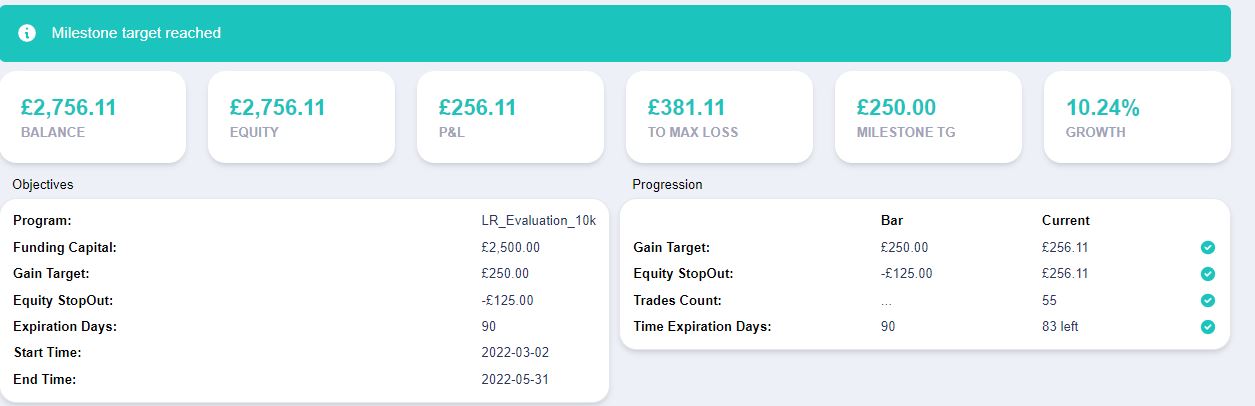
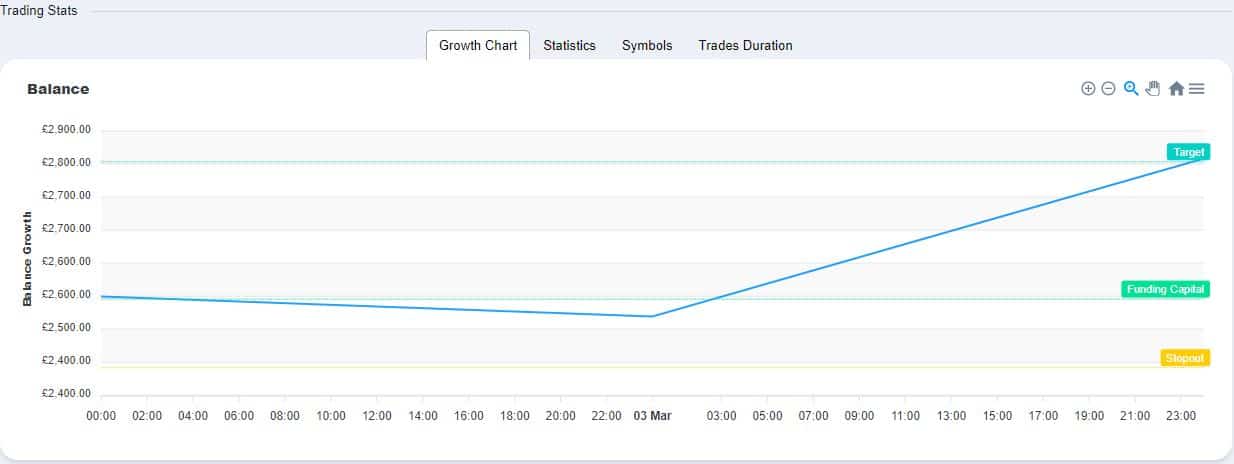
One of our latest traders, David has recently hit the first profit milestone in just 2 days! We take a brief look at his performance.

How long have you been trading?

1 year 2 months

Why did you choose us?

Recommended by a friend

What has been your experience with us so far? 

Good impression so far

What is your main trading style?

Swing and scalp

Do you have a trading plan in place? 

Yes, I have an excel I write in

What would you say to other traders with FTUK? 

Trade simple and constant

Recent articles


Share:

Share on facebook
Share on whatsapp
Share on twitter

MOHAMED HAS REACHED THE PROFIT MILESTONE IN JUST 4 DAYS

MOHAMED HAS REACHED THE PROFIT MILESTONE IN JUST 4 DAYS

https://youtu.be/qWWAuxUDiFM

One of our latest traders, Mohamed has recently hit the first profit milestone in just 4 days! We take a brief look at his performance.


How long have you been trading?

Since 2 years.


Why did you choose us?

I have read a lot of positive reviews and the prices of the programs are low. 


What has been your experience with us so far? 

I would say the risk management. 


What is your main trading style?

Day trading


Do you have a trading plan in place? 

Yes


What would you say to other traders with FTUK? 

To continue always with you in the long term. 


Recent articles


Share:

Share on facebook
Share on whatsapp
Share on twitter

REDUCE LOSSES IN YOUR TRADING

Reduce losses in your trading

How Not To Lose Money When Forex Trading


When it comes to playing the financial markets, forex trading will always be a very popular option because it’s easy to get started and there are very low margin requirements – so you can get going pretty quickly with small amounts of capital and start bringing home the Benjamins.


But, as much as it’s true that there’s a lot of money to be made, there’s also a lot of money to be lost… and you’ve got to be prepared for this, putting in the hours so you can mitigate the risks but also preparing yourself mentally and emotionally for those inevitable financial hits.


Celebrate the wins, yes, but learn from the losses and try not to take them to heart. It’s all a learning curve, after all, and the losses will help you improve your trading game… even if you can’t see it at the time.


That being said, it also makes sense to do all you can to avoid losing money when FX trading. After all, the game is all about making money at the end of the day – so here are some top tips to help you keep your hard-earned cash where it belongs… in the bank!


#1

Practise, practise, practise


As with anything, the key to success is practice when it comes to foreign exchange trading so find yourself a demo account and start placing those hypothetical trades. This will really help you improve your entry order techniques and strategies (those you use to enter a trade at a specified price level).


This can be pretty complicated because there are so many variables that affect the forex market, so practising when you’re not financially invested can help you work out what you need to do and when without any added pressure.


Making mistakes with entry orders can result in big losing trades and it’s really common for new traders to accidentally add losing positions instead of closing the trade – all by pushing the wrong button by mistake.


When you suddenly see a big loss, your confidence will take a hit and your stress levels will rise… and trading is all about keeping a cool head, no matter what happens – which is why practice is so very essential and something that all the most successful traders will no doubt have done, as well.


#2

Start off small


Of course, it’s tempting to go all in when you first go live as a trader. That’s where the excitement lies, after all. But, even with all the practice in the world, things can still go wrong and you’ll still be relatively new to the trading floor so be sensible when first starting out and don’t put everything you have on the line.


Real trading has a very different feel to it than when you’re in the practice room and you won’t gain a full understanding of how emotion can impact your actions until you’re trading live.


You may also find that your trading plans and strategies just aren’t as effective in the real world as they were when using your demo account, so starting small can help you evaluate everything and really see where you’re going wrong and what you can do to rectify it, without risking your entire trading account.


#3

Focus on money management


It might seem boring and arduous, but effective money management is an absolute must if you’re to see real success as a trader. Losses are absolutely inevitable, so it’s important to monitor your positions constantly and take the hits when they happen.


You can control the risks through stop losses, an order type designed to limit the losses from a trade. This means you can be wrong numerous times and still retain the majority of your equity – and this is certainly a better approach than having to learn a few harsh lessons when your finances seriously suffer.


You can manage your money either by implementing lots of small stops and then trying to rake in profits from a couple of big wins, or you can opt to take infrequent bigger stops and try to make smaller gains that build up over time, in the hope that these will outweigh any of the larger losses you see.


#4

Trade less


Overtrading is very common among FX traders. The thrill and the excitement of it all keeps you coming back for more time and time again, and before you know it you’ve amassed some serious losses… all because you couldn’t restrain yourself.


Work smarter, not harder, so they say – and this is a great rule of thumb to bear in mind when trading currencies. Experienced traders may well see consistent profits over time, but taking on too many trades generally only leads down a dark path and you’ll spread yourself too thin, which will have an inevitable impact on your profits.


Increasing profit is basically just about reducing and preventing your losses – and one of the best ways to go about this is to trade less frequently.


#5

The trend is your friend!


This is a really popular trading expression and one you’re sure to hear bandied about when you start trading yourself. Trends are simply prolonged movements in the market in one general direction – up or down.


For traders, this means that price responses can become predictable at levels of support or resistance, which change over time – and you can use trend analysis to look at what took place in the past to gain an idea of what’s going to happen in the future.


However, your successes and failures where trends are concerned will depend on one thing – understanding that the trend will end at some point. You’ll never know how long they’ll last and the key is to learn how to identify them early on so you can take advantage sooner rather than later… and so you can get out again without sustaining any losses.


#6

Trade one strategy at a time


Of course, it’s tempting to want to try out all sorts of different strategies at once but, again, you’ll spread yourself too thinly and it will be harder for you to track and see what’s working most effectively.


It makes more sense to pick one strategy and really get to grips with it, before trying something new. You’ll see greater success with this approach and you’ll reduce your risk of blowing your entire trading account.


#7

Preserve your trading capital


Playing a strong defensive game is essential for any successful trader, so make sure you preserve your capital, as this will keep you in the playing field for longer. If you run out of money and can’t trade, you’ll never win big.


#8

Learn to interpret forex news


Markets move because of what happens in the news, so learning to interpret what’s taking place – especially where economic data is concerned – will help you see what you need to do and when. Naturally, it’s not quite as simple as that and you may find it harder to interpret trading news than you at first thought, which can lead to losses if you’re not careful.


Watch out for reported consensus figures, as well as whisper numbers (unpublished and unofficial forecasts) and any changes to previously published reports. And remember – not all reports are created equal. Some will have a bigger impact on others… so there are a lot of factors at play and it can be quite confusing for novice traders.


#9

Don’t get cocky!


It’s important to be confident, yes, but overconfidence can be a real killer. Overconfident traders often find themselves opening too many positions and taking positions that are too big – which ultimately will lead to their downfall.


Emotions can be tricky to manage when you’re trading but you need to be able to control them, or you could find yourself in dire financial straits if you’re not careful. So, even if you have seen a series of big wins recently, keep a level head on your shoulders and don’t get carried away. The game will change soon enough.


#10

Do your research


You can’t expect to just jump into the wonderful world of forex trading and understand what’s happening right off the bat.


You’ll need to read up on and research all sorts of different theoretical notions and strategies first, as well as familiarising yourself with all the different terms and lingo that get thrown around. You’ll feel like a fish out of water at first, most likely, but sooner or later you’ll be one of the sharks – as long as you put the hard graft in at the beginning.


Sign up to one of our forex funded trading programs today. You can trade when you like, where you like, with instant access to live funds.

————————————-


Meta Description

When it comes to playing the financial markets, forex trading will always be a very popular option because it’s easy to get started and there are very low margin requirements.


Recent articles

Share:

Share on facebook Share on whatsapp Share on twitter

POSITIVE TRADING MINDSET

Positive trading mindset

Positive trading mindset


Forex trading can be an exciting and fulfilling career, but it is not for the faint-hearted. With so many uncertainties in today’s market, you need the correct trading mindset like a captain to hold your own behind the computer screen. Whilst discipline and self-control play a big role, having experience and knowing the markets capabilities will help keep you balanced.


The forex market is an unpredictable place. The best traders will always find themselves caught off guard by an unexpected outcome, but this just proves that they’re doing their job right and working hard at it! If you have the right outlook and preparation, you will be able to survive both the winning and losing days.


Forex trading is both an exciting and stressful experience. A trader’s confidence may be lost throughout the process of trading, which can lead them to become mentally exhausted as well over time if they do not learn how to adapt their mindset for success on this new life path of theirs, this means learning about mental fortitude too!


We all have moments where we feel anxious and fearful, but it’s important to remember that if you’re not in the right headspace then your performance at work or school will suffer. The more confident someone feels with what they do on a daily basis has an huge impact on how well he does throughout their career – this is especially true for traders who need confidence before putting money onto trades because there are no guarantees when making decisions about whether something could lead towards positive returns.


Focus on process


In this article, we will discuss the rewards that Forex trading can offer. We have mentioned in most of our previous articles about why focusing on returns may not be a good idea for traders and what is more important when investing your funds into any form of investment (not just forex).

Almost every trader out there knows how profitable currency moves are; however- as with many things in life! There’s always an “exceptions to exceptions”. It turns out these few people who focus too much time or money into making them rich tend do even worse than those without such addictions…


The forex market can be highly volatile and the uncertainty in it is pretty high. There really isn’t a sure way to make 100% profit on every trade, but if you’ll focus mostly inwards your trading plan rather than outwards – which could destroy any chance at wealth-building over time due too much attention being paid only towards seeing how well one was doing financially while ignoring all other aspects like risk management skillset or lack thereof etcetera-, then things will go more smoothly.


You will start to feel bad after this trade. You might even go on a revenge trading spree without thinking twice, all you’ll be able think about is taking back what was lost and making things even worse than they were before! More stress sinks in – which means your decisions get clouded by it too (incurring more losses).


So, it’s clear that you can lose a lot of money in the markets, but if you focus on process rather than outcome then there’s no need to worry. Your trading plan will dictate when to enter and exit trades regardless of whether they are winning or losing so long as your account remains safe throughout all transactions. So even though today might not turn out well for us traders (and trust me – sometimes it feels like every day is bad!), at least tomorrow awaits with open arms and potentially a different set of trading results. 


Focusing on the process first will give you a competitive edge. Consistency is key to being profitable as well, so don’t neglect that!


Practice and patience


Everyone knows that to be a great trader, you must put in hours of practice. But what if I told you, it’s not just about how much time we spend practicing our craft but also where? The type of trading content you consume and post-practice mood! So next time you study a new method or look at someone else’s trades, try to see what you can extract in a positive way and discard the stuff that doesn’t make sense to add to your current strategy.


The more you prepare yourself, the easier it will be to find success in any field. Being prepared for what’s going on around us can make a huge difference and give off an air of professionalism that people want from their professionals!


Positive thinking


Your positive mindset in forex trading is one of the most important aspects to your success. If you want confidence, then thinking on Brighter side will help improve both how successful you are at trade and live with yourself day by day since everyone has their own problems or anxieties which they struggle through every single second like us traders do too.

It is no secret that successful people in forex trading are confident, regardless of what life throws their way. Your thoughts create your reality so if you prepare for the rainy day then it will most likely materialize soon after.

Recent articles

Share:

Share on facebook Share on whatsapp Share on twitter