UNDERSTANDING DXY

Understanding DXY

Understanding the Dollar Index (DXY) is a fundamental requirement for all Forex traders.

The DXY is the USD Dollar Index that controls the value of the US Dollar (USD). If you have ever traded Forex, you have most likely traded a currency pair with the US Dollar included. Any currency pairs that contain the USD are known as major currency pairs. Any currency without the USD involved is a cross-currency pair.

The DXY base price is 100.00, which is relative to the percentage of price gain or loss. If the value is 97.00, this means a 3% decrease in value has occurred since the beginning of the index on that chart. There are many uses for the information gained from DXY movements. It’s an accurate reflection of the dollar price and how it compares to other currencies.

This information can also be used for other business objectives by goods and commerce. Any investor or interested party can examine the impact of economic conditions on the dollar in order to plan future financial moves. This information will also be used to convert currencies for travel and tourism.

How do you manage USD?

Breaking down conventional Forex charts on a technical level is similar to reading the US Dollar. However, when it comes to fundamentals and price movements, analyzing the US Dollar necessitates a deeper understanding. The fact that you have a bias for DXY will persuade you to think about the influence it will have on other instruments.

For example, if the Dollar Index goes up the EUR/USD chart will go down. That’s because the USD strength will pull the price down within the currency pair. On the other hand, if we look at USD/CAD, both the DXY and USD/CAD will move in a similar direction 100% of the time. So, managing biases and receiving conflicting information can easily send traders in circles. It’s, therefore, best to manage each asset on its own.

Keeping the Dollar Index in your watchlist is a good idea, even when considering your other pairs. Track it over time and plot on simple key levels on the higher timeframes such as daily, weekly and monthly. The Forex market should keep revisiting your key levels and analysis can provide that extra edge for your market judgement.

How do you trade DXY movements?

Let’s look at how we can use the DXY as a tool to find profitable trading setups. When analysing your watchlist of currency pairs, knowing where the DXY is on the chart and its overall sentiment can help with finding clarity for the other Forex pairs. You can then identify scenarios in which they correlate with your bias or viewpoint on the US Dollars forecast.

The news and fundamentals will have a large influence on the DXY. The global trade will also reflect in the value of US cross-rates across the world. So, when it comes to following the US economy and its impact on the Forex market, you can go as in-depth as you like. Jobs data or inflation numbers originating from the US government will provide the majority of the news that causes volatility.

Highly volatile market

Many traders may be enticed to participate in trading during live speeches by the Fed and the US president throughout the year in order to make a quick buck. More money is rushed into the market during major occasions, creating more manipulation by larger investors and rendering the market more volatile.

That’s why we recommend that our Forex traders not trade during heavy news announcements that could affect their open trades. Sometimes, the price is pushed so hard in both directions that stops are triggered.

Moving the US Dollar

While some positive US news may appear as if it will increase the value of the dollar, you need to interpret how the data will affect world trade or other business interests. We can view currency circulation, volume, and other factors that will move the value of the dollar. 

If you forecast dollar weakness in alignment with the fundamentals, then it might be worth looking to see if the EUR/USD chart has enough bullish confluences to enter into a long/buy position to take advantage of the forecasted dollar move.

It is also possible to trade indices such as the US30 where you can also take advantage of US economics. Spreads and trade conditions are similar to trading commodities – something to keep in mind. As of late, some traders have been able to profit lucratively from the US indices. 


DXY Conclusion

Gathering evidence on the US Dollar’s movements can put you steps ahead of other Forex traders. Knowing the key levels and volume times will enable you to effectively manage trades relative to the daily news.

If you do have any major currency pairs on your watchlist, it is also crucial to review the DXY chart before and during a trade to make sure you are taking into account the full story. If you haven’t yet looked at the DXY, search ‘DXY’ on Trading View, and back-test your technical breakdown strategies to understand its movements.


Share:

Share on facebook Share on whatsapp Share on twitter

FOREX CHARTS

HOW TO USE FOREX CHARTS

Forex charts are essential for technical analysis, identifying repeated patterns, and forecasting trends for Forex traders.

Forex charts are an important tool for technical analysis for Forex traders. To make the best selections based on accurate data, it is critical to comprehend every element of a Forex chart. Use the chart type and time interval that best fit your needs. In this approach, when trading Forex, a Forex chart serves as a compass.

What is a Forex chart?

A Forex chart is a price chart that shows the actual and historical price and volume data of one or more currency pairs. In other words, a Forex chart graphically represents the behaviour of a currency across throughout various time frames. A Forex chart is often referred to as a currency chart.

Most Forex charts offer additional support like technical patterns and other Forex indicators overlays that help you to discover a trend.

Why do we depend on Forex charts?

Forex charts are key for technical analysis. Forex traders study price movement, and it is all about discovering repeating patterns and trends. When you look at historical price movements, you might be able to determine the future price movement. With this technical analysis of Forex charts, you can gain a strong idea of the trend and how price will develop.

When you perform proper technical analysis, you might be able to discover support and resistance levels. History tends to repeat itself, so you are able to use a Forex chart and look at patterns in the past and predict repeating movements.

Types of Forex charts

There are three main chart styles in Forex trading:

  • candlestick chart
  • bar chart
  • line chart

Every Forex trader has their own preferences for which Forex charts are ideal for them, but the candlestick chart is by far the most popular. A Japanese candlestick chart is also known as a candlestick chart.

It visualizes the price movements of a currency. Each “candlestick” typically shows a certain time interval. For example, on a monthly chart, every candlestick represents a day. For more information about candlestick patterns, read out blog about this topic.

Timeframes of Forex charts

There are many timeframes to use in analysis of your Forex charts. You can choose from the following options:

  • M1: 1 minute
  • M5: 5 minute
  • M15: 15 minute
  • M30: 30 minute
  • H1: 1 hour
  • H4: 4 hour
  • D1: daily
  • W1: weekly
  • MN: monthly

The optimal timeframe for you is determined by your personality and the type of trader you are. A monthly Forex chart will not help you if you are a day trader. In this scenario, a 1-minute chart could be a better option.

A common mistake beginner Forex traders make is to use too much detail. More is not always better! With a 1-minute chart you can easily get overwhelmed with all the information presented. It is most important to choose the timeframe that gives you the perfect amount of information.

Want to know more about Forex charts and timeframe analysis? Read our blog about 5 tips for timeframe analysis.

Forex tick charts

You might use a tick chart instead of a Forex chart that creates a bar for each time interval you specify. When a particular number of transactions are completed, tick charts generate a new bar. Forex tick charts are more beneficial for some Forex traders since they reduce market noise to a bare minimum. There are no low activity bars, and each bar is equally represented.

Other advantages of Forex tick charts are:

  • Momentum and strength are much better visualised.
  • Trends are more pronounced which makes it easier to trade as a trend trader.
  • Charts are cleaner as low activity periods are not shown.

Forex charts trading platforms

In spite of the many Forex charts for sale on the market, it is okay to use the one provided to you by your trading platform. 

How to read Forex charts

First and foremost, you must determine which direction the chart is moving. When you want your base currency to be stronger than the terms currency, you want the chart to rise. When you expect your base currency to weaken, on the other hand, you expect the currency pair to fall.

Next, you must look at the time frame displayed on your Forex chart. Some charts provide the option to show multiple time frames which might give you an advantage in certain situations.

Third, you should realize that the BID prices are shown on the Forex chart, rather than the ASK price. The price depends on if you buy or sell, so it is important to consider, as it could deviate a few pips.

Next, keep in mind that the times displayed on the Forex charts are from a single time zone. It is useful to keep a world clock near you to monitor critical timings (for major economic announcements) in other time zones, as this can have a significant impact on the Forex rate.

Finally, you should check if your Forex charts represent open or close times of each interval. Every chart can be programmed differently. For example, on a monthly chart it could make a big difference if the opening time is used or the closing time.

Do you want to apply your Forex chart skills to a funded Forex account?

Do you want to start Forex trading, based on using Forex charts, with substantial capital of a funded Forex account? Forex Traders UK is passionate about funding traders in the Forex market, no matter their background, level or current situation. As long as you have trading skills, we give you a platform to use them.

Forex Traders provides you with capital via its trading platform, allowing you to demonstrate your trading abilities by trading in the real market with real money. There are no entrance exams, no demos, and no questions asked. Your capital is doubled every time you hit your targets, until you attain a guaranteed capital of one million pounds. And the best part, you keep no less than 50% of your profits, without any risk.


Share:

EMMANUEL IS NOW A LEVEL 2 TRADER

EMMANUEL IS NOW A LEVEL 2 TRADER – SUCCESSFUL FOREX TRADERS

Emmanuel’s performance

Emmanuel has shown great discipline in his ability to achieve the profit target of 10%, securing £1,005.65 on his £10,000 starting balance. He has a wide range of instruments to trade and has placed correct stop losses for all his trades. He remained within all our rules and exceeded his target. We wish him the best with his larger account!

His experience with Forex Traders UK

Emmanuel has told us that his experience with Forex Traders UK has been excellent, and we have set up a trading account for him that exceeds all of his requirements. In comparison to other prop firms, we have been more supportive and have offered the fastest pay out.

Want to be featured on our blog with successful Forex traders?

Send us an email to support@forextradersuk.com to be featured on our blog and show off your performance.

Share:

Share on facebook Share on whatsapp Share on twitter

SETTING STOP LOSSES

Setting stop losses as your trading seatbelt

Stop losses are like seatbelts for Forex traders. They will help a Forex trader stay afloat and grow their capital.

A stop loss is a level at which the market will remove a trader from a position to prevent further loss. The main goal of a Forex trader is always to grow capital. We can cut losses short with the use of a stop loss order on all of our trades.

All Forex trading platforms will have the option of stop losses as part of the trade setup. Should the currency pair reverse, a trader will be able to precisely establish a stop loss at a level at which they must exit the deal.

Why use a stop loss?

There are two basic rules:

Rule 1: Always use a stop loss!

Rule 2: Never move a stop loss once it has been placed.

There is no set or standard way to place a stop loss. The stop loss required in any given situation will be determined by market conditions and the trader’s opinion of where the cut-off point should be.

Without a stop loss, a Forex trader’s account would suffer, and trading will cease to perform like a business. It’s a complete risk. We can avoid significant losses on trading accounts by implementing tactical stop losses.

Avoiding any emotional decisions

When sitting behind the charts all day, some Forex traders may say that they will personally close out the position. Setting a stop loss prevents our emotions from taking control, because we’ve previously decided where the trade should end if the Forex market moves against our trading bias.

As Forex traders, we don’t want to be a part of the group of traders who blow their accounts. We always want to be able to immediately reduce a loss and exit the Forex market before the loss grows too large.

Maintain discipline and let the stop loss alone after it has been set. It’s tempting to imagine that moving the stop loss into a higher loss will offer the transaction more room, but this will simply leave you open to significant losses in your trading account.

How to set a stop loss?

Physically setting stop losses can be easy, but knowing where to place them on the charts can be a more difficult task.

Managing stop losses while a trade is active is a good idea, especially if you want to bank some profits while reducing risk in certain trading scenarios. This can be done in your trading platform. 

Percentage of your account

In every trading scenario, you will want to set a stop loss based on a percentage of your account. This will allow you to predetermine the total risk allocated on that trade. If you are trading a standard account, this should be no more than 3%.

Some traders may control their risk by the number of pips or points on that stop loss. So, if they risk 0-40 pips = 1% risk. 40-100 pips 2%. And anything above up to 3%. By setting your stop losses in this way, this you will control the risk exposure and adapt for each situation.

Short trades will be quicker and more volatile. The larger pip trades, on the other hand, will take longer, so you’ll want to be paid for your winnings when they meet their targets.

Identifying the right places

Using indicators to identify key areas to place these stops could be a good strategy. Using average true range or Bolinger bands on smaller timeframes, for example, will give you a sense of structure. After that, you’ll need to set a stop above or below those levels, and if such levels are met, the bias will be invalidated.

Remember that when you use popular indicators and tools, they are accessible to every other retail trader, making them open to manipulation during certain hours.

Traders can make mistakes while establishing stops, such as placing them too close together with insufficient breathing room. If you don’t let the Forex market breathe or vary, it will almost certainly hit your stop loss.


Understanding volatility

It is a good idea to research and try to understand the currency pairs you trade and monitor their volatility when looking at the size of the stop loss to place. It is not possible to make 100 pips profit if you only gave the trade 5 pips stop loss. On the flip side, you also don’t want to place your stops too wide. 

The pip value is the ideal place to search for stop losses. After you’ve determined your pip stop loss and trade plan, you’ll want to consider risk and position size.

Finally, pick a broker or service provider that matches your trading style. You’ll have capital management principles that you define for yourself, so combine that with correct position sizes and you should be in good shape.

Setting a stop loss conclusion

It will be difficult to stay afloat in the world of not only trading but also investing without using stop-losses. They are the fundamentals that should be followed at all times when trading.

Examine your losses if you are a losing trader over a large sample size. In some cases, lowering them can help you become more profitable. Always be in control of your risk and know each trade plan before you execute the position.


Share:

IS THE MARKET RANGING OR TRENDING?

Is the Forex market ranging or trending?

Is the market ranging or is it trending? Make note of this major factor before you plan your trade.

The overall trend direction of the Forex market is the first thing to consider while looking for a trade. Consolidation will be present in most circumstances, but it is critical to grasp the daily and weekly trends. This Forex market sentiment will have an overriding effect on the market and open trades.

Trending market

Traders often agree that trending markets are the most straightforward to trade. A trending market carries momentum in one direction for a long time. While these trends can be highly profitable when Forex trading, the retracements and trend changes are very significant, so effective use of stop-loss placements is necessary. 

Uptrend

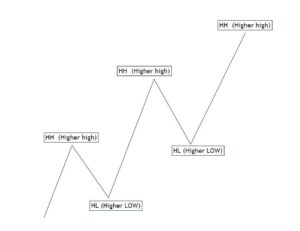
In an uptrend market, the currency pair will form a series of higher highs and higher lows. An uptrend can be confirmed with at least two printed higher highs. In this trend, we should only look for buys on the daily or weekly timeframes.


When analysing an up-trending market, look to trade within the overall direction of the Forex market momentum. We can seek out confluence such as trendline bounces or higher lows to form at Fibonacci retracement levels. These patterns will form buy zones, indicating that the currency pair will continue to rise and profit.

Downtrend

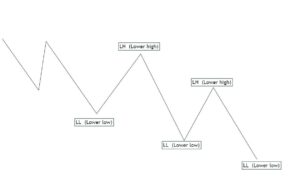
In a downtrend, the currency pair will create a series of lower lows and lower highs. This can be confirmed by at least two printed lower lows. In a downtrend, we want to look for short/sell trades most of the time.


Trend reversals

The shift in general momentum that causes a change in direction and pushes the price in a new direction is known as a “trend reversal.”

Range bound market

Range bound markets are the trickier Forex markets to trade within, as they can be erratic. These Forex markets will move sideways between two major key levels for a long period of time, and can often provide the most market manipulation. The price will not appear to be able to break through the support or resistance. It will just continue to move on a horizontal basis, confusing traders.


Some Forex traders will refer to this Forex market sentiment as “choppy conditions.” The range bound market will, frustratingly, not provide any long-term, clear direction. Yet, when a trader becomes frustrated, emotions can lead to negative results that are otherwise avoidable. 


In an ideal Forex market, we would want to take advantage of these conditions by buying at the lows and selling at the highs. Even in an ideal world, it can be difficult to build a winning trading strategy from basic trading analysis. Using trendlines can help with locating entry points and exit points. To locate these points, a trader would enter the market upon break-outs, then extract profit at the bounces on the trendline until point 1 is reached. 

Ranging and Trending Markets in the Forex Market – Conclusion

As important as it is to know the Forex market conditions and trends, it is also important to know when the market will retrace or reverse. By staying on your toes, you will be able to remain unbiased, enabling you to enter profitable break-out trades and more long-term positions. Expertise of the Forex market behaviour in different conditions will come with chart time and experience. 

Share:

Share on facebook Share on whatsapp Share on twitter

WHAT IS MARGIN

What is margin in Forex?

Margins in Forex trading are needed to open a position and keep it open. By applying margins, a Forex trader can effectively trade with more capital than actually in their account.

We can use leverage and trade Forex with the help of margins. To establish and sustain a trade, we simply need to invest a little amount of capital up front. An account margin is not a transaction cost like swaps or commission, but a portion of the funds set aside by a broker to open a trade and cover any losses that the trade incurs.


This capital is then used for that specific trade and cannot be allocated to other trades. In trading terms, margins are sometimes referred to as the “margin requirement.” This term is defined as: the percentage of the total position that you wish to open on the trade.


Margin requirements can be upwards of 1%, 5%, or 10%. The percentage will depend on the instrument you are trading, as well as your broker or provider. If you have a circumstance where the margin requirements are 3%, you will only need to put up 3% of the capital to open and maintain the trade.


If a Forex trader has multiple positions open, each trade will have an independent, required margin. The total of the open trade margins is known as the “used margin.” The used margin is the total of all required margin being used.

What is free margin?

The free margin is essentially the difference in value between the equity and total used margin. Thus, the free margin is the margin not tied up in the account. This statistic is usually shown live on your trading platform next to your account balance. As you open and maintain trades, the free margin will decrease and the remaining free margin will be displayed.


To calculate the free margin in a situation, we use the equation: Free margin = Equity – Used margin. The result will constantly change given the current margin situation. If multiple open trades are running in profit, the equity increases and more free margin will become available. This scenario would become more apparent with a higher leverage trading account.


If your trading positions are losing money, the equity will decrease alongside the free margin. If you have no open trades, the free margin will be the same value as your balance amount. The level of free margin versus the equity will depend on the buying power of the trading account. 

What is the margin call level?

Margin call or stop-outs are a Forex trader’s worst nightmare; the margin level has reached the upper threshold on the account. When this level is reached, the broker will forcefully close all positions and leave the small remaining capital. This process is known as “liquidating the position.”


Depending on your Forex broker, you will have a margin call of around 90%, with some brokers offering 100%. Ideally, you should never be anywhere near this level. If you are only risking a small percentage of your account value and you practice disciplined trading, you will never have to worry about the margin call.


If you do experience a stop out, take some time away from the Forex markets to refresh your mindset and revaluate your trading decisions. Focus on your missteps and rebuild your strategy more independently of your account margin. 

What is margin in Forex conclusion

While it may seem ideal to use high leverage and a high account margin to flip your account, regardless of your account type or leverage, it is important to maintain a low-risk strategy and not overextend your margin in Forex trading.. You can practice this by limiting the number of trades you place to one or two at any time. By limiting the amount of risk exposure on your account, you are also less likely to experience a margin call. 


Share:

BEST FOREX BROKER

HOW TO FIND THE BEST FOREX BROKER?

Most Forex traders start looking for the best Forex broker that gives them the most advantages. Lowest costs, maximum leverage and extended analytic features to name a few. How do you select the best broker to immediately start trading effectively?

Most Forex traders start Forex trading with a small capital of their own, even when there are ways to trade substantial amounts of capital of prop firms. It is a way to get acquainted with the market and many traders first want to be sure if Forex trading is something for them.

When they have starting Forex trading and they are getting used with the market they are ready for larger sums of capital. But how to get there. There are so many brokers and each one with its own advantages and disadvantages.

So the question is how to select the best Forex broker for your specific desires. All traders of Forex Traders UK once started with a Forex broker so we can give you all insights about the various parties you can choose from.

So, how to find the best Forex broker? Underneath you find the top 10 best Forex brokers in the market at the moment:

City Index

City Index is backed by GAIN Capital, and therefore a trusted and low-risk Forex broker. Not for nothing City Index is authorised by three tier-1 regulators:

  • Financial Conduct Authority (FCA)
  • Australian Securities & Investment Commission (ASIC)
  • Monetary Authority of Singapore (MAS)

The main advantages of City Index are that the process of opening an account is simply seamless, the fee of trading Forex is very low and besides, the available research tools are more than adequate.

However, the product portfolio at City Index is quite limited, there is a fee charged, even when you are not active as a trader, and the desktop version is not as good as the excellent mobile app.

All in all, City Index provided you with an excellent all-round offering when you are searching for the best Forex broker.

CMC Markets

CMC Markets is one of the most trusted Forex broker in the world and is considered low-risk. It is authorised by no less than four tier-1 regulators:

  • Financial Conduct Authority (FCA)
  • Investment Industry Regulatory Organization of Canada (IIROC)
  • Australian Securities & Investment Commission (ASIC)
  • Monetary Authority of Singapore (MAS)

Why many Forex traders consider CMC Markets as the best Forex broker is because of the low fees, the advanced educational and research tools, the high amount (10,000+) of tradeable instruments, and the extremely well developed mobile and web platforms.

On the downside, the account verification process is quite complicated and needs some patience from your side, there is no back-testing and the product portfolio is not that extensive.

Overall, we consider CMC Markets as one of the best Forex brokers with the best platform and the widest amount of currency pairs.

eToro

eToro was founded in 2007 and is considered a low-risk Forex broker as it is authorised by the following two tier-1 regulators:

  • Financial Conduct Authority (FCA)
  • Australian Securities & Exchange Commission (ASIC)

Forex broker eToro offers no less than 2,000+ tradeable symbols, offers a smooth trading experience for traders, and is especially know because its innovative way of copy trading.

eToro’s research is not that extensive, and besides eToro is less useful for traders who trade high volumes because of the relatively small maximum trading sizes.

Concluding, eToro is great for Forex traders who want to use the power of copy trading.

FOREX.com

FOREX.com is one of the best known Forex brokers in the market. This Forex broker is owned by the publicly-traded Stonex Group Inc which is regulated in no less than four tier-1 jurisdictions, which makes it a safe Forex broker:

  • Financial Conduct Authority (FCA)
  • Investment Industry Regulatory Organization of Canada (IIROC)
  • Japanese Financial Services Authority (JFSA)
  • Commodity Futures Trading Commission (CFTC)

The mobile app of FOREX.com is considered as one of the best in the market and offers a great trading experience to all Forex traders whatever experience level. Besides, you have a great variety of currency pairs expanding your possibilities tremendously. FOREX.com also offers diverse technical research tools making it easy to make the right trades.

However pricing is quite up which makes it less accessible for starting Forex traders, and it offers a limited product portfolio.

FOREX.com is without a doubt a trusted Forex broker thanks to its extensive product offering and  excellent trading tools. It comes at a price but you are ensured of a great trading experience.

FXCM

FXCM was founded in 1999 and is part of Leucadia Company (owned by publicly owned Jefferies Financial). FXCM is considered as low risk as it is regulated in no less than three tier-1 jurisdictions:

  • Financial Conduct Authority (FCA)
  • Regulatory Organization of Canada (IIROC)
  • Australian Securities & Investment Commission (ASIC)

FXCM offers a wide range of educational materials so it is highly recommended for beginning Forex traders. The platforms are extremely easy to use so you can just start trading in the blink of an eye. All FXCM platforms offer the ability of algorithmic trading. Together with the advanced charting tools, that gives much wider possibilities with this trading broker.

Concluding, while with FXCM you can just trade in a narrow range of markets, Forex traders appreciate the robust trading tools together with the high quality market research. Therefore it is considered as the best Forex broker for some traders.

IG

As well, IG is highly trusted around the world as it is considered as an extremely low-risk Forex broker. Not for nothing IG – founded in 1974 – is authorised by six (!) tier-1 regulators:

  • Financial Conduct Authority (FCA)
  • Swiss Financial Market Supervisory Authority (FINMA)
  • Australian Securities & Investment Commission (ASIC)
  • Japanese Financial Services Authority (JFSA)
  • Monetary Authority of Singapore (MAS)
  • Commodity Futures Trading Commission (CFTC)

IG offers great deposit and withdrawal options, features excellent educational tools and includes a first-class web trading platform.

The high Forex fees can be a barrier for some Forex traders and many trader complain about the slow customer support. As well the limited product portfolio could be a barrier for some traders.

All in all, IG is considered as one of the best Forex brokers in the market, combining high trust with an extensive package of trading and research tools.

Interactive Brokers

Interactive Brokers also I considered as a low-risk Forex broker and is authorised by six tier-1 regulators:

  • Financial Conduct Authority (FCA)
  • Investment Industry Regulatory Organization of Canada (IIROC)
  • Japanese Financial Services Authority (JFSA)
  • Monetary Authority of Singapore (MAS)
  • Commodity Futures Trading Commission (CFTC)
  • Securities Futures Commission (SFC)

Interactive Brokers offers to Forex traders a sophisticated trading platform, and that for competitive fees. Besides, Interactive Brokers offers the widest array of third-party research and is therefore great for trading professionals who want to improve their Forex trading skills.

On the other hand you have to consider the minimum monthly activity fees as it could add up when you are inactive some times. Therefore, Interactive Brokers is less attractive for low-volume traders.

Concluding, Interactive brokers is the best Forex broker for professional Forex traders.

Saxo Bank

Saxo Bank was founded in 1992 and is considered a low-risk Forex broker with six tier-1 regulators authorizations:

  • Financial Conduct Authority (FCA)
  • Swiss Financial Market Supervisory Authority (FINMA)
  • Australian Securities & Investment Commission (ASIC)
  • Japanese Financial Services Authority (JFSA)
  • Monetary Authority of Singapore (MAS)
  • Securities Futures Commission (SFC)

Saxo Bank is highly-trusted and offers a great experience for Forex traders. It offers advanced tools and high quality market research. Saxo Bank as well emphasized the user friendliness of the tools on both desktop, web, and mobile platforms. Besides, you can choose from 40,000+ instruments to trade.

On the other hand it comes at a price. Saxo Bank is an exclusive broker and requires a US$10,000 minimum deposit to open a basic – Classic – account. Saxo Bank as well offers Platinum and VIP accounts that require a US$200,000 or US$1,000,000 deposit respectively.

Concluding, Saxo Bank offers excellent trading platforms with great research, agile customer service and the ultimate trading experience.

Swissquote

UK-based Swissquote as will is a low-risk Forex broker, being authorized by four tier-1 regulators:

  • Financial Conduct Authority (FCA)
  • Swiss Financial Market Supervisory Authority (FINMA)
  • Monetary Authority of Singapore (MAS)
  • Securities Futures Commission (SFC)

By many experienced Forex traders, Swissquote is considered as the Forex broker offering the best all-around trading experience. Additionally, Swissquote offers reasonable prices. The great advantage of Swissquote is that they do not charge any inactivity fee, and besides, you have access to many different markets and products.

The trading fees are a bit high on the other had and the research tools are not for free which might increase overall costs.

In the end, when you are willing to pay a premium, Swissquote offers an attractive package for any Forex trader.

XTB

XTB was founded in 2002 and is publicly-traded. This Forex broker is regulated by just one tier-1 jurisdiction but anyway makes it a safe Forex broker:

  • Financial Conduct Authority (FCA)

XTB offers an outstanding customer service for Forex trader and besides, features an excellent trading experience thanks to its innovative proprietary Forex trading platform. Besides, XTB features a wide selection of competitive research.

Pricing at XTB is around the industry average, whether you choose the Standard account (spread-only) or the Pro account (commission-based).

In the end, XTB is the best Forex broker if you are looking for an excellent trading platform and the best customer service.

Best Forex broker conclusion

In the end, XTB is the best Forex broker if you are looking for an excellent trading platform and the best customer service.

So we have given you 10 excellent options when you are search for the best Forex broker to support your trading career. All Forex brokers have in common that they are low-risk brokers where your money is safe. All of these 10 Forex brokers are accredited by at least one but up to six trading authorities, which must give you the relief you are searching for with your selection process.

Answering the question, what is the best Forex broker, cannot be answered unambiguously, as each trader has his own criteria. One trader wants to pay as little as possible, while the other Forex traders wants to have an extensive library of Forex research, while the other trader fancies the user-friendliness of the tools provided.

Bottom line, you will have to consider at least the following 5 factors whether a certain broker is the best Forex broker for your needs:

  1. Trustworthiness
  2. Price
  3. User friendliness tools providers
  4. Analytical tools
  5. Research database


Instead of searching the best Forex broker, start trading with a funded Forex account

Have you found the best Forex broker, or do you want to immediately start Forex trading with substantial capital of a funded Forex account? Forex Traders UK is passionate about funding traders in the Forex market, no matter their background, level or current situation. As long as you have trading skills, we give you a platform to show your skills.

Forex Traders fund you with capital on its trading platform. You can start showing your trading skills and trade with real market with real money. No admission tests, no demos or questions asked.

When you reach your targets, your capital is doubled each time. Until you reach o guaranteed capital of 1 million pounds. And the best part, you keep no less than 50% of your profits, without any risk.

In addition to articles on technical analysis and technical mindset, we also write about other Forex-related topics. Subscribe to our newsletter to stay informed about our newest blog posts.


Share:

ENGULFING CANDLESTICKS

Analysing engulfing candlesticks patterns: how it is done

Bullish engulfing candlesticks patterns are patterns of analysis that engulf prior candlesticks and change the price momentum.

Engulfing candlestick patterns can be either bearish or bullish. It is marked by a candle that closes higher or lower than the prior candles close. The body of the candle should completely overlap the prior candle’s body.

The more candles the candlestick pattern engulfs, the more impact it will usually carry. Ideally, you want to trade Forex currencies in the same direction as the engulfing candles, as they will carry overall momentum which may follow.

Understanding the engulfing candlestick pattern

Candlestick patterns are most common to trade on the daily chart. They will move in the direction of the overall Forex trend which should elucidate great points of entry.

As mentioned, you want to look for these candles on the daily and weekly timeframes to find substance. After identifying an engulfing pattern form on any lower timeframe, it can prove difficult to find a solid setup. Many days or weeks of low volume typically precede this pattern, especially over the news, and push the market in an overall direction.

Testing the engulfing candlestick pattern

You may find engulfing candles at the end of a trend to provide the currency pair with respite. For example, at the end of an uptrend, the price may quickly fall back into support engulfing prior candles and take out any stops of traders’ FOMO buying at the top.

We are not directing you to sell at the top of the candlestick, as momentum moves in large trends, and many Forex traders will fail if they try to ‘pick’ the very tops or bottoms of the trends. But, after the engulfing has invalidated the prior high or low, then the daily or weekly Forex trends can change.

You will want to study and back-test the engulfing candlestick pattern before jumping into the market, as knowing when to act on them can be tricky. Knowing whether it is a change in sentiment for the trading session might be difficult and can trap traders into the Forex market. The more conservative Forex traders may want to wait until the closure of the following day before trying to take advantage of any further movements.

Using the pattern in combination with other tools

The best way to get the most out of these candle formations is to use them in combination with other technical tools and confluences. If you are looking for a short position within a downtrend, and you see a daily bearish engulfing candlestick pattern at a lower high, then this will build confidence to trade that setup down.

Other ways to use the pattern is to combine key levels and look for momentum to occur after the engulfing has been printed. This is a good way to trade within the momentum, as long as it is in alignment with your bigger picture viewpoint.

When calculating risk to reward ratios, make sure you have wide enough stops to cover the bar to allow for pullback. If the market was to reach your stop, then it would certainly indicate that engulfing candlestick pattern was not respected, and you might need to rethink your overall bias and sentiment on that particular pair.

Engulfing candlestick pattern conclusion

Establishing trades from engulfing candlestick patterns isn’t always easy, but spotting them move within your bias can help with confidence in executing a trade. When price action is choppy, the market can move sideways within a range for a long period.

The engulfing candle patterns can help with identifying when breakouts will occur. Watch out for minor retracements, but expect momentum to follow through and price to continue developing in the indicated direction.

Share:

Share on facebook Share on whatsapp Share on twitter

JOURNALING YOUR ANALYSIS

Keep on journaling the results of your trading analysis

Journaling your Forex trades helps you with mindfulness, and, above all, allows you to gain perspective while trading Forex.

Trading analysis is a very important aspect of being a Forex trader. Journaling and documenting your journey are vital to bettering yourself and your strategies in the Forex market. You can include as much detail on the influence of external factors as you like.

Journaling trading analysis is a way of defining your situation in your career. For some traders, it is the only way to handle pressure, and it develops strength and confidence. Not only will you be able to clarify and improve your trading weaknesses, but you will also be able to self-coach.


I. Pre-Trade trading analysis

Before the trade, look at your confluences and reasons for entry. You should have at least two profit targets and many reasons why the trade will go in the direction of your bias. Write down the emotions you feel and the present condition of the markets.

Is there news ahead? Is the market moving slowly? You can even note where you are. Are you at your desk? Also, include any other external factors, such as if you have plans later and how your schedule may affect your Forex market watch time.

II. In-Trade trading analysis

While in the trade, you will typically either be in a small loss or a small profit, but it is good to write a commentary of what is happening to your charts and if the Forex market has formed any other variations on the lower timeframes. If you are looking to close or adjust any of the positions early, then write down your reasoning. When you are in similar situations in the future, you will be able to refer back.

III. Post-Trade trading analysis

Trading analysis after the trade is the most important, as the trade will be closed and the outcome of your market judgement is finally revealed. Remember, if you end up with a loss, don’t stress yourself out. Profitability is built over hundreds of trades. But if you do feel stressed or unhappy with the trade outcome, then take a small, 24-hour break before coming back to your screen and writing down what happened.

Importance of journaling your Forex work

Journaling your Forex trades promotes mindfulness, and helps you to gain perspective on your skills within the Forex markets. As well as giving you a great place to reflect, journaling allows the opportunity to help build your skills as a Forex trader. To gain more confidence in your future decisions, you can look back on prior achievements and also document trades that resulted in a loss.

We are not all robots, so journaling is the only comprehensive tool we have to identify patterns in ourselves. When we have busy lives and other commitments it can seem so time-consuming and boring to sit down and add to your journal. The growth you will achieve will be far greater than any book or trading event, and you will thank yourself months down the road.

What to include in your trading analysis journal

As well as trade logs, it is a good idea to document your thoughts and emotions so that you can study and try to control your trading bias. Journaling your emotions as a trader will help relieve any stress you may have.

Studies have shown that in many fields of work, journaling emotions can provide a wealth of benefits, including an increase in productivity. Jotting down the details about how you feel allows you to get out of your head, a beneficial trait that can help you in the following week’s trading sessions.

You can also use journals to keep track of your goals. It’s useful to write down ‘to do lists’ along with the events that took place in that Forex trading session.

Define your own perfect way of journaling

They are many ways to journal: you can either physically write down in a notepad, or use your computer. There are helpful programs such as the Trading View that will enable you to document your charts, but the best way to document is keeping a notepad near your desk. With physical paper, you can spend time away from the screens over the weekends when you are refreshing your mind or reviewing your recent performance for the next week of Forex trading

While it’s not a mandatory task, and no one is going to tell you what to do as a Forex trader, it is on you to carry out your work and you choose how you want to operate. You can be prepared and grow, or you can rush back to the market week in, week out repeating problems that will only cost you money.

Always look to elevate yourself and eliminate bad habits. Chart time and market experience will help you understand better trading setups. The only way to document this is by journaling your experience.

Journaling trading analysis conclusion

Overall, as a Forex trader, you can either use your trading plan or copy and implement a plan you found online, but it is crucial to use the above steps to journal and document what occurs on your trading journey. The post-trading analysis will help you develop habits so that you don’t repeat mistakes and fall into an endless cycle of losses.

Share:

Share on facebook Share on whatsapp Share on twitter