YOGA & ITS BENEFITS FOR FOREX TRADING

Yoga & Its Benefits For Forex Trading

When it comes to forex trading, we all know how important it is to keep your emotions properly in check. Leading with your heart instead of your head will only get you into trouble later down the line and it can be very hard to make rational well thought-out decisions that adhere to your trading strategy when you’re impassioned over something.


Controlling your emotions is certainly easier said than done when trading currency pairs and the good news is that you’re by no means alone if you are struggling in this regard. Even professional traders can find it hard to keep a lid on it when it’s necessary, so if you are new to the trading game, don’t worry too much about it.


There are lots of ways you can start to build up emotional resilience and strength so that when something does happen, you have the skills and experience you need to fall back on, helping you to steer clear of potential trouble.


For example, coming up with a robust trading strategy based on your analysis of the markets is a great first step to take, as this will allow you to devise different ways to approach certain situations and scenarios, knowing when to stick and when to twist.


Take this as an opportunity to also come up with some golden rules for yourself, such as getting out after a series of three wins or three losses, which will help ensure that you continue to trade consistently and without bringing emotion, positive or negative, into the equation when making decisions.


But there’s something else you could consider giving a go if you really want to master your emotions so you can trade lucratively… and that’s yoga.


Emotional management is an essential skill if you’re to be a successful trader, allowing you to react to everything in a much more constructive manner.


You can develop these skills in a variety of different ways, such as journaling (which is recommended for traders, in any case) or breathing exercises… which are especially effective for emotional regulation during times of excitement or stress.


A lot of yoga practice is focused on the breath and becoming more aware of your breathing and the associated sensations is a really effective way of anchoring yourself in the present moment, which in turn helps to calm and quieten the mind.


This gives you the time and space you need to absorb and adjust to what’s happening externally so you’re better able to approach it in a more rational frame of mind in the future.


But it’s not just the mental health benefits you can enjoy with yoga. Engaging in more physical activity and getting more exercise will only serve you in good stead when trading, allowing you to get rid of any tension that may have built up in your muscles over the day, as well as any pent-up aggression or stress you may be feeling.


Traders often find themselves hunched over their desk or staring at a screen for prolonged periods of the day, so this kind of exercise can help you work out any niggles or aches and pains you might be experiencing.


What’s great about yoga is that it’s a win-win and you’re able to enjoy both the mental health benefits and the more physical ones at the same time, helping you to keep your focus and continue to trade with a positive outlook and the best mindset for success.


If you’re new to yoga and aren’t sure where to start, here are some beginner poses and techniques you could try, either at home or in the gym.


Child’s Pose


This is an essential yoga pose to familiarise yourself with. It’s actually a rest pose and you can use it whenever you need to if some of your other more difficult or taxing poses start to feel uncomfortable.


Child’s pose is really easy to do and is an effective way to relax your nervous system. All you need to do is kneel on your mat with your toes tucked beneath you, then lean forward and stretch your arms across the mat in front of you, lowering your glutes towards your feet.


Rest your stomach comfortably on your thighs and let your forehead fall forward to gently touch the mat. In this position, you’ll find that your spine, thighs, hips and ankles enjoy a gentle stretch. It can help you calm the mind, reduce tiredness and anxiety and help increase blood circulation to the head.


Cat & cow pose


Cat and cow is a really lovely flowing pose to try, helping you with the mobility in your back – which is great for traders, since you’ll often find yourself sat at a desk in front of your laptop.


To try this one out, kneel down on the mat and place your hands below your shoulders, pushing gently through the mat with your fingertips and palms so you feel well supported. Keep your spine neutral and your abs engaged.


Take a big deep breath in and, on the exhale, round your spine so it extends towards the ceiling, while tucking your chin towards the chest so you release your neck.


When you breathe in, arch your back and relax your abs while lifting your head and sending your tailbone upwards. Move slowly and follow your breath, making sure you only move within your comfortable range of motion.


There are all sorts of health benefits associated with this particular yoga pose, including improved posture and balance, strengthening of the spine and neck, improved coordination, stress relief and a greater sense of emotional balance.


Downward dog


This is one of the most well-known and most popular yoga poses of them all and it’s a brilliant way to give your back, arms, shoulders and hamstrings a good stretch… although you’re sure to feel it throughout your entire body!


To do it, get down on the mat on your hands and knees, with your palms just past your shoulders and the fingers pointing forwards. Position your knees so they’re below your hips, then lift the hips and press your palms down into the mat so you form a V-shape with your body.


Keep your feet hip-width apart and hold the pose, focusing on your breath as you inhale and exhale. On the exhale, gently draw down with your heels so that they’re closer to the mat – but don’t overdo it and make sure you stay within your range of motion. If you feel any twinges, relax out of the pose and don’t push yourself any further than that.


If you can’t reach your heels to the floor, it suggests that your hamstrings are too tight and you should never try to force yourself into any yoga pose, as this could result in injury if you’re not careful. Always make sure that you listen to your body when practising yoga!


As well as strengthening your upper body and elongating your spine, downward dog also helps you build strength in your hands, wrists and fingers, as it’s a weight-bearing posture. From a mental health perspective, you may find that this pose relieves feelings of anxiety and depression, stress and any mental fogginess you may be experiencing.


Warrior I pose


If you’re feeling a little stronger and want to try something a bit more challenging, the Warrior I pose is a great place to start.


This pose will really help you focus on the alignment and positioning of your body – and focusing so intently on what you’re doing physically will really help you clear your mind of any and all troubles you may be experiencing on the trading floor.


Start in downward-facing dog (see above!), then step your right foot forward so the toes are in line with the fingertips. Bend the front knee 90 degrees so your thigh is parallel to the floor and your knee is stacked above the ankle. Then pivot your back foot so it’s at 45 degrees to the side of the mat, making sure your feet are placed so you feel nice and stable.


Keeping the back knee straight, extend your arms up so that the hands are shoulder-distance apart and the palms face each other. Squeeze the shoulder blades together and down, lifting your chin to gaze at your hands. Hold the pose, then repeat on the other side.


Physically, this pose will help you strengthen your legs and upper arms, as well as stretching the muscles around the hips and helping you improve your balance and core strength.


Of course, these are just four beginner poses to try and there are countless others that you might find useful as you become more experienced as a yoga practitioner. You may also find it beneficial to join a yoga class, however, since it can be difficult to progress on your own and you may not be doing the poses in such a way as for them to be most effective.


For forex funding, get in touch with FTUK today. We fund your trading strategy with our capital, allowing you to optimise your craft and master your trading skills.

Recent articles


Share:

ANGER MANAGEMENT IN FOREX TRADING

Anger Management In Forex Trading

One of the very first lessons you learn when embarking on a career in forex trading is how important it is to keep your emotions well under control.


Keeping a clear head is an absolute must, no matter what happens, win or lose, if you’re to continue seeing an overall upward trend… and, if you’re ruled by your heart rather than your head, it’s likely that you’ll see your progress start to falter and before you know it you’ll be on a downwards slide.


But, of course, it’s often easier said than done to stick to your trading strategy and not make off-the-cuff decisions because of something that’s happened.


If you are new to trading, it’s key to remember that everyone struggles with this and you’re certainly not alone, with professional traders also finding it hard to stick to their guns and trade consistently, rather than letting their emotions take charge.


This is where a strong trading strategy really comes into its own. Following the plan and not deviating from it, no matter what, is surely the key to success – even if your heart is pulling you in a different direction. A good strategy is based on analysis and analysis alone, and it’s essential that you trust yourself and the work you’ve put in away from the trading floor.


Unfortunately, when your emotions do start to rise, it can be incredibly difficult to suppress them – especially when you feel that first flash of anger and your heart rate and blood pressure start to go up.


Frustrating outcomes are an absolute inevitability when trading currency pairs and this is something all traders have to accept if they’re to see the successes they’ve always dreamed of. Otherwise, failures will become more and more consistent – and, before you know it, you’ll have abandoned your trading dreams altogether.


Anger is one of the most basic of emotions but it’s also one of the hardest to control. The most instinctive and natural way to express anger is to respond in an aggressive way. This is simply our natural response to threats and stressors, giving us the tools we need to fight and defend ourselves when we feel attacked.


While that’s great from a survival perspective, it’s less effective if you want to see big wins as a trader, so looking into anger management could prove particularly beneficial. The aim of anger management is to help you calm your emotional feelings and reactions, while reducing your physiological responses at the same time.


You need to accept that you’ll never be able to avoid or eliminate everything that causes you feelings of rage and anger, but you are able to learn how to control your reactions… and this will stand you in excellent stead as a trader.


So, with all this in mind, here are a few tips and coping mechanisms you could try to help you the next time you feel that all too familiar flare-up rising up through your chest.


Square breathing


Breathing exercises are really effective ways to calm your mind and give you the time and space you need to gather yourself and regain control of your emotions.

Square breathing is a great place to begin if you’re new to mindfulness techniques such as this. Sit or lie down in a comfortable position, then breathe in through your nose for a count of four. Hold your breath for four counts and then breathe out through your mouth for another count of four. Hold your breath for four counts, breathe in for four counts… and repeat.


Inevitably, thoughts will continue to crowd your mind at first but the aim of this practice is to always bring your focus back to your breath, taking note of the sensations of the air in your lungs and belly, how it feels coming out through your nose, the feeling of it as you hold your breath.


When thoughts do enter your mind, simply acknowledge them and bring your attention back to the breath, without dwelling or pausing overly long on what’s going on in the mind.


As you practise, you’ll find it easier to do this – although it can be tricky at first. Start off with a couple of minutes and try to increase the amount of time you spend doing the exercise, to really help keep you centred and your mind quieter.


Distance yourself


If something isn’t going as you would like, don’t force yourself to stay in the situation, as this will only serve to make you more flustered and agitated – ultimately leading to potentially disastrous decisions on the trading floor.


Take a break, even if it’s just for five or ten minutes, and put some physical distance between you and whatever it is that’s getting under your skin.


If, for some reason, you can’t escape elsewhere, try putting some psychological distance between you and your stressors, looking at the situation objectively by imagining someone else going through it and considering how they might approach the problem.


Write it down


Traders are often advised to keep a trading journal so they can keep track of their successes and failures, helping them analyse their work each day and seeing potential areas for improvement.


Journaling can also be very useful from an anger management point of view, as well, allowing you to express your feelings in a constructive manner… which can be very cathartic, helping you to calm yourself and clear your mind before returning to the problem with a fresh perspective and a new attitude.


Have a laugh


There’s no better way to flip your mood on its head quickly than by laughing a lot. Even if you really don’t feel like it, take a break and find something funny to watch, read or listen to.


Laughter is, in fact, a really effective stress and anger management tool, one that has almost immediate short-term effects. When you laugh, you stimulate lots of the organs in your body, including your muscles, lungs and heart, which increases the amount of endorphins being released by the brain.


Stress responses are also calmed when you laugh, helping your heart rate and blood pressure to drop… leaving you feeling nice and relaxed.


Over the long term, laughter also has a wide range of potential health benefits, including boosting your immune system, increasing personal satisfaction, making it easier to cope with tricky situations, pain relief, boosting your mood and so on.


Do something creative


Expressing your anger is natural and, some might say, essential. You don’t want these negative feelings to build up over time without having some kind of outlet for them, or they could burst out of you at quite the wrong time and in a very unproductive manner.

Channelling your negative energy into some kind of creative endeavour can really help you free yourself from what’s shackling you and holding you back.


Interestingly, recent studies have shown that angry people are actually more likely to be creative, with anger associated with unstructured brainstorming that can help deliver creative problem solving.


Angry study participants demonstrated having more ideas by volume, as well as more original ideas than those who were sad or unemotional… although this benefit was relatively short-lived and only present at the start of the task in question. Over time, the number of ideas all levelled out among the participants.


Painting could be a particularly fun and fulfilling way of expressing your anger and helping you to release any pent-up rage or stress.


Why not keep a set of paints and some paper nearby, so that when you do start feeling the emotions overwhelm you, you can simply take a step back, get the paintbrush out and see what comes out on the page.


Stop trading!


If you’ve been on an upward streak and have enjoyed three consecutive wins in a row, consider stepping away from the markets and taking a break. Do the same if you’ve suffered three consecutive losses in a row.


Prevention is always better than cure where anger is concerned and it’s possible that if you do continue to trade after a series of wins or losses, you could start to make some ill-informed decisions, whether that’s over-trading because of confidence levels or revenge trading because you’re chasing losses.


This will generally only end in disaster and then your anger response could well kick in, leading you to make even more dubious decisions.

Taking regular breaks can help stop this from becoming problematic, allowing you to keep your emotions well under your own control and ensuring that you’re able to continue trading consistently, no matter what.


Do you want to find out more about forex funding? Get in touch with the team here at FTUK to secure immediate funding so you can start earning from day one.

Recent articles


Share:

WHAT YOU NEED TO KNOW ABOUT CURRENCY PAIRS

What You Need To Know About Currency Pairs

Understanding currency pairs is a key element of successful forex trading. It’s all about buying one currency and selling the other, at a strategic price point calculated to minimise losses and maximise profits. Here are some essential points about currency pairs that every forex trader needs to know.


How do currency pairs work?

The values of the currencies are constantly fluctuating in response to market forces. A currency pair is the value of two different currencies quoted against each other. The base currency refers to the first listed currency of the pair, and the second listed is referred to as the quote currency.


The comparison of the pair allows the trader to see how much of the quote currency is needed to purchase the base currency. This forms the basis of the decision to buy or sell currencies in order to make a profitable trade on the foreign exchange, or forex market.


The forex markets enables the conversions of currencies for international trade and investment purposes, and also allows currencies to be bought, sold, and exchanged on a speculative basis. Instant forex funding is available with a low barrier of entry to anyone who wishes to trade, and the markets are open almost 24/7.


The buyer transaction process involves buying the currency and selling the quote currency, and the seller process involves selling the base currency and buying the quote currency. The bid price is the buying price, and the ask price is the selling price.


All currencies are identified by a three letter alphabetic code, e.g. USD for US dollars, known as the ISO (International Organization for Standardisation) Currency Code. The codes also have a corresponding three digit numeric code which is used for computer algorithms, although for trading purposes the currencies are quoted using the alphabetic code.


The ISO document states: “ISO 4217:2015 specifies the structure for a three-letter alphabetic code and an equivalent three-digit numeric code for the representation of currencies. For those currencies having minor units, it also shows the decimal relationship between such units and the currency itself.”


It adds: “ISO 4217:2015 is intended for use in any application of trade, commerce, and banking, where currencies and, where appropriate, funds are required to be described. It is designed to be equally suitable for manual users and for those employing automated systems.”


The full listing of ISO codes was established in 1978, and can be found on their website. The base and quote currencies are listed together thus: USD/EUR. The United Nations recognises 180 currencies that can be traded on the forex market, and if you do the maths to work out all the possible combinations, that’s. . .a lot.


What are the currency categories?

The three categories of currency pairs are the ‘majors’ the ‘minors’ (sometimes referred to as crosses) and the ‘exotics.’ Major currency pairs always include the US dollar (USD) and one of the other most commonly traded currencies of the world.


These include the Euro (EUR), the Japanese Yen (JPY), the Swiss Franc (CHF), the Australian dollar (AUD), the British pound (GBP), the New Zealand dollar (NZD) and the Canadian dollar (CAD). The Australian, New Zealand and Canadian currencies are referred to as commodity currencies, because both countries are rich in commodities, such as coal, oil, and metals.


Major currency pairs

The currency pairs which are most often traded together are the majors, and they have the most liquidity, which refers to how quickly and easily the currency can be bought and sold on the markets. This means there is less risk associated with trading these currencies, because there are generally always buyers and sellers to be found.


There is some variation of liquidity even within the major currency pairs. For example, the USD/EUR is one of the most liquid pairs in the world, while the AUD/USD or the NZD/USD are less liquid, as they are from smaller or more specialised economies.


Minor currency pairs

The minor currency pairs are those pairs which are from the major currencies, but which don’t include the US dollar. For example, they may be a pairing of the British pound and the Eurozone (GBP/EUR), but as a result of not being paired with the USD, they will have less liquidity on the market.


You may also hear of minor pairs referred to as crosses or cross currencies.  A cross currency means any currency which does not contain the USD, as opposed to a minor, which is a pair not including the USD, but which are still from a major economy.


The most often traded minors included currencies from the three major economies of Japan, the UK and the Eurozone. Minors are the most traded pairs after the majors. While they still offer profitable opportunities for traders, it’s important to do some careful market analysis before making your move with the minors.


Exotic currency pairs

Exotic currency pairs refer to a pair from a combination of a developing or emerging country or economy, and a major currency. An example of this would be the South Africa Rand (ZAR) and the USD. It could also be a combination that doesn’t include the USD, such as the Euro and the Swedish Krona (SEK).


Two exotics can also be paired together, known as exotic v exotic, such as the Kuwaiti dollar (KWD) and the Singapore dollar (SGD).  Exotics are traded less frequently than the majors or minors, and have less liquidity. They can be prone to more volatility, which makes them riskier, but also provides lucrative opportunities for the discerning trader.


Therefore, it is usually recommended that only experienced forex traders trade the exotics. However, with some research and preparation, it is quite possible to successfully trade the exotics.


Advantages and disadvantages of trading minors

While most newbie traders are advised to begin with the majors, there can be advantages to trading minors. They are most suited to those with a medium- or long-term trading strategy, rather than a short day trader.


Those who are skilled at close market analysis are best suited to the minors, as it is possible to spot highly profitable trades in a less competitive and crowded arena than in the majors. However, it can be harder to get out of a less profitable trade, for example when there are delays in obtaining prices, so this requires careful vigilance.


If you have enough capital and a flexible enough risk tolerance to withstand some occasional losses and slippage, then trading the minors could be well worth your time. Th best strategy is to identify consistent long term trends and patterns in the market, and pay attention to economic data releases for your chosen currencies.


Advantages and disadvantages of trading exotic currency pairs

Exotic currency pairs from developing and emerging markets are still affected by changes to the USD, so it’s important to keep an eye on the economic calendar for the latest relevant data releases. However, in general, they are not as sensitive to general market forces as other types of currency.


Exotics are a lot less liquid than the majors and minors, so it is more difficult to achieve a target price zone. They may require more capital to make up for higher spreads, and are prone to sudden rapid devaluation. Therefore, they are considered riskier to trade with than other currency pairs.


However, the greater volatility of the exotics also leads to significant opportunities for the discerning trader.


Some exotic pairings are more profitable and reliable than others, so if you want to have a try, it’s worth starting off with the more popular pairs, including the JPY/NOK (Japanese Yen/Norwegian krone), the AUD/MXN (Australian dollar/Mexican peso), the EUR/TRY (the Euro and the Turkish lira) and the USD/THB (the US dollar and the Thailand baht).


Trading an exotic against a strong major, particularly the USD, is a good strategy which yields more predictable results than other pairings. This is because the USD is so powerful, that it can sway the price of smaller currencies in its wake, making it easier to trade off the back of market swings.


If you live a country which has an exotic currency and speak the native language, you are also better placed to trade with that currency, because you are able to observe at close hand the economic factors which might influence the price movements, and have knowledge of them before the rest of the world takes note.


If you are thinking of trading an exotic but you don’t speak the native language, be aware that any information you receive may be out of date, second hand, and/or poorly translated. Trading two exotics against each other is even more of a risk, and you may find that brokers are unwilling to offer leverage for this in any case.


Conclusion

Currency pairs fall into three categories: major, minor, and exotic. The major currency pairs always include the USD, and have high liquidity, meaning that they move large quantities of currency on a daily basis. This makes them easier and less risky to trade than minors and exotics, so if you are new to forex trading, the usual advice is to stick with the majors.

Recent articles


Share:

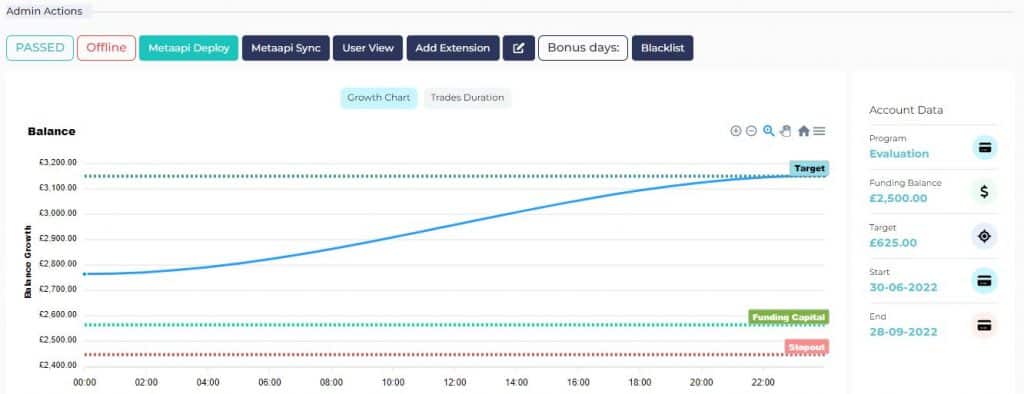
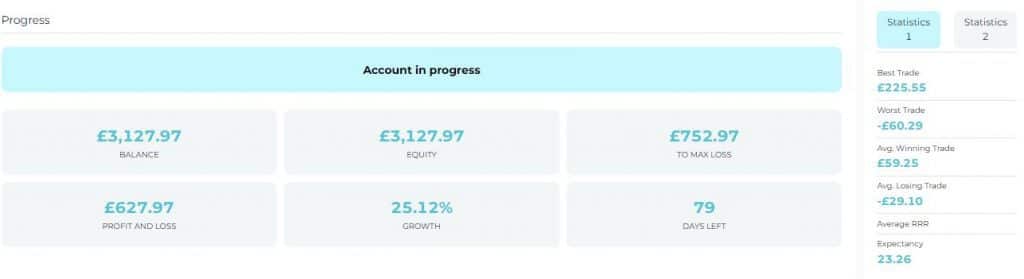
AGGRESSIVE TRADER PASSES IN JUST 24 HOURS!

AGGRESSIVE TRADER PASSES IN JUST 24 HOURS!


How long have you been trading for?6 month How long did it take you to become profitable and how did you become consistent?I’m still learning and would not say I’m profitable on a consistent basis What trading methods do you use? Elaborate on your trading style.I’m a scalper only really trade 1/2 pairs and use supply and demand and the rsi indicator What has been your biggest hurdle to overcome?Trying to not overtrade and take profits What has been your best moment in your trading career?Hitting this milestone Why did you choose FTUK?Because they are uk based and the reviews are relatively good compared to some other firms What would you say to other traders starting out with FTUK?Very helpful right from the start I would highly recommend What are you goals long term in trading?To steadily grow my capital and have a long relationship with FTUK

Recent articles


Share:

HOW TO IMPROVE YOUR TRADING PSYCHOLOGY

How to Improve Your Forex Trading Psychology

One of the key pillars of successful forex trading is developing the right mindset. It’s just as important as having an in-depth technical knowledge, and it’s a skill that dedicated traders continually work on. Good trading psychology helps you to manage your emotions, make more rational decisions, and trade to a consistent pattern.


Ultimately, the right mindset boosts your chances of making profitable trades, using forex funding well, and of avoiding damaging losses. The forex markets can be volatile, and keeping a cool head is your best defence against being battered by the turbulence. Sometimes, you will need to make decisions that seem to go against your natural instincts.


Fortunately, there are many techniques and steps that can be learnt to help you manage your emotions and behaviours when trading. Here are some of the most important starting points.


Keep greed in check

Greed is a natural human instinct, that no one is immune to. It’s down to centuries of evolutionary survival tactics, where the opportunity to stock up on supplies while the going was good meant the difference between life and death. The pursuit of wealth is still a great motivator for many people today, and it can of course lead to rewards.


However, this instinct to prioritise profits above all else will work against you in forex trading. Greed can make you double down on a losing trade, or over invest in a potential gain, and incur damaging losses. You may even be convinced that you are doing the right thing.


However, greed is a powerful and treacherous emotion that can easily overpower cooler thoughts, and to conquer it, you need to understand it. It’s a reactionary emotion, meaning that it can make you follow the herd and try and take advantage of every passing asset bubble. The problem is, bubbles will always burst in the end.


The best trading strategies tend to follow a consistent pattern, and see the bigger picture, rather than react to every possible get-rich-quick opportunity that crops up. Some super-savvy investors even take what is known as a ‘contrarian strategy’ which is to trade off the back of market panics. However, this is best left to very experienced traders only!


For the rest of us, the best way to conquer greed is to first understand and be aware that it affects us all. The next step is to toughen up your trading strategy. This means that you should manage risk and always stick to a trading plan. Work out what your risk tolerance is; that is how much money you can comfortably stand to lose on each trade.


Never be tempted to take high leverage to try and maximise a profit, if it means crossing your tolerance zone. This is no better than gambling. Guard against the urge to over-trade, which is another very common mistake that new traders make. More trades do not equal more profits; it is how well you manage your trades that matters.


Another common pitfall for new traders that is related to greed is overconfidence. This can happen as the result of a first run of successful trades, and emboldens the trader to take higher leverage, or make more trades, and hang on to them in the hope of maximising profits.


This is often the way that the markets can trip up a new trader, by inducing a false sense of confidence. The excitement of success, and making knife-edge decisions under pressure, can be intoxicating, and this can lead to you abandoning a logical trading strategy. Remember that the best route to success is to follow cool logic, and not your emotions.


If you are well disciplined in your trading routine, and stick to your strategy through thick and thin, then you are far less prone to falling prey to the power of greed.


Getting a grip on FOMO

Greed’s nasty little twin is fear, and its evil cousin is Fear of Missing Out (FOMO). Fear is another very powerful emotion, which drives the most basic of human instincts. It’s easy to understand from an evolutionary perspective; it let our ancestors know when they were in danger from predators, and stopped them from taking foolish risks.


Fear is still a necessary emotion, to let us know when we might be in a dangerous situation, and to lose touch with it completely would be a bad idea. However, most of the time, we aren’t in a life-or-death situation, yet the primal fear instinct kicks in when we think we might be vulnerable to a loss, and this includes on the financial markets.


The problem is that fear can lead a trader to abandon hard-learned lessons. This means they might cut short winning trades for fear of making a loss, hang onto a losing trade rather than cut their losses early, or make trades for the sake of it rather than leave funds sitting in their account. This last pitfall is known as FOMO in trading.


Psychological studies have shown that most people are loss averse, meaning that the fear of making a loss is more powerful than the pleasure of making a profit. While greed should be guarded against, as we have seen, fear is often the more overwhelming and complex emotion to master for many forex traders.


One of the reasons for this is that it can be entangled with other powerful emotions, such as jealousy and pride. The pressure not to miss out on a bargain can be hard to resist, because we not only fear losing the chance to grab a bargain, but we covet what we perceive others to have, and take pride in our successes and gains.


There are other types of fear that can come into play, such as fear of the unknown. This may because you have starting trading before you were ready, and have not acquired enough background knowledge about how the forex markets work, how to put together a sound trading strategy, and how to stick to a daily routine.


If you suspect that this may be the case, it’s best to go back to the drawing board, and work with a demo account until you get your confidence levels up. Trading blind is basically just gambling, and your luck will run out sooner or later. Ignorance can lead to fear, but ignorance can easily be remedied with some learning and skill-building.


Another common fear is the fear of being wrong. Now, this is not the same as a lack of knowledge and experience. Even experienced traders make mistakes, and good traders will sometimes make losses, even though they stuck to a tried and tested strategy, and didn’t make any serious errors of judgement.


The thing is, losses are part and parcel of trading, and even seasoned traders take the occasional loss. This is because the nature of the markets means that there is no way of being right 100% of the time. There is no correlation between winning percentage and profits, because what matters is trading within your limits, not being right all the time.


Therefore, a good forex trader is constantly on their guard against letting their ego cloud their judgement. Remember that there is no one single way of doing things. The need to be winning all the time, and to make huge profits, will lead to taking higher leverage than you can handle, over trading, and not cutting your losses.


Planning is key to being a good trader

Failing to plan is planning to fail, as they say, and this is never truer than when trading the forex markets. The single best defence that you have against making emotion-led decisions when trading is to arm yourself with a well-informed trading strategy. Every move that you make should be guided first and foremost by this plan.


Set out your risk management parameters, by putting a limit on the amount of money you are willing to lose on each trade. Read up on the technical aspects of trading before you start making live trades. Understand how to read the charts, and grasp the basics of support and resistance levels. Use stop losses on your account to help manage risk.


Know when the best times to enter the market are, which currency pairs react to which economic news. Read up on how data releases influence the forex markets, and study how they react to macroeconomic events and geopolitical announcements. Keep a journal so that you can track your progress, and review it on a regular basis.


Finally, it is important to keep a good work life balance, and not constantly think about your trades. Include some activities in your daily routine that allow you to clear your mind, such as meditation, exercise, or socialising with non-trading friends. Keeping a sense of perspective will help you to relax and enjoy your trading more.


It is perfectly normal to have fears and anxieties around trading, or to sometimes become overconfident. The key is to keep these emotions in check, and follow your head, not your heart.

Recent articles


Share:

EXPERIENCED DAY TRADER’S METRICS

EXPERIENCED DAY TRADER’S METRICS

What is your name and location?

My name is DAI. I come from An Dao, Phu Ninh, Phu Tho country Vietnam


How long have you been trading?
I have been trading for 2 years


Have you used other prop firms before?
I have never owned a prop account before FTUK.


Why did you choose us?
You guys have modes that are quite suitable for my trading style! Your growth program is quite
impressive too!


What has been your experience with us so far?
Trade with tight capital management! Don’t break the trading rules!


What is your main trading style?
I use an RSI indicator and day trading! I always follow my rules and never break them.


Do you have a trading plan in place, and do you follow it strictly?
Of course, this is vital in this profession.


What is your favourite instrument to trade?
My favourite tool is the RSI and trade on many different forex pairs.


What would you say to the other traders trading with FTUK?
You enter a few orders, manage your capital closely, and be patient!


What are you goals long term in trading?
I want to improve my skills and earn stable money from this job!


Recent articles


Share:

SWING TRADER PASSES IN JUST 13 DAYS!

SWING TRADER PASSES IN JUST 13 DAYS!

https://youtu.be/r22bM0op-ZQ

How long have you been trading?

1 Year.

How long did it take you to become profitable and how did you become consistent?

It took me about 6 months but I became profitable when I changed to a 1 Day timescale and created my strategy rather than trying to use ones from books or the internet.

What trading methods do you use?

I use equidistant price channels on a 1-day chart with a 1:1 risk-to-reward ratio.

What has been your biggest hurdle to overcome?

Just taking in all the information.

What has been the best moment in your trading career?

My best moment was when I started seeing that the strategy I created myself start to work. I was also very pleased with passing the Level 1 evaluation in just 13 days!

Why did you choose FTUK?

I looked at most of the other deals including FTMO and I felt that FTUK was by far the best deal and the scaling plan is awesome!

What would you say to other traders starting with FTUK?

I would thoroughly recommend FTUK to anyone.

Recent articles


Share:

HOW TO USE SEASONAL TRENDS IN FOREX

How To Use Seasonal Trends In Forex Trading

There are many strategies and techniques that you can adopt for forex trading. One of these is using seasonal trends as a way to predict how the markets will move. This is because regular fluctuations or patterns occur, depending on what time of year it is. Analysts have demonstrated that it is possible to make reasonably reliable seasonal predictions.


Here’s how forex traders use these patterns to enhance their profits. Seasonal trading shouldn’t be adopted as a complete trading strategy; you will certainly need other factors in place to trade effectively. However, an awareness of seasonal patterns can help you to make better trading decisions, especially at certain times of the year.


What is seasonality?

When traders talk about seasonality, they are referring to predictable trends that repeat over a number of years. Of course, there are always curve balls that throw things off kilter, such as pandemics and wars. However, when a pattern is repeated on a one year cycle up to 80% or 90% of the time over a number of years, it’s regarded as sustainable and significant.


To understand seasonal patterns, analysts focus solely on price and time, and filter out the noise of indicators. Remember that any results are based on averages, and therefore they should only be used in combination with other technical analysis.


Why do seasonal patterns occur in forex?

There are some known factors that cause cyclical patterns in the forex and other financial markets, although it is not an exact science. Some theories do not appear to hold much weight, or are disputable, while other patterns seem to defy an easy explanation. Season can refer to calendar events, as well as the climatic conditions.


There are a few reliable and predictable seasonal events which will always have an impact. For example, holiday periods, especially those which are widely celebrated in the US, affect the forex markets. There will be an increased demand for consumer goods and food around Christmas, Thanksgiving and Halloween for example.


During the summer vacation period, there will be demand for other goods, such as air conditioning units and outdoor furniture. Petrol consumption tends to rise during the summer as people take more holidays and trips out. Foreign travel tends to be higher during summer months, which can affect the forex markets.


The climate also affects seasonal trends, and while this is in some ways predictable, there are of course always variables. For example, poorer than average summer weather may mean tourism and foreign travel is weaker than expected, and there is less demand than anticipated for certain consumer goods, while demand for others is unseasonably high.


The weather may also influence harvests and food production, if it has been a poor or unpredictable year. This in turn affects the trade balance of the countries who are major exporters of the affected produce, and the currency may correspondingly fall to lower than expected levels.


The wider forces that move the financial markets, known as macroeconomics, are particularly unstable at the moment. Some factors are also interrelated to seasonality, such as climate change. The world is starting to experience major and disruptive episodes of wildfire, flooding, storms, and drought, on a more frequent basis than in the past.


Therefore, it is important to keep up with geopolitical events and understand how these may drive the forex markets. Currently, the war in Ukraine is driving oil prices to record highs for example, which will inflate the currencies of major oil producing economies, and negatively impact those countries who rely heavily on imported oil.


There are certain economic announcements which are made at fixed times throughout the year, such as taxation rates, interest rate adjustments, and so on. It is helpful to obtain an economic calendar to help you keep track of the economic data releases which are relevant to forex trading.


Some data releases will only have a minor impact, or not be relevant to your currency pairs. There are certain predictable figures which impact the USD. Since this is by far the most commonly traded currency, it is important to track these key releases. Look out for unemployment figures, interest rate rises, inflation levels, and the GDP.


The market will also react strongly to sudden geopolitical events, such as outbreaks of war, pandemics, natural disasters, elections, and other signs of political instability. As we are living through relatively turbulent times at the moment, it is important to follow current affairs closely as part of your seasonal trading strategy.


So, while some seasonal events are cyclical and patterns can be identified over a one year period, there may well be macroeconomic or environmental factors which cause anomalies. It is best not to react too hastily to these however, because sometimes the expected market reactions do not occur, or the market may whipsaw.


What is a seasonal trading strategy?

When it comes to incorporating seasonality into your trading strategy, it is important to start with the wider time frame, i.e. years, then break it down into quarters, months, weeks, and so on, until you begin to look at times of day. This is known as a top-down strategy, and it applies whether you are a scalp trader, a day trader, or a swing trader.


There are some generalities that can be applied to the forex market as a whole. For example, September is usually a month of high volatility, which presents good profit-making opportunities for break out traders, for example.


Breakout traders identify a key price level that they expect the price to break through, and then buy or sell at that price to gain a maximum profit. The strategy works best when the market is moving strongly in one direction, hence the advantage of predicting periods of high volatility in advance.


To learn in more depth about breakout trading, it’s important to understand support and resistance levels, which can be plotted on a graph or chart. Support refers to the price level where a downturn in the market is expected to pause, because of favourable conditions and increased demand.


A resistance zone is where an uptrend in the market is predicted to pause for a temporary period. Traders watch support and resistance levels to judge which way the markets will turn, and seasonality is one of the factors that they take into account. 


If the direction of travel is wrong, the position can be quickly closed to minimise losses. The timing, pace and volume of support and resistance are carefully monitored by breakout traders, to enable them to refine down to the last second when to make a trade, or reduce or increase a position size with more leverage.


How seasonality affects currency pairs

Anyone who has learned anything about trading will have noticed that the forex market is geared around the US dollar. It is a pair in about 85% of all currency transactions, so obviously this means that when it comes to using seasonal trends, it makes sense to look at what direction the USD is moving in, with other major currency pairs.


The EUR/USD tends to be in a weaker position at the start of the year in January, as foreign currency is invested overseas. The USD then tends to rally as new placements are made. The USD/EUR tends to reach a low, or ‘bottom’ around mid-February, and then climbs steadily again to a peak in April. August tends to be the worst month, before the September upturn.


The USD/GBP tends to follow behind the curve of the EUR/USD, bottoming out in March, before climbing throughout April. It then tends to peak in August.


The USD/CAD currency pair tends to rise during the early months of the year, before peaking by the end of February. It then peaks again in August, and declines in September. October and November are generally stronger months.


For the USD/JPY, the month of October tends to be the strongest trading time of the year. There doesn’t seem to be any official explanation of why this is the case, but it is certainly a statistically significant trend that has been identified over the years. During August, the JPY also tends to be in a strong position against the USD, the GBP, and the EUR.


Conclusion

In conclusion, currencies tend to move in predictable patterns year on year. Traders can identify these patterns with a top down approach to price and time analysis. to help them understand when to make the most profitable trades for different currency pairs.


Seasonality should not be used as a single trading strategy, but it can be used in combination with other techniques to help you make the most profitable trades.


If you want to learn in more depth about using cycles to improve your profits, you could also study time-based trading strategies. This will help you make a more detailed analysis of how months, days of the week, and the time of day affect the markets.


If you are looking for instant forex funding, please get in touch today.

Recent articles


Share: