6 Tips To Balance Forex Trading With Your Full Time Job

Many people wonder if it is possible to balance forex trading with a full-time job, and the answer is yes, it’s certainly possible. Like most aspects of life, it does take some planning and preparation to achieve the best results. It’s important that you do not compromise your performance in either role by overstretching yourself.


Here are some tips to optimise your strategy and mindset to successfully combine forex trading and your full time job… and how trading could even become your main career.


Define your goals

First of all, it’s important to set out what you want to achieve, and to manage your expectations to ensure they are realistic. Do you want to earn some spare cash from your trading to put in a nest egg or pay for treats such as holidays and meals out? Or do you ultimately aim to make trading your full time career?


Make a clear-eyed assessment of your circumstances: do you have a regular nine to five and rarely work outside of these hours? Do you have a lot of commitments outside of work, such as family responsibilities, sports, hobbies, or voluntary work? Are you in a position to delegate or give up any of these demands on your time?


What is your current level of knowledge and experience: if you are a complete novice, you will need to devote some time to learning the basics and practising with a demo account before you let loose on an instant forex funding platform. Consider how much capital you can realistically afford to invest, and put a solid risk management plan in place.


Decide from the outset exactly how much time and money you have to devote to trading and what you want to get out of it. This will help to clarify your approach and make sure that you are focused and not overfacing yourself.


Sharpen up time management skills

Effective time management is at the heart of balancing trading with your existing responsibilities. Draw up a daily schedule with allocated blocks of time for trading and other duties. Set goals and categorise them in order of priority, and develop a daily trading routine so you don’t neglect certain areas and waste too much time on others.


Consider if you have times of the day when you feel at your most alert and productive, such as first thing in the morning, directly after a workout, or late at night when the rest of the household has gone to bed. Schedule your most demanding tasks for these times.


At first, this process will probably involve trial and error as you find your feet and gain a more realistic idea of how long it takes you to complete each task. Some forex tasks are open-ended and can lead you down rabbit holes, so monitor the time spent on these carefully and learn to focus only on what is most relevant to you.


Decide on your trading style

Part time trading may limit the types of trades that you can carry out successfully. For example, scalping and day trading require careful monitoring and significant time commitment throughout the day and may not be compatible with a full time job.


Long term trading where you keep positions open for days or even weeks or months are less time-intensive and may be more suitable for part time traders. It’s always better to focus on quality over quantity, so don’t be tempted to over-trade to compensate for limited timeframes.

Keep a trading journal

Keeping a trading journal may seem to be a rather unnecessary and time consuming chore, particularly when there is an accessible digital footprint of your trades. However, by keeping a detailed record of your reasoning for opening a position and your target price points, you will be able to more accurately measure your performance and correct any mistakes.


Don’t neglect your wellbeing

Balancing two jobs will inevitably absorb a lot of your physical and emotional energy as well as your time. Guard against burnout by carving out time to take care of yourself: ultimately, your wellbeing impacts on your ability to perform well so this is not self-indulgence or laziness.


Make time to exercise, eat well, and chill out with relaxing and undemanding activities such as listening to music or watching TV at least a few times a week.


Build a support system, both by networking with other traders and explaining your goals to your family and friends. This will help you pick up ideas and advice and give you somewhere to turn on those inevitable days when you wonder if you are doing the right thing.


Be disciplined and persistent

Finally, you will need to be highly disciplined to stick to your routine and work in a consistent manner. Forex trading rarely brings instant large rewards, but requires patience and hard work.


How to turn forex trading into your full time career

So you feel as though you are smashing forex trading as a side hustle, and are starting to nurture ambitions about turning it into a full time career. This is the dream for many, bringing the flexibility of being your own boss, and potentially unlimited earnings. Naturally, it also brings challenges and should not be done on a whim.


Here are some points to carefully consider, and how to successfully make the transition.


Make an honest evaluation of your current situation

Be honest with yourself and examine your reasons for wanting to go full-time: is it to escape the treadmill of a nine to five that you hate, or because you genuinely enjoy and thrive on the process of planning and executing trades? Your reasons should be weighted towards the latter, rather than purely because you are trying to get away from a negative situation.


The most successful forex traders do not prioritise making huge profits: they relish the whole picture of monitoring the economic news, mastering technical analysis skills, and exploring the best currency pairs to work with. Profits arise as a result of diligent and methodical planning and risk management, and not because of a single minded pursuit to get rich.


Review your performance over the last six or 12 months (if you have not been trading part time for this long, you are almost certainly not ready to step up to full time trading). If you are already making consistent profits as a part time trader, then you are already in a great starting position.


If you have not yet reached the level where you are making more gains than losses in your trades, or your performance is very uneven, you will be putting yourself under too much pressure by attempting to go full time. This could push you into taking risks and you will find it more difficult to manage strong emotions such as fear, greed, and panic.


Consider your trading environment

When part time trading, it’s easier to tolerate a less than ideal working environment. However, if you are going to make a full time go of it, you will really need a comfortable and distraction free place to do your best work. If you cannot have a room to yourself, zone off an area to create a physical and psychological barrier between your home and work life.


Review your trading strategy and style

As a successful part time trader, you will already have developed a trading strategy and probably stick to one particular style of trading. Consider if you need to adapt or diversify your approach.


For example, you will have the opportunity to make trades at any time of the day, and be able to monitor them more closely, so you may want to switch from position trading to day trading.


Financial planning

If you are intending to earn your living from full-time trading, you will need to ensure that you manage your finances carefully. Ideally you should have savings to cover your living expenses for at least the next six months to provide a backstop while you establish your full time career.


If possible, gradually decrease your part time hours rather than give up a steady income stream altogether. If you are currently employed, consider if you could transition to freelance work for an interim period. This will give you peace of mind that you can earn money if you really need to, and take the pressure off your fledgling trading career.


Draw up a budget to keep track of your monthly outgoings and income, and remember to factor in how much income tax you will pay as a self-employed person.


Remember that such a big step will rarely be straightforward, and you will need the strength of mind and resilience to persevere through uncertainties and setbacks. However, with a disciplined and careful approach and a commitment to continuous learning and development, you can become a successful part time or full time forex trader.

Forex Traders: How To Set Realistic Expectations

There are few places where expectations can vary so wildly from reality than in the world of trading, and amidst the noise and newsworthy stories of huge gains and huge losses, it can be difficult to find a sense of perspective and calm.

To be a successful trader, particularly in a world with high stakes such as at a proprietary trading firm, you need to be able to make consistent gains, increase the value of your portfolio by a predictable level and have realistic expectations for how much the value of your forex currency pairs will increase.


This can be exceptionally difficult, particularly for traders relatively new to forex and are still getting used to how the market moves, as well as what a realistic expectation even is.

This is what this guide aims to help with; it will explore why people are not always the best at gauging expectations in forex, what you should expect with your portfolio and how you can adjust your mindset to set your expectations correctly and have a better chance of making money.


Man Bites Dog And Availability Heuristics

There is a saying in journalism that a newspaper will never publish an article about an aeroplane that arrived without incident, because it is such a common occurrence that by definition it is not news.

This phenomenon, also rather hilariously known as “man bites dog” based on a very similar concept, is the irony that rare events are far more commonly reported than more common ones, having the side effect of making the former feel far more common.

Both of these are examples of availability heuristics, where readily available information is used when making decisions and assumptions about future events.


Because there is so much happening in the world at any given second, we pick and choose from what information we have to hand when making a decision, which is why, for example, people tend to believe that air travel is far more dangerous than it actually is.

This can be a problem when it comes to financial markets, and part of the reason why a casino capitalism mindset can sometimes emerge in some traders is because the most widely reported events on the stock market are aberrations.

This can lead to somewhat warped expectations about what is realistically possible with a given asset. An event like Black Wednesday will never happen again in forex, and devising a trading strategy based on essentially rolling the dice on a major notable event is a one-way ticket to a bankrupt portfolio.


On the other hand, this is not an invitation to discount the possibility of potentially devastating but unlikely events either. Long-Term Capital Management’s fateful foray into forex coincided with Russia defaulting on its debt and devaluing the rouble, something believed to be inconceivable at the time.


Why Are Realistic Expectations Important?

A lot of people believe that financial trading in general and forex trading in particular can make you a lot of money very quickly. This is not necessarily false advertising, but it is somewhat misleading about how likely that is.

Forex is not a “get-rich-quick scheme” and any trader who goes into it with an expectation to almost immediately “10x” their investment will quickly find that optimistic delusion punctured.

It leads to a focus on a goal without any idea of how to reach it with an acceptable level of risk, often ignoring the consequences of falling short in a bid to hit a target quickly.

Trading plans, if they are even drafted, go out of the window in favour of impulsive decision-making, which typically translates to very poorly made decisions.


Forex is not a financial discipline that looks kindly on taking punts, but even in the impossibly rare event that someone makes what is essentially a gigantic gamble and happens to succeed, if anything that can be even worse for their long-term future as a trader.

Anyone can get lucky once, but a trading career that is reliant on luck will be nasty, brutish and short.

Speaking of short careers, it also ignores the fact that successful trading is about the long game. It is about ignoring the constant murmurs and noise of the market and instead seeing the general trends and curves.


It is impossible to have a perfect record in forex if you are trading consistently; sometimes the market is down or something you could not possibly have foreseen happens which increases the volatility of a particular currency value.

Expecting quick success is not going to happen, and whilst you do not need unrealistic goals to have unrealistic time frames, setting yourself a goal that is essentially a moonshot is setting yourself up to fail.


Failure hurts more than success. Failure is discouraging and failure often causes traders, even those who have potential from a talent and knowledge perspective to give up early.


Trading is a high-pressure environment, and creating goals which rely so heavily on low-percentage scenarios magnifies these exceptionally strong emotions. This not only is awful for mental health, but it also leads to emotional trading, which makes all of the above far worse.


Tips For Setting Realistic Goals

It is all well and good knowing that you should avoid setting goals you cannot reach without a black swan event. It stands to reason that you should never promise what you cannot deliver.


However, actually setting realistic goals might not always be the easiest task in itself, especially for traders relatively new to forex and without the experience to understand expectations in the long term.


The first step, rather naturally, is to learn as much as you can about currency trends, both in terms of the pairs you intend to invest in, find patterns in the data and look at explanations for aberrations as well.


Forex is typically a market that moves very incrementally, so a lot of money is made through disciplined trades with realistic expectations that one half of the pair is set to fall and the other to rise. Know when the market is at its most volatile and exercise the most caution there.

Ultimately, as with any other discipline, forex trading is about continuous development. It is absolutely fine not to know everything before you make your first trade. Making mistakes and realising losses are part and parcel of the experience and the best traders at their best will sometimes do so.


Stanley Druckenmiller is one of the greatest minds in the history of forex, masterminding the biggest currency short of all time when he “broke the Bank of England”. And yet he lost $3b in just six weeks when he made an impulsive decision to get into the dotcom bubble an hour after it burst.


Setting realistic goals is about understanding that the process is often more important than each individual result, especially at first.

Ensure that every trade has effective and robust risk management practices attached to them, including stop-loss orders, diversification and position sizes appropriate relative to the makeup of your portfolio


Sticking to your trading plan, maintaining your discipline in trades and building a portfolio based on these principles will ultimately make more money in the long term than impulsive trades will, even if some of the latter end up making more money individually.

Credit yourself for following the plan even in trades that do not work as intended, and be critical of money-making trades made emotionally or impulsively. Over time, results tend to normalise, and this means that consistent, strategic, disciplined traders are more likely to succeed.

A trading journal can be really useful in this regard, allowing you to keep track of the dates, purchase price, sell price, quantity and any additional notes about the logic of any particular trade.


Over time, this journal and the practice of writing in it will be an invaluable resource that lets you see your performance, strengths and potential areas of improvement, as well as providing you with realistic outcomes based on your actual trading performance.

When setting goals, using the SMART criteria framework can be a really helpful practice to help you set goals that can actually be worked towards.


The five criteria in question are:


● Specific – the goal needs to have particular goals and particular desired outcomes. It cannot simply be “I want to make a lot of money,” for example.

● Measurable – the goal needs to be empirically defined. For prop firm traders, this will generally be a specified growth target within acceptable risk tolerances and drawdown limits.

● Achievable – the goal needs to be actually possible with the tools, skills, resources and time available.

● Relevant – the goal must contribute to a wider target and have a reason for being set and being achieved.

● Time-sensitive – there needs to be a timescale. Goals tend not to be helpful in perpetuity.


Sometimes it is best to break down your targets into milestone goals that also follow these principles. If you need to increase the value of your portfolio by a set percentage, what do you need to accomplish every week to achieve this? What do you need to do every day to achieve that?

Ultimately, setting realistic expectations does not just make traders more successful, it makes the process of trading more enjoyable by reducing the risk and pressure that comes with it.

Common Causes & Solutions For Beating Forex Trading Anxiety

Forex trading can be an exhilarating and rewarding endeavour, but it can at times be a stressful pursuit, with a lot of high pressure decisions and worries about profitability and success. Here’s a closer look at the potential sources of anxiety in forex trading and the most effective methods for managing and reducing it.

Identifying the causes of trading anxiety

The first step is to pinpoint the causes of your anxiety. Not all anxiety is bad for us; it’s a natural human response that is intended to sharpen up our physical and mental reactions when we are under pressure or feel threatened.

It can be useful, giving us an extra burst of adrenaline to help us respond to a dangerous situation such as getting caught in a riptide, or the mental clarity and stamina to perform well in an exam, or indeed during a high-stakes forex trade.

Everyone feels anxious from time to time, and it is not necessary to try to overcome it unless it starts to intrude on our daily lives in a way that is out of proportion to the cause. For forex traders, anxiety can mean their approach becomes too hesitant and fearful, or too rash and ill-considered, leading to mistakes and missed opportunities.

Therefore it’s important to be aware of the signs that you might be afflicted by trading anxiety, and take steps to overcome it.

What are the symptoms of anxiety?

Anxiety can have both mental and physical symptoms. It’s most commonly experienced as feeling on edge and panicky, a sense of detachment, feeling restless and being unable to concentrate or make decisions, and a sense of dread or unease.

Physical symptoms might include headaches, muscle pain, shaking, dizziness, sweating, shortness of breath, and a fast or irregular heartbeat. In severe cases, anxiety might even lead to a full-blown panic attack. However, everyone’s experience of anxiety will be slightly different, just as we all have unique triggers or reasons for feeling anxious.

For some people, persistent levels of anxiety might manifest in behaviour such as withdrawing from friends or family, and avoiding certain activities or situations. Some people seem to be naturally more prone to anxiety than others, which may be a result of temperament or personality traits, upbringing, environment, or past experiences.

If you are worried about anxiety affecting your forex trading performance, first of all it’s important to determine the causes. Think about the trading situations that make you most anxious, to a point where it is impacting on your ability to make clear and rational decisions. Here’s a look at the most common reasons forex traders feel anxious.


Market volatility

The forex markets are characterised by sudden and unpredictable moves and this lack of control can be a source of anxiety for some traders. However, the sudden sharp swings in price points also offer opportunities and this needs to be seen as an advantage rather than a source of fear or anxiety.

Setting unrealistic expectations

It is a common mistake for new traders to be overambitious and expect too much from themselves. They might be fixated on making the perfect trade or the potential outcome of every move. However, the reality is that it takes time, effort and patience to make consistent profits in forex trading, and it is unlikely that success will arrive straight away.

Instead of fixating on the outcome of each trade, set yourself small achievable goals and focus on the process rather than the end result. If you see trading as a get rich quick scheme then you are likely to be setting yourself up for a lot of pressure, failure, and frustration.

Make sure that you have another steady income source besides trading, do not invest more capital than you can comfortably afford, and do not expect large profits immediately.

Trading with too much leverage

With instant forex funding platforms available that offer high leverage ratios even for modest amounts of capital, it can be tempting to take out large position sizes to maximise potential rewards. However, if you are trading with more than you can afford to lose, you are obviously taking a huge risk and this will inevitably lead to high levels of anxiety.

Instead, start small and increase your position sizes in small increments as you gain confidence and experience. This brings us neatly onto our next point…

A weak risk management strategy

Without a solid risk management strategy, you are effectively doing no more than gambling with your forex trading. It can be tempting to take the attitude that the forex markets are unpredictable so it is not worth putting much effort into this area, but in fact successful forex trading is not about chance or luck, but all about taking carefully calculated risks.

Never trade with more than one or two per cent of your capital in the early stages, and use stop losses to limit the amount that you can potentially lose on each trade. Always stick to your trading plan, even if you feel that rising tide of anxiety when a trade isn’t going your way. Step away and centre yourself before taking any further action.

Insufficient knowledge or technical skills

If you dive in headlong without sufficient preparation, you will soon feel out of your depth and this can drive anxiety levels sky high. Learn as much as you can about the basics of trading and how the forex markets operate before you begin, and start off with a demo account before you go live.

Make sure that you understand some basic technical analysis methods such as line graphs and bar charts, and have a grasp of how global and economic events can impact the forex markets.

Information overload

The flip side of being underprepared is trying to learn everything there is to know about forex trading. It’s a vast and ever-evolving field, so this would be a Sisyphean task for even the most experienced of traders. Accept that you can never know everything, and stay well informed but focus on data and news sources that are most relevant to your trading strategy.

Fear of failure

Learning how to deal with losses is part and parcel of the forex game. Remember that even when you are making consistent profits, only about 50 per cent of your trades will be wins. Learn how to take losses in your stride, rather than seeing them as a sign of personal weakness.

Do not let your anxiety drive you to make more trades in an effort to compensate for a bad loss, and be vigilant for other powerful emotions such as anger, shame, or greed. Forex trading requires objective analysis and any emotions clouding your judgement will only compound your problems.

Methods to manage and reduce your anxiety around forex trading

It’s important to deal proactively with anxiety that may be affecting your forex trading. This is to ensure that it is not leading to rushed or biassed decision making that can perpetuate the cycle of anxiety.

Have a daily routine


Follow a consistent daily routine to help you avoid making unnecessary mistakes and give you a sense of order and control over your trading career.


Pay attention to your trading environment


Make sure that you have a quiet and uncluttered space to work that is free from distractions. It should ideally be spacious and comfortable with good ventilation and natural light. Take regular breaks and get outside for short walks to relax and clear the mind.


Keep a trading journal


Keeping a detailed journal of all your trading decisions can provide insights into your patterns of thinking, and help to identify any issues that are a particular source of anxiety.


Reach out to the trading community


Connect with other traders, either online or in person. This will bring a sense of community as well as a source of advice and moral support when times are tough.


Consider the wider picture


You should also consider if your anxiety is purely forex related, or if it is part of a wider mental health problem that could be rooted in other areas of your life. If you feel that this might be the case, it is important to be honest with yourself and others about the way you are feeling.

Some people feel anxious and on edge all the time without any clear causes or triggers, a category of mental health disorders referred to as Generalised Anxiety Disorder. It’s a recognised medical condition, so if you decide to seek medical advice you may be offered treatment such as medication or talking therapies, or guidance on lifestyle changes.

If your anxiety is impacting your trading, remember that this is a very common condition that affects almost all traders at some point. To a certain extent, you can harness this anxiety to keep you motivated and mentally sharp, but do not let it control your thoughts and actions.

Pinpoint the causes of your unhelpful anxiety, and take steps to overcome them, whether through a calm trading environment, a careful risk management strategy, or a good work life balance. Remember that good mental health is just as important as technical knowledge and skills when it comes to successful forex trading.

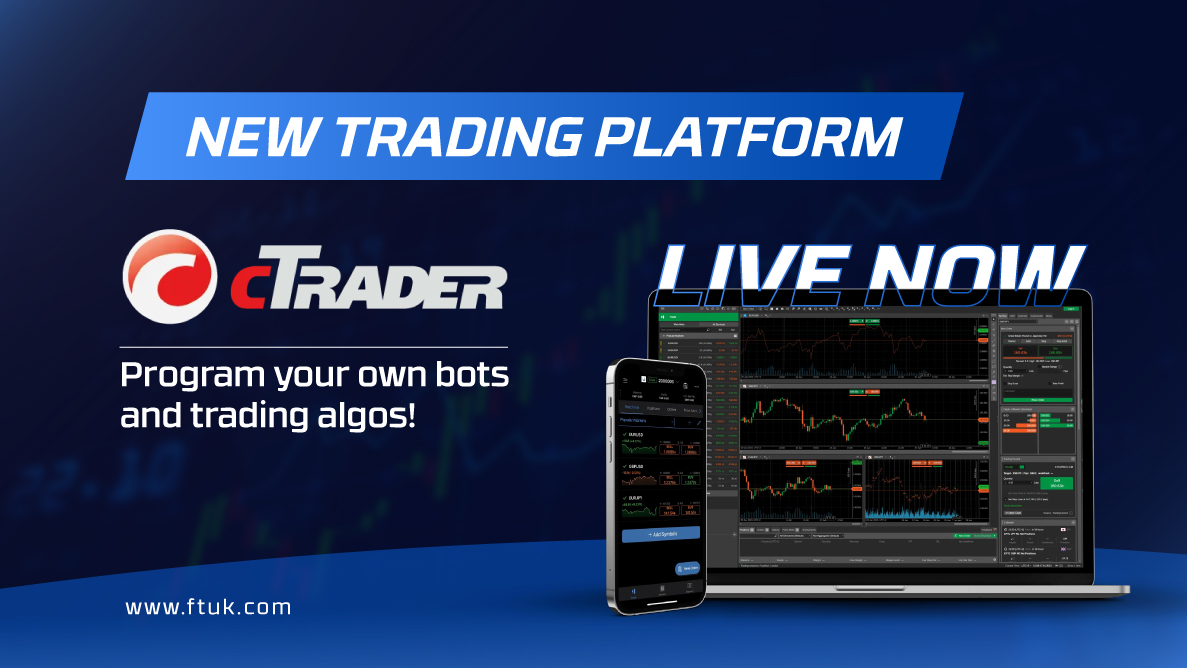
How To Get Started With cTrader at FTUK

For FTUK’s traders seeking a powerful and feature-rich platform, cTrader deserves your attention. This industry-respected platform equips you with the tools and functionalities to navigate the markets with confidence.

This comprehensive video walkthrough, will unveil everything you need to know about setting up and using cTrader. We’ll delve into the platform’s core functionalities, highlighting its advanced charting tools, seamless mobile integration, and the innovative copy trading features that can revolutionize your trading approach.

But cTrader doesn’t stop there. For those seeking ultimate control, the platform empowers you to code your own trading algorithms, taking your market analysis and execution to a whole new level.

Ready to unlock the potential of cTrader? Watch the included video for a step-by-step guide!

https://www.youtube.com/watch?v=L2EwoOHi9eI&feature=youtu.be

How To Decide If Forex Or Stocks Is The Best Fit For You 

If you have decided to dabble with trading, or even take a leap into the unknown and aim to make your living as a trader, you might have been weighing up the pros and cons of forex trading versus stocks. This is a decision that requires careful thought, and there are many factors that will influence your decision.


Forex trading involves buying and selling currency pairs on the foreign exchange market with the aim of making a profit. When you buy one currency, you simultaneously sell the other. Traders analyse market trends and price patterns in order to anticipate which way the markets are going to move, and to help them to identify the optimum time to buy or sell.


Just 20 years ago, forex trading was the preserve of financial institutions and full-time city traders. Now the markets have opened up into the world’s largest financial exchange with a trade volume of about $5bn per day, and they are highly active almost round the clock. Anyone can access them online via a broker platform.


Stock market trading allows traders to buy small shares of blue-chip companies, such as Microsoft or Apple, or many thousands of others. If the company performs well, the value of the shares increases, enabling you to sell them at a profit. Conversely, if the company performance declines, the value of shares drops.


Here’s an overview of the key differences between the forex market and the stock market, and how to decide which style of trading might suit you best.


Market access


One of the major draws of the forex market is that it offers almost 24/7 access, with peak trading hours that conveniently coincide with the hours just before and after a typical 9-5 day. This means that you can trade at a time that is convenient to you, and it is very possible to fit forex trading around a full-time job.


This is an ideal way to gain experience and build up confidence without the pressure to instantly make consistent profits. Forex trading is a skill that takes time and patience to acquire, and newcomers need to be well-prepared with technical knowledge and armed with psychological resilience (more on this topic later).


Therefore, the flexibility of the forex markets, with 24 hour access to the overlapping London, New York, Tokyo, and Sydney markets, offer new traders the opportunity to trade in a market with high liquidity at almost any time. This means that even if you have just a small window of time to invest, it’s still possible to get a foot in the door.


On the other hand, the stock markets operate strictly on fixed trading hours on a centralised exchange, usually between 8am and 4pm. They are also closed at the weekend and during public holidays, so there is much less flexibility in the hours you can trade. If you have a full time job, this can be very limiting.


Leverage opportunities


The forex markets offer much higher leverage opportunities than the stock markets. This is the use of borrowed capital to invest in a currency or stock, and it can be borrowed from a broker. Typically, a stock market broker will offer leverage ratios of 2:1, whereas forex brokers tend to offer much higher leverage ratios of 50:1 or even 100:1.


This gives you the chance to significantly amplify your potential profits. For example, if you have £1,000 invested in your account, you can access instant forex funding to use a 100:1 leverage ratio to open a position. This would mean that you can control a position of £100,000 in the forex market.


If the value of your currency pair increases by just 1 per cent, then the value of your position rises to £101,000. If you decide to sell your investment at this point, you would make a profit of £1,000, minus any broker fees. Without leverage, your investment would have yielded a profit of just £10; hardly worth the time and effort put into making the trade.


However, the potential for higher rewards comes with the downsides of higher risks. If the value of your currency pair falls by 1 per cent, then you would be £1,000 out of pocket, effectively wiping out your initial investment. Therefore, if you are considering trying your hand at forex trading, you need to be fully aware of the risks.


The key to successful forex trading is a solid risk management strategy and a good understanding of how the forex market works.

Market volatility


Volatility in the markets refers to short-term price fluctuations. This can bring the potential for keen traders to make significant profits, but it also carries the risk of heavy losses.

The forex markets are considered to be more volatile than the stock markets, because they are more susceptible to the influence of geopolitical and global economic events such as elections, inflation rates, and international trade. Stock markets are more dependent on the performance of individual companies, and therefore tend to be more stable.


Therefore, people who relish the challenge of short-term trading are more likely to be suited to forex trading. Blue-chip shareholders tend to adopt more long-term strategies, and this may minimise risk, but it does not offer the same potential for making a steady and profitable income.

Skilled forex traders can supplement their monthly income very comfortably without having to give up their main occupation, whereas stock trading is generally considered to be a more advanced method of investing capital rather than actively generating a steady income.


Points to consider if you think forex trading is right for you


If the opportunities afforded by high liquidity, flexible trading hours, and high leverage appeal to you, then forex trading may be the right choice. However, it’s important to be aware of the psychology of trading before you plunge in. This applies to both forex and stock trading, but the aforementioned benefits of forex also make it more high risk.


Underprepared traders can be taken by surprise when they are under pressure to make fast decisions that will have significant financial consequences. Money provokes strong emotions in even the most stoical of people, and not many of us are truly indifferent to the amount we have. This is because it is so fundamental to our survival and mental and physical comfort.

Therefore, you need to have confidence in the risks you are taking and avoid being tempted by greed for bigger profits, or too crippled by the fear and anxiety of making a loss. Only invest what you can afford to lose, and when considering leverage, it’s best to trade with just one or two per cent of your account value at first.


Use stop losses on all of your trades, which allows you to set a limit on the amount you can lose, protecting you from catastrophic losses.

Never risk losing an amount of money that would compromise your ability to pay for life’s essentials, such as rent, bills, and food, or this would lead to a very slippery slope indeed. Amateur traders who make a stinging loss can be provoked into making further rash trades in the hope of recouping their losses.

This can be a natural reaction through panic, fear, shame, or a sense of entitlement. However, successful forex trading relies on being able to make unbiased decisions based on cold facts and market analysis. It’s about risk management, and you should never make decisions in the heat of the moment.


Many forex traders practise meditation or deliberately focus on a good work-life balance to keep themselves emotionally stable and grounded. This helps them to step back from a difficult situation and reflect before they act.

Of course, it’s impossible to fully protect yourself from losses, and it happens to the most experienced traders, but the key is to find a balanced strategy that will bring consistent profits over time.


Tips for learning about forex trading


Forex trading is undoubtedly demanding, and it takes plenty of effort, commitment and patience to succeed.

It is a broad and sometimes complex field, but the majority of traders concentrate on the seven major currencies of the US dollar (USD), the Great British Pound (GBP) the Euro (EUR), the Canadian dollar (CAD), the Japanese yen (JPY), the Swiss franc (CHF), and the Australian dollar (AUD).


This helps to narrow down the focus, particularly when you are starting out. There are of course many more world currencies, which are referred to as minor currencies and exotics. However, these tend to be more volatile and challenging to trade than the majors, so beginners are advised to avoid them until they gain more experience and confidence.

There is a vast range of resources available to anyone who wishes to learn more about forex trading, and much of the information is free to access online. There are also many books, podcasts, webinars, and online courses available, so it’s easy to find a method that suits your learning style, schedule, and budget.

Why Forex Traders Need To Be The Boss Of An Amygdala Hijack

Forex trading is a potentially lucrative and rewarding occupation, and to get ahead you need to be prepared to work hard and never miss a beat. It is a game that demands a hard head and emotional detachment in order to succeed.

Paradoxically, mastering true emotional detachment isn’t about attempting to turn yourself into an automaton, but about cultivating emotional intelligence. This will put you in control of every decision that you make, so that you are never at the mercy of emotions such as fear, greed, impatience, excitement, or anxiety.


The first step to really being in control of your emotions is to understand a little bit about how your brain processes them. There’s no need to delve into degree level psychology, but it’s really useful to know some of the science.

The part of the brain that is responsible for dealing with our emotions is called the amygdala. It also plays a role in other important functions, including forming memories, learning, and sensory processing. Furthermore, the amygdala is linked to a larger network called the limbic system, which is closely associated with emotional control and behaviour.


The amygdala deals with our most primal emotions, and in particular fear and anxiety. This is an evolutionary feature, because our ancestors had to be on constant alert for dangerous predators. Early humans faced life threatening situations on a daily basis, and their brains were primed to instantly recognise and respond to a potential aggressor.


When a threat has been identified, it triggers the sympathetic nervous system, AKA the ‘fight or flight’ response. This tells the body to pump more blood to the muscles in preparation for physical combat or a swift departure, so the heart beats quicker and the breathing becomes fast and shallow.


Now you may well be thinking, what does all this have to do with forex trading? Well, when we are trading, whether you like it or not we are dealing with a resource that is now the basis for our survival: money. It’s what we all need to keep a roof over our heads and ourselves and our families fed, not to mention pay for all the extras that make life feel worthwhile.


We may not be literally facing fearsome beasts slinking through the undergrowth looking for their lunch, but we are facing the mighty forces of the market with the potential to take our precious resource away from us. This evokes strong feelings of fear, and opens the gateway to all sorts of other intense emotions, such as anxiety, anger, greed, and outright panic.


Obviously, in the 21st century we still need this powerful response to dangerous situations, because sometimes we are in physical danger. However, a lot of the time the stressors are psychological, and we have no physical outlet for this sudden surge of adrenaline. This can lead to what psychologists call an ‘amygdala attack.’


This is a term that was first coined by the psychologist Daniel Goleman in his groundbreaking book Emotional Intelligence (1995). It describes the process where the rational brain is overridden by intense emotion, so that our reactions are not based on logical thought.

We have probably all ruefully reflected on a hasty action that was prompted by an intense emotion such as anger or fear at some point in our lives. For example, you might snap at a loved one who is asking seemingly trivial questions when you are anxious to leave the house in time for work, or curse at a sluggish computer when you have a looming deadline.


This is what Goleman defines as an ‘amygdala attack.’ You will probably have noticed some physical symptoms that accompany it, including a racing heart, fast breathing, tense muscles, and even feelings of nausea. After the attack subsides, you realise that your actions were disproportionate or inappropriate for the situation.


Sometimes there are no particular consequences for an attack. However, in certain situations they can be corrosive or even seriously damaging. It does not take much of a leap of imagination to realise how they can affect our performance as forex traders. It’s an activity that carries risks and uncertainties, as well as potentially lucrative rewards.


The fear of making losses or the desire to make profits can cloud judgement and lead to impulsive decisions. In the complex world of forex trading, this is a slippery slope that can lead to a downward spiral of further mistakes. For example, suffering one loss can provoke ‘revenge trading.’


This is a major reason why many beginner traders fail and ultimately decide to quit, and you will always find it featured in those ‘most common forex trading mistakes’ type lists and articles.


When a trader suffers a loss, the first step should always be to go back to the strategy to work out what went wrong, and refrain from making another trade for at least a day or two.


Inexperienced traders often scramble to try and recover their loss as soon as possible, relying on luck far more often than judgement. However, the forex markets are oblivious to human emotions or lucky strikes, and the only way to get a good result is through clear and rational analysis of the market conditions.


The revenge trader may have had a run of good fortune and therefore have a sense of entitlement and an exaggerated idea about their own abilities. A sudden loss can provoke anger or cause hurt pride and loss of face, or even feelings of shame and humiliation among colleagues, family members and friends.


This can drive an irrational and disproportionate reaction, such as doubling a position to try and recover the lost money. Because the trade was made in haste rather than because of a genuine opportunity existing in the market, it will only compound the failure and make the financial loss more painful.


This destructive cycle therefore needs to be broken or preempted before it takes hold.


How can you manage an amygdala hijack?

There is no sure fire way of preventing an amygdala hijack because it is an instinctive human reaction. Some people may be more prone than others; we all have different personalities, temperaments and life experiences that have shaped us as human beings. However, even the most hot headed and impulsive person can learn some control.

The first step is to identify situations where you are vulnerable to an attack, and recognise when one might be about to take you over. This will usually happen when you are about to make a loss, or just after you have made a loss. Your first reaction should always be to step back and stop trading for at least a day so that you can make a rational decision.

Physically remove yourself from the computer screen by going for a walk or making a cup of coffee, then take a few deep breaths. It can even be helpful to picture yourself doing this in advance of a bad outcome, so that you just need to reach the action down from the shelf with no extra effort.

You may find that engaging in a meditation practice such as mindfulness meditation is helpful. This is a way of training the brain to focus on the present moment and to look objectively at the world around you, rather than to become wrapped up in our habitual thoughts and feelings.

Some of the world’s most successful traders and businesspeople start their day off with 15 or 20 minutes of meditation to get them in the right mindset for the rigours of trading. When practised regularly, it can sharpen the focus and concentration of the mind, enabling you to more quickly and effectively step away from unhelpful emotions and recalibrate.

Once the moment of danger has passed, take a look at your trade in the cold light of day and try to work out why it wasn’t successful. Remember that losses happen to everyone, and you need to view them simply as business expenses rather than a sign of personal incompetence or a malevolent market that is out to get you.

Make an assessment of the current market conditions. Are there any factors that are causing uncertainty or volatility, such as an election campaign in a country with a major economy, or a natural disaster or outbreak of war? Maybe you underestimated the impact that these events would have.

It may be necessary to review and adjust your trading strategy so that it is more aligned with the market conditions. Make sure that you learn from the experience and mentally rehearse how you will deal with it next time.

Forex trading is a continual learning curve, not just for facts and figures but also in self-discipline and emotional management. With a little effort, it is possible to become more in charge of your own behaviour and set yourself on track to being a resilient and emotionally intelligent trader.

If you are looking for funded trading accounts in the UK, please visit our website today.

Clocking In: Good Time Management Tips For Forex Traders

Forex trading offers unique opportunities, with instant funding and highly liquid markets that operate around the clock. However, this 24-hour availability can represent a double edged sword: with the possibility of trading at almost any time of the day or night, it can be easy to become unfocused and not settle into the most effective trading pattern.


Why is good time management crucial for forex traders?


The temptation is there to trade at every available opportunity, and this is understandable, especially if like most people, you are juggling trading with another job. However, quantity is often the enemy of quality in forex trading. Pushing yourself to work at every hour of the day won’t necessarily result in more successful trades, and it could soon lead to burnout.


Forex trading has many aspects to it, and the best traders understand that it’s a continual learning curve. It’s crucial to have a good knowledge of the basics to avoid falling into bear traps. However, in such a dynamic and complex market you always need to be broadening and deepening your understanding to stay ahead of the game.


For example, it’s important to keep up with the geopolitical events that might affect currency prices, and study the latest economic data releases that are relevant to the currency pairs you trade with. Then there’s technical analysis tools to get to grips with, which can help you to identify the best times to enter and exit the markets.


As well as all this, you need to closely monitor and review your trading and risk management strategies, and also keep track of your progress in a trading journal. It’s no wonder that most traders occasionally feel overwhelmed by their to-do lists. With such open-ended tasks, it can be easy to get sidetracked down unnecessary routes that eat up your time.


Time management is therefore important not just to guard against overtrading, but also to help you filter out distractions and save you from getting bogged down in a miasma of detail. It may be fascinating to disappear down the occasional rabbit hole, and who knows, the information may lead to a brilliant trading move one day.


However, without discipline and focus, the majority of good trading opportunities will pass you by. It’s therefore important to learn how to navigate the forex markets in a time-efficient manner, to protect both your capital investment and your mental health. Here are some tips to help you put together an effective time management strategy.


Understand forex market trading hours


The first step is to work out when the most active trading hours are for the currency pairs that you trade with. Although the markets are open 24 hours a day, they operate across overlapping time zones rather than in a globally uniform manner.


Essentially, trading hours are divided into four major sessions: London (7am to 4pm GMT); New York (noon to 8pm GMT); Sydney (10pm to 5am GMT); and Tokyo (11pm to 8am GMT). The London (or European) session opens just as the Tokyo (or Asian) session is closing, and this crossover period can be a particularly active time.


When the New York (or North American) session opens at noon, there is another spike in trading activity. There is a further period of volatility towards the end of the day when the London market is preparing to close. If you are trading majors such as the EUR/USD, then look for crossover times to identify the best trading hours.


However, the most active and volatile periods do not suit all types of trading strategies. They may benefit scalpers or swing traders, but if you prefer to adopt long term trading positions, then you are probably best avoiding the active hours for your currency pairs.

For people who work full time hours of 9-5, it’s still possible to trade during the peak hours for the major currencies such as the EUR, the USD, and the GBP, because these peak at 7am -9am and 4pm-7pm.


Work out your priorities


As previously mentioned, forex trading can seem like a many-headed monster at times. To avoid exhausting yourself by trying to do everything, work out those aspects that are most critical and relevant to your trading strategy. For example, if you favour technical analysis, allocate a proportion of your time to market analysis and interpretation.


If you focus more on fundamental analysis, make sure that you use the most credible and reliable sources. Set alerts and reminders for new economic data releases that are relevant to your currency pairs, and follow news topics for geopolitical events such as elections, civil unrest, international conflict, natural disasters, and so on.


However, bookend the time you spend on research and analysis, otherwise it can turn into an amorphous and never-ending task that will constantly distract you from taking the next steps. Be fussy about the credibility of your sources, because an hour spent absorbing high-quality content is worth a day spent wading through misinformation and fake news.


Establish a routine


Decide how many hours per day or week you have to devote to trading, and then divide up each training session into specific tasks. For example, you might spend the first hour on research and analysis, the second on reviewing your current positions and identifying new opportunities, and the third on placing trades and reviewing completed trades.

Consider your strengths and weaknesses


How you use your time to best effect depends to a certain extent on your personality and individual strengths and weaknesses. Spend some time on self-reflection, or alternatively take a personality test or ask the opinion of friends, family, and colleagues. This can be more helpful than self-assessment, because we all have blind spots.


If you are an impatient person with quick wits and a high tolerance for risk, then you may suit trading sessions in short sharp bursts rather than longer blocks of time. Be strict about not packing in too many trades, and develop the emotional resilience needed to avoid revenge trading.

On the other hand, if you are a deep thinker and dislike being rushed into decisions, you will probably thrive with longer trading sessions that allow you to drill down into detail and think carefully about your next moves. However, keep an eye on your goals and make sure that you are not being over-cautious in your decision making.


Sort out your trading environment


It is likely that you are working from home, and this is not always conducive to an ideal trading environment. If you do have a spare room to use as an office, zone off a space with furniture or a screen, to form a physical as well as mental barrier between yourself and the rest of the household.


Make it clear that you do not want any interruptions, and make sure the TV is off and pets and kids are in another room. Shut down any ‘fun’ browsing windows on your computer and give 100 per cent of your focus to your work. If necessary, invest in some good-quality noise cancelling headphones to block out unwanted noise from elsewhere.


This way when you sit down at your desk, you will instantly be in work mode, and find it easier to break free from any mental clutter than can cause your mind to wander and eat away at your precious time.

Recognise when doing nothing is the best policy


Do not put yourself under pressure to place a trade if there is no genuinely good reason or opportunity to do so. Trading for the sake of it will only drag down your profit targets, and could lead into a spiral of disillusionment. The best traders have mastered the art of knowing when to do nothing.


Take regular breaks


Finally, scheduling in time for rest and self-care is just as important as everything else. Forex trading is mentally and emotionally demanding, and if you are not careful you can fall prey to stress and exhaustion. Make time to do activities that refresh your batteries, such as exercise, hobbies, or socialising with friends.


Time is money, as the aphorism goes, but in forex trading the truth is more complex than this. Of course, you need to put the time in to get the results you want, but how you use the time is more important than simply clocking up the hours and maxing out your trading budget.

A good time management strategy will steer you away from the temptation to overtrade, which will only result in burnout and disillusionment. It will also help you to sort out your priorities, so that you do not waste time and energy on activities that bear no immediate relevance to your currency pairs or trading strategy.


By learning how to make your time work for you, you will soon be on the path to making consistent profits in your forex trading, and each small success will breed further success.

Is Forex Trading A Realistic Full Time Career Choice?

The idea of making forex trading a full-time career appeals to a diverse range of people, and you may wonder if this is an achievable goal, or an unrealistic pipe-dream. There are many rewards and advantages to be found in a forex trading career, although there are some risks to consider as well. Here’s how to decide if full-time trading is a realistic career for you.


Have a clear understanding of what’s involved

First of all, if you are completely new to forex trading, it’s essential that you put in some ground work to help you develop a good understanding of what’s involved. Forex is a continual learning process and it’s best to build on solid foundations.


Some people have the misconception that it’s a quick and easy way to make a lot of money, but this is far from the truth. Forex trading requires a high level of discipline, motivation and commitment, as well as good technical skills and market knowledge. As well as this, it requires the ability to accept a certain level of risk and to be able to handle failure well.


You will need to have a degree of emotional intelligence and self awareness, so you do not let feelings such as fear, greed, and anger get in the way of your decision making. There is plenty of material available on trading psychology, and it’s strongly recommended to do some research into this field alongside the technical aspects of forex trading.


What are the advantages of a forex trading career?


Having said all that, there are many advantages to forex trading, which makes it an attractive career choice for a diverse range of people. The forex markets are highly liquid, which means that they are constantly active and it’s easy to buy and sell currency pairs at a high volume without significantly impacting the exchange rate.


A highly flexible work schedule

It’s a truly global marketplace that operates across all time zones, so it’s possible to trade almost 24/7 from anywhere in the world. This flexibility makes forex trading a particularly popular career for the ‘digital nomad’ generation who combine travel with work, because location is unimportant, apart from the need to have a reliable internet connection.


It also appeals to anyone who dislikes the rigid nine to five working structure, irrespective of where they live, and it can suit people with caring commitments. It can offer the chance to be your own boss, work the hours you choose, set your own profit targets, and be in charge of your work-life balance.


This freedom and independence can be empowering, giving you confidence in your own abilities and putting you in charge of your own destiny.


Low start-up costs

Unlike most attempts at starting your own business, you can begin forex trading with very little capital and investment. Choose an instant forex funding firm that offers high leverage, and you will be able to work your way up to trading with a much larger amount of capital. Even if you have less than £500 to work with, there’s still an opportunity worth taking.


No qualifications to entry

Unlike most financial careers, you don’t need any formal training or qualifications, nor do you have to undergo a rigorous and daunting recruitment process in order to get the job. This can be a huge advantage for people who have not gone down the conventional educational pathways when they were younger, and don’t have any advanced level qualifications.


It also suits people who may be recent graduates, but want something different to the standard milkround of interviews and assessment centres that are the usual way onto a graduate career path. If you are happy working on your own initiative and thrive best when working alone, forex trading might be a good career choice for you.


Plenty of learning opportunities

Most people who trade forex are self-taught, and in the digital age there is a wealth of information freely available to help you build up your knowledge and skills. Some companies offer structured training courses and webinars if you want to take a more formal approach to learning.


There’s also a huge range of books, podcasts and video material available, so your only difficulty might be knowing where to start.


A broad range of trading styles

Although you will need certain mental attributes to be a good forex trader, there’s no rigid set of rules about the right or wrong way to do things. Over time, you will develop your own trading strategy based on your personal strengths and weaknesses. For example, impatient people who thrive under pressure may be suited to scalping or day trading.


More placid and patient personalities who like to work methodically and think over their next move carefully may be better suited to swing trading or long-term trading. This means that there are many paths to profitability in forex trading, and you do not need to fit in with a cookie-cutter mould to be successful.


The most important way to make progress is to continually evolve your strategy and review your progress, and to be prepared to learn from your mistakes.


Volatile markets that offer frequent profit-making opportunities

The forex markets can be volatile, with sharp price swings in the major currencies. For well-prepared traders, this offers the opportunity to make significant profits.


Drawbacks of a full-time forex trading career

Some people will be ideally suited to full time forex trading, but this is usually because they already have lots of experience on a part time basis, or that they are transferring from another demanding finance career. If you are intending to make forex trading your main income source from little or no previous experience, it’s important to be aware of the pitfalls.


High level of risk

There’s no such thing as a 100 per cent success rate in forex trading. It is inherently risky due to market volatility and even experienced traders regularly make losses. Therefore you need to be able to live with a degree of uncertainty, and be prepared to constantly manage risk.


No guaranteed income

One of the biggest challenges to making forex trading your full-time career is that it is impossible to guarantee a steady income, especially when you are just starting out. It is unrealistic to expect that you can go from little or no experience to making enough profit to support yourself within a few weeks, or even months.


Therefore, unless you have another income source to rely on and are able to withstand losses, it’s strongly suggested that to begin with, you trade with a demo account and then trade live part-time while you find your feet. Otherwise, you will be setting yourself unachievable goals and are likely to feel under too much pressure.


Trading is mainly about managing risk rather than pursuing profit, and if you have a ‘sink or swim; mentality, it can lead to mistakes and bad decisions that could be a slippery slope into financial disaster. You can be cushioned from this if you have a significant amount of start-up capital, but even so, a gradual transition to full-time is always the wisest course of action.


Self-discipline and lifestyle

Forex trading can be an isolating career, so consider if this will suit your personality and lifestyle. There are online communities where you can connect with other traders and share ideas and advice, but essentially you will be working alone for much of the time.


Therefore, you will have to make an effort to maintain a good work-life balance so that you can benefit from real-world social interactions. This will help you to stay emotionally buoyant and better able to withstand the ups and downs that forex trading will inevitably bring.


You will also need the self-discipline to keep learning and refining your strategy, because the forex markets are highly dynamic and if you just tread water, it’s likely that you will soon get behind the curve.


Consider if you have the right level of motivation and commitment for self-directed learning, with no one to hold you accountable to your progress. If you think that this might be an obstacle for you, it might be possible to reach out to a more experienced trader who will be willing to mentor you through the early stages of your career.


One of main reasons people give up forex trading is a lack of practical knowledge combined with impatience and high expectations. To be successful, you need to set yourself small achievable goals and take very small risks in the early stages.


Learn how to regulate your emotions so that your decisions are always based on logic rather than emotions such as greed, fear, or anger. Cultivate the ability to walk away and do nothing rather than let yourself be hustled into a poorly-thought through move.


Full-time forex trading is a realistic goal for some, but always be aware of the risks involved, and make the transition in well-managed stages rather than assuming that you will be able to have a sustainable career from the outset.