RETAIL TRADING VS PROP TRADING

RETAIL TRADING VS PROP TRADING

Trading with a small trading account is very common in forex and can often seem easier that it is in reality. It can be very risky because of the lack of capital and risk management discipline which most traders battle with. There is also a lot of pressure put on leverage which means that the trader might overlook risk management in order to increase their gains and profits.


Trading with a small account is risky and can lead to losses. There is a high probability that the account will be wiped out and traders may also face margin calls.
The risks of trading with a small account are as follows:


– High possibility of all capital being lost
– Margin calls which means that the trader has to deposit more capital into the account to avoid liquidation
– Pressure on unrealistic targets in percentage
– High transaction costs


In order for a trading account to grow in value there must be a consistent strategy and risk management plan behind the operation. A trader might be excellent at the technical analysis and spotting trading opportunities but if they fail to take control of their bankroll and trade with large amounts of risk on certain trades this will only lead to loss in the long run. The trader can also increase their profits by using leverage within a prop firm to scale their account slowly but consistently, which means trading other prop firms’ capital.


What is prop trading?


The prop trading account is an account that is used for trading in the forex market. The person who has this type of account is called a “proprietary trader.” A prop trading account is usually a large amount of capital, and it can be leveraged to generate profits and gains.


The person who has this type of account must have some experience in the trading markets and they must also have a good knowledge about how to trade. The financial industry is changing. The retail trader is gradually getting replaced by the prop trader as prop trading oppournities are expanding and only getting better for traders.


Retail trading


The retail trader is when an individual trades with his or her own capital. The prop trader trades on behalf of a company that owns the capital, and they are compensated in terms of profits and gains. At FTUK you can get up to 80% of the profits you make. Prop traders also use leverage to increase their potential profits, but the downside is that it increases their risk as well. This is a common issue with some prop firms advertising high leverage options to increase the likelihood of the trader choosing them when most traders don’t understand it actually offers a quicker route to failure. The optimal leverage that a trader can use and profit long term with a prop firm is between 1:5 and 1:30 leverage.

 
A prop trading account can be opened with most providers and getting started is very easy, but in order to be successful you need to know what you are doing.Traders are always looking for ways to increase their capital and profits with the use of leverage. However, with high risk comes high reward – so they often set unrealistic targets which can lead to losses if they are not met.
Many traders have lost their account balance in just one trade because of the risky nature of trading. They should be aware of the risks and know when to stop trading before it’s too late. Trading has been a thing for long time now, with retail traders working from home and finding new ways of beating the market for the last two decades.


Trading limitations


The trading process is full of limitations and the most important one is the amount of capital that you have to invest in order to make a profit or gain. Leverage can help you with this limitation if you know how to use it properly and if you are not careful enough, it can lead to failure. The use of leverage in retail trading refers to the practice of using borrowed money to buy an asset. The purpose is to increase potential gains on the trade.
Trading can be very profitable if done right. You just need to find the right trading strategy and follow it. Traders need to constantly be adapting and find new ways to limit the amount of loss and increase the win rate or general trading edge in the market. Prop traders also need to be making sure they are managing the account correctly, to ensure long term profits and other prop trading benefits. If you invest wisely, you will see consistent gains over time.


A good plan is required


Trading can be difficult and risky business. However, the key to success in trading is to have a good plan and some patience. There are many different strategies that traders can use. Some of the most common strategies are swing trading, day trading, position trading, and scalping.
In order to trade successfully, traders need a significant amount of capital which might mean you already need to be wealthy in order to create more long-term wealth. The more capital they have available for trades, the more money they can make on their investments. Traders also need to be able to wait out periods where there are no profits or gains so that their account does not lose money due to losses or leverage during those periods of time when they do not make any profits or gains. Trading for a prop firm can help with this process and even long periods of drawdown times. All the trader needs to keep in mind is trade well and they will be rewarded for calculated and correct decisions.

 
Prop trading can be very lucrative when a trader aims for long term small and consistent results, when broken down is manageable and with a strong trading edge is possible to achieve. Here is a FTUK account from October to November 2020 with a very small but consistent daily results:
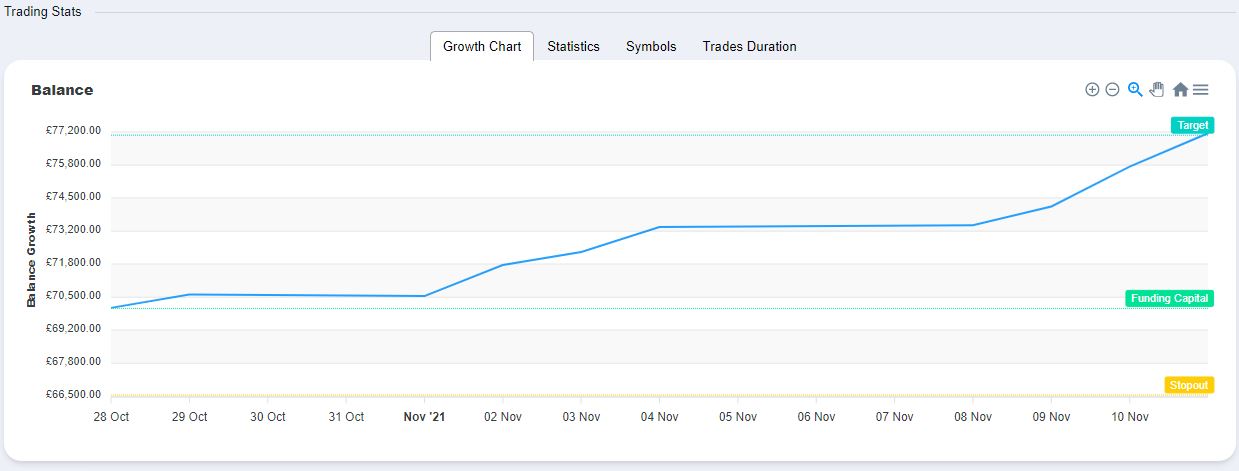


Traders need to break their visions down into small steps and with the opportunity in prop trading, it is very possible to scale and build large accounts by staying humble with small steps.

Recent articles

Share:

Share on facebook Share on whatsapp Share on twitter

THINGS PROP TRADERS NEED TO KNOW

THINGS PROP TRADERS NEED TO KNOW

If you’re a new prop trader, one thing you should stop doing is looking for the one golden formula  to know in this industry. You might think that there is a quick way to find a winning formula, but it only leads to more confusion. New traders become overwhelmed and intimidated by these lists and many inexperienced traders get their trading psychology dented as they feel inadequate when they see such long lists of information telling them to follow their gospel. These kinds of list are off putting if you’re making trades with live funds (especially large amounts) where learning and consistency is key.

Analysis

Price action is not as simple as you think. Master the basic analysis tools, they will serve you well when find trades and document your findings about how the market reacted to the trading tools you’ve used.

It is common for a new trader to try every indicator possible at first – even stacking them on top of each other. Eventually you will need to layout very simplistic charts to study and find trading setups on.

Candlestick analysis will be your bread and butter in your trading, but if candlesticks are too difficult for you then use other basic systems like support/resistance or supply/demand with a good understanding of trends and the way the market moves in cycles.

Risk Management

Risk and reward are an extremely important topic which we have cover in the past and offers concepts which often go hand in hand. The key is to make sure you stay on top of your system, as well as identifying any weak points, if necessary, by making improvements or not trading certain markets until you understand why they don’t work for you. This is a big point for traders and most traders will tell you they wish they knew this long before making too many mistakes in their trading. The idea is to constantly improve and not compound mistakes over many trades or many weeks.

New traders take the advice about capitalizing to accelerate success seriously – this means investing enough money into the market so that it will be profitable over time, trade mentors can really help newbies out with their knowledge and expertise, account margin calls or failed prop accounts has led many people to see how important a good mentor is – coaching industry seems like it’s picking up since then because more people realise just how beneficial having one could be!

Education 

Mentors make the difference in your success. Getting mentored by someone who has been doing what you want to do for 5 years can give you all that knowledge in just 1 year, because they teach and guide your development, giving feedback and introducing relevant ideas. Beginners may not know where to start when solo trading; with a mentor’s help, they avoid trial-and-error phases of figuring it out on their own while also avoiding costly mistakes! The best mentors are those who care about teaching students and forming them into profitable traders over time. Mentoring is an investment so take some time vetting before making any commitments on live trading capital.


Share:

Share on facebook Share on whatsapp Share on twitter

RISK TO REWARD IN TRADING

Risk to reward in trading

Trading in the Forex market can be a high-risk activity. It can also be a lucrative one. The risk to reward ratio is the most important factor when it comes to managing risk in this market. There are many factors that can affect how a trader might use the risk to reward ratio. These include volatility of currencies, leverage, trading style, and more.

The risk to reward ratio is one of the most important things to consider when finding a trading setup. If you are not careful, you can easily get carried away by a certain trade and end up losing more than you make without any plan or control over a trade.

The risk to reward ratio is a measure of potential profitability versus potential loss. It is calculated by dividing the possible return on an investment by its corresponding possible loss.

A trader needs to carefully assess his or her own plan of risk and rewards before entering into the forex trading markets. Forex traders should also know their own risk tolerance and be aware of their own psychological strengths and weaknesses before they start investing.

As mentioned, the risk to reward ratio in forex trading is a main consideration for traders. In some cases, the more risk the trader takes, the higher the potential for reward. In forex trading, there are two types of risks: market risk and personal risk. Market risks are those that you cannot control, and they include things like currency volatility and interest rates. Personal risks are those that you can control, such as your trading style and discipline trade by trade.

What should my Risk to Reward look like?

Risk and reward are two sides of the same coin, and in forex trading, this is no different. The risk to reward ratio is a measure of how much risk you take on for every pound you make. For example, if you invest £1,000 and make £2,000 – your risk to reward ratio would be 1:2.

Ideally traders want at least a positive risk to reward of 1:2 or higher in a profitable trading strategy.

Trading in the Forex market can be an exciting endeavour, but it also comes with a lot of risks if there is a lack of control.

The risk to reward ratio is one of the most important factors that traders need to consider when they are considering whether to enter a trade. The higher the risk, the higher the potential for profit. Therefore, many traders are willing to take on high-risk trades in order to make more money.

A good trading strategy will also likely use a consistent risk to reward ratio to balance out their trades. Constantly using 1:1 and 1:9 risk to reward ratios might unbalance a trading system and cause traders to lose control over their market judgment. The whole idea of effective risk: reward is that we grasp an element of control before we even get into a trade. This is because we know the best- and worst-case outcomes for that given investment.

As with any business or investment, there is always a risk to reward ratio. The higher the risk, the higher the reward. This is true for forex trading as well. The risk to reward ratio in forex trading has increased over time due to the evolution of the trading platforms and the availability of information on these platforms.

In forex trading, the risk to reward ratio is a ratio of how much you can lose to how much you can gain. It is the inverse of the probability of success. In other words, it’s a measure of how risky your decision is.

A high risk to reward ratio means that you stand to gain a lot from your investment but if things go wrong you stand to lose an awful lot too. A low risk to reward ratio means that your decision is less risky, and you stand to gain a little less in return for not risking as much.

A forex trader must decide whether the risk is worth the reward. The more risk a trader takes, the higher the potential return. But it’s important for traders to remember that they can only lose money on a trade.

Placing trades with significant risks and not knowing where the exit point is can also be a bad idea for a trader. We need to comprehend how these risks work and, logically, if the reward in forex trading increases proportionally to the level of risk in forex trading.

A lot of novice traders in this space may not take into account that market fluctuations are inherently impossible to predict. What they do know is that when you buy or sell at a specific time, when prices fall or go up if might provide them with an opportunity. How a trade can spot an opportunity through that will determine how successful they will be.

The risk to reward ratio is a key factor in determining the success of a trader. It is important to understand the uses of a risk reward tool and make sure that we use them for every trading setup! Don’t be lazy!

Share:

Share on facebook Share on whatsapp Share on twitter

ANOTHER AGGRESSIVE ACCOUNT PASSED

ANOTHER AGGRESSIVE ACCOUNT PASSED

https://youtu.be/Emer6emOiZg

In this video we break down one of our latest traders accounts who recently hit the 25% aggressive milestone target. Their methods and styles are simple yet very effective at producing a profit. We break down some of their performance to gain an insight into how to pass the aggressive program successfully!

Share:

Share on facebook Share on whatsapp Share on twitter

ANALYSING THE USDCAD

ANALYSING THE USD/CAD

https://youtu.be/nwoRnVpl9y4

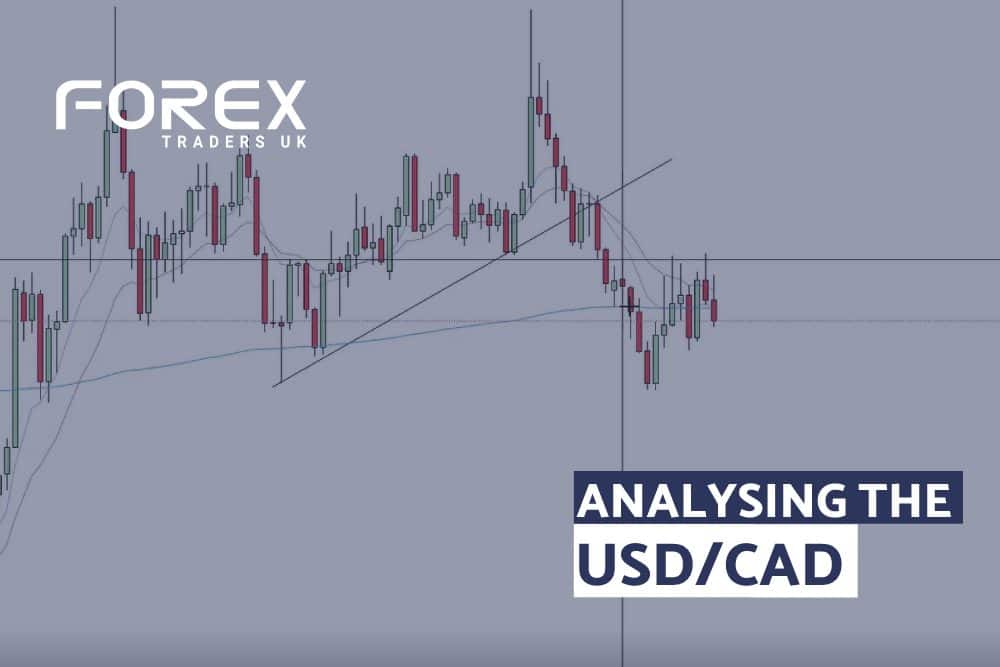
In this video we cover a simple breakdown of the USD/CAD ranging from the Monthly timeframe right down to the 1 Hour. As always we use simple technical tools such as key levels, fibonacci and trendlines. Please use your own trading judgement. We will provide an update in the coming week on USD/CAD to see how it has performed.


Share:

Share on facebook Share on whatsapp Share on twitter

USING THE DASHBOARD TO IMPROVE AND TRACK

USING THE DASHBOARD TO IMPROVE AND TRACK

https://youtu.be/s5NlNR3AOiM

Using the dashboard is important to grow as a trader. Tracking your performance can help gain extra edge in your trading which may lead to producing more profits. Knowing what to look out for can be difficult but in this video, we cover the essential numbers and targets that will be crucial to your trading success. Obviously, the main number that our traders will be focusing on is the profit and profit target, but providing attention to the account history and performance, means we can look to see if our strategy needs adjusting.


Share:

Share on facebook Share on whatsapp Share on twitter

TRADING FOR FOREX TRADERS UK

TRADING FOR FOREX TRADERS UK

https://youtu.be/e3Y0QuhMrlg

Immediately start trading with real money on our account and we increase the amount of capital at every milestone.​ Forex Traders UK is the all in one solution for traders to earn and grow. Join one of our programs today and keep up to 80% of your profits!

Share:

Share on facebook Share on whatsapp Share on twitter

THINGS FUNDED TRADERS CAN AND CANT CONTROL

Things funded traders can and can’t control

Traders can’t control the variance in price action

No matter when you started trading or how long you have been trading for the reality is that traders don’t have control over the price action or variance in their trading. A lot of the trader’s work comes down to the mental preparation and the psychology on how they deal with the market moves. Traders can prepare themselves by looking into fundamental and news announcements that may affect the markets but there will always be movement in price that will go against all traders at some point. That’s why it is important to focus on the things that we can control on those traders so that we give ourselves the best possible chances of succeeding in this field.

Trades and stop losses

One thing that we can certainly control as traders is our trading levels and the placement of our stop losses. By placing the stop loss you will be in control of your maximum loss in that situation. If you find yourself adjusting the stop loss into further loss oftentimes this means that you don’t have much control over your accounts and won’t be able to justify why you are increasing the maximum loss on a trade. Trades should always be prepared and planned before the trade is executed that way you don’t have to worry about finding an exit strategy whilst in the trade.

Trading tools

A great concept that we can control as traders are the tools that we look at. As traders we need to try and find the tailored tools that suit ourselves to make the best trading decisions. While some traders may use indicators and technical analysis along with reading the pure price action whilst other traders may look to use other tools that affect more of the news side of trading. It can be beneficial for a trader to learn early on what tools work best for them and how they can use them to create the best performance. Another thing we can control is the timeframes that we look at and how we view the market. All these things should be thought about in depth whilst you’re building your trading plan. When we have a plan we know what to do and when to do it it can be easier to stick to the plan and control ourselves from deviating into bad habits that may lead to loss or long-term negative performance on our trading accounts.

Trading experience and psychology

A lot of negative trading experience of drawdown can usually be linked to a traders’ psychology and their emotions when being in trades. Feelings that may come up are fear and revenge which can have negative impacts and be pivotal when aiming for trading success. What most traders don’t know is that we can control them and have a more relaxed and controlled experience in their trading careers.

Sometimes it may be hard to process a loss because effectively in that decision-making process when trying to identify winning trade the trader was wrong. What we need to understand is that we are all going to lose trades at some point and making sure that our risk management is on point and we’re not losing too much money on certain situations which will help us survive as traders.

On the flipside to that you should also not get overexcited about winning trades. This can also have a negative effect on your trading journey as traders may get overconfident and lose the ability to keep the profits that they’ve made. The best way to control this is by taking a break after each trade decision, documenting the outcome and making sure that you are using that experience to build your trading edge. All our trading experiences whether they are a win or loss should all influence our decision making moving forward and how we are able to trade successfully to the best of our abilities.

Share:

Share on facebook Share on whatsapp Share on twitter