WHY THE UNEMPLOYMENT RATE IS YOUR FRIEND

Why The Unemployment Rate Is Your Friend

The success and failure of foreign exchange trading hinges on all sorts of contributing factors, but they’re not all necessarily created equal, so knowing which ones to really focus on and perhaps lend slightly greater weight to can make all the difference when it comes to taking advantage of trading opportunities, as and when they present themselves.


What makes FX trading so exciting – and, no doubt, what appeals to many of you traders out there – is that markets change all the time and it can be for any reason, so opportunities appear as if from thin air, based on what’s happening in economies all over the world… and the rush comes when you spot something making waves and buy and sell accordingly.


Of course, it’s essential that you keep a very close eye on global economic news so you can identify these opportunities and get in there quick, assessing the impact of what’s happening on interest rates and monetary policy.


Hawkish and dovish


New to the trading game? Familiarise yourself with some of the terms you’ll likely hear bandied about and you can help maximise your chances of success.


If you’ve just started keeping a closer eye on what’s going on around the world, you’re sure to hear the word ‘hawkish’ being used to describe contractionary monetary policy, whether that means rising interest rates or reducing the central bank’s balance sheet, increasing inflation or strong economic growth.


And then there’s ‘dovish’, which is basically just the opposite. It indicates a fall in interest rates, with the hope that a stagnating economy will be stimulated. Depending on what you see happening throughout the day, you can then buy and sell as you judge to be appropriate.


But! It’s not just monetary policy that you need to keep a close eye on and there are other factors you’ll need to monitor to see what impact they’re having on markets, as well. And, unluckily, some of these are entirely unpredictable – so it’s all about acting fast when they do suddenly make an appearance.


Event risk is anything that will have a market impact but that you can’t see coming, everything from natural disasters and terrorist attacks to good and bad economic news, new technological innovations and inventions, comments from government or central banks and so on.


So what should you monitor first?


With so much to watch out for on a daily basis, it can be a little overwhelming for new traders to keep up with – so if you’re looking for one particular factor to really pay attention to, global unemployment rates would be an especially good place to start.


Why? Because unemployment rates are very significant indicators of any given country’s economic condition, reflecting changes that have already taken place.


What is the unemployment rate?


The unemployment rate is the percentage of unemployed people in the total workforce, comprising payroll or contract-based employees, the self-employed and the unemployed. People who are ineligible to work such as elderly people, children and so on are excluded from the rate.


By comparing rates from the current and past periods, it is possible to work out if more or fewer people are seeking government support – and, from there, you can then work out whether the unemployment rate is on an upward or downward trend.


Trends are strongly associated with business confidence. Expanding economies have more confident companies that are looking to grow, hiring more people in order to do so. But unstable economies hinder business confidence, with companies not looking to make any investments in their operations until conditions change and improve.


The release of unemployment rate reports is typically followed by high currency market volatility – an exciting time for any forex trader, since you’ll be faced with all sorts of high risk and high return opportunities.


And it’s because of this impact on financial markets that unemployment rate indicators are closely monitored around the world… so make sure that it’s at the very top of your list, whether you’re new to trading or old hat.


How can traders invest in unemployment rates?


Top note: When trading forex, make sure you’re comparing year on year rather than making more frequent report comparisons, as this latter strategy may not provide you with an accurate representation of actual unemployment trends.


There are three ways in which you can invest in unemployment rates – lower than predicted, higher than predicted and lower than natural.


Lower than predicted


A buying opportunity! When unemployment rates are lower than predicted, you’ll see an increase in workers generating income and consumption expenditure, as well as possible inflation and a rise in interest rates. This is, of course, very positive for one and all, and a strong indicator that an economy is on the up.


Higher than predicted


A selling opportunity! When unemployment rates are higher than predicted, you’ll see a drop in economic activity, lower incomes and decreased consumption. This could drive the government in question to bring in fiscal policies, launch public work projects or create demand within unemployment benefits.


Lower than natural


Historically, the natural rate of unemployment has remained relatively stable, hovering between 4.5 and 5.5 per cent. Unemployment won’t be sustained beneath this natural rate for long, because it will lead to higher inflation and force government hands to increase rates and moderate growth.


Knowing when the relevant reports are due to be released country by country is essential, as this will mean you’re better able to prepare yourself to trade assets and won’t be caught on the back foot.


Key unemployment rate reports


UK


These reports are released monthly by the Office for National Statistics, affecting assets including British stocks, EUR, GBP, UK Gilts and the FTSE 100.


EU


Covering Europe, these reports are released monthly by Eurostat, affecting assets like government bonds, CAC 40, DAX 30, EUR and EuroStoxx50.


US


These reports cover North America and are released monthly by the US Bureau of Economic Analysis. They affect US stocks, USD, the S&P 500, the Dow Jones, traded commodities and the NASDAQ 100.


Canada


Statistics Canada releases its reports monthly, which affects CAD, Canadian stocks, Crude Oil, S&P/TSX and Canada Marketable Bonds.


Japan


The Statistics Bureau of Japan releases its reports each month, with affected assets including government bonds, the Nikkei 225, Japanese stocks and JPY.


China


Released each month by the National Bureau of Statistics, affected assets include CNY, NZD, AUD, the China A50, Chinese stocks and government bonds.


Australia


The Australian Bureau of Statistics releases its reports monthly, affecting assets such as AUD, NZD, the ASX 200 index and both Australian and New Zealand stocks and bonds.


How to keep track of it all


You can’t expect to remember all the information you need to have at your fingertips in order to buy and sell in forex trading. It would just be impossible and you’d go mad trying – but, luckily, this is the digital age and there’s a lot of technology out there doing much of the hard work for you.


Economic calendars are really useful tools, covering financial events and indicators from all over the world. When new data is released, the calendars are updated in real time. Although these calendars aren’t meant to be a trading guide, only providing general information, they can be useful resources for maximising efficiencies and organising your trading strategies.


If you’re a news trader or plan to trade forex through fundamental analysis, you’ll need to monitor global economies based on macroeconomics data like the unemployment rate, inflation, consumption data, GDP and so on – and you can just keep your economic calendar open in a tab on your devices, so the information is right there as and when you want it.


And even if you’re not that bothered about macroeconomics when trading (although you probably should be), you can still use the calendars to check when high volatility data is expected to be released, allowing you to manage your trades more effectively.


The data is displayed in chronological order, divided by day. When new data is released, the page refreshes itself automatically so you won’t miss anything and you can enable notifications so you’re alerted to releases as they happen.


You’ll see a little flag icon next to the data release, indicating which country it’s from. The currency is right there next to it, so it couldn’t be easier to scan quickly through the list and see what currencies are likely to be affected now or in the future.


Give it a go


Put your trading skills to the test using our low fee evaluation Forex funding program. Here, you’ll have a single phase process to prove how you can manage large capital, with amounts on offer ranging from $14,000 to $90,000.

Recent articles

Share:

Share on facebook Share on whatsapp Share on twitter

PROP TRADING STRATEGIES

Useful tips for a prop trading routine

The different prop trading strategies


The main trading strategies consist of: 

Swing trading 

Day trading 

Scalp trading 

News/Fundamental trading


Each one will carry different traits that will not suit all traders. Firstly there is a time element to each strategy, and if you can’t be available behind the screens for large portions of the day, then short term methods won’t work. You need to adapt profitable methods and styles to your plan and how you see it working. 


We all have different styles and how we act outside of trading will show up in your trading performance. This is because we are all human and carry emotion. The more emotional we are within trading the more difficult it will be to succeed. The best way to overcome this, is to simply trade with amounts you won’t react to if you lose. Then we can focus on bettering ourself through our strategies and build are skillsets. Constantly looking to take your trading to the next level, no matter what your situation is will be beneficial to the strategy that you will build over time. Not all traders fit into a box and we are all different. 


What strategy is best for me?


Understanding what strategies will work for you will depend on how much time you can invest into your work. If you have other life priorities such as a job, then swing or position trading might be the best approach. If you have lots more time to dedicate to your craft, you might want to try day trading if it fits your investment style and characteristics. 


We recommend traders try new strategies out on a demo account and start small. Always try to earn the right to trade bigger. By starting small you can test the waters to see how well you build a solid performance over a large sample size of trades.


Useful trading strategy books


In previous blogs we have displayed some of our books that we recommend traders read. Here are a few that will help with your strategy:


Market Wizards by Jack Schwager.


Reminiscences of a stock operator by Edwin Lefevre.


Trading in the zone by Mark Douglas. 


These books have gone into a lot of technical strategy regarding how to trade and when. Whilst you may find other traders online who show themselves winning on a small sample size, don’t let that fool you into trying to rush profits or trade too quickly by overleveraging your account. You will know when you have found or developed your strategy, it will make you life easier and sustainable.


Most popular prop trading strategies


As we have analysed hundreds of prop traders strategies of the past year we have understood similar habits across different styles and strategies. All profitable traders will carry positive risk to reward ratios across all trades. The best performing traders seem to be all-round traders where their trades can last from as little as 30 minutes up to 3 days. Some have also used high impact news to drive their accounts to meet profit targets. The beauty about our prop fund is that we have a very open mind to new traders and are always looking at new variations and styles of traders who come through our fund. 


After speaking with a few of the traders lately they have explained the 80 – 20 rule which means they focus 80 percent of the technical analysis side whilst 20 percent keeps a handle of the fundamental announcements. This combination seems to be very fruitful in building long term successful habits. We have studied the volume drives before and if a trade has many confluences at a certain location, then the news ca help drive momentum into that spot. 


Do some research and figure out your available times to be trading and back test some of the strategies you think would work for your lifestyle. And then when it works, implement it slowly with low risk on your live account.


Recent articles

Share:

Share on facebook Share on whatsapp Share on twitter
USEFUL TIPS FOR A PROP TRADING ROUTINE

Useful tips for a prop trading routine

Traders will have different routines and trading hours


If you are a long-term trader, or trading part time. Then the start of your trading day will most likely be in the mornings or late in the evenings around your standard daily commitments. You may just be starting to trade in the morning and then go to work from 9-5. Or you may have a different schedule where you are trading during the day, but not at night. All traders are different when it comes to putting in the hours into their craft. But let’s have a look at some of the basic needs for a profitable routine when trading for a prop firm.


Regardless of what your schedule is, there are some things that you can do to make sure that you’re ready when the market opens:

1) Have a plan for what trades you want to take before the market opens

2) Have an idea of how much you want to put on each trade

3) Have a list of instruments that are in your watchlist

4) Check if any news


Studying the charts


You will need to find time to analyse the markets by looking at the charts of the individual currencies and research into the next trade. It can take time to look at the trends and patterns to decide what trades to make.

The first thing you should look for is the trend of a currency which will usually offer the quickest route to finding an overall sufficient trading setup. The trend is a general direction of price movement that can be either up or down, depending on what is happening in the market. You should then study and implement patterns to see when it might be a good time to buy or sell.

Journal work


Documenting your trades is a great way to keep track of your progress. It also helps you identify areas where you might need to improve. Taking time out of your day to write down your thoughts will certainly give you more edge which you may be looking for.

It is important to know what works and what doesn’t work for you in trading so that you can make better decisions in the future.

This is super simple but a very important concept for traders who are just starting out in the markets.

If you cannot justify an entry, you preferably should not enter a trade and wait for the next available time you have to sit down behind your computer and find another trade.

This means that if you do not have the conviction to enter a trade, then there is no point in doing it. If you are not sure about your trade, then don’t do it. You will lose money in the long run if you continue to make trades that are too risky or have little information on them.

Trading full time for profits


We are all different and we have different goals int trading. Some will be more recreational and do it on the side of another career or job, whilst some will do it full time professionally. It is important to find what works for you and then stick with it. If you are able to hold down a profitable strategy for a while that works for you with low risk, then it might be viable to treat trading like a full-time long-term career. If you are finding your account going sideways or even into drawdown over a long period of trades then maybe keeping another job and trading alongside it in the evenings for example, might be the better approach.

The truth is that there is no one-size-fits-all solution to trading.

There are many ways to trade, and many ways to be successful in trading.

The trading routine should be a set of rules that traders have to follow in order to trade successfully. It’s not really an automated or mechanical system, but it will help the trader make decisions in a systematic way. The trading routine can be seen as a framework for decision-making, which helps traders take control of their emotions and make better decisions in the market.

The trading routine is mainly about discipline and consistency which you will find are the most important assets to fully understand and achieve in the trading space.

Recent articles

Share:

Share on facebook Share on whatsapp Share on twitter
USING HISTORICAL PRICE ACTION

USING HISTORICAL PRICE ACTION

Why should we look at historical price action?

We need to look left to search for clues on where to enter the market for profitable trades. This can include key levels, where a market has reacted before, and where the instrument is heading towards.

Support and resistance

When looking left we are able to identify the key areas of profit-taking. When a market is trending it is even more important to always look left at the support and resistance levels as they modify. This happens plenty in technical analysis. Previous resistance becomes support. Or the opposite way around – previous support becomes resistance. 

Looking left vs indicators

Having too many indicators on your charts might cause confusion where one might provide you with a buy and another one is saying sell. This sort of chart confusion and mess can result in confusion for the trader leading to loss or no trades.

Well, this happens to lots of new traders. They learn as many indicators as can and try to use them all at once. Then, they slap all of them on a chart and think this will equal more profit. This provides them mixed signals, confusing them and causing them to require the incorrect trading positions.

Well, what if I told you that the most effective indicator is price action itself? And better of all, if you wish to use it to make the most of Forex profits, all you would like to try and do is LOOK LEFT!

Supplement your back testing with an occasional amount of indicators.

Now that you just know where to look for in price action to induce entry or exit levels for your trades, you’ll be able to use one or two indicators to supplement your price action strategy.

So, without adding all the confusing indicators in your charting platform for no reason, find an indicator that confirms and compliments your entry and exit levels. Find such an indicator by back testing it along with your new price action trading approach that matches your style. If you get a price action entry idea confirmed by an indicator entry signal, you may increase your chances of profitable trades if it goes in alignment together with your bias.

The earlier you prepare using price action as your main indicator, the sooner you’ll mature as a trader! So, before you’re taking your next trade, remember to look LEFT and remember that price action is that the most significant indicator in the market.

Looking at history increases confidence.

The more ambitious swing traders will look on the largest timeframes looking back as far as possible to search out the largest trades. Whilst it is important to look left on all timeframes and review the value action short term, you must utilise the monthly/weekly timeframes to work out where you’ll hold your trades to. These timeframes are the foremost respected when it involves price action. With some traders able to hold a trade 100 pips some may only get out 30 pips. The most important thing is to journal all of your work and constantly adapt as a trader.

Summary

Looking left is the simplest sort of chart breakdowns however such a big amount of miss out on vital info when live trading. Keep the chart clean and look left on the larger timeframes to boost your trading bias and overall performance.

Recent articles

Share:

Share on facebook Share on whatsapp Share on twitter
RETAIL TRADING VS PROP TRADING

RETAIL TRADING VS PROP TRADING

Trading with a small trading account is very common in forex and can often seem easier that it is in reality. It can be very risky because of the lack of capital and risk management discipline which most traders battle with. There is also a lot of pressure put on leverage which means that the trader might overlook risk management in order to increase their gains and profits.


Trading with a small account is risky and can lead to losses. There is a high probability that the account will be wiped out and traders may also face margin calls.
The risks of trading with a small account are as follows:


– High possibility of all capital being lost
– Margin calls which means that the trader has to deposit more capital into the account to avoid liquidation
– Pressure on unrealistic targets in percentage
– High transaction costs


In order for a trading account to grow in value there must be a consistent strategy and risk management plan behind the operation. A trader might be excellent at the technical analysis and spotting trading opportunities but if they fail to take control of their bankroll and trade with large amounts of risk on certain trades this will only lead to loss in the long run. The trader can also increase their profits by using leverage within a prop firm to scale their account slowly but consistently, which means trading other prop firms’ capital.


What is prop trading?


The prop trading account is an account that is used for trading in the forex market. The person who has this type of account is called a “proprietary trader.” A prop trading account is usually a large amount of capital, and it can be leveraged to generate profits and gains.


The person who has this type of account must have some experience in the trading markets and they must also have a good knowledge about how to trade. The financial industry is changing. The retail trader is gradually getting replaced by the prop trader as prop trading oppournities are expanding and only getting better for traders.


Retail trading


The retail trader is when an individual trades with his or her own capital. The prop trader trades on behalf of a company that owns the capital, and they are compensated in terms of profits and gains. At FTUK you can get up to 80% of the profits you make. Prop traders also use leverage to increase their potential profits, but the downside is that it increases their risk as well. This is a common issue with some prop firms advertising high leverage options to increase the likelihood of the trader choosing them when most traders don’t understand it actually offers a quicker route to failure. The optimal leverage that a trader can use and profit long term with a prop firm is between 1:5 and 1:30 leverage.

 
A prop trading account can be opened with most providers and getting started is very easy, but in order to be successful you need to know what you are doing.Traders are always looking for ways to increase their capital and profits with the use of leverage. However, with high risk comes high reward – so they often set unrealistic targets which can lead to losses if they are not met.
Many traders have lost their account balance in just one trade because of the risky nature of trading. They should be aware of the risks and know when to stop trading before it’s too late. Trading has been a thing for long time now, with retail traders working from home and finding new ways of beating the market for the last two decades.


Trading limitations


The trading process is full of limitations and the most important one is the amount of capital that you have to invest in order to make a profit or gain. Leverage can help you with this limitation if you know how to use it properly and if you are not careful enough, it can lead to failure. The use of leverage in retail trading refers to the practice of using borrowed money to buy an asset. The purpose is to increase potential gains on the trade.
Trading can be very profitable if done right. You just need to find the right trading strategy and follow it. Traders need to constantly be adapting and find new ways to limit the amount of loss and increase the win rate or general trading edge in the market. Prop traders also need to be making sure they are managing the account correctly, to ensure long term profits and other prop trading benefits. If you invest wisely, you will see consistent gains over time.


A good plan is required


Trading can be difficult and risky business. However, the key to success in trading is to have a good plan and some patience. There are many different strategies that traders can use. Some of the most common strategies are swing trading, day trading, position trading, and scalping.
In order to trade successfully, traders need a significant amount of capital which might mean you already need to be wealthy in order to create more long-term wealth. The more capital they have available for trades, the more money they can make on their investments. Traders also need to be able to wait out periods where there are no profits or gains so that their account does not lose money due to losses or leverage during those periods of time when they do not make any profits or gains. Trading for a prop firm can help with this process and even long periods of drawdown times. All the trader needs to keep in mind is trade well and they will be rewarded for calculated and correct decisions.

 
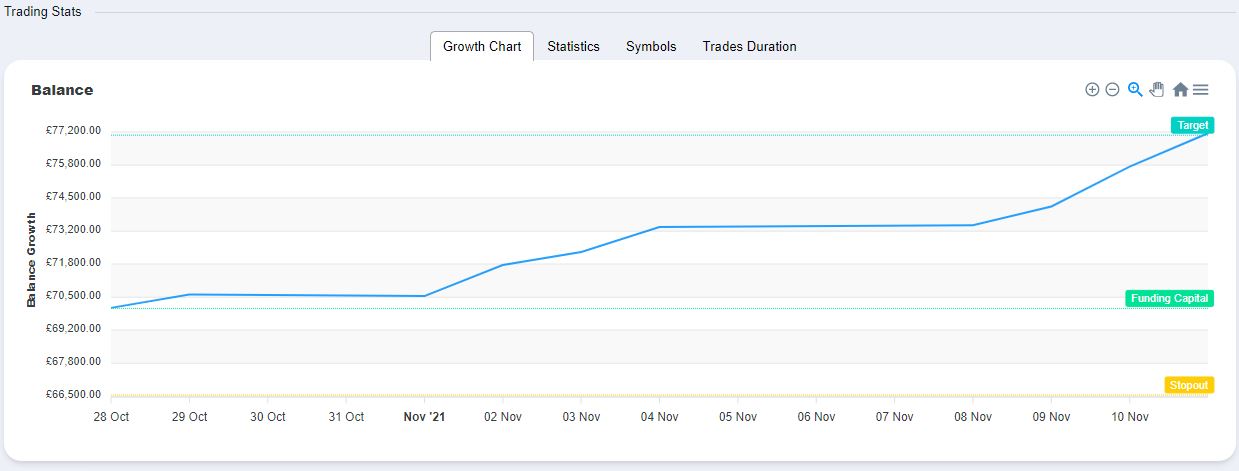
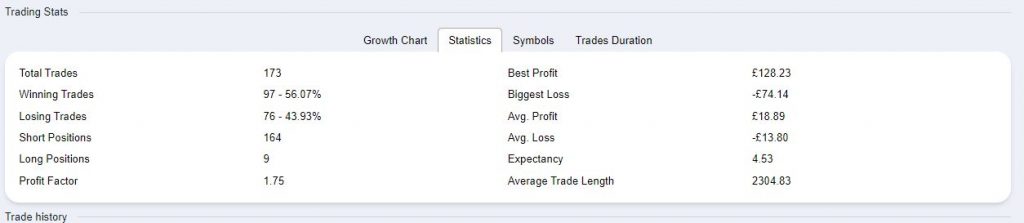
Prop trading can be very lucrative when a trader aims for long term small and consistent results, when broken down is manageable and with a strong trading edge is possible to achieve. Here is a FTUK account from October to November 2020 with a very small but consistent daily results:


Traders need to break their visions down into small steps and with the opportunity in prop trading, it is very possible to scale and build large accounts by staying humble with small steps.

Recent articles

Share:

Share on facebook Share on whatsapp Share on twitter
SYED IS NOW TRADING £10,000

SYED IS NOW A LEVEL 2 TRADER – SUCCESSFUL FOREX TRADERS

SYED IS NOW TRADING £10,000

How long have you been trading for? 3 years How long did it take you to become profitable and how did you become consistent? 1 Year What trading methods do you use? Elaborate on your trading style. Forex Overlapping Fibonacci Trade What has been your biggest hurdle to overcome? New Ground What has been your best moment in your trading career? 10% Profit in a Single Trade Why did you choose Forex Traders UK? For Testing my Skills What would you say to other traders starting out with Forex Traders UK? ones best success comes after their greatest disappointments

Want to be featured on our blog with successful Forex traders?

Send us an email to support@forextradersuk.com to be featured on our blog and show off your performance.

Share:

Share on facebook Share on whatsapp Share on twitter
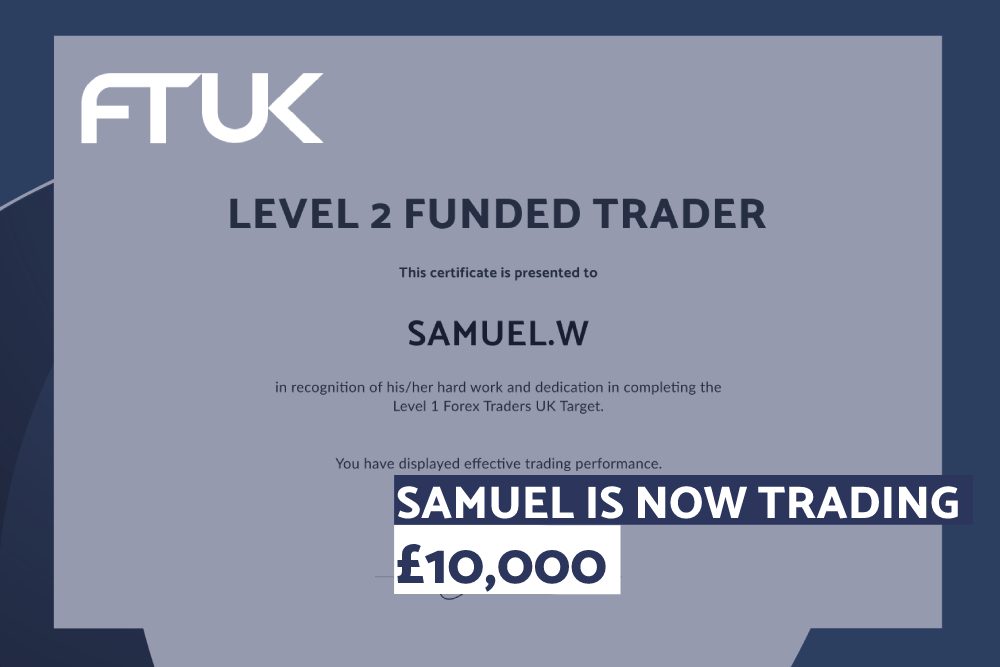
SAMUEL IS NOW TRADING £10,000

SAMUEL IS NOW A LEVEL 2 TRADER – SUCCESSFUL FOREX TRADERS

SAMUEL IS NOW TRADING £10,000

How long have you been trading for? 3 years How long did it take you to become profitable and how did you become consistent? 2 years to become profitable and to become consistent was due to all the failures and learning but the main thing was risk management. What trading methods do you use? Elaborate on your trading style. My trading style is pretty basic I take my trades when a candle has closed,so on daily candle ill wait for the candle to close before I place a trade. I only take continuations and reversal patterns I use bollingerbands and use 100 50 round numbers as 100 round numbers being stronger in support or resistance. Bollingerbands give me direction of price, in a continuation setup in an uptrend I will look for a retracement to the middle bollinger and look for a daily bullish candle to give me that continuation of the upside trend and thats were I will look for round number to protect my trade with a stop loss. What has been your biggest hurdle to overcome? Mindset What has been your best moment in your trading career? Being able to identify trade setups and them pulling through in a positive Why did you choose Forex Traders UK? Forex uk have a good not good but excellent customer service all questions ask are answered honestly, dashboard is excellent to monitor trades there rules regarding evaluation or instant funding is pretty excellent for any new trader to adopt to which it makes a trader at ease when trading not thinking have I done this or that wrong did I violate my account. I think the way they have there risk for traders is good because its also teaching me to be even more disapline which helps you stay in the game longer the time limit for the level 1 90days is very good were not rush for time. Able to hold trades over the weekend is what I like and news. so these are pressures that a trader doesn’t have think about. You get credentials pretty fast so thats what I liked. What would you say to other traders starting out with Forex Traders UK? I say take your time to understand the rules, be patient keep risk small because they give enough time to reach your target and enjoy the process and journey with forex traders uk What are you goals long term in trading? I like to become full time fund trader with forex traders uk

Want to be featured on our blog with successful Forex traders?

Send us an email to support@forextradersuk.com to be featured on our blog and show off your performance.

Share:

Share on facebook Share on whatsapp Share on twitter
THINGS PROP TRADERS NEED TO KNOW

THINGS PROP TRADERS NEED TO KNOW

If you’re a new prop trader, one thing you should stop doing is looking for the one golden formula  to know in this industry. You might think that there is a quick way to find a winning formula, but it only leads to more confusion. New traders become overwhelmed and intimidated by these lists and many inexperienced traders get their trading psychology dented as they feel inadequate when they see such long lists of information telling them to follow their gospel. These kinds of list are off putting if you’re making trades with live funds (especially large amounts) where learning and consistency is key.

Analysis

Price action is not as simple as you think. Master the basic analysis tools, they will serve you well when find trades and document your findings about how the market reacted to the trading tools you’ve used.

It is common for a new trader to try every indicator possible at first – even stacking them on top of each other. Eventually you will need to layout very simplistic charts to study and find trading setups on.

Candlestick analysis will be your bread and butter in your trading, but if candlesticks are too difficult for you then use other basic systems like support/resistance or supply/demand with a good understanding of trends and the way the market moves in cycles.

Risk Management

Risk and reward are an extremely important topic which we have cover in the past and offers concepts which often go hand in hand. The key is to make sure you stay on top of your system, as well as identifying any weak points, if necessary, by making improvements or not trading certain markets until you understand why they don’t work for you. This is a big point for traders and most traders will tell you they wish they knew this long before making too many mistakes in their trading. The idea is to constantly improve and not compound mistakes over many trades or many weeks.

New traders take the advice about capitalizing to accelerate success seriously – this means investing enough money into the market so that it will be profitable over time, trade mentors can really help newbies out with their knowledge and expertise, account margin calls or failed prop accounts has led many people to see how important a good mentor is – coaching industry seems like it’s picking up since then because more people realise just how beneficial having one could be!

Education 

Mentors make the difference in your success. Getting mentored by someone who has been doing what you want to do for 5 years can give you all that knowledge in just 1 year, because they teach and guide your development, giving feedback and introducing relevant ideas. Beginners may not know where to start when solo trading; with a mentor’s help, they avoid trial-and-error phases of figuring it out on their own while also avoiding costly mistakes! The best mentors are those who care about teaching students and forming them into profitable traders over time. Mentoring is an investment so take some time vetting before making any commitments on live trading capital.


Share:

Share on facebook Share on whatsapp Share on twitter