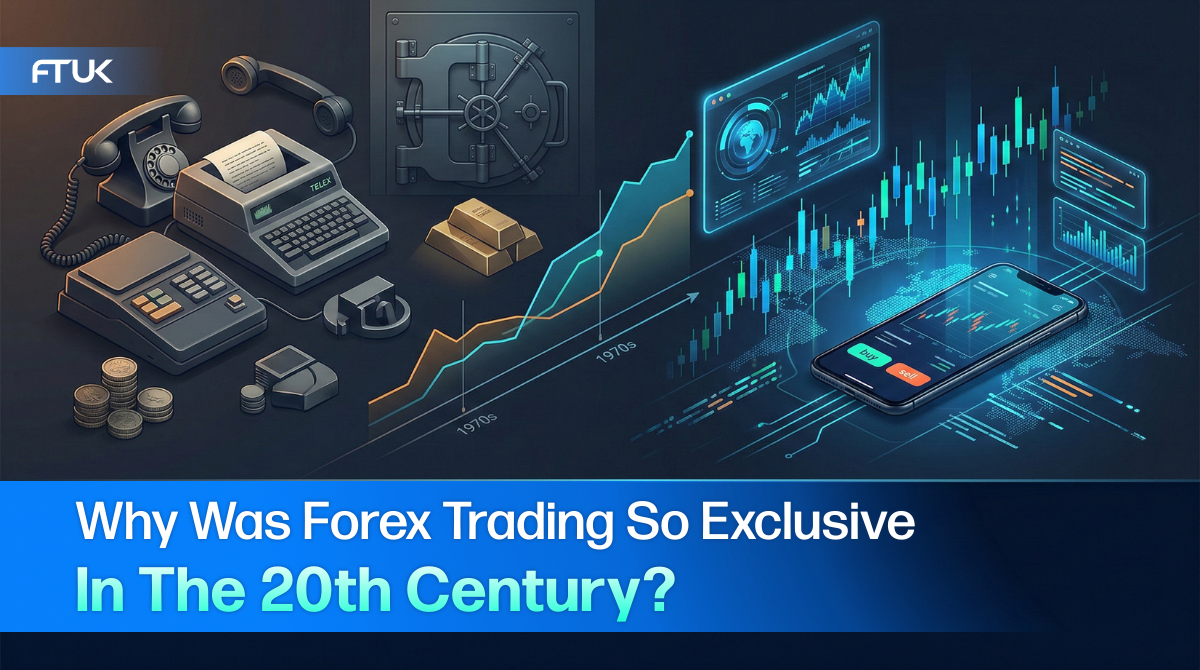
Why Was Forex Trading So Exclusive In The 20th Century?

Why Was Forex Trading So Exclusive In The 20th Century?

Today, individuals can get instant forex funding and trade from their phone, from anywhere and at almost any time of the day or night. This scenario was completely unimaginable 20 yearshistory forex trading has been limited to elite financial institutions and central banks.

So why was forex trading so exclusive at the beginning? The answer to this question can be found in the evolution of national currencies and the roots of international trade, and also the world-changing events of the 20th century. The early origins of forex trading

The need to exchange foreign currencies has existed since the time that merchants and traders travelled to sell goods. Initially, commodities such as salt and spice were exchanged rather than money. The first coins were produced in the early 6th century BC, and gold or silver coins became the universal currency for hundreds of years to come.

The value of the coins was determined by weight and metal content, rather than today’s free-floating system that measures currencies against each other. There was no reason to speculate on currency values as most contemporary forex traders do, because the purpose was purely transactional. The earliest forex market

Over time, the heavy metal coins were replaced by paper notes that could be converted into gold. Individual countries began to hold their precious metals in reserve, and paper notes served as bills of exchange. This enabled the world’s first real forex market to be established in Amsterdam about 500 years ago.

In 1875, the Gold Standard was introduced, which restricted the printing of paper notes to the equal value of a country’s gold reserves. Gold was the metal of choice due to its rarity, durability, mallability, and the effort involved in extracting it.

The government of countries that signed up to the Gold Standard guaranteed that they would redeem paper money for its value in gold. This sthe Great Depression after World War I, when many countries had depleted reserves and frequently defaulted on their obligations.

Recognising that this would make it impossible for the world economy to recover from the devastating effects of two world wars, global leaders and economists began working out a new system to stabilise exchange rates. The rise and fall of the Bretton Woods System

This led to the creation of the Bretton Woods System, which pegged most global currencies to the value of the US dollar, as the US economy and industrial base had suffered the least damage from the wars. In turn, the US dollar was pegged to gold at a fixed rate of $35 an ounce.

The agreement was signed by delegates from 44 different countries in July 1944 at Bretton Woods in New Hampshire, USA. In terms of forex history, it was very significant because it fixed exchange rates and allowed swift and smooth transactions between countries.

However, forex trading remained a very exclusive domain because there was little room for speculation, and governments intervened heavily in the market to maintain exchange rate pegs. Only central banks, commercial banks, and large multinationals participated in the market, mainly to manage currency reserves or conduct international business.

It was almost impossible for individuals to access the market unless they had significant amounts of capital, and even then it required contacts within a banking system that was largely closed to the public. All this began to change with the collapse of the Bretton Woods System and the rise of digital technology. The rise of the free floating market

By 1971, the Bretton Woods system was failing due to the devaluing of the US dollar against its gold reserves following a surge in government spending and lending. The system was completely dismantled by President Nixon in 1973. As a result, most currencies floated freely on the market, with the value determined by supply and demand.

This meant that speculation was profitable for the first time, and the first true forex market was launched out of Chicago in 1972. During the 1970s and 80s, the global economic situation remained uncertain and the resulting fluctuations in the market created both risk and opportunity.

However, even in this freer environment, forex trading remained largely exclusive to interbank markets, large corporations and governments and central banks. Continuing barriers to entry

Despite the foundations being laid for the modern forex market, it remained closed to individual traders for a variety of reasons. These included

High minimum trade sizes: the interbank market operated with multi-million dollar lot sizes, and this amount of capital was not accessible to 99.9 per cent of the population.

Basic communication systems: During the 1970s and 80s before the internet, trading was conducted by telephone or telex machines and prices were relayed manually. This meant the practical means to access the market was limited to those who worked in the financial sector or who had trusted contacts within it.

Limited access to leverage: Leverage (trading with borrowed money) was only accessible within financial institutions, and individual investors were not in a position to negotiate leverage.

Lack of regulation: Although the forex markets were tightly controlled by governments, there was no structure in place to protect individual speculators. The only realistic way for solo traders to access the market was through having access to substantial private capital and contacts within the banking system. How the internet bulldozed through barriers

The real levelling of the playing field began in the 1990s, with the rise of the internet and personal computing. Brokers and prop firms offered leverage to solo traders, who were able to access the market through electronic trading platforms and real-time quotes. An online trading community grew, offering tips, insights and free educational materials.

During the 00s, forex trading was still a relatively niche activity, but as technology and internet speeds improved, the global market has blown up and become more competitive. Today, millions of solo traders supplement their income or have even made forex trading their career. New frontiers: how to thrive as a solo trader

In theory, anyone can access the forex markets from their phone or laptop and begin trading. However, it’s important to appreciate the history of the markets and have an awareness that it can be risky, complex and fast moving. We might enjoy advanced technology and instant connectivity, but it’s essential to back this up with knowledge and skills. Learn as much as you can

Although forex trading is more accessible, for most of history only trained professionals carried out trades, and even they made mistakes and incurred heavy losses sometimes. The markets have evolved around global economies and international trade, and they take skill, patience and emotional control to navigate.

The technology might be user-friendly, but the markets are not designed to serve your purposes: you need to put in the time and effort to learn technical and fundamental analysis and risk management skills.

There’s a lot of content out there promising to help you learn to trade, but separating valuable insights from empty hype takes discernment. Be cautious of flashy courses or so-called YouTube gurus promising overnight riches. Unless you already have a strong background in finance or trading, the idea of turning a few hundred pounds into millions in just a few months is more fantasy than fact.

Instead, look for educational material that’s realistic about what forex trading involves. A good course will teach both the opportunities and the risks, without making inflated promises. Once you’re comfortable with core concepts like pips, spreads, leverage, and margin, it’s time to put together a structured trading plan. Risk management: your most important skill

Perhaps the most essential skill for long-term success in forex is mastering risk management. Every trader, no matter how experienced, faces losing trades.

What separates successful traders from the rest is how they handle those losses. Always trade with a stop loss in place to limit your downside, and make sure you’re clear on your personal risk tolerance. Understanding how much you’re willing to lose on any given trade is just as important as identifying when to enter or exit the market. Put Your Knowledge Into Action

Once you’ve built a solid foundation, the next step is applying what you’ve learned. Demo accounts can be a great way to get familiar with a trading platform and market conditions, without risking real capital. However, because there’s no real pressure, they can also feel a bit detached from reality.

If you want a more immersive experience with minimal financial risk, consider signing up for a 14-day free trial with a proprietary trading firm (prop firm). These trials offer access to virtual funded accounts where you’ll trade under live market conditions, using professional platforms and tools.

You’ll be challenged to meet profit targets and adhere to strict risk management rules, offering a more realistic trading environment. If you can demonstrate consistent skill and discipline, you may qualify for the firm’s evaluation stage and, ultimately, a fully funded live account with a profit-sharing arrangement.


How Did The US Dollar Become The Global Reserve Currency?

Since 1944, the US dollar has been the world’s global reserve currency. Before we look at how the US dollar reached this position, it’s important to understand what a reserve currency is and why it’s important for global trade.

What is a global reserve currency?

A global reserve currency, such as the franc and the Australian dollar, is a currency that’s held by central banks around the world, as well as other financial organisations, to both stabilise economies and underpin international trades.

Global reserve currencies are particularly important for trading. By using a common currency to buy and sell goods, companies and countries can avoid currency exchange fees.

Although the US dollar is the dominant global reserve currency, other currencies are also used in a similar way – most notably the euro. However, few come close to the US dollar’s dominance, with 58 per cent of global foreign exchange reserves held in dollars.

Meanwhile, 54 per cent of international trades are conducted in the US currency, while 88 per cent of foreign exchange transactions involve the US dollar. The euro is the next-biggest currency, but it only accounts for 20 per cent of global foreign exchange reserves.

Has the US dollar always been the dominant global reserve currency?

No, it wasn’t until 1944 that the US dollar became such a powerful force in global currency markets. Prior to the second world war, the British pound was the main currency of choice for international trades.

However, as a result of the two world wars, the UK’s economy took a significant hit. Meanwhile, many European countries transferred their gold assets to the US during this turbulent period to keep them safe.

In 1944, under what’s known as the Bretton Woods Agreement, the US dollar, which at that point was pegged to gold, was named as the world’s primary reserve currency. The aim of this agreement was to create a unified international money market.

Under Bretton Woods, the value of all currencies would be linked to the US dollar, rather than to the price of gold. However, because at this point the US dollar was pegged to the gold price, little practically changed in terms of currency valuations.

It wasn’t until the 1970s, when Richard Nixon decoupled the US dollar from gold, that the floating currency exchange rates we have today emerged. The reason behind this decision was that the US no longer had enough gold reserves to cover all the US dollars in circulation around the world.

What does a currency need to be a global reserve currency?

The key requirement for a global reserve currency is stability. Now that all currencies have been decoupled from the value of gold, each currency is underpinned by the governments of individual countries – or in the case of the euro by a block of countries.

Although China has been pushing to make the renminbi an alternative to the dollar, the fact is that too few global trades are conducted in its currency and too few governments hold it in their reserves for it to seriously challenge the US dollar at this stage.

One of the main reasons why the US dollar has dominated global currency markets for so long is that the majority of oil transactions around the world are conducted in dollars. It is also used for many other commodity trades globally.

The sheer volume of trades conducted with US dollars makes it highly liquid – another important trait for a global reserve currency.

Why is it important to understand global reserve currencies if you’re trading forex?

Liquidity is important – and it’s one of the main reasons why the forex market is so highly traded around the world.

In the context of forex, and other areas of global trade, a currency that is highly liquid can easily and quickly be bought and sold. This indicates that many other people trust the currency that you’re trading – after all, if no one wants the currency you’re trying to trade, that indicates that it is not worth as much.

Therefore, currencies like the US dollar that are highly liquid are considered stable and therefore desirable for traders and governments alike.

Forex trades take place quickly, which is why it’s important to ensure you are comfortable with the market before you start trading in real-time. Funding prop firms give you a chance to run trades in a simulated account.

In doing so, you can practice your forex trading and demonstrate that you’ve got what it takes to make it on the markets, giving the firm confidence in funding you to trade for real.

What Is A Floating Exchange Rate System & How Can It Affect Your Trades?

What Is A Floating Exchange Rate System & How Can It Affect Your Trades?

The currency and foreign exchange market is one of the most unique and unusual to trade in, filled with opportunities to apply not only technical financial knowledge but also geopolitical awareness and a degree of intuition in order to make financial gains.

Because there are so many avenues for success when it comes to forex trading, particularly if you are part of an instant funding prop firm which allows you to make impactful trades very quickly, it is important to understand how the market works and why exchange rates change so rapidly.

Most currencies operate using a floating exchange rate system and have done so for nearly half a century.

What is a floating exchange rate? Where did it come from? Why has it become the preferred exchange rate system, and how can forex traders navigate it to make gains?

What Is A Floating Exchange Rate?

A floating exchange rate is a system where the value of a currency is linked to supply and demand. In other words, the forex market decides how much a currency is worth in relation to other currencies.

If the demand for a given currency is high, usually during economic boom periods where people are more willing to spend, and the rate of inflation is relatively low, the value will gradually rise, whilst the opposite will happen if the demand is low relative to supply.

Floating Exchange Rates Vs Fixed Exchange Rates

The alternative way to manage the value of a currency is either outright fixed exchange rates or rates pegged to another asset, often a curbasket of currencies or a precious commodity such as gold or silver.

The gold standard is a form of fixed exchange rate, where a given currency’s value is pegged against the value of gold on the open commodities market. As gold is a relatively stable store of value, this approach traditionally led to relatively stable exchange rates.

A fixed exchange rate system is centrally managed, is typically linked to the market price of another asset and often relies on having a large pool of reserves to help keep the currency within a narrow band.

This is especially true for currencies which have somewhat unrealistic fixed rates relative to their market value, and many of these potential weaknesses led to the modern floating exchange rate system in more economically developed countries.

Where Did Floating Exchange Rates Come From?

Why did this change? There are a lot of reasons, but the biggest is the breakdown of the biggest and most widely used fixed exchange rate system in the world.

What Was Bretton Woods?

The Bretton Woods System is the final form of the gold standard as a major international currency exchange system.

How it worked was that any country that agreed to the system would need its currency to be pegged to the price of the US dollar, which was itself pegged to the price of gold.

The idea was to avoid the issues with competitive devaluations, promoting growth after the devastation of the Second World War and avoiding the complications that emerged when countries had to abandon the gold standard after the First World War.

Under Bretton Woods, the dollar was convertible to gold at a rate of $35 to a troy ounce, which then in turn gave the dollar a relatively fixed value that other currencies were pegged against and were required to remain within one per cent.

Why Did Bretton Woods Collapse?

Bretton Woods, despite establishing the World Bank, International Monetary Fund and the foundations of the modern forex market, was ultimately both short-lived and a failure in the long term.

The adjustment aspect of Bretton Woods would lead to “stop-go” economic policies to try to fix it. This was most visible in the United Kingdom, which raced from expansionary policies to sudden austerity.

The United States dollar, by being the standard currency that every other forex market had to interact with, did not have any of these restrictions or requirements to adjust.

At the same time, however, there were liquidity concerns which forced the USA to run at a deficit in order to keep the system running with its relatively fixed exchange rates.

Ultimately, the problems were exposed when gold prices increased above the $35 an ounce price, which created huge potential problems that could only be fixed by increasingly protectionist measures.

This in itself created a no-win situation where maintaining liquidity would affect the confidence of the dollar and potentially cause a run on the USA’s gold reserves.

The solution domestically was to implement inflationary policies, but this doomed Bretton Woods to break down. There was a run on the pound sterling in 1967, and the collapse of an eight-nation gold pool in London in 1968.

By 1971, the system had all but collapsed, replaced by floating exchange rates for most of the nations under Bretton Woods. However, some countries still use fixed exchange rates today, typically through pegs to the US dollar or a basket of currencies, as the United Arab Emirates does.

How Do Floating Exchange Rates Affect Forex Traders?

Currencies which use floating exchange rates have few, if any, restrictions surrounding how they are traded, with the market open five and a half days a week.

Ultimately, floating exchange rates are both liquid and relatively volatile; the price will rise and fall in relation to supply and demand, with bigger pip shifts appearing in relation to speculation, major national and international events, rumours surrounding fiscal policy and diplomatic relations.

Are High-Value Currencies Always Good?

Ultimately, a currency with a high value is not always positive, as high values can affect the ability of a nation to trade with others, as it becomes expensive to export goods. Usually, this is when a currency is intentionally devalued to maintain trade competitiveness and will inevitably lower.

Are Low-Value Currencies Always Bad?

Similarly, whilst a low-value currency can seem bad on paper, it means that there is a greater likelihood that international investors will invest due to the relatively low cost of doing so.

What Could The Forex Trading Landscape Look Like In 2026?

What Could The Forex Trading Landscape Look Like In 2026?

A new calendar year often brings a new trading landscape, as the extended winter break for many on the market often creates particularly strong volatility in the pursuit of equilibrium.

The last three months of the financial year, therefore, are often filled with potential opportunities you do not see in the rest of the forex trading landscape has begun to settle into established trends.

This means that if your New Year’s Resolution is to give forex trading a try in 2026, there is perhaps no better time to get in touch withoffer instant funding, allowing you to make meaningful trades immediately and test yourself against an emerging market.

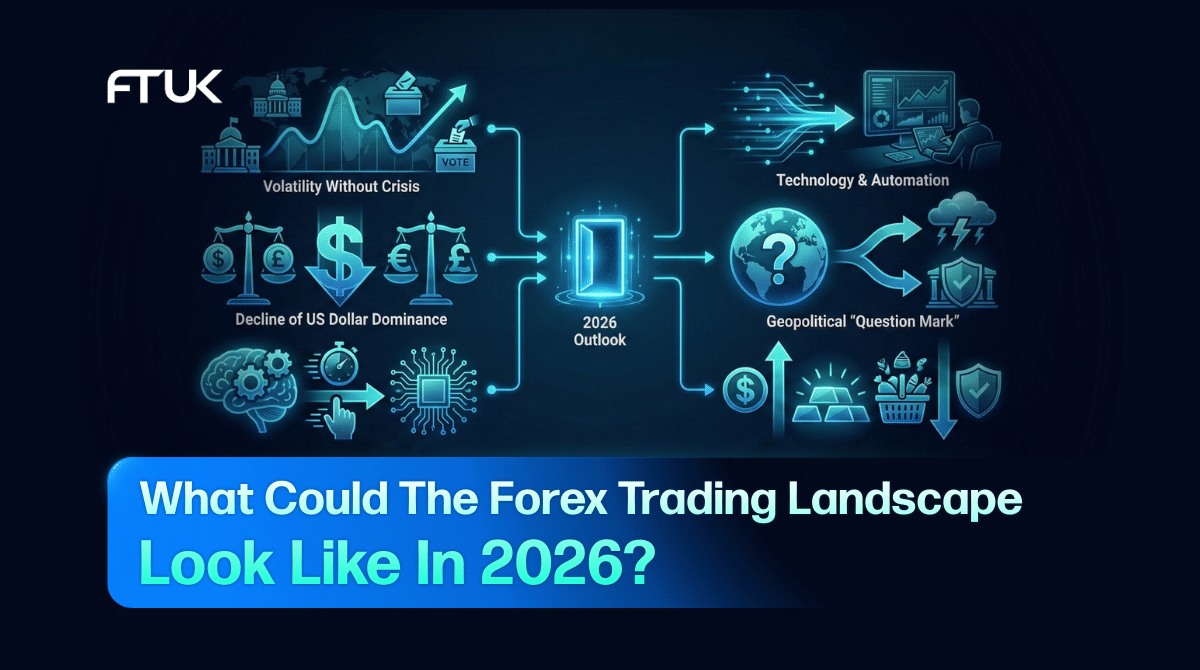
Given the sheer chaos that was seen last year, 2026 can go many different ways, but to understand why, we need to look at some of the biggest trends and changes that affected forex in 2025.

What Changed In The Forex Market In 2025?

The year 2025 was a year that will perhaps be seen alongside 1987, 1992, 2001 and 2008 in terms of fundamentally changing the financial world, characterised by a deep degree of displacement and upending of the established order as it pertained to forex.

Whilst there will likely be entire tomes written in the years ahead to attempt to provide some form of explanation for 2025, there were three major trends that dominated the year.

Forex Became Volatile Without Overt Crises

One of the more fascinating long-term trends is that forex lost some of its relative predictability outside of overt and explicit crises, which spoke as much about the wider chaos surrounding 2025 as it did about the forex market in general.

Part of this is due to the wide number of political changes seen in many of the nations which were part of the most significantly traded currency pairs

Whilst the most impactful of these was seen in the United States, the 2024 UK General Election, several elections in Continental Europe and the election of a new prime minister of Japan consequently had effects on currency pairs related to the pound, the Euro and the yen, respectively.

The Absolute Power Of The US Dollar Began To End

The forex market has, since the establishment of Bretton Woods, revolved around the US dollar, but amidst political chaos, rampant inflation and an ultimately disastrous trade and tariff war, the dollar has weakened relative to its rival currencies.

For example, the currency pair EUR USD has surged from near-parity at the start of 2025 to a high of over $1.18 to the Euro, with a similar story seen with GBP/USD and even JPY/USD for some parts of the year.

Strategy Replaced Reflexes Forever

With the rapid rise of various automated forms of trading, the focus on long-term, high-level strategy in forex is more important than ever before, with a particular focus on seeing the long-term fundamental trends that can sometimes be missed by technical analysis.

How Could Technology Affect Forex Trading In 2026?

The push for efficiency in high-frequency trading has created even faster and more dominant forms of trading that have shaped how most traders will interface with the market.

The trend of strategy mattering over reflexes and instincts is likely to continue, and the importance of a trading plan will only intensify, with most of your high-level decisions being made long before your first trade in an account.

How Could Political Volatility Affect The Forex Market In 2026?

The biggest question mark hanging over the forex market over the next 12 months will be the impact of geopolitics on forex.

All markets are politically affected, from commodities to futures, but with a combination of elections and the effects of major macroeconomic policies taking root, it will be difficult to predict whether there will be more or less chaos and thus volatility ahead.

There are a lot of schools on this, but time will tell whether the economic shocks of 2025 could continue in the face of yet more political instability, or if the hedging that many major funds and investors have made will provide the market with a degree of shelter from the chaos.

The think tank OMFIF has claimed that the latter is the case, but it is perhaps impossible to truly predict.

Will The Forex Market Experience A Flight To Safety Or Bravery In 2026?

With all this noted, the current trend appears to indicate a flight to safety is in effect, where investors move away from currencies seen as risky and into more stable stores of value such as commodities.

Whilst the greatest beneficiary has been gold, which has increased in value by over a third in a year, what is interesting is that the US dollar has not appeared to have been treated as the same type of safe investment, with other currencies trading strongly against it relative to average prices.

How Do Margaret Thatcher’s Monetary Policies Still Affect Us Today?

How Do Margaret Thatcher’s Monetary Policies Still Affect Us Today?

Given that Margaret Thatcher left office some 35 years ago, you could be forgiven for thinking that her economic and monetary policy decisions no longer affect either you or the broader UK economy.

However, there is evidence that some of the decisions Margaret Thatcher made during her time as the UK’s prime minister from 1979 to 1990 are still affecting some areas of our lives, even today in 2026.

More specifically, Margaret Thatcher’s policies around deregulation of the stock exchange, privatising public companies and even using the theory of monetarism to manage the economy are still having a ripple effect today. Let’s take a look at what each of these policies was and why it’s still relevant to those of us trading on financial markets now.

Deregulating the stock exchange

The day that the London Stock Exchange (LSE) became a private company, in effect deregulating the stock exchange is often referred to as the Big Bang This occurred in 1986 and it was the moment at which the LSE opened up to the rest of the world and to more traders.

Among the changes that still have a bearing on how financial markets operate today was the removal of fixed commissions on securities trading. This allowed more competition in the markets and ultimately paved the way for the kind of trading activity we see today.

One of the other significant shifts during the Big Bang in 1986 was the overnight move to electronic trading. This was huge. Until this point, trades had to be completed face-to-face. It’s why there are so many videos of trading floors that are full of life and very loud.

It’s hard to imagine having to execute all of your trades in person if you are involved in making trades today. But historically this was how it was done and the move to electronic trading really did change the world.

This is what has enabled us to build the business that we have and to help more people get access to prop funding Although technology has evolved considerably since the 1980s – the internet wasn’t even available back then – the concept of being able to make trades from anywhere in the world has been game changing and is still relevant today.

But this shift also made it much cheaper to execute trades, which opened up the idea of trading in shares and other financial instruments to more people. Prior to this period, it had been the preserve of investment bankers.

Finally, this period saw a significant influx of foreign companies into the LSE, which had previously been excluded. The volume of trades being made each week on the LSE increased considerably.

Privatising public companies

This was a side policy of Margaret Thatcher’s time in power, but it’s one that has had long ripple effects. When she came to office, the railways, telecoms companies, energy and utility organisations and water companies in the UK were state owned.

The idea behind privatisation was to improve efficiency by allowing such organisations to be run for profit. In the case of the telecoms industry, this has worked well. The increased number of players in the market has benefited consumers by lowering bills and we’ve seen significant infrastructure investment made by these private firms.

However, when it comes to the likes of the railways and water companies, privatisation has been less successful. What it did do back in the ‘80s though was open up share ownership to more people.

Indeed, many people who bought shares in previously state-owned businesses like BP and British Gas saw their share values increase substantially very quickly, building wealth. This highlighted how effective shares trading could be for building wealth and likely encouraged others to consider going down this route.

Monetarism theory

One of the driving forces behind Margaret Thatcher’s economic policy was the theory of monetarism This theory suggested that the supply of money in a country’s economy was one of the most important factors for controlling the direction of the economy.

In the UK, this approach to monetary policy was credited with bringing down inflation during the late 1970s and early 1980s, which meant people had more disposable income which they could spend or invest.

However, inflation also has an impact on the value of savings and periods of high inflation drive people to look for ways to maximise their returns rather than essentially watching their cash depreciate in value if it sits in a savings account.

When the percentage of inflation in an economy exceeds the interest rates being paid on cash savings, your money effectively becomes worth less every year. This is one of the reasons why more people are considering prop trading in the UK.

The UK government has set a target of 2 per cent inflation, although it is currently sitting at 3.6 per cent. This means that many people who haveits base rate over the last year.

A lower base rate is good news for borrowers but bad news for savers, who will see the amount of interest they earn on their funds reduce.

What can you do as a saver as rates fall?

If you’re seeing the value of your savings eroded by falling interest rates and higher levels of inflation, there are a few steps you can take. It’s important to note that these aren’t without risks to your capital, but the returns can be so significant many people decide they are worth it.

Getting involved in prop trading is an increasingly popular option, although there is a lot to learn in this area if you want to have a chance of doing well with your trades. That’s why we put together our trading programs, which are designed to help people with varying levels of expertise get started with prop trading.

If you have experience, for instance, our instant funding program will give you access to the markets and allow you to start trading in a live environment straight away – and enable you to make money from the get-go.

Should you be newer to prop trading, we also offer one-step and two-step accounts designed to help you become familiar with the different kinds of trades and learn how to read the market before you commit with a funded account. This gives you time to get comfortable so that once you start making real trades, you see results straight away.

How Long Does It Take To Learn Trading? A Realistic Timeline

How Long Does It Take To Learn Trading? A Realistic Timeline

Learning forex or futures trading isn’t a single milestone; it’s a progression of skills, strategies, psychology, and risk management.

One of the most common questions new traders ask before embarking on a funded account free trial with a prop firm is: How long will it take me to learn how to trade? Here, we explore the factors that affect your progress, and why time isn’t the only issue. What does “learning to trade” actually mean?

Before we talk about time, it’s important to define what “learning” means in the context of trading

Understanding market structure – how forex and futures markets operate.

Mastering technical and fundamental analysis – interpreting price action and economic data

Developing a strategy – a repeatable plan with entry/exit rules.

Risk management – position sizing, stop loss, risk/reward ratios.

Trading psychology – discipline, emotional resilience, and decision-making under stress.

Live execution skills – placing trades efficiently on platforms like Match-Trader.

So when someone asks how long it takes to learn trading, they’re really asking how long it takes to get consistent at all of the above. Can you learn the basics of trading in a few weeks?

Yes, but with important caveats.

In four to eight weeks, most beginners can

Learn basic terminology (pips, lots, margin, leverage).

Understand what drives market prices (interest rates, economic releases, supply/demand).

Use simple technical tools (moving averages, support and resistance).

Navigate a trading platform.

This level is often called “theory understanding.” It’s enough to know what a chart shows and why prices move, but it’s not enough to trade profitably in live conditions.

This is because trading isn’t just knowledge: it’s application. Many novice traders learn concepts but struggle to apply them consistently in real time. That’s where the real learning begins. How long until you can trade forex or futures profitably?

Profitability is the gold standard, and it’s where timelines vary most dramatically.

Based on industry surveys and performance data, a typical progression looks like

0 to three months: Beginner phase – learning tools and terminology.

Three to six months: Backtesting and demo trading – learning without risking capital.

Six to 12 months: Early live trading – real money, small positions, building discipline.

12+ months: Consistent and scalable trading – risk-adjusted profits and reliable execution.

Many prop firms require a demonstrable track record of consistency before offering funded accounts; typically evidence of a profitable demo, or passing their one or two-step evaluation phase (within a two-week free trial).

But true consistency, meaning positive expectancy and repeatable risk management, usually takes six to 12 months or more for most traders. What factors affect how long it takes to learn forex or futures trading?

There’s no fixed clock – the journey depends on several variables: Personal factors

Time commitment: Full-time learners progress faster than part-time learners.

Analytical skills: Some traders naturally grasp patterns and statistics quicker.

Emotional control Handling losses without tilting is critical.

Educational path

Structured courses vs random YouTube videos: A structured curriculum speeds learning.

Mentorship or coaching: Reduces trial-and-error time.

Market choice

Forex vs Futures: Both have steep learning curves, but futures often require deeper understanding of contracts, expiries, and market internals.

Some people pick one and master it before branching out.

Should you learn forex before futures (or vice versa)?

This question is common among beginners.

Forex first if

You prefer 24-hour markets.

You’re interested in macroeconomic drivers.

You like currency pairs over commodity/interest rate futures.

Futures first if

You want exposure to commodities, indices, bonds, or interest rates.

You prefer structured contract specifications.

You can handle slightly steeper product complexity (like expiry dates).

In reality, many traders learn one first and transition to the other once they’ve built core skills (e.g risk management and technical analysis). What role does practice (demo trading) play?

Demo trading is essential, because it bridges the gap between theory and live execution.

What demo trading builds

Platform fluency.

Strategy execution without emotional stress.

Understanding slippage and order types.

But demo trading cannot replicate the emotional pressure of real money.

Thus, most successful traders use demo accounts until they can

Maintain consistent profits over time.

Keep drawdowns within defined limits.

Follow a written trading plan without deviation.

A good rule of thumb

At least three to six months of disciplined demo trading before moving to live or funded accounts. How much time should you spend learning trading each week?

When it comes to learning forex or futures trading, consistency matters far more than occasional bursts of intensity. Trading is a skill built through repeated, focused practice over time, not long weekends glued to charts followed by weeks of inactivity.

For traders who can commit around ten hours per week, it’s realistic to expect a learning curve of roughly nine to 12 months before achieving consistent performance in live markets.

Those able to dedicate 20 to 30 hours per week often shorten that timeline to around six to nine months, as regular exposure allows patterns, execution, and risk management habits to develop more quickly.

Full-time learners, especially those following a structured programme or working with a coach, may progress to consistency in as little as three to six months.

Importantly, this time commitment isn’t just about watching price charts. Effective learning time is spread across several key activities

Study time (reading, videos, courses)

Backtesting

Journal review

Demo/live trading

Ultimately, progress comes from deliberate practice, and approaching each session with a clear purpose and a willingness to review and improve, rather than simply spending more hours in front of a screen. What are the steps to learn forex or futures trading effectively?

Here’s a step-by-step guide that many successful traders follow: Step 1 – Build foundations (weeks one to four)

Learn terminology and market basics.

Choose whether to focus on forex, futures, or both.

Open a charting platform and practice basic navigation.

Step 2 – Study strategies (weeks three to eight)

Learn technical analysis basics.

Understand fundamental drivers.

Study examples of winning and losing trades.

Step 3 – Create a trading plan (weeks six to ten)

Your plan should include

Market selection

Timeframes

Entry/exit rules

Risk per trade (e.g., one per cent of capital)

Maximum daily drawdown limits

Step 4 – Backtest and refine (weeks eight to 16)

Use historical data to test your ideas.

Record results and adjust rules.

Build a playbook of trade setups.

Step 5 – Demo trading (three to six months)

Trade real strategies with simulated capital.

Keep a trading journal.

Track performance metrics (win rate, average gain/loss, drawdowns).

Step 6 – Evaluate readiness

Before moving live or to a funded account

Consistent profits over at least 20–30 consecutive demo sessions.

Controlled drawdowns.

Psychological comfort.

Step 7 – Live/funded trading

Start small.

Use strict risk management.

Review and refine continuously.

What are common milestones traders should hit?

Many funded trader programs look for

Consistency: steady gains over time.

Risk discipline: adhering to stop losses and limits.

Execution quality: clean entries and exits.

Psychological control: no revenge trading, no blowing up accounts.

Consistent risk-adjusted performance is key to working successfully with a prop firm, so the learning curve isn’t just about profitability: it’s about risk discipline and process. Can you accelerate the process of learning to trade?

Yes, with disciplined methods

Structured courses – reduce guesswork

Mentorship/coaching – personalised feedback

Focused journaling – identify mistakes faster

Backtesting tools – remove noise from decision making

Risk frameworks – protect capital early

But beware shortcuts like

Overtrading tiny timeframes without understanding context

Blindly copying signals

Chasing “overnight success” systems

Successful traders learn slow and steady first, then scale. What mistakes slow down your progress as a new trader?

Here are the most common delays beginners face

Skipping journaling: Without records, mistakes repeat.

Ignoring psychology: Fear and greed erode logic.

Jumping live too soon: This can cost confidence and capital.

Overcomplicating strategies: Simple, proven setups usually outperform complex ones.

How long do most traders take before getting funded?

While timelines vary, here’s a realistic pattern

Casual learners: nine to 12+ months before ready for funded evaluations.

Committed part-timers: six to nine months.

Dedicated learners with coaching: three to six months.

These timelines assume structured practice, portfolio journals, and disciplined review. Does learning to trade ever really end?

Markets evolve, and so should traders.

Even professional traders with decades of experience

Continue refining strategies,

Adjust to new market regimes,

Study performance metrics,

And revisit risk assumptions.

So rather than “I’ve learned everything,” the better mindset is

“I continuously improve my strategy based on evidence and market feedback.” A roadmap to get started on your trading journey today

Here’s a quick starter checklist

Choose your market (forex or futures)

Build a structured learning plan

Develop and document your strategy

Backtest thoroughly

Demo trade with discipline

Track results and refine

Evaluate readiness for funded accounts

What’s a realistic timeline for becoming a successful forex or futures trader?

You can grasp the basics in weeks, but true trading proficiency takes months to years.

Consistent profitability and psychological discipline often emerge after six to 12+ months of focused training.

Remember that a funded account is a milestone, rather than proof of mastery. Your path will be unique, but with structured learning and realistic expectations, you can accelerate your progress and avoid common pitfalls.

How Are Forex Trades Taxed? A Comprehensive Guide

How Are Forex Trades Taxed? A Comprehensive Guide

Although forex trading was established decades ago, it only became popular more broadly in the 1990s and early 2000s with the rise of the internet. This made forex and other trading activities much more accessible, boosting its popularity.

Of course, when enough people make money from any kind of activity, the government usually seeks ways in which to tax any income that is earned. It’s no different with forex trading.

However, in the UK the tax rules around forex trading can be complicated. For a start, how you are taxed (and how much) will depend on the type of forex trading you are undertaking and how much money you’re earning from the activity.

In this blog we’ll give you an overview of how forex trades are taxed in the UK. However, this does not constitute tax advice. If you are in any doubt about how much tax you should be paying on your trading activities, it’s essential that you consult with an accountant.

What kind of forex traders pay tax?

If you make enough profit on your forex trading activity, you will need to pay tax in the UK. That means that the majority of forex traders pay some form of tax on their profits.

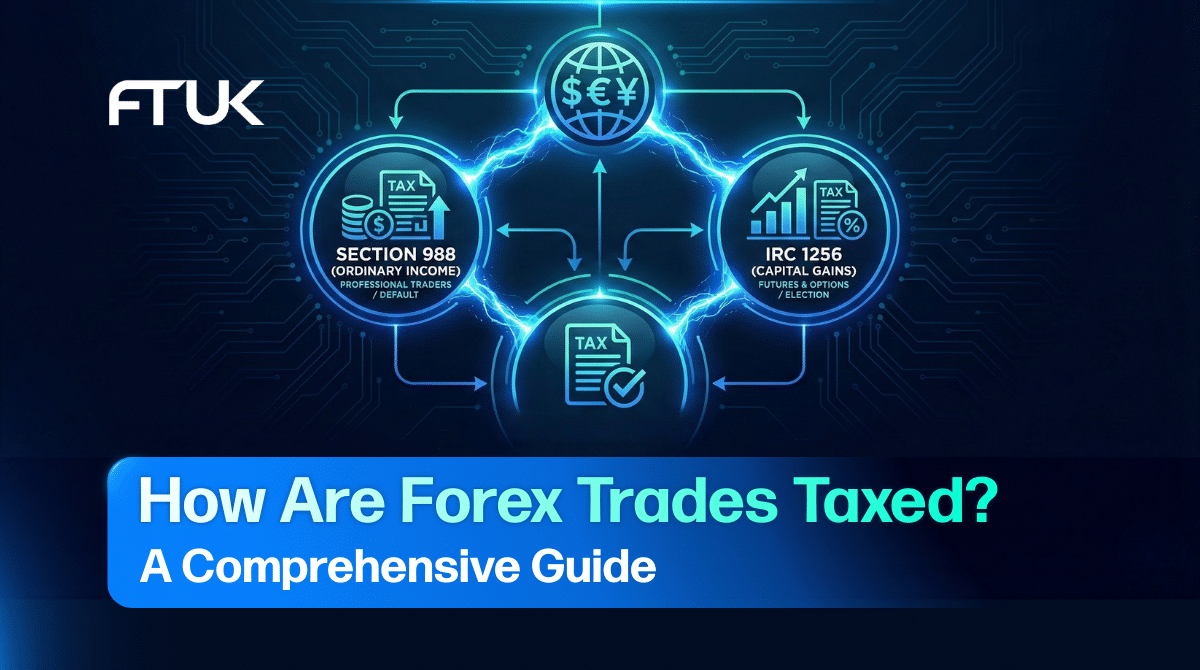
Under UK tax law, how you are taxed on your forex trades will depend on whether His Majesty’s Revenue and Customs (HMRC) classes your trading as a side hustle or as a main profession.

HMRC will tax you using capital gains tax rules if it deems your trading activity to be a side gig or an additional source of income. However, if HMRC believes your trading activity is your main source of income then you will pay income tax on your trades.

Are there any tax exemptions for trading?

Yes, in the UK there is a £1,000 tax-free allowance for trading income. However, if you exceed that amount you will need to complete a self-assessment tax form with HMRC.

How does HMRC decide what kind of forex trader you are?

Commonly, HMRC will look at how much you’ve made on your forex trading in a given tax year, as well as what other source (or sources) of income you have.

If you are using instant forex funding as a way of raising some extra money alongside your earnings from a full-time job, HMRC will consider you to be a part-time trader, or someone with a side hustle.

They will look at how much you earn from forex trading, how many trades you make and how often you’re trading, as well as what tax you pay on the rest of your income when working this out.

However, if HMRC considers your trading activity to be more “professional” or to resemble a business, then income tax rules may apply instead.

When making this assessment, HMRC will look at how much time you spend trading, whether the money you make from forex trades is your main source of income and whether this money is used to pay for the majority of your living expenses.

If you trade consistently and with a great deal of organisation, the UK’s tax authorities are more likely to consider trading your “job” and therefore tax you according to income tax rules rather than capital gains tax.

What tax will I pay if I’m a part-time trader?

Usually if you’re deemed to be a part-time trader, you will have to pay capital gains tax on your earnings if you make more than the tax-free allowance. As of the 2025/26 tax year, this allowance stands at £3,000.

What rate of tax you pay on earnings above that threshold will depend on whether you are a basic rate or higher rate income tax payer. For those who pay the basic rate of income on other earnings, you’ll be subject to an 18 per cent tax on your “chargeable assets”.

However, this 18 per cent rate applies provided your forex trading gains don’t push your overall income into the higher rate band. If they do, you’ll pay the basic rate of capital gains on everything you earn up to that limit and the higher rate of 24 per cent on any earnings above it.

Calculating your tax position can be challenging if you’re new to this, and the tax rates are subject to change, so it’s important to seek professional advice if you are unsure.

What tax will I pay if I’m a full-time trader?

If forex trading is your main source of income, you will need to pay income tax on your earnings rather than capital gains tax.

Under income tax rules, you have a tax-free allowance of £12,570 per year. After that, any earnings you make are charged at the basic rate of 20 per cent, until you reach the threshold for the higher rate. This kicks in if you earn £50,271 or more in a year.

If you are paying income tax on your forex trading, it is also likely that you will need to make national insurance contributions (NIC). This is why it’s important to get support from an accountant, to ensure you pay what you owe if you are a full-time trader.

What Is Forex Rigging And How Does It Affect Currency Prices?

What Is Forex Rigging And How Does It Affect Currency Prices?

Forex rigging is not a new thing, with several global incidents having taken place over the years, costing consumers and businesses billions of pounds by manipulating foreign exchange rates.

So, what is Forex rigging and why should traders using instant funding prop firms be aware of the risks before parting with their money? Forex rigging explained

Forex rigging is when traders collude with each other to manipulate the foreign exchange rates, affecting millions of traders all around the world.

Typically, it involves the collusion of traders from major banks working together to plan trades that will distort the benchmark rates for their own benefit.

They secretly decide to submit very aggressive orders during very short windows, such as 30 seconds, which results in a huge shake-up of the market.

For instance, through a huge rush of buying or selling of orders, they can manipulate benchmark rates by pushing them higher or lower. How does a rush of orders affect the Forex market?Selling financial orders

Traders who want to manipulate trades for their own benefit could decide to sell orders en masse.

The impact of this is a significant decrease in asset price as it would suggest there is a greater supply than demand for the asset. Therefore, the price must be lowered to appeal to the potential buyers who remain.

It could also trigger other traders to sell their order, as it suggests there is a lack of confidence. Many consumers or businesses might think there is something negative about the asset, which is why it is being sold so readily.

In this case, it sends a ripple throughout the market, as other traders begin to sell to protect their investment before the price plummets further.

Of course, this results in a more substantial drop in the asset’s value. Consequently, it can cost sellers a huge amount of money. Buying financial orders

On the other hand, colluders could decide on buying a huge volume of orders. This would result in a rise in the asset’s value, as there is greater demand than supply.

This is because there are not enough sellers for the number of people who want to buy.

Similar to the case of selling a large number of orders, buying lots will send a message across the foreign exchange market that it is worth purchasing.

Therefore, more people will jump on the band wagon and buy the asset, even at an elevated price. This further increases its value and encourages buyers to spend over the odds on an order. A highly liquid market

In either case, Forex rigging temporarily leads to greater liquidity in the market, thanks to the surge of orders being placed.

While this liquidity is not likely to last for long, it still helps the traders manipulating the market to make a profit. This is because it triggers stop-loss sales or buys, enabling them to see where retail traders place their stop-loss orders. How do traders take part in Forex rigging?

This illegal trading activity is typically conducted by traders from large financial institutions who create cartels together, with the agenda of rigging the foreign exchange market.

They use chatrooms to discuss plans with each other on how to co-ordinate their trades for the same short window that will really shock the market.

The manipulators also often share confidential details about their clients and their large pending orders, as this will give each other information to predict how the market will move and how best to boost their own profit. Famous cases of forex rigging

There have been several cases of Forex rigging over the years, all resulting in huge fines for the banks and costing other traders billions in losses. Three-Way Banana Split Cartel

Barclays, the Royal Bank of Scotland (RBS), Citigroup and JP Morgan were known as the Three-Way Banana Split cartel when they joined together in 2019 to rig the foreign exchange market.

They were collectively fined €811,197,000 (£712,409,429) for communicating between December 18th 2007 and January 31st 2013 in three chatrooms known as Three-Way Banana Split, Two And A Half Men, and Only Marge about manipulating the market. Essex Express

The European Commission also issued a fine of €257,682,000 to the Essex Express cartel, which consisted of Barclays, RBS and MUFG Bank. They conducted their actions between December 14th 2009 and July 31st 2012.

UBS was involved in both scandals, but it was able to avoid a huge fine of €285 million, as it revealed the cartels to the European Commission. Lasting issues with Forex rigging

These are just two examples of Forex rigging, but there have been several more over the last few years.

The biggest problem of manipulating the market is that it undermines trust in the sector, causing traders to lose confidence when placing orders.

This could reduce the number of people who choose to trade in the foreign exchange market, as they might decide the risks of huge financial losses outweigh the benefits of potentially significant gains.

However, greater regulations in the market and more substantial individual accountability for those responsible would boost confidence for traders and make the market a more reliable investment opportunity.

How To Break Patterns Of Failure And Make Consistent Profits

How To Break Patterns Of Failure And Make Consistent Profits

If you’ve been forex trading for a few months or even a year, you’ll probably have experienced some ups and downs. Going through cycles of success and failure is something that happens to every trader, but unfortunately it’s the bad times that tend to take up more of our mental landscape.

This isn’t a sign of personal weakness: negative bias in human psychology is well documented. The trait is thought to be rooted in our ancestors’ need to be constantly vigilant for signs of danger, and it means our brains have evolved to focus on potential threats rather than bask in victories.

While it’s still necessary to reflect on what’s gone wrong sometimes, it’s all too easy to get trapped in a frustrating loop of fear and anxiety that ultimately stops you from progressing. So how do you avoid becoming permanently discouraged in your trading and break these patterns of failure? The answer might surprise you. It’s probably not your strategy

Your first instinct after a run of bad trades is probably to blame your strategy and start making changes. Maybe you double down on your effortsto your mindset and emotions as technical skill.

Often, it’s not about your strategy, but how you execute it. In fact, introducing tweaks and extra elements is more likely to contribute to inconsistencies in your approach. There’s more pressure, so you repeat subconscious emotional patterns that override the detached mindset necessary to make good trading decisions.

Therefore, the first place you need to look for change is within yourself, rather than in your trading plan. Recognising patterns of failure

As we’ve discussed, most traders fail not because of a particular flaw in their plan or analysis, but because they repeat a pattern of emotional responses. It usually looks like this

Hope: You enter a trade expecting to make back losses or hit a big win.

Anxiety: The trade moves against you. Instead of following your plan, you second-guess yourself.

Fear: You close early or move your stop-loss.

Frustration: You realise you’ve broken your own rules again.

Overcompensation: You take a revenge trade or increase your lot size to recover.

Each loop reinforces the next. The brain becomes conditioned to respond emotionally to uncertainty, rather than logically. This isthrough unexamined repetition .

Breaking this cycle begins with awareness. Start documenting your emotional state before, during, and after each trade. A simple journal noting your mindset and reasoning can be a powerful diagnostic tool. Over time, patterns emerge: you’ll probably see that your biggest losses aren’t from bad analysis, but from emotional decision-making. Identifying emotional triggers

Every trader has emotional triggers, such as fear of missing out, fear of loss, or the thrill of winning. These reactions are built into our wiring, but the financial markets punish emotion.

When you find yourself unable to cut losses or tempted to double down, that’s a sign your trading decisions are being driven by the emotional brain, not the analytical one. The best traders aren’t emotionless; they’ve just built systems that protect them from themselves.

Ask yourself

What emotions tend to surface when I trade?

Which market conditions trigger the worst decisions?

What rules could I create to interrupt those moments?

If you struggle to maintain discipline under pressure, structure can help. A funded account evaluation program is one example. These programs require traders to follow strict risk parameters to qualify for funding. Passing such an evaluation isn’t just about profit; it’s about demonstrating consistency and emotional control.

The discipline you build under those conditions can translate into all areas of your trading. Letting go of the pressure to win

Many traders subconsciously equate self-worth with winning trades. This pressure makes it almost impossible to think rationally. You may know your edge is statistical – even successful full-time traders tend to win only about 50 per cent of their trades – but emotionally, every red trade feels like personal failure.

This mindset leads to overtrading, impulsivity, and burnout. To break it, reframe your relationship with losses. Instead of seeing them as setbacks, treat them with the same acceptance and detachment you would for tuition fees or business expenses: necessary for current operations and future rewards.

Professional traders focus on execution, not outcome, and following process takes priority over winning. They know that long-term profitability comes from consistency, not from trying to be right every time.

One practical exercise is to set process-based goals instead of profit-based ones. For example, avoid revenge trading or overtrading by only taking trades that meet all the conditions of your trading plan. If losses trigger panic or fear, make a rule to stop trading for the day after two consecutive losses.

When your identity shifts from the need to win, and towards the need to execute well, the pressure eases, and paradoxically, your results often improve. Discipline as a skill, not a trait

Discipline is often misunderstood as something you either have or don’t. In trading, it’s a trainable skill.

Start with micro-disciplines

Only trading during set hours.

Respecting your maximum daily loss.

Logging trades without fail.

Each small act of consistency reinforces the self-image of a disciplined trader. Over time, you’ll find it easier to stay calm under pressure, because your habits have already decided how you’ll respond.

A useful way to develop this discipline is through external accountability. Funded trading programs offer an environment where you must adhere to strict drawdown limits and risk rules. Knowing that your funding depends on consistency adds a layer of professionalism that many solo traders lack.

Even if you never pursue outside funding, trading as if you were funded, with a defined risk plan, limited drawdown, and structured targets, can elevate your mindset to a professional standard. Harness the power of detachment

Emotional detachment doesn’t mean apathy. It means freeing your decisions from the emotional highs and lows that sabotage performance. When you detach, you stop seeing the market as something to conquer and start seeing it as an environment to operate within. You follow your plan with precision, accepting uncertainty as part of the job.

To cultivate detachment

Use predefined stops and take-profits to prevent impulsive decisions.

Trade smaller sizes. Reducing position size lowers emotional volatility.

Create a pre-trade checklist. Review your plan before entering any position.

The role of reflection and review

Breaking a pattern requires self-honesty: you can’t improve what you don’t measure. A weekly review ritual can transform your trading psychology. Ask yourself

Which trades aligned perfectly with my plan?

Where did emotion interfere?

What was the thought process before each poor decision?

Record your findings. The goal isn’t self-criticism; it’s pattern recognition. Over time, you’ll begin to see your behavioural weak spots as clearly as you see chart patterns.

Funded evaluation programs often require detailed reporting and consistency tracking. Even if you’re trading independently, adopting this professional level of review is essential. Treat your trading like a business, not a hobby. Breaking the “all or nothing” mentality

One of the most destructive beliefs in trading is the idea that success must come quickly. You might see social media posts of traders flipping accounts overnight and feel the urge to replicate them. But real, lasting profitability comes from compounding skill, not chasing one-off windfalls.

Patterns of failure often stem from impatience. You abandon a strategy after a few losing trades, switch systems, or increase risk to speed up progress. To counter this, embrace the concept of slow consistency. Set realistic milestones

Break even for three consecutive months.

Maintain a one per cent daily risk limit.

End each week with complete journal notes.

Traders who succeed often do so because they master this mindset. They prioritise consistency over excitement, sustainability over intensity. If you can learn to find satisfaction in gradual, disciplined growth, you’re already breaking the psychological pattern that causes most traders to fail. Reprogramming your mindset for long-term success

Breaking a pattern of failure isn’t about finding a new indicator or strategy. It’s about reprogramming how you think about trading altogether. Learn to replace the pursuit of perfection with the pursuit of consistency, so that your focus shifts from outcome to process, and value self-control as much as technical knowledge.

This is the mindset of a professional trader; the kind that thrives in structured environments and can scale with confidence. Whether you choose to trade independently or within a funded account framework, the key is the same: psychological mastery precedes financial mastery. Turning failure into framework

Every trader experiences failure. The difference between those who repeat it and those who grow from it lies in awareness, structure, and mindset. Your trading results are a reflection of your habits. By observing your emotional patterns, setting clear rules, and maintaining discipline through structured accountability, you can gradually replace chaos with control.

Funded trading accounts are not shortcuts to success, but learn to use them wisely, and they can become powerful tools. Trading is a journey of personal evolution as much as financial growth. When you master yourself, consistent profitability will naturally follow.