Transforming Your Trading Success With Deep Learning

Transforming Your Trading Success With Deep Learning

Artificial intelligence, and deep learning in particular, is reshaping the forex markets at remarkable speed. Prop traders today have access to advanced tools that can analyse huge volumes of data, and uncover patterns invisible to the human eye.

Deep learning models can generate highly accurate predictive signals, and therefore they are becoming a competitive advantage for forex and futures traders who want long-term consistency.

However, among all the technological breakthroughs, the fact remains that deep learning does not replace trading knowledge: it amplifies it.

For forex and futures prop traders, learning to integrate AI with a strong foundation of market understanding is the key to genuinely sustainable success.

In this article, we explore how deep learning works, how it enhances trading strategies, and how prop traders, particularly those who aspinstant funded account, can apply it to sharpen their edge and achieve sustainable, long-term growth. What is deep learning…and why does it matter in forex trading?

Deep learning is a branch of artificial intelligence that uses multi-layered neural networks to identify patterns, relationships, and future outcomes from massive datasets.

Unlike traditional algorithms that follow step-by-step logic, deep learning models learn autonomously, improving their accuracy as they process more data. Deep learning models can

Analyse patterns across vast datasets

Forecast price volatility

Detect subtle changes in market structure

Process news sentiment instantly

Remove emotional bias

But deep learning cannot

Teach you why a trade matters

Replace market reasoning

Interpret central bank behaviour

Manage your psychology

Explain liquidity dynamics

Develop your risk management discipline

A trader who depends solely on AI tools without understanding the why behind market movements becomes vulnerable, especially when the market behaves irrationally or during extreme macro events. How do deep learning models interpret markets?

Unlike traditional technical indicators, deep learning models don’t rely on rigid rules. Instead, they recognise relationships from price action, volatility profiles, liquidity behaviour, macroeconomic triggers, and order-flow patterns.

Some of the most common deep learning architectures used in forex include: 1. LSTM networks (long short-term memory)

These models capture sequential patterns and are highly effective for predicting future price movements based on historical data. They “remember” long-term dependencies; ideal for detecting repeating market behaviours. 2. CNNs (convolutional neural networks)

Originally designed for image recognition, CNNs excel at identifying patterns in chart data, heatmaps, and volatility structures. They can detect micro-structures in price movement that humans may never notice. 3. Reinforcement learning models

These models learn by trial and error, discovering the most profitable trading actions in different market environments. They are extremely useful for creating adaptive trading algorithms. 4. Transformer models

Transformers are the architecture behind today’s most powerful AI systems. They can analyse multi-source market data simultaneously, offering highly accurate predictive insights and sentiment interpretation.

Each architecture provides a unique advantage, and many advanced prop trading systems combine several of them to form hybrid, multi-input models. Where deep learning excels in forex/futures trading1. Predicting short- and medium-term price movements

Deep learning models excel at forecasting market direction over timeframes relevant to prop traders. They can predict

Next-period price movements

Breakout probabilities

Trend continuation likelihood

Mean-reversion opportunities

Volatility spikes

These insights empower traders to choose better entries and exits, or automate them entirely. 2. Filtering out low-probability setups

Successful trading is as much about not trading as it is about execution. Deep learning identifies low-quality environments where noise, manipulation, or uncertainty is high. This leads to fewer impulsive trades and sharper overall performance. 3. Risk management & drawdown protection

Deep learning can assess real-time risk levels by analysing

Volatility expansion

Order-flow shifts

Liquidity gaps

Correlated currency behaviour

News sentiment

By adjusting position size or automatically mitigating risk during unstable periods, deep learning models help maintain prop-firm-grade discipline. 4. News & sentiment interpretation

Modern markets move not only on data but on narrative. Deep learning models trained on economic releases, social sentiment, central bank commentary, and global news can detect shifts in tone that precede price changes.

This gives traders advanced warning during high-impact periods. 5. Continuous self-improvement

Every market session feeds deep learning models more data, allowing them to refine and adapt over time. This is why prop traders increasingly use AI-based systems: they get better with experience. Building a solid forex foundation before adding deep learning

To use deep learning effectively, traders must first understand the fundamentals of the forex market: 1. Market structure

How liquidity flows, how sessions behave, why price consolidates, and what drives breakouts. 2. Price action

Candlestick psychology, support/resistance behaviour, market reaction around imbalance zones, and the anatomy of trends. 3. Macroeconomics

Interest rates, monetary policy, global risk sentiment, inflation dynamics: all crucial forces behind currency behaviour. 4. Risk management

Position sizing, drawdown limits, compounding rules, and account preservation, especially vital for prop traders. 5. Trading psychology

Discipline, emotional regulation, patience, confidence, resilience: the emotional and mental trading traits AI cannot automate.

A trader with this foundation will use deep learning as a force multiplier, not a shortcut. How deep learning enhances knowledge-based trading1. Better confirmation for your existing strategy

Instead of replacing analysis, deep learning complements your understanding by assessing

Trend strength

Breakout probability

Volatility risk

Liquidity conditions

This helps you avoid weak setups and focus on high-quality opportunities. 2. Turning theory into real-time insight

Understanding macroeconomics is one thing; tracking hundreds of data points in real-time is another. Deep learning can

Detect subtle changes in sentiment

Read patterns in interest rates or bond markets

Highlight currencies under macro pressure

Your knowledge combined with AI speed delivers a superior edge. 3. Enhancing risk management discipline

Traders often know what they should do; they simply don’t do it consistently.

Deep learning can monitor

Position risk

Volatility spikes

Correlated pair exposure

Unfavourable market shifts

It reinforces your discipline by providing objective warnings based on real-time data. 4. Helping you learn faster

Deep learning tools can analyse your journal, identify recurring mistakes, and highlight patterns in your performance. This accelerates learning.

But without a baseline of trading knowledge, even the best insights are wasted. Where deep learning fits into a balanced trading workflow

Successful prop traders integrate deep learning into a broader, knowledge-led approach: Step 1: Master the fundamentals

Before using advanced tools, traders should fully understand

Structure

Liquidity

Sentiment

Risk

Psychology

Step 2: Build a strategy rooted in logic

Whether it’s trend following, scalping, liquidity-based trading, or swing trading, the strategy must be grounded in rules you fully understand. Step 3: Use deep learning for validation

AI evaluates the environment and confirms whether conditions support your strategy.

It becomes a second pair of eyes, not the driver. Step 4: Automate where appropriate

Once you know a strategy inside-out, automation becomes a powerful tool. But automation without understanding leads to blind trust. Step 5: Continue learning & adapting

Markets evolve, and your knowledge must evolve with them. Deep learning grows with data, but traders grow through education. Why prop traders should avoid “AI-only” trading

Many new traders attempt to skip the learning process by relying entirely on AI alerts, automated bots, or deep learning prediction tools. While tempting, this approach carries major risks: 1. You won’t understand when the model fails

All models malfunction temporarily, even the best ones. Without knowledge, you won’t recognise when to step aside. 2. You miss out on market intuition

Intuition isn’t guessing; it’s pattern recognition built from experience. AI can reinforce intuition, but it cannot replace it. 3. You cannot troubleshoot your strategy

If the market behaviour changes or volatility shifts, knowledge-free traders have no ability to adapt. 4. You rely on tools that others also use

When thousands of traders use the same AI signals, the edge eventually decays.

Knowledge keeps you competitive. 5. You cannot pass prop firm challenges long-term

Funding programs demand discipline, risk management, and adaptability: qualities that must be learned, not automated.

The most successful prop traders in the coming years won’t be AI-dependent: they’ll be AI-augmented. What do AI tools mean for the future of trading?

As financial markets continue evolving, deep learning will become even more embedded in trading workflows

Adaptive trade execution

Real-time liquidity mapping

AI-powered macro interpretation

Behavioural market modelling

Personalised risk algorithms

But none of this removes the need for a trader to understand the market they’re operating in.

Deep learning represents one of the most powerful tools ever made available to forex prop traders. It can transform market analysis, sharpen execution, reduce risk, and improve consistency.

But it only becomes truly effective when combined with

A solid understanding of forex mechanics

A well-built trading strategy

Strong risk management principles

Resilient trading psychology

Continuous learning and growth

AI can make you faster, more disciplined, and more accurate, but it cannot replace the foundational knowledge that underpins every successful long-term trader.

The strongest traders of the future will be those who blend human expertise with deep learning intelligence, using both to create a sustainable, competitive edge.

If you are ready to take a one-step prop firm challenge or open an instant funded account, connect with us today and start your forex or futures trading journey.

Spotlight On: The Sultan Of Currencies, Bill Lipschutz

Spotlight On: The Sultan Of Currencies, Bill Lipschutz

There is an allure to trading, for the potential to turn a small deposit into a big fortune with the right moves, with forex particularly popular as a trading market due to how there is action to be had at seemingly every moment of every day.

Of course, success in trading is not a matter of luck but skill, discipline, a willingness to learn and the resilience to take the right lessoprop firm account those who end up losing their portfolio just as quickly as they had set it up.

Success is as much about protecting your assets and your gains as it is about going for the big single trade, particularly as forex is often based around making the most of marginal gains and playing the long game.

One of the greatest masters of these marginal gains is Bill Lipschutz, one of the first notable superstar forex traders and a man so notorious in the markets that he became known as the “Sultan of Currency”.

How did he earn that name and reputation? What were his trading strategies? And what can we learn from both his great successes and notable failures?

How Did Bill Lipschutz Get Into Trading?

Because trading is measured by success above anything else, many traders take rather unusual routes into the financial markets, either finding a knack for it through enthusiasm or curiosity as much as taking a more traditional route to the floor.

For Mr Lipschutz, it was a mix of tragedy and fate that would ultimately lead him to the market.

A prodigious student throughout his school days, Mr Lipschutz opted for a degree in Architectural Design, but whilst he was there, his grandmother died, and he ended up being a party to the will.

This took the form of $12,000 worth of stock in multiple portfolios and locations. In total, over 100 stocks were involved, and liquidating and consolidating this capital was neither a simple nor inexpensive task.

He learned more about risk capital and learned more about the market, and instead of putting the $12,000 in a savings account, a low-yield investment or spending it on something nice, he decided to indulge his interests and invest in the market.

This decision would change the course of his life and arguably alter the future of forex as we

know it. The former would be the decision to seek an MBA, and the latter would be his decision to accept an invitation to join the infamous Salomon Brothers investment bank.

How Did Bill Lipschutz Get Into Forex?

Whilst perhaps more famous today as the subject of Michael Lewis’ famous 1989 memoir Liar s Poker and inspiration for Tom Wolfe’s Bonfire of the Vanities, Salomon Brothers was one of the largest investment banks in the United States, and had an unparalleled reputation for innovation.

They were the first to sell mortgage-backed securities, had involvement in the leveraged buyout of RJR Nabisco that eventually inspired the book Barbarians at the Gate, had an infamously cut-throat culture and were amongst the first major banks to truly see the potential in forex.

Mr Lipschutz was the right person at the right time, joining the company in 1982 and immediately being earmarked for a role in the company’s Foreign Exchange Department.

He had a remarkable consistency whilst at Salomon Brothers, earning $300m per year for Salomon, and at his peak was considered to be one of the five best forex traders in the world. This eventually garnered him the nickname “The Sultan of Currency”.

He ended up becoming the Managing Director and Global Head of the bank’s forex operations before quitting in 1990, rather fittingly getting out at the right time before Salomon Brothers would fall apart due to a treasury bond scandal.

What Was His Most Notable Failure?

Arguably, the trade that made Bill Lipschutz such an effective forex trader was his first stock portfolio, where he learned one of the most fundamental of trading lessons in as brutal a fashion as anyone can learn it.

At the time, he had a working understanding of the market but was not entirely adept at risk management and portfolio diversification. Regardless, he turned $12,000 into $250,000, proving the old adage that anyone can make a lucky investment once.

He essentially was guessing, gambling with his stocks, and very quickly got it badly wrong, wiping out his portfolio.

This kind of brutal loss often causes traders to quit, but Mr Lipschutz learned a vital lesson not only about risk management but also about how traders actually make money.

Instead of making sure you make the right guesses, he learned to develop trading plans that require him to only be correct a fifth of the time in order to still make money. He soon built his finances back up.

What Can We Learn From Bill Lipschutz’s Successes?

He has far more successes than failures, and his biggest advantage is that he was at no point ever weighed down by the pressure of the finances involved in his trades.

He set a record in 1986 for the largest options trade ever when he bought 30,000 put options on the British pound, predicated on the pound remaining stable or increasing in value in two months. He took advantage of an inefficiency and made a huge amount of money as a result.

However, this was an aberration from his typical investment style, which involves scaling into a position as the market becomes clear rather than going big or going home. This is at odds with other traders who try to swim against the current somewhat.

He was also one of the few traders who made money during the 1998 Asian Currency Crisis that led to the demise of Long Term Capital Management and caused other major forex traders such as Stanley Druckenmiller to face huge losses.

He also emphasises the importance of risk management, paying attention to macroeconomic trends and being patient, avoiding the temptation to trade too often.

How Reaganomics In The 1980s Helped The US Economy Explode

How Reaganomics In The 1980s Helped The US Economy Explode

When Ronald Reagan, the 40th president of the United States, took office in 1981, he faced a tough brief. The energy crisis that dragged on throughout the 1970s had hobbled world trade, and the US economy was stagnating. Unemployment was at a record 7.5 per cent, inflation was skyrocketing and the government was racking up debt.

President Reagan recognised that swift action was needed to reignite the economy and prevent millions more US citizens sliding into poverknown as Reaganomics Here’s what happened next. The four key principles of Reaganomics

Reagan adopted a school of thought called Supply-Side Economics Although he never used the term, this approach is also known as “Trickle Down Economics, because it focuses on introducing business-friendly policies and supporting entrepreneurship. The idea is that the benefits will trickle down to everyone through more jobs, higher wages and cheaper goods.

The four pillars of Reaganomics included: Lower taxes (for some)

Reagan slashed taxes for higher earners, cutting the top bracket of income tax from 70 per cent to 28 per cent. He also reduced corporate taxes from 48 per cent to 34 per cent, in the belief that if businesses and high net worth individuals had more freedom to spend and invest, the whole economy would benefit. Less government regulation

Reagan rolled back the price controls on US oil and gas prices that were introduced by the previous president. He also deregulated or relaxed regulations in other sectors such as financial services, telecommunications, public transport and ocean shipping. The idea was that freer markets would mean more innovation and efficiency. Reduced government spending

Reaganomics prioritised spending on national defence to strengthen the US against the growing threat of the nuclear arms race, increasing it by 35 per cent over five years. At the same time, he reduced domestic spending in areas such as welfare and education. The theory was that the bolstered private sector would be able to absorb these costs. Tighter control of money supply

A contractionary monetary policy was introduced (although this part was largely led by the Federal Reserve rather than Reagan directly). The idea was to keep inflation under control by managing how much money was circulating in the economy. A key strategy was to raise interest rates to make lending more expensive. What happened next?

The final results of Reaganomics are still being argued over to this day, but one indisputable fact is that the US economy entered one its strongest and most sustained periods of growth ever. Between 1982 and 1990, over 20 million US jobs were created, and the unemployment rate fell to 5.2 per cent.

Inflation levels decreased significantly, dropping from double digits to low single digits, and lower taxes and less regulation boosted business. This encouraged more calculated risk taking and created an entrepreneurial spirit as investors gained confidence.

Lower inflation also encouraged more personal consumer spending, as people had more money in their pocket and felt more confident about finding and staying in work. During the mid 1980s the US economy boomed, although critics argued that the gap between rich and poor became wider. The rise of new technology

The policies of President Reagan may have given the US economy the kick-start it desperately needed, but there is another thread to the story: the rapid advances in technology that were changing the face of business. Although it was still the pre-internet era, computers were making doing business quicker and easier than ever before.

The financial markets boomed as traders no longer had to rely on placing manual orders over the phone: electronic trading platforms replaced pen and paper. Trades could be made within minutes rather than days, and for the first time speculative trading became possible and accessible outside of exclusive financial corporations and major banks.

In fact, you could argue that the combination of Reaganomics and new technology laid the foundations for the rise of today’s prop trading firms and individual traders. The prop trading revolution

Before the 1980s, proprietary trading was almost exclusively carried out by big banks and financial institutions who traded using their own capital in order to profit directly from market moves. The barriers to entry for individual traders were almost impossibly high: you needed multi-million dollar capital, even if you had the means to physically access the markets.

Deregulation, advances in technology and wider access to knowledge and information have dramatically changed all that. Now, retail prop trading programs allow individual traders to access the markets from almost anywhere in the world and trade with little or even none of their own capital.

The prop firm model works by allowing individuals to trade with the firm’s capital. The trader will usually either need to pass an evaluation program (to prove they can manage risk and hit profit targets) or pay a fee to be given access to a funded account, which can be $100k or more.

The profits are split (typically 50-90 per cent for the trader), and losses are absorbed by the firm. Most prop firms operate scaling trading plans, allowing traders to gradually increase account size and profit share if they can demonstrate a consistent performance over time. The rise of the retail trader

Although the challenges facing the US economy have changed, we are still in an era of fluctuating inflation, higher interest rates and job uncertainty. Reaganonomics has left a lasting legacy in how we deal with our spending and investments in this economic climate, as traditional approaches become less rewarding.

This can be seen in the rise of retail trading — trades carried out by individuals using digital platforms. The 1980s created an environment where entrepreneurs were encouraged to take managed risks, invest and innovate.

This led to millions of US citizens having the confidence to start small businesses, invest in real estate or explore other ways to expand their income. The same confidence to think big and act on one’s own initiative can be seen in the rising numbers of people today who are starting side hustles, including retail trading.

Today’s economy might be more uncertain, but there are also huge modern day advantages: democratised market access, lower barriers to entry, and the freedom to work at any time and from anywhere in the world. These make ideal conditions for ambitious, committed and well-disciplined traders to supplement their income or even trade full time. The parallels between prop trading and Reaganomics

Whatever your personal opinion about Reaganomics, there’s no denying that it reshaped the US economy and encouraged individual enterprise.

The economic policies of the 1980s were all about unlocking opportunities and removing barriers. Regulations were relaxed or removed altogether; high taxes for businesses and top earners were dramatically reduced; and technology helped to open up new sectors. This was an environment that rewarded hard work and calculated risk taking.

Modern day prop trading offers similar opportunities. It’s no longer necessary to be an employee of a major bank or financial institution to trade; neither do you need to be a multi-millionaire. Prop firms allow you to trade with significant capital with no personal financial risk, only the prospect of reward.

Just as deregulation and technology opened up new sectors in the 1980s, prop firms and digital technology have opened up trading to individuals. Lower taxes provided financial incentives for new businesses in the 1980s, and today traders are rewarded for their performance with profit shares and scaling account plans. The balance of risk and reward

Just as the 1980s were largely a “sink or swim” environment for businesses and not every entrepreneur made the cut, prop trading requires determination to succeed. The financial markets may be more accessible, but it still takes skill, knowledge and emotional discipline to navigate them.

The financial markets can be unpredictable and volatile, and trading requires strong risk management and technical and fundamental analysis skills. It’s important to understand that if you want to sustain your account with a prop firm, you will need to demonstrate that you can operate within their rules and not take unsupported risks.

Before signing up for an account, it’s a good idea to take a 14-day free trial. This will allow you to trade in a simulated market environment and get a taste of working under pressure before you go live. Wrapping up

The economic policies of the Reagan era changed patterns of spending and investment. As the global economy continues to stagger under the weight of the post-Covid era, entrenched international conflicts, spiraling living costs and political unrest, spending patterns continue to be reshaped.

Prop trading offers a low-cost entry point into the financial markets, with the potential for high rewards. This window of opportunity is attracting skilled individuals who have the drive and determination to succeed in a world that was once closed to them.

5 Of The Biggest Forex Trading Black Swan Events In History

5 Of The Biggest Forex Trading Black Swan Events In History

In the world of forex trading, black swan events act as brutal reminders that the market isn’t always rational, predictable, or even explainable. These are rare, high-impact events that appear without warning and reshape global financial markets, often in minutes.

For prop traders and those who are keen to access instant forex funding, black swans aren’t just historical footnotes; they’re case studies in risk management, discipline, and strategic resilience.

Below, we break down five of the most significant black swan events to ever hit the forex market, what actually happened, how traders were affected, and what lessons today’s traders can take away. The 2008 global financial crisis

The 2008 financial crash,recessions%20since%20the%20Great%20Depression. didn’t just send stock markets crashing: it triggered a full re-pricing of global currencies. As major banks collapsed or teetered on the brink, liquidity dried up, credit markets froze, and forex volatility skyrocketed to levels not seen in decades. How did the 2008 financial crash happen?

The crisis began with the US subprime mortgage collapse, where thousands of high-risk home loans started defaulting as interest rates rose. Mortgage-backed securities that were once considered ultra-safe rapidly lost value, triggering losses across major banks and hedge funds.

When Lehman Brothers collapsed in September 2008, confidence in the global financial system evaporated overnight. Banks stopped lending to each other, liquidity dried up, and counterparty risk exploded.

Traders no longer trusted that institutions on the other side of their trades would survive long enough to settle them. This sudden flight to safety sent USD, CHF, and JPY soaring as investors sought stability.

Meanwhile, risk-on currencies such as GBP, AUD, NZD, and most emerging-market currencies plunged. Commodity-linked currencies suffered even more as global growth forecasts imploded and demand expectations collapsed.

It was a perfect storm that reshaped forex volatility for years, transforming previously steady pairs into unpredictable, multi-percent daily movers, and redefining market risk. What was the impact of the 2008 financial crisis on forex traders?

Spreads widened dramatically, making trading expensive and unpredictable.

Highly leveraged traders were wiped out as once-stable pairs made multi-percent daily moves.

Currency correlations broke down; strategies built on historical norms failed.

Prop firms and brokers tightened risk parameters, changed margin requirements, and some collapsed. Key trading lessons

Liquidity risk is real. Even major markets can seize up.

Correlation isn’t constant. Traders must adapt when traditional relationships break down.

High leverage amplifies vulnerability. Conservative risk per trade becomes essential.

The 2008 crash pushed modern traders toward more risk-conscious strategies, something professional prop firms still emphasise today through max daily loss rules, strict risk caps, and robust analytics. The 2015 Swiss Franc shock

If any single event symbolises just how violent a black swan can be, it’s the Swiss National Bank SNB shock on 15 January 2015. In seconds, the EUR/CHF pair moved more than 30 per cent, wiping out traders, brokers, and funds. How did the 2015 Swiss Franc shock happen?

Since 2011, the SNB had maintained a peg preventing the EUR/CHF from falling below 1.20 to protect Swiss exporters. But without warning, the SNB abandoned the peg. In an instant, the franc surged as markets scrambled to reprice the pair in free-floating conditions. What was the impact of the 2015 Swiss Franc shock on forex traders?

Many traders suffered catastrophic losses, even with stop losses.

Liquidity vanished as market makers pulled prices.

Several retail brokers became insolvent as client accounts went deeply negative.

Algorithmic and high-frequency strategies broke down under extreme price gaps.

Key trading lessons

Stops do not guarantee fills. Slippage during extreme volatility can be enormous.

Never rely blindly on central bank commitments. Policy can change without warning.

Tail-risk hedging matters. Black swan events require contingency plans, not assumptions.

For prop traders, the SNB shock remains the ultimate case study,immediate%20price%20and%20competitive%20pressures. in risk limits and why capital preservation should always outrank short-term performance. Brexit Referendum (2016)

Few geopolitical events have moved the forex market quite like the Brexit vote on 23 June 2016 Polls predicted a close outcome, but traders broadly priced in a “Remain” result. When the UK voted to leave the EU, GBP/USD collapsed in real time. How did the Brexit Referendum happen?

As results swung toward Leave, GBP/USD plunged from 1.50 to around 1.32 — its largest intraday move in modern history. GBP/JPY fell more than 10 per cent within hours, and volatility rippled across global markets. What was the impact of the Brexit Referendum on forex traders?

Massive volatility created both windfall gains and devastating losses.

Many traders faced margin calls overnight, sometimes while asleep.

The pound’s volatility persisted for months following the referendum.

Algo strategies required recalibration as historical volatility regimes shifted dramatically.

Key trading lessons

Political risk is hugely underestimated. Markets tend to price in stability, until they shouldn’t.

Event risk must be respected. Referendums, elections, and geopolitical milestones require position sizing adjustments.

Volatility clustering is real. A single shock can reshape market behaviour for months.

Modern traders often approach major political events with reduced leverage or hedged positions, something prop firms often encourage through pre-event risk guidelines.

The Dotcom Bubble Burst (2000–2001)

While not as sudden as the SNB shock or Brexit night, the dotcom collapse was a black swan that eroded risk appetite and reshaped currency flows for years.

The bursting of the tech bubble triggered a deep US recession, affecting interest rate expectations and safe-haven positioning. How did the Dot Com bubble burst happen?

Between March 2000 and late 2001, trillions in equity value evaporated. As the US economy slowed, the Federal Reserve slashed interest rates, shifting the dynamics of USD-based pairs. What was the impact of the Dot Com bubble burst on forex traders?

The USD weakened significantly against the EUR and JPY as rate cuts accelerated.

Volatility increased gradually but unpredictably, with erratic long-term trends.

Commodity-linked currencies responded to slowing global demand.

Multi-year carry trades became riskier as interest rate differentials collapsed.

Key trading lessons

Long-term macro changes can be black swans too.

Interest rate expectations drive major FX trends.

Diversification beyond equities is essential.

The dotcom crash highlighted the importance of understanding macro fundamentals, especially for trend-following and swing-trading strategies often used by prop traders. The COVID-19 pandemic (2020)

COVID-19 created arguably the most chaotic period in modern FX history Borders closed, supply chains stopped, entire economies froze, and central banks launched emergency interventions at unprecedented speed. How did the financial markets react to the Covid pandemic?

The market reaction evolved in stages

Initial panic (March 2020)

USD surged in a global dash for liquidity.

Equity markets crashed; risk currency pairs (AUD, NZD, GBP) tanked.

JPY and CHF strengthened as safe-haven flows dominated.

Massive central bank intervention

The Fed announced unlimited QE and slashed rates.

Liquidity stabilised and USD reversed lower.

Commodity currencies staged huge multi-month recoveries.

Long-term shifts

Persistent inflation reshaped global rate cycles for years.

Volatility stayed elevated well beyond the initial shock.

What was the impact of the Covid pandemic on forex trading?

Multi-standard-deviation daily moves became normal.

Technical strategies struggled; macro drivers took over.

High leverage during March 2020 obliterated unprepared traders.

Many found opportunity in trending markets once volatility stabilised.

Key trading lessons

Global shocks create multi-phase market behaviour. Traders need flexibility.

Volatility regimes change quickly. Strategies that work in calm markets fail in chaos.

Risk-on/risk-off dynamics dominate during systemic crises.

Prop traders who adapted quickly by reducing position sizes, trading high-liquidity pairs, and focusing on macro-driven setups, often found some of the best opportunities in a decade. What these black swan events teach us about sustainable forex trading

Each black swan may look different, but the trading lessons connect: Always expect the unexpected

Even the most stable currency pair can become unrecognisable during a shock. Strategies should assume the possibility of extreme moves, not treat them as anomalies. Protect capital first, chase profit second

Risk management isn’t a footnote; it’s survival.

Key principles include

conservative leverage

strict stop-loss placement

max loss rules

event-based position scaling

avoiding overexposure to correlated pairs

Macro awareness matters

The best traders combine technical setups with macro context

Interest rate policy

Geopolitics

Global risk sentiment

Central bank communication

Liquidity conditions

Black swan events often begin where traders least expect them, but rarely without some underlying cracks. Flexibility beats rigidity

What worked yesterday might not work after a black swan. Prop firms reward traders who can adjust

shifting to lower timeframes or higher ones

reducing position size

pausing trading during extreme uncertainty

switching from breakouts to mean-reversion (or vice versa) based on market regime

Use technology and analytics to your advantage

Modern trading platforms offer tools that didn’t exist in previous black swans

real-time volatility monitoring

advanced charting

automated risk limits

execution protection

position analytics

trade journaling.

Remember, the next black swan is always ahead…

Forex history makes one thing clear: black swan events are inevitable. The only unknowns are when, where, and how big they’ll be.

For traders, especially funded traders operating within disciplined prop-firm environments, the goal isn’t to predict the next crisis. It’s to build strategies, habits, and risk frameworks robust enough to survive it.

Forex Scalping Strategies: What You Need To Know

Forex Scalping Strategies: What You Need To Know

Because of how quickly the forex market moves, the right way to trade will depend on how closely you follow the market and whether you are focused on the tiny ripples or the massive waves they form.

Most of the time when we talk about forex trading, particularly if you are signing up for a prop firm that provides instant funding, it tends to make more intuitive sense to look at the longer-term trends and devise more holistic strategies for trading in the market.

However, every trader has different strengths, different goals and different mindsets when it comes to trading, and whilst some people will pactive day trading approach.

One of the fastest high-energy types of trading on the market is scalping, which, in one sense, is the opposite of conventional trading.

Rather than employ long-term analysis to buy low and sell high for a significant gain, you trade multiple times a day to catch small movements and gains in asset prices.

Because profits come from small accumulations, it requires a particular set of analysis skills, strategies and a disciplined mindset to make the most of the small gains, and this handy guide will let you know everything you need to know about the top scalping strategies to make consistent gains.

What Is Scalping… And What Is It Not?

Despite the name, scalping in the context of trading and especially in the context of trading forex is a legitimate strategy that focuses heavily on making the most out of what would otherwise be relatively marginal gains.

A form of day trading, scalping involves making a relatively large number of trades in a single day, taking advantage of price action and the fluctuating nature of the market to buy low, sell enough pips higher to cover any fees and making immediate albeit relatively small profits.

Unlike day trading, which accelerates the pace of trading but otherwise resembles short-to-medium term strategies, scalping often involves hundreds of trades a day, often holding positions for hours, minutes or even seconds.

It is not high-frequency trading, a controversial system banned by many prop firms, which relies on using computer algorithms to make huge numbers of trades in less than a second, but it does often rely on rapid technical analysis and almost reflective decision-making.

It is also not related to the similarly controversial business of reselling concert tickets or highly desired products, also known as scalping, although some versions of the strategy involving high leverage or building up large positions to sell gradually over the day can sometimes superficially resemble it.

How Does Forex Scalping Work?

There are a few strategies that are used for successful scalping, some of which rely on taking a large position very quickly and gradually exiting throughout the day, some involve buying during a little dip and selling when it makes a relatively small but large enough gain, and lots of others in between.

Unlike high-frequency trading, it can be done completely manually, although it is generally advised to set up some risk management tools and stop-loss orders to minimise the chances of missing the market by a few seconds and losing considerable amounts of money.

Generally the spread between buy price and stop order is very small for exactly this reason, and many trades of this type are made with leverage to maximise potential gains from relatively low-risk trades.

Alongside this, scalping only really works within highly liquid and volatile markets, and whilst trading the news directly as it happens should be avoided, the existence of volatility leading up to and in the aftermath of major economic events can help scalpers considerably.

One of the most effective markets for scalping is forex, because the currency market is inherently liquid and inherently volatile, being the largest market in the world and often moving in very small measures.

This allows you to buy in with more leverage and exit your position exactly when you want to, as opposed to less liquid markets, where you may have to wait until your window has passed.

What Are The Most Common Forex Scalping Strategies?

There are several major scalping strategies, which involve the use of technology, rapidly entering and exiting trades or buying large amounts and selling over the course of a day.

As a trading technique so reliant on technical analysis, there are an almost limitless number of potential strategies, but many of them can be easily categorised into a few relatively loose columns

Following a trend and catching a rising rocket. Whilst typically ill-advised for long positions, it is far easier to make a profit if the aim is only a small gain.

Anticipating a fall and shorting a rising currency, expecting bad news. This is more difficult to make money from in the short term in a volatile market.

Support and resistance trading, which involves buying near the floor of the range and selling near the resistance range, makes money through the relatively natural actions of a particular asset.

Seeking out and trading with certain anomalies or patterns of financial behaviour.

Ultimately, the strategy is to make a small amount of money multiple times in a day to hit your target, rather than buying and holding until you reach your price goal.

What Are The Benefits Of Forex Scalping?

Whilst most day trading strategies are rather daunting for newcomers, it can be a very effective way to learn how to trade, as the liquid nature of forex means that you can buy, trade and sell within minutes, learning the basics of the market in the process.

Scalping also does not require a lot of theoretical knowledge of trading and financial markets (although it does still need a plan), as it focuses more on technical analysis and recognising the market as it exists on an hour-to-hour, minute-to-minute or second-to-second basis.

Finally, it is perfect for relatively impatient traders, as you are rarely waiting for a position to close and that in itself inherently stops overtrading.

What Are The Potential Risks Of Scalping?

A lot of scalping strategies, especially in forex, rely on holding large positions, which often require leverage in order to make the trades worthwhile. Sometimes, traders invest tens of thousands of pounds to make a profit of between £50 and £100.

Leverage maximises gains, but it can also magnify losses as well, and with such fine margins, small tailwinds of volatility can have dramatic effects.

It also requires the opposite type of discipline to conventional trading; there is no room to think or second-guess yourself once in a position, and any decision to enter or exit must be made immediately, or you might miss your window.

10 Top Tips For Backtesting Your Forex Trading Strategy

10 Top Tips For Backtesting Your Forex Trading Strategy

If you’ve spent any time around professional traders, you’ll know that consistent profitability doesn’t come from luck: it comes from data.

Backtesting is one of the most powerful tools at a trader’s disposal, helping you evaluate how your strategy would have performed in the past so you can trade with confidence in the future.

Whether you’re preparing for a one-step, two-step, or instant funding challenge with a prop firm, knowing how to backtest properly can make all the difference between passing and blowing an account.

A solid backtest helps you refine your edge, build discipline, and understand your strategy’s strengths and weaknesses long before real money is on the line.

Here are ten essential tips to help you get the most out of your backtesting process, whether you’re a beginner refining your first trading plan or an intermediate trader aiming to trade with prop firm capital.

– Define your strategy clearly before you start

Before you even open a chart, you need to define exactly what your trading strategy is. This includes your entry and exit criteria, timeframes, risk management rules, and any filters you apply (for example, avoiding trades during high-impact news or trading only in the direction of the trend).

Without clear rules, you can’t measure performance accurately, and your results will be meaningless. A vague strategy leads to random trading; a defined one builds repeatable results.

Think of your strategy as a process

Entry: What specific conditions must be met before taking a trade?

Stop loss and take profit: Are these fixed, percentage-based, or based on structure (e.g. below swing lows)?

Trade management: Will you trail stops, take partial profits, or leave trades untouched until take profit or stop loss is achieved?

Remember, every rule you set now saves confusion later.

– Use quality historical data

You get what you give: this saying couldn’t be truer in backtesting. Low-quality or incomplete data can completely distort your results, where spread slippage, and liquidity can vary widely.

Ideally, use tick-level or one-minute data that includes accurate price movements and spreads. Many professional backtesting platforms allow you to import detailed data for better accuracy.

Also, ensure your data covers enough time – at least five to ten years – to include different market conditions such as trends, ranges, and high-volatility events like Brexit or major rate decisions.

A strategy that only works during one kind of market is fragile; one that holds up across years of volatility is far more likely to succeed in a prop challenge.

– Backtest across multiple market conditions

Markets are never static. A strategy that thrives in a trending EUR/USD environment might collapse when price consolidates for weeksvarious market environments

Consider categorising your test data

Trending markets – clear directional movement and momentum.

Ranging markets – choppy or sideways periods.

High-volatility events – central bank announcements, geopolitical tensions, or major economic data.

This approach exposes how flexible and resilient your strategy really is. The goal isn’t to create a “perfect” system for every condition, but to understand where it performs best, and when to step back.

– Start with manual backtesting (even if you plan to automate)

While automated backtesting tools can crunch thousands of trades in minutes, manual backtesting gives you a deeper understanding of how your strategy behaves in real market action.

By scrolling through charts bar by bar, you train your eyes to spot setups and understand their context.

Manual testing helps you

Build confidence and trust in your system.

Notice subtle market behaviours automation might miss, like false breakouts or price reactions to key levels.

Learn patience and timing, essential skills for passing prop firm challenges.

Once you’ve completed a few hundred trades manually, you’ll know the system inside out. Then you can explore validating your findings with larger sample sizes.

– Record everything in a trading journal

Backtesting without record-keeping is a wasted opportunity. A trading journal allows you to capture every detail, identify patterns, and make data-driven improvements.

Record for each trade

Date, pair, and timeframe

Entry and exit prices

Position size and risk percentage

Outcome (win/loss, pips, profit percentage)

Observations about setup quality or market context

Over time, this builds a goldmine of insights. You’ll start seeing trends: maybe you’re more profitable during certain time zones, or perhaps trades taken after three consecutive wins tend to fail (a sign of overconfidence). These details shape your future success.

– Don’t cherry-pick trades

It’s easy to skip losing trades when backtesting. Maybe the setup “didn’t look right” or you wouldn’t have taken it live, but that’s a trap. Cherry-picking trades introduces bias, giving you an unrealistic picture of performance.

The rule is simple: if the setup met your defined criteria, you log it, win or lose. Every trade is part of your sample size. The losing ones teach you just as much, if not more, than the winners.

Remember, when you’re trading for a prop firm, risk management is everything. Knowing your worst-case drawdown helps you stay within challenge rules and avoid unnecessary violations.

– Focus on key performance metrics

It’s not enough to know whether your strategy made money: you need to understand how and why it made (or lost) it.

The key performance metrics to monitor include

Win rate – Percentage of trades that are profitable.

Average risk-to-reward (R:R) – Your average reward relative to the risk per trade.

Profit factor – Total profits divided by total losses. Anything above 1.5 is considered solid.

Maximum drawdown – The largest equity drop from peak to trough.

Expectancy – The average return you can expect per trade over time.

For example, a system with a 45 per cent win rate but an average R:R of 2.5 can outperform one with an 80 per cent win rate and poor R:R. Understanding these numbers builds realistic expectations and reduces emotional decision-making once you’re live.

– Avoid overfitting your strategy

Overfitting (or curve-fitting) happens when you tweak your rules so precisely to past data that the system looks flawless on paper but collapses in live trading. It’s like designing a key that only fits one door.

Typical signs of overfitting

Adding too many filters or conditions.

Unrealistic precision in entries/exits.

Results that look “too good to be true.”

To avoid this, keep your strategy simple, logical, and based on sound market principles (e.g., support/resistance, momentum, mean reversion). Then test it on out-of-sample data with a different time period or currency pair you haven’t optimised for. If it still performs decently, it’s likely robust.

– Simulate realistic trading conditions

Many traders make the mistake of testing in “perfect” conditions with instant execution, zero slippage, and minimal spread. Real life doesn’t work that way, especially in Forex.

Simulate realistic trading conditions by

Applying average spreads for each pair.

Factoring in commissions and overnight swaps.

Including random slippage or missed entries/exits to mimic volatility.

If your backtest still produces consistent results under realistic friction, you can be more confident heading into a funded account. It’s better to discover weaknesses now than during a live prop challenge where rules on daily drawdown or max loss are strict.

– Forward test before you go live

Backtesting provides statistical confidence, but forward testing tests your psychology Run your strategy live on a demo or small real-money account for at least 30 to 60 days. This helps you experience how it performs under live spreads, news shocks, and your own emotional reactions.

For prop traders, this phase is invaluable. You can check whether your discipline holds under the challenge’s trading rules: no over-leveraging, no revenge trading, and no holding beyond the permitted hours. It’s a dress rehearsal before your capital really counts.

If the results align with your backtest, you’re ready to scale up, and to take on a one-step or instant funding account with greater confidence. Finally: Make backtesting part of your routine

Even once you’ve passed a prop challenge or earned funding, your backtesting journey isn’t over. Markets evolve: central bank policies shift, volatility changes, and algorithms influence price behaviour. A system that worked beautifully last year might need minor adjustments today.

Regularly re-test and review your strategy’s performance every few months. Treat it like maintaining a race car: fine-tune it before each season so it performs reliably under changing track conditions. Wrapping up

Done properly, backtesting builds the two traits every successful trader needs: confidence and discipline.

By defining your system, using quality data, testing across conditions, and recording everything, you gain a genuine edge. You’ll know not just that your strategy works, but why it works, and what to do when it doesn’t.

For traders preparing for a prop firm funding challenge, backtesting isn’t optional. It’s the foundation that helps you approach the market with professionalism, re

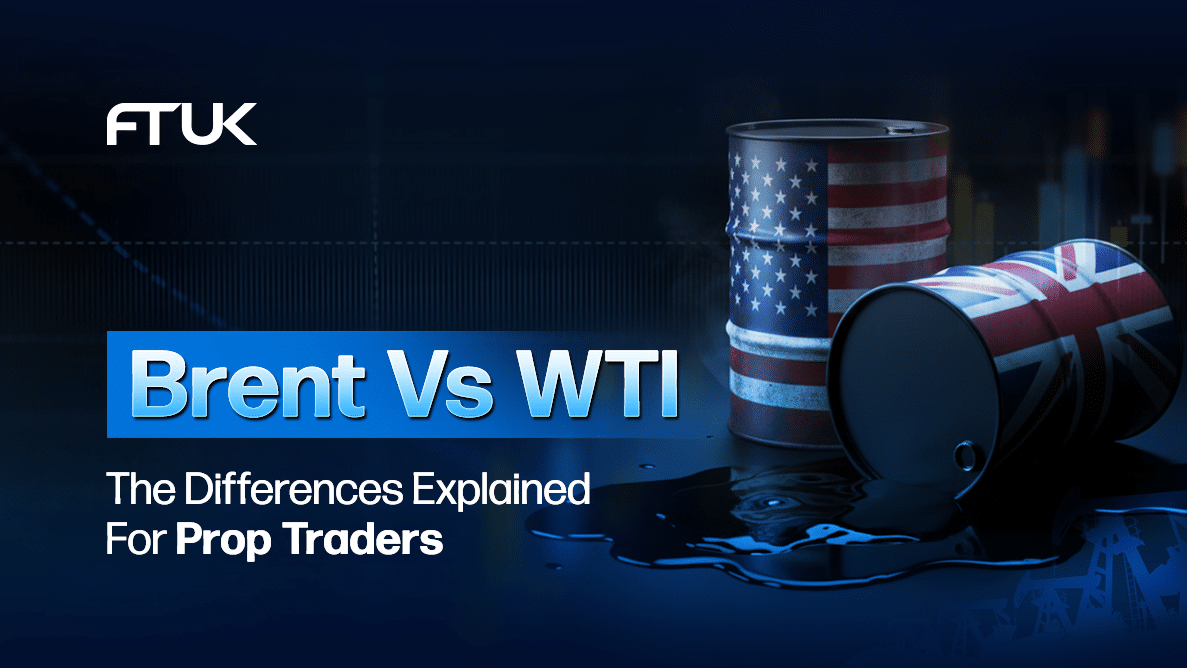
Brent Vs WTI: The Differences Explained For Prop Traders

Brent Vs WTI: The Differences Explained For Prop Traders

If you’ve spent time trading forex, you’re already familiar with how global events move currencies. But step into futures and commodities, and you’ll quickly find that energy markets, especially crude oil, are where macro trends, volatility, and opportunity all collide.

Among the world’s oil benchmarks, two dominate: Brent Crude and West Texas Intermediate (WTI). Both move global markets, influence inflation, and dra prop firm, understanding how and why they differ can open up new trading edges and diversification opportunities. What are Brent and WTI?

Brent and WTI are two major global benchmarks for crude oil prices, providing reference points for trading, hedging, and pricing oil futures and physical contracts.

Brent Crude refers to oil extracted from the North Sea, primarily from fields between the UK and Norway. It serves as the global benchmark, used to price about two-thirds of internationally traded crude.

WTI (West Texas Intermediate) is a US-based benchmark, sourced from inland American oil fields and delivered at Cushing, Oklahoma, which is a major U.S. storage and distribution hub.

Both are light, sweet crudes, meaning they have low density and low sulfur content, making them easier to refine into petrol and diesel. However, subtle differences in geography, transport, and market structure cause their prices and market behaviour to diverge. Why do Brent and WTI prices differ?

At first glance, you might expect both to move identically: they’re both crude oil, after all. But real-world logistics and market forces create a persistent price spread between them. Location and transport costs

WTI is landlocked. Deliveries must go to or from Cushing, Oklahoma, which can create bottlenecks in storage and pipeline capacity. Brent, by contrast, is seaborne and easier to ship globally. When US inventories swell, or when infrastructure constraints arise, WTI often trades at a discount to Brent because it’s harder to export. Global vs domestic exposure

Brent reflects global supply and demand, influenced by OPEC decisions, geopolitical tensions, and international shipping routes. WTI reflects US supply dynamics, including shale production and domestic refinery demand. This means macro shocks, such as Middle Eastern tensions, tend to lift Brent more than WTI. Quality differences

Brent is slightly heavier and contains more sulfur than WTI, making WTI marginally more valuable from a refining standpoint. But this quality edge is often outweighed by Brent’s easier access to global markets.

As a result, Brent usually trades at a premium to WTI, known as the Brent–WTI spread, though that spread fluctuates with market conditions. How do traders use the Brent–WTI spread?

For prop traders, spreads are where things get interesting. Instead of simply going long or short crude oil, you can trade the relative value between the two benchmarks. Spread Trading

A trader might go long WTI and short Brent when the spread widens unusually (Brent too expensive relative to WTI), expecting it to narrow again. Conversely, when US supply builds or export bottlenecks occur, the spread may widen, providing an opportunity for those watching pipeline data, refinery maintenance schedules, or export flows. Correlation and Hedging

Because both benchmarks are correlated but not identical, Brent and WTI pairs can serve as a hedging tool. A trader exposed to one can partially offset risk by taking the opposite side in the other. Macro Signal

Changes in the spread often signal shifts in global oil flows, US export capacity, or regional demand strength. For macro-minded traders, the spread can act as an early indicator of economic or geopolitical shifts.

For prop traders seeking to go beyond forex pairs, this kind of structured relative-value trade introduces a different rhythm of volatility and risk: still directional, but grounded in fundamentals. Which contracts are traded – and where?

Both benchmarks are highly liquid, but they trade on different exchanges and under slightly different specifications. For prop tradethe contract specifications matter.

WTI (CL) is the most liquid crude oil futures contract globally, with tight spreads and heavy participation from hedge funds and energy producers.

Brent (BRN) is popular with institutions and global energy firms. Liquidity is strong but slightly thinner than WTI during US hours.

If you’re new to prop trading, start with paper trading both benchmarks. Watch how they respond to economic data, inventory reports, or geopolitical headlines. You’ll soon see that Brent reacts more to global events, while WTI dances to the tune of US energy reports. What moves Brent and WTI prices?

For traders transitioning from forex, the drivers will sound familiar: global macro, policy, and risk sentiment all matter. But oil has its ownset of catalysts,Demand%20in%20OECD%20countries :
Supply & demand fundamentals

OPEC production quotas, US shale output, Chinese imports, and refinery utilisation all feed directly into price. Geopolitical risk

Events in oil-producing regions, from the Middle East to West Africa, can tighten Brent’s supply outlook quickly. WTI, meanwhile, is more insulated from those disruptions, often trading steadier in times of tension. US dollar strength

Crude oil is priced in USD. A stronger dollar typically weighs on prices, especially for Brent, as it makes oil more expensive for non-US buyers. Inventory data

Weekly EIA (Energy Information Administration) and API (American Petroleum Institute) reports move WTI significantly. Traders watch for surprise builds or draws in US stockpiles. Seasonality and refinery cycles

Gasoline demand peaks in summer; heating oil demand rises in winter. These cycles can influence both benchmarks, though WTI often responds more to US refinery maintenance and domestic travel trends. How do Brent and WTI behave for short-term traders?

Volatility and liquidity differ slightly between them

WTI: More intraday liquidity, tighter spreads, higher participation during US hours. Excellent for scalping or short-term momentum strategies.

Brent: Moves with global macro sentiment; may trend smoother but reacts strongly to geopolitical headlines and OPEC decisions. Better suited to swing or position trading.

For prop traders using futures or CFDs, that means WTI often behaves like a “fast” market during the US session, while Brent’s rhythm is more global, often moving in the European morning or reacting to Asian demand news. Can you trade Brent and WTI through a prop firm?

Most modern prop trading firms offering futures or CFD platforms provide access to both Brent and WTI markets. This gives traders funded capital and leverage to trade global energy without needing a physical commodities account.

As a trader inside a prop environment

You can apply risk limits to control drawdowns.

Use correlation awareness (for example, watch how oil moves alongside USD/CAD or energy equities).

Build structured macro strategies that combine commodities and forex, such as short USD when oil prices rally, or long USD when WTI inventories rise.

Many prop traders treat crude oil as a natural next step after forex. It combines strong technical action, predictable fundamental drivers, and round-the-clock news flow. How has the Brent–WTI relationship changed over time?

Historically, the spread between Brent and WTI was small, just a few dollars per barrel. But since 2011, as US shale production surged and export constraints hit Cushing, the gap widened sharply.

Even now, structural differences persist. Infrastructure upgrades and new pipelines have helped narrow the spread, but Brent remains the global benchmark, shaping prices for most of the world’s traded oil.

For prop traders, tracking that relationship over time offers insight into macro energy shifts, from US export growth to OPEC policy changes. A widening spread often points to logistical strain or geopolitical risk, while a narrowing one signals market balance or improved US export capacity. What are some practical tips for prop traders?Watch the calendar

Energy markets follow a rhythm: OPEC meetings, EIA reports, contract expirations. Mark them down like NFP in forex. Monitor the spread

Keep a chart of the Brent–WTI differential. Even if you’re not trading the spread directly, it helps interpret broader risk sentiment. Use futures or CFD simulators first

Oil can move fast. Practice managing position size and stop placement before trading live capital. Blend fundamentals with technicals

Oil futures respond to both. A bullish inventory surprise might spark a breakout from a consolidation pattern, which is a perfect alignment for technical traders who respect the news. Diversify with correlated assets

Watch related markets: CAD, NOK, and energy equities often move in tandem with crude. Building a multi-asset awareness sharpens your edge. Brent vs WTI for prop traders

For prop traders expanding beyond forex, Brent and WTI offer a rich training ground. They combine technical liquidity with deep macro context, giving traders a taste of how global supply chains, geopolitics, and the dollar all connect.

The key takeaway is that Brent moves with global exposure, WTI responds to more US exposure. Each behaves differently, reacts to different news, and offers its own opportunities. Understanding both benchmarks equips you to read global markets more holistically, which is the skill set that sets successful prop traders apart.

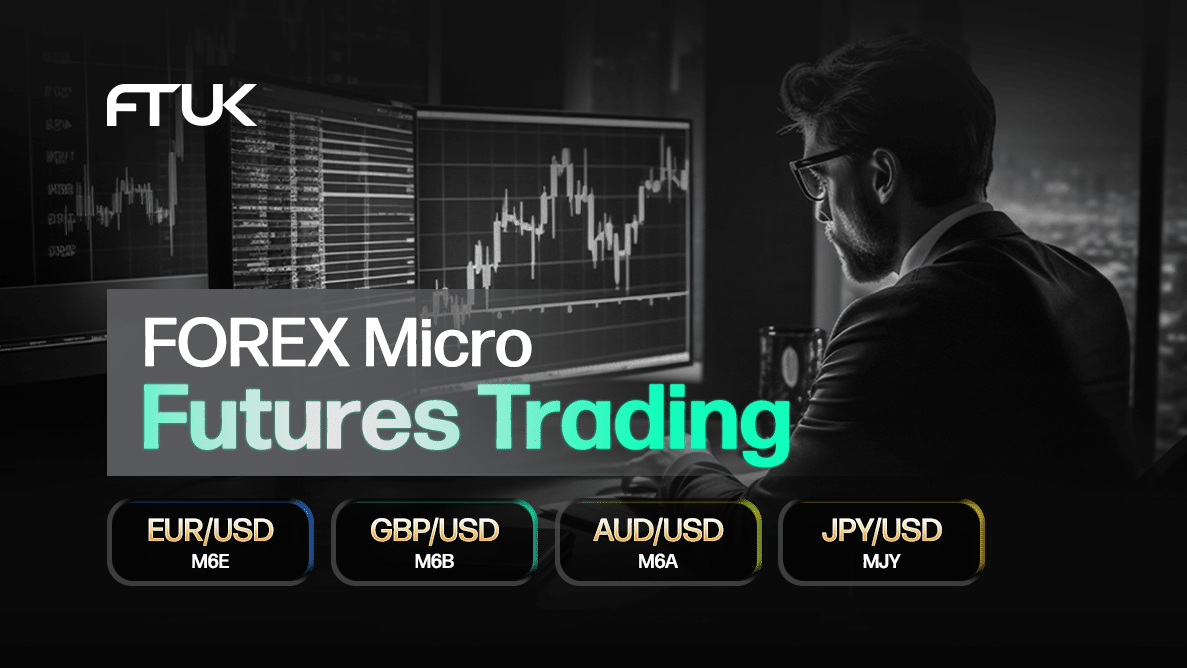
How Do You Trade Micro Futures?

How Do You Trade Micro Futures?

If you’re looking for instant forex funding for trading, you might have heard the term “micro futures” being used in relation to forex trading. But what does this mean, are micro futures different to standard futures contracts and how can you trade micro futures if this is what you’re interested in?

Let’s start with the basics…

What are forex futures?

Before we look at micro futures, we need to explore forex futures to help us understand the difference between the two types of trades. Forex futures are contracts that allow you to buy or sell currency at a specified date, time and contract size.

To trade in forex futures, you will need to put down a deposit on your trade, known as a margin. One of the reasons why forex futures trading has become so popular over the years is that the margin required here is lower than for traditional stock market trades. This makes forex futures accessible to a wider number of investors.

The other figure that it’s important to understand when forex trading is the tick This is the smallest possible price movement within a given currency pair. Ultimately ticks are used to track the changes in value between currency pairs.

The size of a tick depends on the exchange you’re trading through, as they set tick sizes, as well as on the contract instrument you are using to trade.

How are micro futures different from standard forex futures?

The way in which trades are executed for micro futures is much the same as for standard forex futures. The big difference is in the size of the trades. As their name suggests, micro futures are smaller value trades.

Essentially, the contracts you trade in are of a smaller value. This has two main benefits – first that you need less capital up front to get started with forex trading and second that you are exposed to lower financial risks.

It stands to reason that if you are putting less money down to make a trade, the amount you could lose is lower. This makes micro futures a good starting point for those who are new to forex trading and want to learn the ropes with lower risk.

In general, micro futures contracts will be one-tenth of the value of standard futures contracts. This means the margin size is lower, as is the tick size. Of course, while micro futures minimise your potential losses, they also minimise your potential gains.

This means they aren’t suitable for all traders and, indeed, you may decide that once you’ve got a better understanding of forex trading from using micro futures that you want to graduate to full forex futures trading.

Are micro futures the same as mini futures?

No. Mini futures are still smaller than standard futures trades, but are a higher value than micro futures. Think of mini futures as the next step once you’ve mastered micro futures trading.

Mini futures are one-fifth of the value of a standard contract, which means you will have larger margins and larger ticks than you do with a micro futures trade. Ultimately, understanding the levels will help you better manage your risk, particularly while you’re learning about futures trading.

How can I trade micro futures?

At FTUK, there is now the option to trade micro futures within our platform. You can either apply for instant funding, or choose the one-step funding option. This latter option gives you a chance to prove that you are able to effectively manage risk in the markets.

Once you have consistently demonstrated your trading skills in a simulated account, you can transition into real forex or futures trades. With futures trading, you will keep 100 per cent of the rewards you generate once you’ve been funded into a futures account. With forex trading, you keep 80 per cent of the rewards once you have a funded account.

When you have a SIM futures account, you will be funded to between $50,000 and $150,000. The advantage to opting for micro futures when you start trading is that you can make many more micro futures trades than you can mini futures trades – you could trade up to 150 micro futures versus 15 mini futures.

Ultimately, the process of trading micro futures is the same as full futures trades. However, because the values are lower, there is less risk to you and also less pressure. This makes micro futures the perfect types of trades to start learning the ropes with and to help you on the road to making money from your trading activity.

Understanding Leverage In Forex Trading: How Much To Use?

Understanding Leverage In Forex Trading: How Much To Use?


If you’ve ever heard traders say they’re “trading on leverage,” they’re referring to using borrowed capital to open larger positions than their account balance would normally allow.

In forex trading leverage is essentially a loan that enables you to control a much larger position with a smaller amount of your own money.

For example, with 1:100 leverage, you can control £100,000 worth of currency with just £1,000 of your own capital. The potential for profit is multiplied, but so is the potential for loss. Used wisely, it can help traders grow their accounts faster and take advantage of small market moves. However, if used recklessly, it can wipe out an account in seconds.

Here’s a detailed take on what leverage is, and how to manage it responsibly in your trading. Why is leverage so popular among forex traders?

Forex markets move in small increments known as pips,in%20the%20fourth%20decimal%20place.; often a fraction of a penny or cent. Without leverage, these tiny price movements wouldn’t generate enough return to make trading worthwhile. Leverage allows traders to amplify gains from small price changes, making forex an attractive market for individuals without large capital reserves.

It’s also a feature built into prop trading firm accounts, where traders can access substantial capital (e.g., $10,000 to $6m + funded scaling accounts) once they pass an evaluation or pay a one-time fea profit share without risking their own savings. How does leverage actually work in practice?

Let’s imagine you have £1,000 in your trading account, and you want to open a position on GBP/USD.

With no leverage (1:1), your £1,000 lets you control £1,000 worth of currency – a move of one per cent in your favour earns you £10.

With 1:100 leverage, your £1,000 lets you control £100,000 worth of currency – a one per cent move in your favour now earns you £1,000.

However, bear in mind that a one per cent move against your position also loses you £1,000: basically, your entire account balance. This is why leverage is both powerful and dangerous; it magnifies everything… including mistakes. What’s the difference between margin and leverage?

Leverage and margin are often used together, but they’re not the same thing .

Leverage is the ratio showing how much larger your position is compared to your capital (for example, 1:50 or 1:200).

Margin is the actual amount of money you must put down to open that position.

For instance, with 1:100 leverage, the margin requirement is one per cent of the trade size. So if you open a £100,000 trade, you need £1,000 in margin. If the trade goes against you and your equity falls below the required margin, you’ll face a margin call or automatic position closure.

In prop trading, firms often have strict rules about maximum drawdown and margin usage, which are designed to protect both you and the firm’s capital. How do prop firms handle leverage differently from brokers?

Most retail brokers let traders choose their leverage, sometimes up to 1:500 or even 1:1000, depending on jurisdiction. Prop firms, on the other hand, often set predefined leverage limits (e.g., 1:50 or 1:100) as part of their risk management framework.

Here’s why

Prop firms are providing real capital, so they want to ensure traders use it responsibly.

Evaluations test not just profitability, but discipline and consistency under these risk parameters.

Leverage is balanced to give traders enough flexibility without encouraging gambling behaviour.

For example, a prop trader might receive a $100,000 funded account with 1:100 leverage, meaning they can open positions up to $10 million in notional value. However, if they exceed the maximum drawdown or violate daily loss limits, the account is paused or closed. It’s all about sustainable performance, not reckless scaling. How do traders choose the right leverage level?

This is one of the biggest questions new traders ask. The truth is, there’s no universal “best” leverage ratio: it depends on your trading strategy, risk appetite, and experience level.

However, general guidelines can help

Scalpers (who take small quick trades may use higher leverage (1:100–1:200) but with very tight stop losses.

Swing traders (holding positions for days or weeks) usually opt for lower leverage (1:10–1:30) to weather larger price swings.

Beginners should start low (1:10 or less) until they master risk management.

In a funded trading environment, sticking within the firm’s parameters is crucial. Many successful traders actually don’t use all their available leverage. They treat it as a tool, not a goal. Can you lose more than your account balance?

With most modern brokers and prop firms, negative balance protection is in place, meaning your losses can’t exceed your account equity. Once your margin is exhausted, your positions are automatically closed.

That said, over-leveraging can still cause major drawdowns before protection kicks in. For traders on a funded account, it might mean losing the account or having to restart the evaluation phase. That’s why experienced traders focus less on how much leverage they can use and more on how much they should use for each trade. How does leverage affect your trading psychology?

Leverage doesn’t just impact your numbers; it also influences your mindset When you’re over-leveraged, every market move feels amplified. Fear and greed take over, making it harder to follow your strategy. You might start cutting winners too early or moving stop losses to avoid being stopped out, which are both signs of emotional trading.

Using moderate leverage allows you to stay calm, think clearly, and focus on the quality of your decisions rather than the size of your trades. Prop firms reward this mindset, because traders who manage risk consistently are often invited to scale up their accounts. How can leverage be managed effectively?

Here are some practical risk management tips: Use stop losses on every trade

Stop losses are non-negotiable in leveraged trading. Without them, a single bad move can wipe out weeks of gains. Risk a small percentage per trade

Most professionals risk between 0.5 per cent and two per cent of their capital on each trade. This keeps losses manageable. Keep an eye on margin usage

Don’t open too many positions at once – even if each has a stop loss, total exposure can stack up fast. Understand correlation

If you’re long on both EUR/USD and GBP/USD, you’re effectively doubling your USD exposure. Review your leverage use weekly

Many traders don’t realise they’re consistently using more leverage than they intended. Track and adjust.

Prop trading firms often build these safeguards into their evaluation process, so by the time you’re funded, you already have good habits in place. How do funded accounts help traders use leverage responsibly?

One of the key benefits of joining a forex prop firm is structured discipline. Unlike retail accounts where traders can do anything they want, funded accounts come with clear rules, such as maximum daily losses, drawdown limits, and trade size restrictions. These conditions aren’t obstacles; they’re training wheels for professional-level discipline.

Many prop firms also offer

Scaling plans, which increase account size as you maintain steady performance.

Instant funding options, where you pay a one-time fee to trade firm capital immediately.

Profit splits, rewarding you for consistency rather than risky bets.

Leverage becomes a tool to enhance skill, not to chase lucky breaks. What role does leverage play in prop firm evaluations?

Leverage is one of the key metrics firms monitor during the evaluation phase. They’re not just checking your profit target; they’re watching how you manage risk, drawdown, and exposure. Even if you hit your profit goal, excessive use of leverage or margin can signal poor risk management, which may disqualify you.

Passing the evaluation isn’t about getting lucky with a few big trades: it’s about showing you can handle leverage responsibly over time. Once funded, traders who continue to manage leverage wisely often get access to larger accounts, better profit splits, and scaling opportunities. So, how much leverage should you really use?

There’s no magic number, but here’s a rule of thumb

If you’re a beginner, use the minimum leverage available until you’re consistent.

If you’re an intermediate trader, keep total exposure below ten times your account equity.

If you’re funded, always respect firm limits and focus on steady growth rather than fast profits.

Think of leverage as fuel: a little gets you where you need to go faster, but too much can blow up the engine. Treat leverage with respect

Leverage in forex trading is a powerful tool, but it’s also one of the easiest ways to lose control. Understanding how it works, and how to use it intelligently, separates amateur traders from professionals.

In the world of prop trading, where you’re managing firm capital with structured risk rules, learning to use leverage effectively is your ticket to long-term success.