JOURNALING YOUR ANALYSIS

Keep on journaling the results of your trading analysis

Journaling your Forex trades helps you with mindfulness, and, above all, allows you to gain perspective while trading Forex.

Trading analysis is a very important aspect of being a Forex trader. Journaling and documenting your journey are vital to bettering yourself and your strategies in the Forex market. You can include as much detail on the influence of external factors as you like.

Journaling trading analysis is a way of defining your situation in your career. For some traders, it is the only way to handle pressure, and it develops strength and confidence. Not only will you be able to clarify and improve your trading weaknesses, but you will also be able to self-coach.


I. Pre-Trade trading analysis

Before the trade, look at your confluences and reasons for entry. You should have at least two profit targets and many reasons why the trade will go in the direction of your bias. Write down the emotions you feel and the present condition of the markets.

Is there news ahead? Is the market moving slowly? You can even note where you are. Are you at your desk? Also, include any other external factors, such as if you have plans later and how your schedule may affect your Forex market watch time.

II. In-Trade trading analysis

While in the trade, you will typically either be in a small loss or a small profit, but it is good to write a commentary of what is happening to your charts and if the Forex market has formed any other variations on the lower timeframes. If you are looking to close or adjust any of the positions early, then write down your reasoning. When you are in similar situations in the future, you will be able to refer back.

III. Post-Trade trading analysis

Trading analysis after the trade is the most important, as the trade will be closed and the outcome of your market judgement is finally revealed. Remember, if you end up with a loss, don’t stress yourself out. Profitability is built over hundreds of trades. But if you do feel stressed or unhappy with the trade outcome, then take a small, 24-hour break before coming back to your screen and writing down what happened.

Importance of journaling your Forex work

Journaling your Forex trades promotes mindfulness, and helps you to gain perspective on your skills within the Forex markets. As well as giving you a great place to reflect, journaling allows the opportunity to help build your skills as a Forex trader. To gain more confidence in your future decisions, you can look back on prior achievements and also document trades that resulted in a loss.

We are not all robots, so journaling is the only comprehensive tool we have to identify patterns in ourselves. When we have busy lives and other commitments it can seem so time-consuming and boring to sit down and add to your journal. The growth you will achieve will be far greater than any book or trading event, and you will thank yourself months down the road.

What to include in your trading analysis journal

As well as trade logs, it is a good idea to document your thoughts and emotions so that you can study and try to control your trading bias. Journaling your emotions as a trader will help relieve any stress you may have.

Studies have shown that in many fields of work, journaling emotions can provide a wealth of benefits, including an increase in productivity. Jotting down the details about how you feel allows you to get out of your head, a beneficial trait that can help you in the following week’s trading sessions.

You can also use journals to keep track of your goals. It’s useful to write down ‘to do lists’ along with the events that took place in that Forex trading session.

Define your own perfect way of journaling

They are many ways to journal: you can either physically write down in a notepad, or use your computer. There are helpful programs such as the Trading View that will enable you to document your charts, but the best way to document is keeping a notepad near your desk. With physical paper, you can spend time away from the screens over the weekends when you are refreshing your mind or reviewing your recent performance for the next week of Forex trading

While it’s not a mandatory task, and no one is going to tell you what to do as a Forex trader, it is on you to carry out your work and you choose how you want to operate. You can be prepared and grow, or you can rush back to the market week in, week out repeating problems that will only cost you money.

Always look to elevate yourself and eliminate bad habits. Chart time and market experience will help you understand better trading setups. The only way to document this is by journaling your experience.

Journaling trading analysis conclusion

Overall, as a Forex trader, you can either use your trading plan or copy and implement a plan you found online, but it is crucial to use the above steps to journal and document what occurs on your trading journey. The post-trading analysis will help you develop habits so that you don’t repeat mistakes and fall into an endless cycle of losses.


Share:

Share on facebook Share on whatsapp Share on twitter

IS TRADING NEWS WORTH IT?

Is monitoring trading news valuable for Forex trading?

The impact of trading news on the Forex market cannot be ignored. Read our guide to monitoring related news and making the right trading decisions.

Even if you claim to be only a technical Forex trader, everyone experiences trading impulses that are caused by news. While we firmly believe you need to be at least 75% technical, the news will provide volume to reach targets.

This advantage is why understanding the structure of fundamentals and how the news affects the markets will be a major factor in your trading success.

When is the news released?

As we know, the Forex market operates 24 hours per day, 5 days per week. Through the different time-zones, the economic data will fluctuate and affect price and movement.

Usually, the most common times to look for trading news releases on the majors are:

  • USD: 8 AM – 10 AM EST
  • GBP: 2 AM – 5 AM EST
  • EUR: 2 AM – 6 AM EST
  • AUD: 5 PM – 8 PM EST

But, as previously mentioned, these news announcements can affect different currencies throughout the day. Look during the times of volume on any news-related site.

What trading news should I focus on?

The most important trading news for Forex traders on which to focus is interest rates. These decisions will affect each country and will usually provide the trading tone for the day following the news.

Other trading news to focus on includes retail sales and unemployment figures. The most well-known news announcement, taking place on the first Friday of each month, is the NFP (Non-farm payrolls). It provides a huge volume of information from the employment figures.

Some Forex traders may even avoid trading during the hours between 1 PM and 3 PM (UK time) due to the sheer amount of volume and liquidity that is pumped through the pairs.

There are also the more commercial-based announcements that cover Inflation, Production, Business Sentiment, as well as Trade and Manufacturing. It is unlikely that you will need to follow every piece of news. Just keep in mind what news is relevant to the currency you are trading at that time. As traders, it is important to have some volume, but not too much where it can get messy with stop losses.

How long will the effect of the data and trading news last?

Most major news has an instant effect on the Forex market, that will usually last a couple of hours. Other trading news may emerge months after its relevance, for example, the GDP quarterly figures. Despite their temporality, when those figures are eventually released, there may be an instant decrease on volume prices.

Trading news conclusion

When it comes to trading in accordance with the news, most traders will look for obvious movements of consolidation and breakout patterns to catch any large market movements. You may also find spreads will widen at certain times, usually a sign of volatility.

It is important to keep your trading style up-to-date with some of the financial news, but also maintain a solid technical understanding of your key levels. If your chart analysis is effective, the news will help push the price to your targets.

Share:

Share on facebook Share on whatsapp Share on twitter

5 IMPORTANT TRADING RULES

The 5 most important trading rules for Forex traders

If you aren’t respecting these 5 trading rules, it will be nearly impossible to succeed in the Forex market.

https://www.youtube.com/watch?v=tRPK7KHVLyE

All Forex traders have different trading styles and strategies to make returns. Even though few Forex traders succeed overall in this game, there are many ways a trader can research and adopt a winning plan that suits their investing style.

Trading rule #2. Protect your trading account and lower the risk of losing money

One of the best ways to keep risk low is to utilise low leverage. Your focus also needs to remain intact during the hours you trade. Don’t let emotions affect your trading judgement.

Most Forex traders will lose because they either trade too big or too often. Decreasing the risk to 1% per trade will enable you to focus on perfecting your craft rather than becoming rich overnight.

This strategy is not holding you back. Many traders have been able to make outstanding returns by only risking 1% per trade. Utilising effective risk to reward ratios in combination with accurate entries will enable you to trade safely while capturing great returns.

Trading rule #3. Always adapt and learn

All Forex traders are on a mission to find the golden trading strategy that will make them as successful as possible in the shortest amount of time. While it can be worthwhile to find profitable mentors, your success is ultimately based on how you adapt to different conditions.

Recognising the patterns and fluctuations in the Forex market is crucial. Trading Forex 10 years ago was a different game; the market is now much more complex. All moves, breakouts, and fakeouts become balanced while manipulation is slowly becoming more unpredictable. We need to understand from where the market momentum is originating and attempt to profit as much as much as possible when we identify an opportunity.

All Forex traders must practice learning and journaling. Developing more precise and efficient techniques in every aspect of trading should always be a trader’s priority, rather than making a quick dollar that will eventually be given back to the market.

Trading rule #4. Know when to trade and when not to trade

Organising your operation in Forex is 90% of the work. You will continuously either be waiting for a trade, holding a trade, or reconsolidating and reorganising yourself. Many breaks are needed to maintain a positive and productive mindset.

We all have been through the losses of revenge trading and the feeling of not knowing how to come back after a losing streak. However, taking a break to only repeat the same mistakes is also not helping your trading game.

Take time to understand what happened during your loss and where you went wrong. Gain clarity from the mistake and make sure you are in the right mindset when you return to the screens.

Trading rule #5. Withdraw your profits

Making withdrawals and seeing the physical cash that can come from the market is what makes trading a real and sustainable activity. Trading Forex takes courage and determination, both of which you should be rewarded for monetarily.

You do not always need to withdraw all of your profits. Semi-compounding your account is a smart way to reach new milestones, but try to regularly withdraw money from the market to acclimate to the amount of money flowing in. Regardless of the amount – if it’s £10 or £10,000, always make sure you are purging your greedy tendencies outside of the market.

Share:

Share on facebook Share on whatsapp Share on twitter

BOOK RECOMMENDATIONS

Forex trading books recommendations

Reading advice from experts is essential to learning about the Forex market and profitable business practices. Here are the top 5 books every Forex trader should read.

Forex trading books have valuable information about Forex trading tactics from successful experts; it is a good idea to explore these Forex trading books to grow and elevate your trading skills.

Read our list of the top 5 Forex trading books recommendations by Forex trading experts. Not all these books are necessary directly Forex related, but help you to grow your trader’s mindset to become a better Forex trader.

Rich Dad, Poor Dad (Robert Kiyosaki)

An all-around powerful and popular book for any entrepreneur when it comes to business mindset. It highlights practices concerning a trader’s life and gives advice on how to improve business-related skills. In reviews, many readers discuss an increase in overall success within their business as they gained knowledge on leverage.

Rich Dad, Poor Dad has become a hugely popular book with some powerful lines in it. The way the author talks about perspective gives the reader motivation and drive to look at things in a different light.

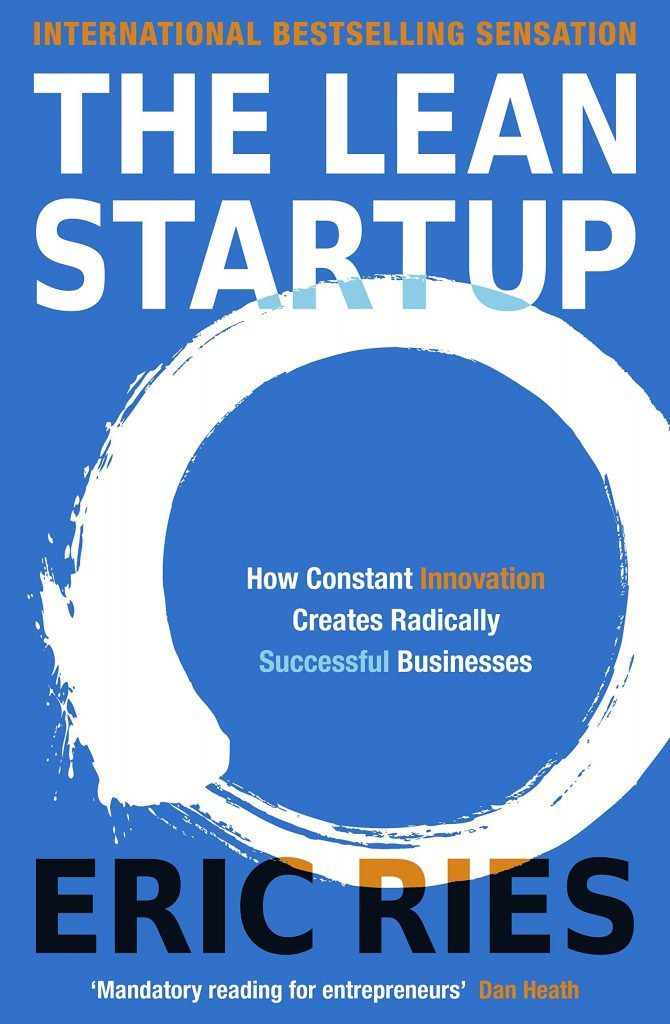
The Lean Startup (Eric Ries)

Even though this book is more suited to business and supporting customer needs, it gives the reader some basic principles on how to manage money and avoid pitfalls. Direction is one of the main topics in this book; it teaches you how to steer towards success.

This Forex trading book is advertised as providing a scientific approach to creating and managing start-ups. When you treat trading like a start-up business, you will have a much greater chance of success.

Die with Zero (Bill Perkins)

This book is not as popular as the other books, but it is authored by the billionaire poker player & gas/commodity trader, Bill Perkins. He has amassed serious wealth over many emerging markets which has allowed him to power his lifestyle with leverage.

In his book, he discusses finding leverage and how to prepare yourself for wealth. The book, as suggested in the title, then goes on to emphasise that spending wealth is important. Having too much capital is just as bad as too little, he writes, with his aim to eventually die with zero money and a life full of experience.

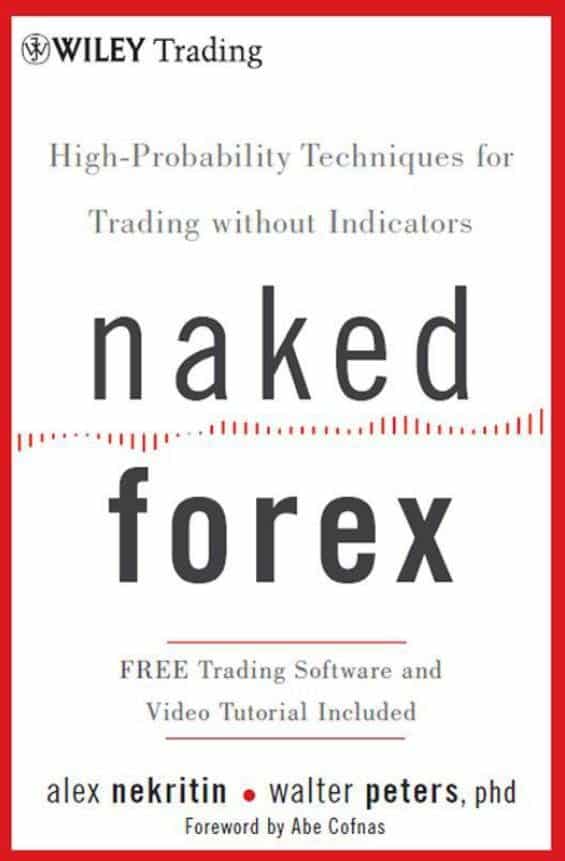
Naked Forex (Alex Nekritin & Walter Peters)

This is a great book for new traders who don’t fully understand charts or how to keep trading clean. It teaches you how to decipher the chart patterns while ‘naked trading’ without indicators.

As well as showing you how to keep Forex trading as basic as possible, Nekritin and Peters offer a simpler way for traders to make effective decisions using the technical price charts. The authors are the CEO and president of one of the world’s largest brokerages and a wealth of knowledge.

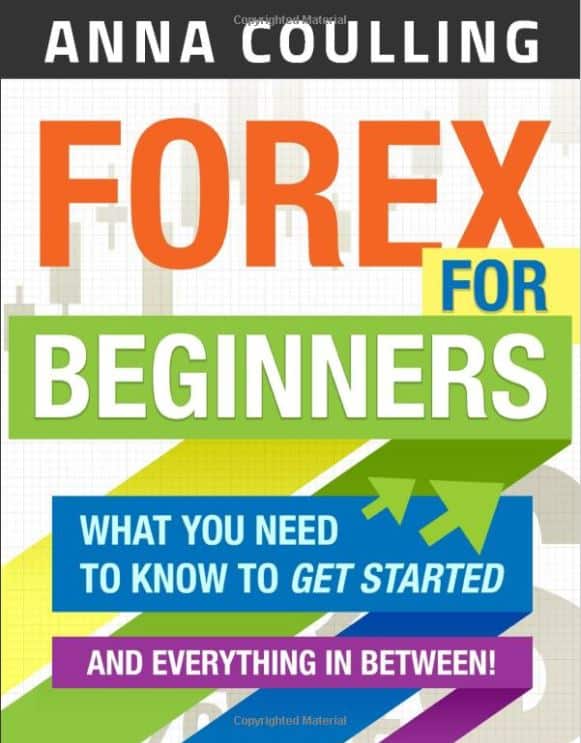
Forex for Beginners (Anna Coulling)

For those who are completely new to Forex and the technical world of trading, this book will provide well-rounded insight into beginner trading.

Even if you are a few months into Forex trading, using this book to clarify the definitions and terms is a great idea to further understand your basic knowledge. This is not a complete and complex guide to trading, but it will allow you to navigate the basics.

Share:

Share on facebook Share on whatsapp Share on twitter

TRADING GOLD

Understanding the fundamentals behind gold trading

Gold trading can be hugely profitable when you understand its power and risks. Learn to adapt your Forex skills and make profits with gold.

https://www.youtube.com/watch?v=SJRoEyBCAQM

Over the recent years, gold trading has become trendy online because of its slightly higher volatility compared to Forex. Few traders have mastered gold and secured positive gains from this commodity, but its large daily fluctuations in value have allowed many traders to acquire quick profit overturn. By knowing and understanding how the value of gold changes and its characteristics, gold trading can be very profitable when trading safely.

To trade gold on the common Forex trading platforms, it is most typical to trade XAU/USD. Trading gold against the US dollar can help us identify more fundamental correlations and build more solid trading setups.

Building your gold trading strategy

Building the strategy to trade XAU/USD is similar to trading Forex. Like any reasonable trading strategy, keeping risk low is a priority. It is ideal to use recognizable instruments which may easily be translated to the gold market to predict future prices, as gold has a tendency to create long-lasting trends.

As an example, various gold traders have discovered success adapting plans. Trend lines, Fibonacci analysis and other tools used within the Forex market can be adapted for the stronger and more violent trends with less consolidation that gold offers.

Main circumstances that influence gold

Gold is one of the more complex financial assets and commodities to estimate. Gold, in ways, is comparable to a currency like the US dollar or the Euro. Gold is enduring, portable, universal, everywhere the planet, and customarily trusted. Still, unlike these more regularly traded currencies, gold is not supported by an underlying economy of operators, businesses, and foundations.

In other ways, gold is a commodity like oil. It comes from the bottom and has regulated physical properties. Unlike other commodities though, the value of gold often fluctuates independently of its industrial supply and demand. Gold can be a safe-haven asset.

Due to this property, it builds confidence which, in today’s markets, affects price movements and trends. The more expensive gold becomes, the more trust and confidence more investors will have.

Gold bugs vs brutal ruins

Because of the properties of the gold market, the emotions and behaviours of retail traders tend to drive major short-term trends. Traders seem to be polarized on the value of gold.

There are guru “gold bugs” who think that the price of gold should be $10,000 per ounce, mainly because central banks around the world are devaluing their base currencies. Others are bearish traders who say that gold is simply “brutal ruins” of the past that ought to be worth closer to $100. This contrast between traders has led to more curiosity and more people trading gold on margin.

Things to consider when trading gold

The spread of gold within a currency pair is typically larger and has more volatility than most currency pairs. The lot sizes are often different and the risk is amplified with some brokers.

Gold trading conclusion

Overall, if you are attempting to keep risk low and trade gold or XAU/USD, you must understand its volume. Use the dollar as an important piece of the puzzle. With this knowledge you can predict trends and other factors that may determine the short-term value of gold.

Share:

Share on facebook Share on whatsapp Share on twitter

THE IMPORTANCE OF LOOKING LEFT

WHY ‘LOOKING LEFT’ IS AN IMPORTANT FOREX TREND INDICATOR

‘Look left’ to find clues on where to enter and exit the market in your search for profitable trades in the Forex market.⁠ With this simple and effective Forex trend indicator, you can keep your chart clean.

https://www.youtube.com/watch?v=1IISxvHrcZo

We need to look at previous chart data to seek clues on where to enter the market for profitable trades. These clues can include key levels, previous market reactions, and to where the instrument is heading.

Support and resistance

When looking left, we are able to identify the key areas of profit-taking. When a market is trending, it is even more important to look left at the support and resistance levels as they change. Dynamic support and resistance levels are common in technical analysis of the Forex market.

Previous resistance becomes support and vice-versa, previous support becomes resistance. All you need to spot these levels is the prior charting history!

Looking left vs indicators

Too many indicators on your charts can lead to a situation of conflicting data; one indicator might indicate a buy is necessary and another one may indicate a sell. This type of messy chart can result in confusion for a Forex trader, leading to loss or no trades.

Overloading a chart is common among new Forex traders. They learn as many Forex trend indicators as they can, then put them all on one chart. This strategy always provides mixed signals, confusing traders and causing them to acquire the incorrect trading positions.

What if the most effective Forex trend indicator is price action itself? If you wish to make the most from Forex trading, all you need to do is LOOK LEFT!

Supplement your back testing with an occasional Forex trend indicators

Now you know what to look for in price action to induce entry or exit levels for your trades. You can now use one or two indicators to supplement your price action strategy.

Without adding all the indicators in your charting platform without reason, find a Forex trend indicator that confirms and compliments your entry and exit levels. Do so by back testing it along with your new price action trading approach that matches your style.

If you see a price action entry idea confirmed by an indicator entry signal, you may increase your chances of profitable trades if it aligns with your bias.

The earlier you prepare while using price action as your main indicator, the sooner you will mature as a Forex trader! So, before you make your next trade, remember that looking LEFT is a highly effective trading strategy. Remember that price action is the most significant Forex trend indicator regardless of your trading style.

Looking left increases confidence

The more ambitious swing traders will analyse the best timeframes, looking back as far as possible seeking out the largest trades. It is important to look left on all timeframes and review the value action short term, but you must also utilise the monthly and weekly timeframes to determine how long you will hold your trades.

These timeframes are the most respected when involving price action. Some Forex traders are able to hold a trade 100 pips longer than others, or get out 30 pips earlier, but the most important strategy among all traders is to journal all work and constantly adapt as a trader.

Forex trend signal indicators conclusion

Looking left is the simplest sort of chart breakdowns. However, traders can miss out on vital info when live-trading in Forex. Keep the chart clean and look left on the upper timeframes to bypass your trading bias and boost your overall performance.

Share:

Share on facebook Share on whatsapp Share on twitter

CURRENCY CORRELATIONS

How to use currency correlations to lower risk

Currency correlation is not the most important element in Forex trading, however, knowing how to use currency correlation to your advantage will lower overall risk and exposure long term.

https://www.youtube.com/watch?v=0LNL0TBuGWc

Currency correlation in the Forex spectrum indicates the analytical measure of each connection between two currencies. Basic currency correlation analysis will range from -1.0 to +1.0.

A correlation of +1.0 means those two currencies will move in the same direction 100% of the time. A currency correlation of -1.0 implies the two currencies will move in the opposite direction 100% of the time. A currency correlation of 0 means that the currency pairs are mostly irregular, sometimes neutral, and always uncorrelated.

The correlation of each of the currency pairs is familiar to most traders. The pound and the US dollar are correlated, so the GBP/AUD and EUR/GBP pairs are affected by the fluctuations of the US dollar.

Broadening risk exposure across different pairs

Some Forex traders might see strength in an index and trade Forex pairs that include that index currency.

This is a basic tactic. For example, the EUR/USD and AUD/USD are not interdependent 100% all the time. In this case, Forex traders can trade within these currencies and distribute their amount of risk. Sometimes the flawed correlation among the two different currency pairs allows for more diversification and a much lower risk overall.

Do correlations in Forex change?

Forex currency correlations will change frequently. When these changes occur, it is important to take any shifts into account when managing open trades. Many factors cause price influxes to work against currency correlation.

Index levels, fundamental and global economic factors can all influence a specific currency value and impact its relationship with another currency. You will see negative currency correlations happen within the short term on positively interdependent currencies, whether or not you are holding long-term trades.

Should you always trade based on currency correlations?

The short answer is no. It is vital to treat each chart breakdown separately when it involves medium/long term bias. On the other hand, do not purposely trade against correlations when trying to gain returns with strategies.

Understand correlational behaviour for a selected currency pair and use it as a confluence for currency strength or weakness. You should be able to find some highly profitable trades when you know the times at which currency correlation will wipe out positions.

Currency correlations conclusions

Overall, to be a well-rounded Forex trader, you should know your exposure when managing different currency pairs as values fluctuate. By recognising patterns and trading what you see, you may gain more meaningful experience when trading a select few pairs. With this learning strategy, you know for which common traits to seek on a technical and fundamental level.

It is vital to keep this currency correlation concept in your mind when viewing the bigger picture. Regardless of your Forex trading plan and whether you are looking to broaden your Forex trading watchlist, it is vital to find other pairs to leverage your investments in the Forex market.

Share:

Share on facebook Share on whatsapp Share on twitter

THE BEST TRADING HOURS

Our experience of the different trading hours

https://www.youtube.com/watch?v=4kflluUtlyw

We have found that good trading hours are during the London session, which is when the volatility is high. By finding your setup correctly and then placing your trade in the morning, your trade will yield all profits made during these higher peak times of liquidity.

Understand the best trading sessions for your schedule

This will help you understand the emotion and thought process that you will need to obtain to stay relaxed, enjoy trading and most importantly make some pips throughout your trading sessions.

The market moves in different directions throughout the different time zones/trade sessions

We have seen many traders get caught up in the emotions whilst holding a trade position throughout the day and get frustrated about the changes in directions as they follow the charts for hours on end. 


It’s important to understand that the market will move in different directions as we go through the different time zones of the trading day. 

This is because of the business hours of trading operations around the world and the different levels of buying and selling pressure.


As the market moves in different directions, this can throw many traders into a downwards spiral due to the lack of patience when sitting in a small loss or breakeven for a short while. 

Trade sessions combined with areas of manipulation

It is important to look at the prior structure of a chart and access at a point in which there is likely to be manipulation. This will occur around levels where most traders are setting their stop losses. As the trade sessions open and close, be aware of retracements and pullbacks that could affect any of your open positions.


Stick to your long-term bias and let the market play out

When you have defined your correct trading bias within the market and in your trade, you will need to adapt your skills to be patient. Know when to sit on your hands while waiting for the profits to come in.


Forex trading hours conclusion

There are several essential tips you should bear in mind before trading in different Forex trading hours. Firstly, you should remember that liquidity will either be high or low depending on the time you are trading; and secondly, remember to be vigilant about the amount of overlap in that session.


Share:

Share on facebook
Share on whatsapp
Share on twitter

PLOTTING THE DIFFERENT TRENDLINES

TRENDLINE TRADING PLOTTING DIFFERENT TRENDLINES

When trendlines are drawn correctly, they show a trend in clarity and offer specific information and opportunities to Forex traders.

https://youtu.be/PlkKFvfnNhU

Trendline trading is a very common strategy within the technical realm of Forex trading. Trendline trading is probably one of the most underrated strategies as well. If a trendline is drawn out correctly, it shows the trend in clarity and offers great opportunities for Forex traders to get into the market.

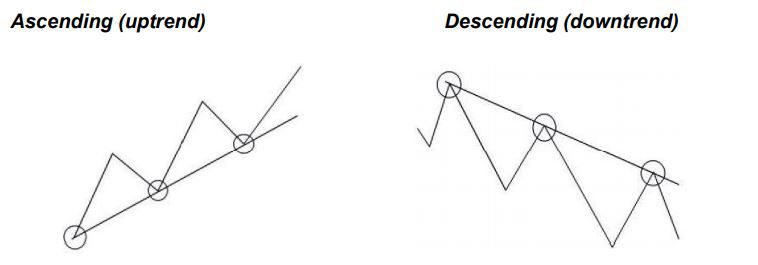
Trendlines are, essentially, a line of the best fit at either the dynamic area of support or resistance. An ascending trendline indicates an uptrend, while a descending trendline uncovers a downtrend.

Basic features of a trendline

The basic features of a trendline are simple. An uptrend line is drawn along the bottom of easily identifiable support areas and signals an uptrend in price action. They will also accurately show the higher lows in the market.

In a downtrend, on the other hand, the trendline is drawn along the top of easily identifiable resistance areas, the tops of the lower highs.

Trendline characteristics and how to use them

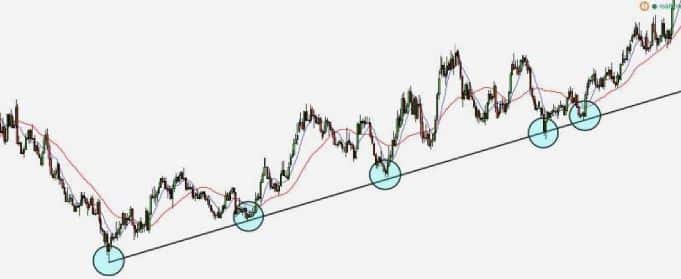
Another note to consider when using trendlines is that the more bounces (touches) a trendline shows, the stronger the trend. A trendline with many bounces would convey that the line is highly respected by the price action and will continue to follow this line to a high degree of accuracy.

You only need two lower highs or two higher lows to place a trendline, but finding a third trendline bounce can be very strong in the current trend direction.

There are two ways in which a price can react to the trendline. The value can bounce off of the trendline and then continue in the trend direction, or there can be a break in the trendline and then a reversal in value.

We have strategies and methods for breaking down these two types of market movements, all of which can produce very profitable trades. We will review the indicators that support these methods and what to look for in terms of indicative entry, stop loss, and target levels.

Trendline bounces

As you can see from these diagrams, bounces will occur in the market that respect the support or resistance lines and will influence the market trend. Here is an example of an ascending trendline that has made many bounces that have caused the market to trend upwards.

When plotting the simple trendline in a daily and weekly timeframe, aim for a line of best fit. You want to link up the key levels and bounces while removing as little price action as possible. If the trendline appears too difficult to plot due to messy market candlesticks, then the trendline is invalid. Do not force a trend where there isn’t one.

Counter Trendlines (CTL) and Trendline breaks

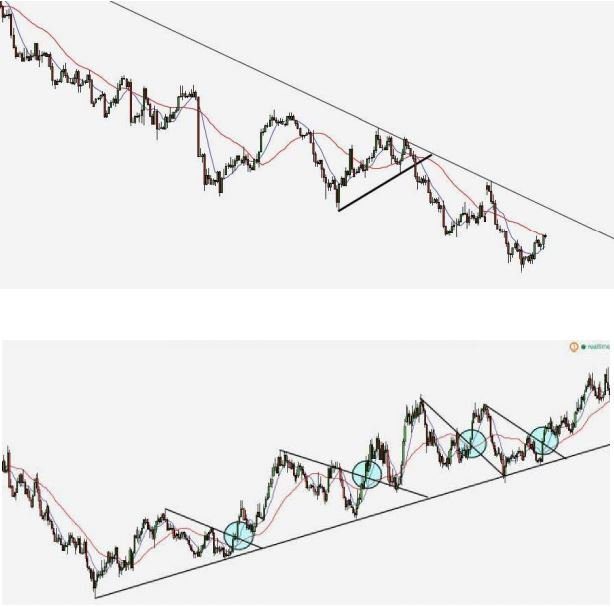
The counter trendlines shown above are the bold lines that fall opposite to the alignment of the overall trend.

Above are some examples of how the counter trendlines will work in alignment with the overall trend.

Trendline Breaks

There are three signals to look out for when identifying a trendline break. We will need some confirmation to get us into a setup. We look for the momentum formed in the previous candlesticks and find a break, retest, and continuation that occurs frequently in the market.

When looking for a trendline break, we need to see a break, retest, and continuation as shown in the diagram above. We have also shown the point of entry you would use to confirm the setup.

As soon as we achieve a break of the minor support created from the initial break, and the candle closes below those levels, we can short/sell. This technique also works in a bullish scenario if we see a descending trendline in play.

Example of a trendline break

We need to look for a break, retest, and continuation in more clarity when trading breakouts. Eighty percent of the time, the market will act this way around trendline breaks. The initial target, for which you should aim in this scenario, is the first point created on the trendline.


Trendline trading conclusion

Trendline trading is a great strategy for Forex traders to utilise. However, it is important not to draw trend lines by forcing them to suit the market. If a trendline does not fit correctly, then that trendline is not valid! Try to understand how each pair in your watchlist reacts to trendlines and journal your findings for future reference.

Share:

Share on facebook Share on whatsapp Share on twitter